

Key takeaways
- Diversity, equity, and inclusion (DEI) describes any company policy, practice, or procedure to make the workplace feel safe, welcoming, and supportive of employees from all backgrounds.
- Successful DEI in the workplace can attract and keep employees engaged while helping your company become more innovative and profitable.
- Recent developments have led some employers to pause or reframe public DEI programs, but EEOC guidance and legal risk still apply.
Contributing experts
- Trevor Bogan: Regional Director of the Top Employers Institute
- Lou Reverchuk: Co-founder and CEO at Echo
- Janet Stovall: Global Head of DEI at the NeuroLeadership Institute
- Jamie Sieja: Director of Marketing at Flex HR
Update notes
- Sep. 25, 2025: Hanna Sillo updated this article with new statistics, additional examples, and the latest developments on DEI in the U.S. context.
What is diversity, equity, and inclusion?
Diversity, equity, and inclusion (DEI) is a framework companies use to create supportive and inclusive workplaces for the spectrum of employees’ unique identities and experiences. It also helps companies understand, support, and anticipate the needs of customers or clients of different backgrounds.
Over the years, DEI priorities have shifted from merely fulfilling legal obligations like collecting EEO-1 data and monitoring affirmative action programs to becoming a fundamental, ubiquitous part of an organization. Nowadays, a company’s commitment to DEI extends throughout its policies, processes, and training programs.
Even the acronym DEI has evolved — alternatives include DEIB (DEI plus belonging), DEIA (DEI plus accessibility), and JEDI (DEI plus justice). Which acronym you choose can signal priorities.
For instance, “belonging” highlights psychological safety, while “justice” reflects systemic accountability. However, DEI remains the most widely recognized in HR, recruiting, and compliance contexts
DEI, however, continues to be the most common. But, while these variants appear in practice, DEI remains the most widely used label.
Each core concept of DEI addresses a distinct organizational function or characteristic, and understanding each one is essential to creating an ideal company culture.
Diversity
Diversity refers to recognizing employees of different backgrounds. We should be careful not to limit diversity to federally protected classes such as race, color, religion, national origin, and sex. Instead, diversity covers an array of different identities and statuses. These are some of the most commonly recognized:
- Age
- Culture
- Ethnicity
- Spirituality
- Sexuality
- Gender
- Identity
- Creed
- Genetics
- Education
- Height and size
- Physical and mental ability
- Political affiliation
- Socio-economic status
- Marital status
- Parental, caregiver, or pregnancy status
- Military or veteran status
- Geographic location
- Thinking or working style
Diversity is the easiest concept to understand for many organizations since you can, on some level, measure and track it. However, remember that you might not be able to recognize diversity based on appearance alone, and it’s important to avoid categorizing people based on assumptions. Instead, conduct anonymous surveys to collect diversity information without making employees feel unsafe or uncomfortable.
Equity
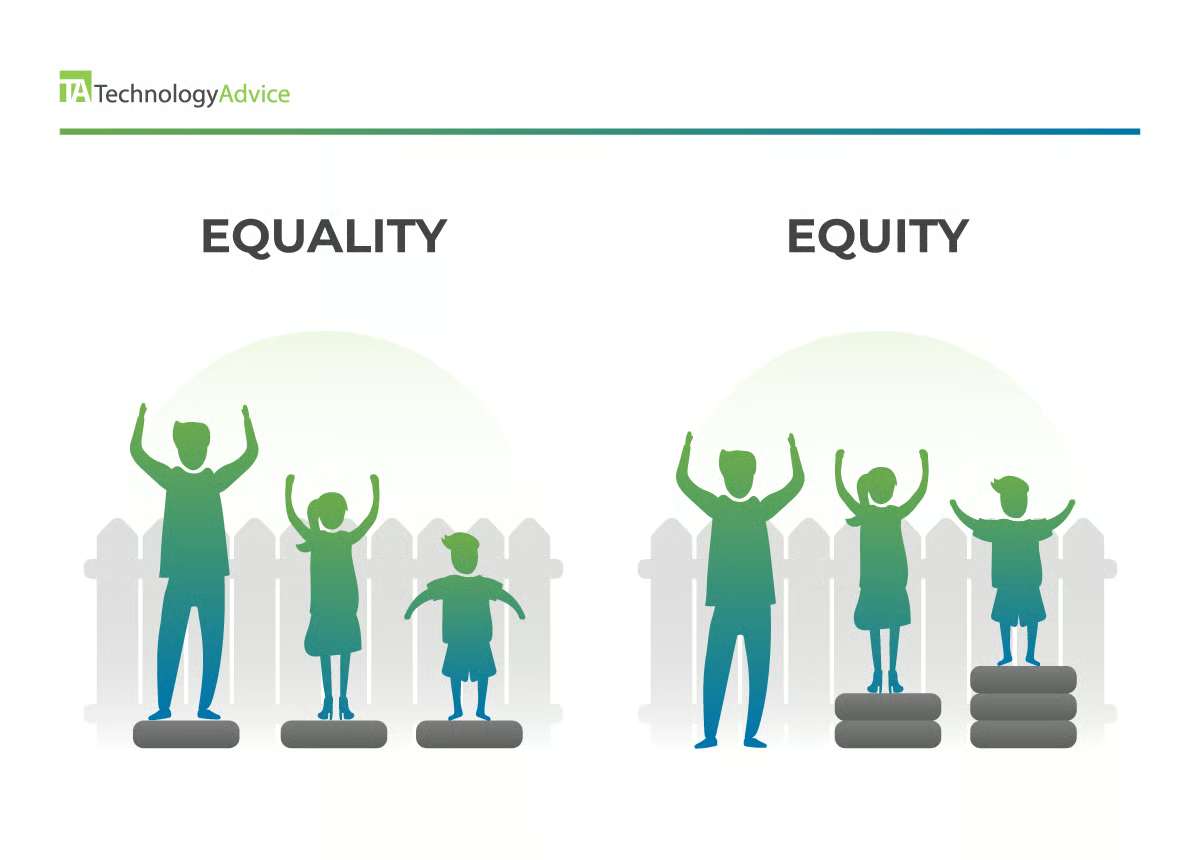
Equity refers to equal, fair, and just access to organizational success, regardless of an individual’s background. It is frequently confused with equality, but it is not the same. Unlike equality, which treats everyone the same, equity recognizes different starting points and provides tailored supports so people can reach the same outcomes.
Equity in the workplace could involve:
Resources for folks with physical or mental disabilities
Providing support like wheelchair ramps, Braille signs, or noise-canceling headphones, which doesn’t give them an unfair advantage but allows them to be as successful in their work as their non-disabled or neurotypical peers.
Flexible schedules and asynchronous work options
Staggered hours, compressed workweeks, or fully asynchronous roles helps caregivers, parents, and people with chronic conditions manage work and life without penalty.
Transport and commute assistance
Transit subsidies, parking stipends, or flexible remote options for those with long or costly commutes reduces a hidden financial burden that can limit some employees’ job access.
Equity can also mean reevaluating promotion pipelines, leadership development access, or performance rating criteria to ensure they don’t disadvantage underrepresented groups.
Inclusion
Inclusion refers to workplace cultures that actively invite people from all backgrounds to contribute and participate without fear of discrimination or retaliation.
In an inclusive workplace, all employees feel safe, respected, and supported in their roles. Engagement surveys, turnover patterns, and promotion velocity data can tell leaderes whether employees feel fully included use that input to take meaningful action.
Practicing inclusivity also means increasing awareness of conscious and unconscious biases, addressing processes and activities that unintentionally exclude participants, and providing avenues for employees to voice concerns and request support.
Why DEI matters in the workplace
Intentional efforts to prioritize DEI in your company can have enormous benefits, like attracting top talent, improving employee retention, sparking innovation, increasing profitability, and improving the company’s reputation.
However, poorly designed DEI efforts can also backfire. Token programs, mandatory training without leadership modeling, or overreliance on optics can erode trust.
Attracts top talent
Employees want to work for employers who value their voices and unique perspectives. Prioritizing DEI through initiatives like social advocacy work and DEI committees can make your workplace more enticing to jobseekers than competitors who do not value DEI.
Companies must also adjust their recruitment strategies to attract a more diverse workforce, especially if they want to remain competitive and avoid attrition.
Improves employee retention and engagement
Simply put, employees leave when they don’t feel valued and included. Retention rates drop, institutional knowledge diminishes, and burnout increases as you distribute work among fewer employees. This only fuels employee unhappiness, prompts turnover, and increases recruiting and onboarding costs.
Genuine DEI initiatives in the workplace can break this cycle by building a culture of psychological safety that builds trust, boosts morale, and fosters collaboration. In turn, employees are more productive, invested in company objectives, and less likely to look elsewhere for work.
To illustrate, a 2025 Catalyst report reveals that three in four employees (76%) say they are more likely to stay in a company if their employer supports diversity, equity, and inclusion.
Sparks company innovation
A diverse workforce means employees with a variety of thoughts and working styles. Their varying backgrounds and experiences are often the springboards for developing novel ways to improve your products or services, increase productivity and efficiency, and solve complex company problems.
In addition, diverse workforces offer opportunities to expand into new markets based on employees’ experience with different customer bases. This gives you a competitive advantage, allowing you to successfully market and serve your products or services to new customers before others in the space.
Increases profitability
DEI’s contribution to innovative thinking, problem-solving, and understanding customers improves your company’s bottom line. DEI can also impact your revenue by saving you money in the long run.
“One of the main data points we help organizations review is how much it costs to lose employees compared to how much they can save and increase revenue by creating a DEI program,” explains Trevor Bogan, regional director of the Top Employers Institute. In other words, a DEI program lowers recruitment costs, resulting in revenue gains that outweigh the program’s expense.
In 2023, McKinsey analyzed over a thousand companies and found that firms with more gender or ethnic representation at the executive level were about 39% more likely to financially outperform their counterparts.
Drives corporate reputation
DEI in the workplace can improve your company’s public perception and showcase your company’s values and mission. Besides attracting diverse job applicants, it can make acquiring and working with new customers and vendors easier.
However, be careful of proclaiming your commitment to DEI if you aren’t prepared to take meaningful action.
“[DEI] initiatives, if not genuine, run the risk of being labeled as mere tokenism,” says Lou Reverchuk, co-founder and CEO at Echo. “This can undermine employee trust and dilute the desired impact.”
Saying you value DEI without DEI policies, practices, or other infrastructure in place can come off as performative, which can ultimately damage your reputation.
What is HR’s role in DEI?
HR departments are well-suited to spearhead DEI initiatives due to their administrative duties, role as employee ambassadors, and access to company policies and procedures. As Janet Stovall, global head of DEI at the NeuroLeadership Institute, eloquently puts it, “Diversity IS a human resource.”
HR teams can be the tool to ensure DEI is addressed within every area of the business and employee life cycle, including:
- Labor law compliance
- Policies and procedures
- Compensation and benefits
- Talent acquisition
- Performance management
- Learning and development
- Employee engagement
But while HR often leads DEI initiatives, long-term change requires business unit leaders, line managers, and executives to co-own the outcomes.
Labor law compliance
DEI in the workplace can ensure you comply with federal and state laws regarding discrimination in employment practices. The primary federal laws include:
- Title VII of the Civil Rights Act
- Americans with Disabilities Act (ADA)
- Age Discrimination in Employment Act (ADEA)
- Pregnancy Discrimination Act (PDA)
- Pregnant Workers Fairness Act
- Genetic Information Nondiscrimination Act (GINA)
- Equal Pay Act (EPA)
- Uniformed Services Employment and Reemployment Rights Act (USERRA)
These laws don’t automatically create company diversity, equitable treatment, or even inclusive workplace cultures. But, they prevent companies from engaging in discriminatory recruitment, termination, or adverse actions and guarantee protections for specific groups — like accommodations for employees with disabilities.
Plus, the ongoing alliance between the Equal Employment Opportunity Commission (EEOC) and the Department of Labor’s Wage and Hour Division (WHD) will make it harder to evade detection for discriminatory workplace practices. To avoid fines or penalties from both agencies, HR teams must work with executive leaders to meet the minimum standards set by these laws and state or local equivalents.
Policies and procedures
HR teams should investigate company policies and procedures to determine if any potentially exclude groups in your organization. Consider the following questions when reviewing policies and procedures:
- Does the policy/procedure consider the different lived experiences of everyone in the organization?
- Will this policy/procedure disproportionately affect some groups in the organization over others?
- Does the policy/procedure give equal opportunity and access to all workplace groups?
- Does your company outline ways for employees to voice concerns? Do you have procedures in place to investigate and act on those complaints?
- Does the policy/procedure avoid language that inadvertently excludes groups or makes assumptions about others?
The investigation may reveal your company’s holiday policy does not give equal access to employees to take days off for their sincerely held religious beliefs. Or, maybe you discover you use the terms “mother” or “father” in your parental leave policies instead of more neutral terms, like “parents” or “caregivers.”
Despite this, keeping a watchful eye on your policies and practices may require external help, not just limited to HR. Employee surveys inviting feedback or a DEI audit by a third party could be more effective at revealing harmful policies or procedures that require change.
Alternatively, leveraging pre-made templates or AI can help you quickly produce equitable and inclusive policies. For example, you can use generative AI platforms like ChatGPT as a support tool to review your policies, identify potentially harmful language, and offer suggestions for improvement.
Compensation and benefits
HR teams must evaluate company compensation and benefits to ensure everyone is paid equitably based on role, department, location, years of experience, and tenure.
To accomplish this, you will need to separate your compensation data by various demographics, departments, and roles to understand how your pay practices impact diverse groups. Partnering with external groups to perform pay equity or payroll audits can also speed up the process, especially if you do not have this data handy.
Similarly, investigate your benefits packages with the same level of scrutiny. Ask yourself:
- Do our company benefits exclude any groups?
- Are certain groups taking advantage of benefits, perks, or paid time off (PTO) policies more than others — why or why not?
The answer to some of these questions may reveal a need to educate some groups on your benefits so they know what is available and how to use them.
You can also go the extra mile by partnering with brokers or insurers that include fair coverage options for various groups, like women.
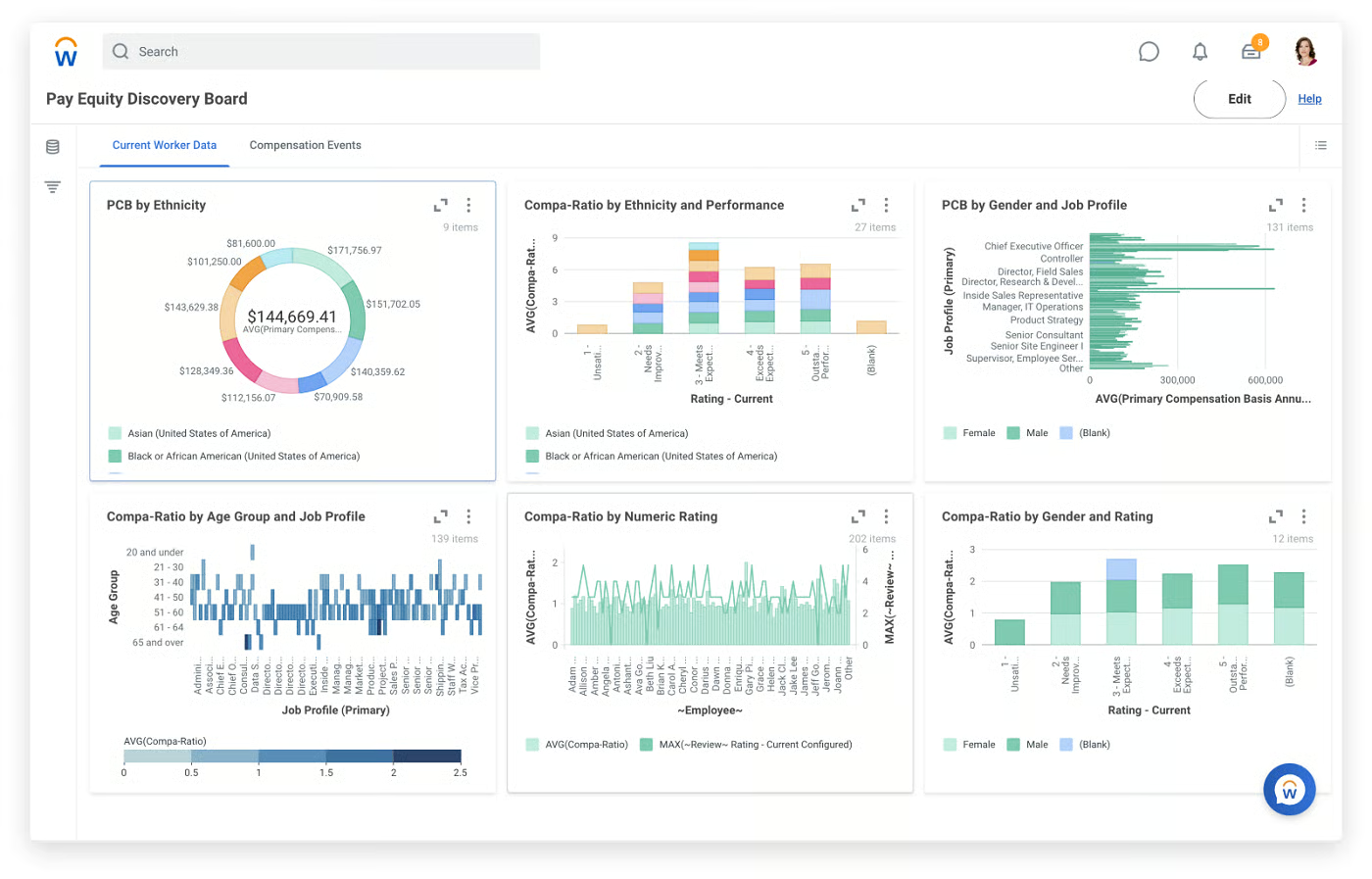
Analytics in current HR software usually include DEI metrics to make uncovering unfair compensation or benefits practices easier. For example, Workday HCM includes a pay equity dashboard to compare compensation ratios by different groups so you can enact targeted initiatives for more effective change.
Talent acquisition
Recruitment plays a major role in the diversity of your organization. Your hiring teams will need to pay close attention to their implicit biases and how current systems may adversely affect minority groups, like people of color, during the application and interview process.
To combat this, you and your teams can use some of the following diversity hiring techniques:
- Designing a structured hiring process to reduce biased résumé screening or hiring decisions.
- Creating more inclusive job descriptions.
- Posting to niche job boards to cultivate a diverse talent pool.
- Implementing key performance indicators (KPIs) to encourage diversity hiring and track success.
- Creating diverse interview panels for fairer candidate interviews.
Most recruitment platforms or applicant tracking systems (ATS) have features to monitor bias and improve the candidate experience. Greenhouse, for example, asks candidates for their name pronunciation and preferred personal pronouns before interviews to demonstrate your commitment to making all gender identities feel included.
Jess Elmquist, CHRO at Phenom, also explains how using AI in recruitment can improve DEI efforts. “It objectively hones in on skills and workplace experience,” he says. “It isn’t concerned with where someone went to college or anything else not directly related to the job posting requirements.”
AI isn’t entirely immune to bias, however. Depending on the dataset it uses to make decisions, it can perpetuate discriminatory processes based on your historical recruitment decisions. However, according to Elmquist, an “accountable AI” can “even the playing field” by giving underrepresented groups equal access to job opportunities.
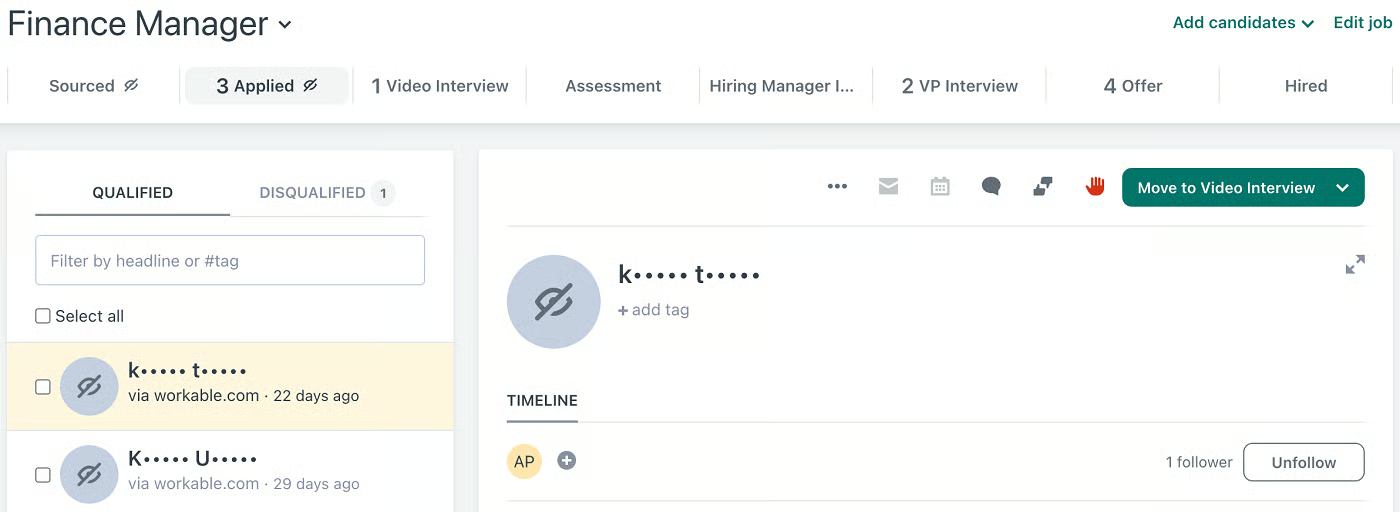
For example, during screening, Workable’s AI automatically redacts identifiable information from candidate résumés and applications, like photos, names, birthdates, or addresses. This increases the chance that candidates progress or regress through the hiring process based on objective characteristics like skills and not on characteristics like age, gender, ethnicity, or other diversity statuses.
Performance management
Promotion and performance discussions should be fair and equitable for everyone. Strategies to reduce the risk of bias in your performance management strategies include:
- Hosting calibration meetings to determine consistent criteria for evaluating each role.
- Training managers on equitable performance reviews to avoid any unconscious bias.
- Providing equal weight to both quantitative and qualitative performance metrics.
- Keeping records of when employees receive promotions or development opportunities for comparison.
Global head of DEI Stovall notes how training managers, in particular, can improve the quality of performance evaluations and reduce the “threat state” direct reports often enter during these conversations. For example, her company’s work training managers at Cigna resulted in 94% of managers feeling their leadership skills improved. Employees also felt more comfortable communicating their feelings and concerns.
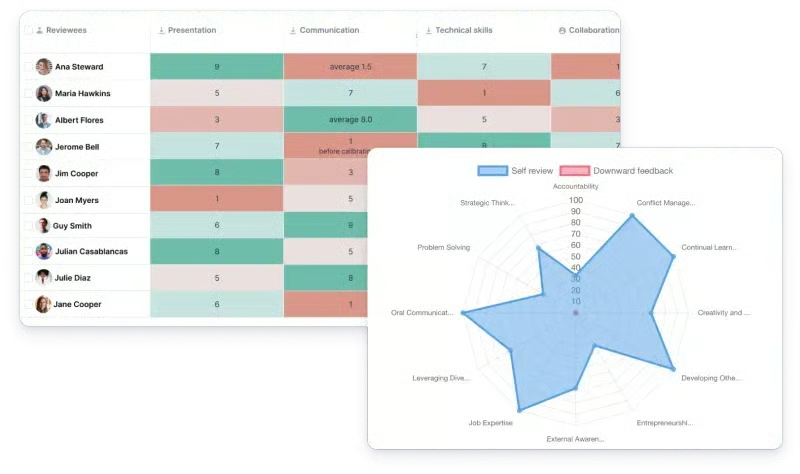
Performance management software also reduces the risk of bias and promotes consistent evaluation practices. Zavvy, for example, allows you to collect 360-degree feedback on performance and calibrate your evaluations. Besides providing a complete picture of the employee, it also helps identify leaders who create uncomfortable or unproductive work environments.
Learning and development
Learning and development (L&D) plays one of the most significant roles in workplace DEI efforts. DEI training courses can help managers identify, prevent, and respond to toxic workplace behavior, like discrimination, stereotyping, and harassment.
Such training also teaches employees to confront their own biases and understand how to collaborate with diverse teams. Continuous DEI training can also build upon employees’ DEI skills, from cultural competency to effective allyship.
Developing DEI training requires sensitivity and awareness of your own biases and assumptions. Inviting outside experts to conduct the training can be worthwhile, especially if your team lacks the time and/or knowledge to develop DEI courses internally. Alternatively, you can take advantage of pre-made courses on learning management systems (LMSs) or from online providers like Coursera.
Interested in DEI training courses offered by some of the top educational institutions? Check out some of the most popular DEI courses from Coursera:
- Rice University’s Organizational Leadership in Diversity, Equity & Inclusion Specialization.
- University of Michigan’s Leading Diverse Teams & Organizations.
- University of California, Irvine’s Diversity and Inclusion for HR Professionals.
Employee engagement
HR teams are instrumental in kickstarting initiatives like DEI committees and employee resource groups that improve employee engagement.
Both provide outlets for employees to connect with peers over shared identities, beliefs, values, or interests. They can also serve as advocates for DEI initiatives with business leaders because they focus solely on DEI compared to HR departments.
Less formal DEI engagement initiatives can also be effective. For example, Jamie Sieja, director of marketing at Flex HR, notes how the company’s twice-weekly “coffee breaks” allow employees to celebrate their victories and recognize other team members.
“Our diverse staff loves to learn about one another and appreciates the positive actions to ensure our workforce is treated fairly,” she says.
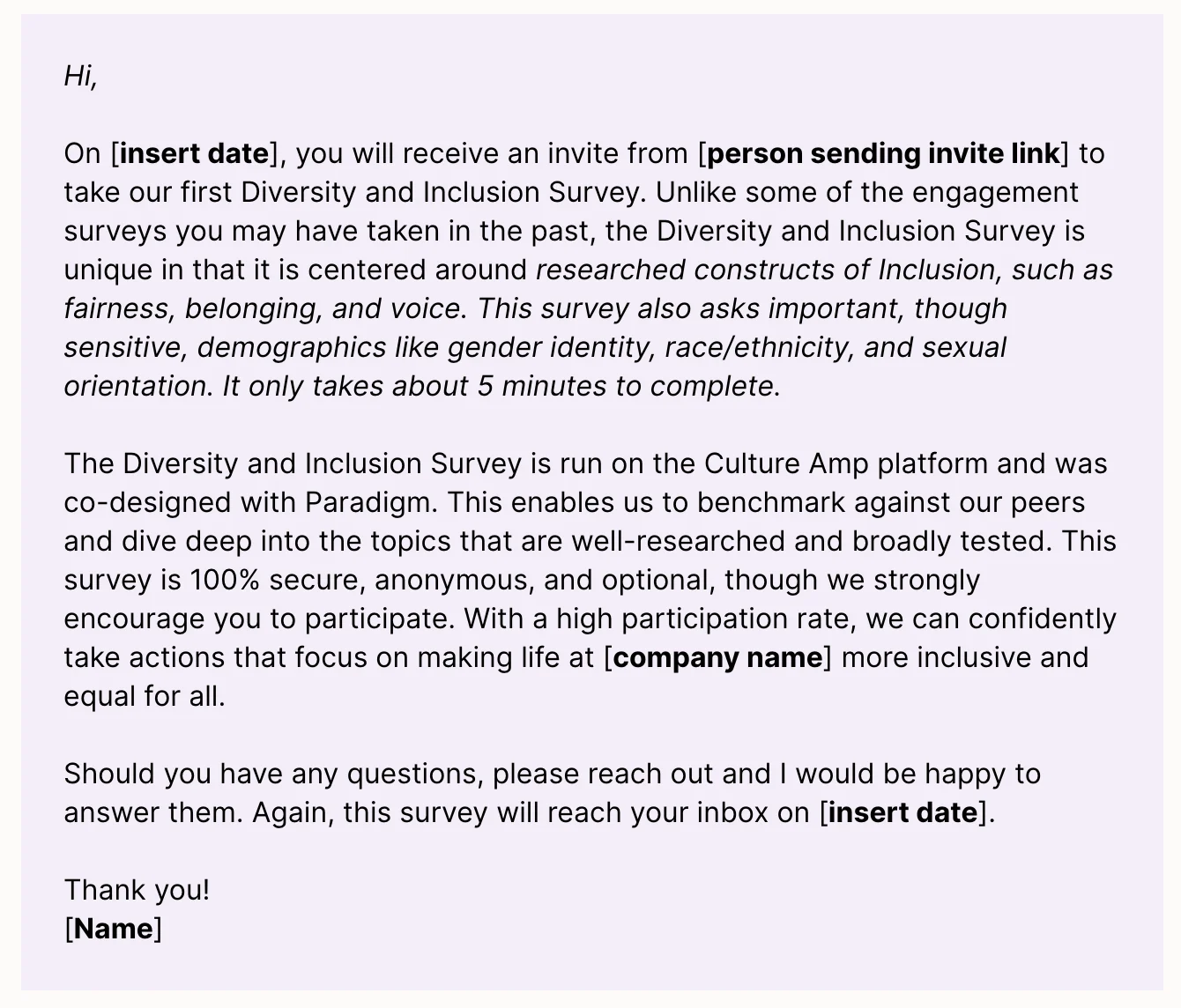
Most employee engagement platforms can help you understand the effectiveness of your engagement efforts and provide a platform for employees to voice their concerns. Culture Amp, for example, offers a pre-built, science-backed diversity and inclusion survey that can prompt detailed insights into the state of DEI in the workplace.
Jumpstart your company’s DEI strategy
Securing commitment to DEI at the executive level is one of the most important steps to starting your company’s DEI strategy. But getting leaders’ buy-in can be an uphill battle.
“HR, traditionally, has been about organizational stability and order,” explains Stovall. “DEI is the opposite. In an inequitable world, equity itself is disruption.” In other words, DEI initiatives may conflict with your leadership team’s goal of reducing organizational risk through HR practices.
However, you can gain executive support by understanding their business goals, explaining DEI’s workplace benefits, and soliciting feedback. With leadership resources, you can then focus on creating DEI initiatives that are not just aspirational but contribute to inclusive and long-term behavior changes within the company.
Global companies should also adapt DEI to local contexts. What counts as inclusive in the U.S. may differ in Europe, Asia, or Latin America due to cultural and legal frameworks.
To learn more about starting DEI programs in your company, check out some of our DEI recruitment and training resources below.
- The Complete Guide to Diversity Hiring
- Strategies for Cultivating a Diverse Talent Pool
- How to Select a Diverse Interview Panel and Improve Your Recruitment Strategy
- How to Create a Training Program for Effective Employees
- What Is DEI Training & How To Implement It
- Cultivating Cultural Competence in the Workplace
- Allyship Training for Organizations
- What is VR Training?
- DEI Metrics: The Key to Building an Effective DEI Program
- Employee Resource Groups: Definition & Implementation