


What is AI software? Types, uses, benefits, and risks
Artificial intelligence software uses computational models to perform tasks that typically require aspects of human intelligence, such as interpreting language, recognizing images, finding patterns, generating content, making predictions, and selecting actions.
Unlike conventional software, which generally follows explicitly programmed rules, many AI systems learn statistical relationships from data. That allows the software to respond to inputs it was not individually programmed to handle, although its outputs remain constrained by its training, design, available data, permissions, and safeguards.
AI now appears in everything from standalone chatbots to features embedded in business applications. TechRepublic’s broader artificial intelligence coverage tracks how these systems are changing enterprise software, security, infrastructure, and work.
The term “AI software” therefore describes a broad category rather than one product type. It can include a fraud-detection model operating behind the scenes, a generative AI assistant drafting an email, a computer vision system inspecting factory equipment, or an AI agent completing a multistep workflow.
Find your new AI software
How AI software works
Most modern AI software is based on machine learning, a subset of AI in which algorithms identify patterns in training data and use those patterns to classify information, predict outcomes, or generate new outputs.
Traditional machine learning systems are often trained for a defined purpose, such as forecasting demand or identifying suspicious transactions. Deep learning uses multilayered neural networks to process more complex data, including images, speech, and natural language.
Generative AI systems learn patterns across large datasets and produce new text, software code, images, audio, or video in response to user instructions. Large language models, or LLMs, are generative models designed to process and generate language.
Some enterprise applications connect these models to company documents, databases, business applications, and tools. Techniques such as retrieval-augmented generation can provide a model with relevant organizational information when it responds, reducing its reliance on training data alone.
AI agents extend this model-based approach further. Instead of only answering a question, an agent can interpret a goal, plan steps, call approved tools, retrieve information, and take actions such as updating a record or preparing a report.
Learn more about how these more autonomous agents introduce new integration, security, and governance requirements.
Major types of AI software
AI software can be grouped according to the capability it provides. These categories frequently overlap, and a single product may combine generative AI, computer vision, speech recognition, predictive analytics, and agentic features.
The products mentioned below are representative examples rather than endorsements or complete lists.
Predictive and analytical AI
Predictive AI examines historical and current data to estimate what may happen next. Common applications include sales forecasting, equipment maintenance, fraud detection, credit-risk assessment, customer churn prediction, and cybersecurity monitoring.
Unlike generative AI, these systems usually return a prediction, classification, probability, anomaly alert, or recommendation rather than producing long-form content.
Predictive capabilities are commonly embedded in broader business platforms. Salesforce Einstein, for example, applies AI to customer relationship management data to support functions such as lead scoring, forecasting, recommendations, and customer-service workflows. IBM watsonx includes tools for building and governing predictive and generative AI models.
Generative AI
Generative AI creates new material based on patterns learned during training. It can draft and summarize text, generate software code, produce images or audio, translate languages, analyze uploaded files, and answer questions conversationally.
ChatGPT from OpenAI and Claude from Anthropic are two widely recognized examples. Both can assist with tasks involving writing, summarization, analysis, coding, and document review. Google’s Gemini is another general-purpose generative AI assistant that can work with multiple forms of information, including text and images.
Other generative tools are designed for more specialized work. Adobe Firefly focuses on image and design generation, while GitHub Copilot and dedicated coding products such as Claude Code assist with software development.
Generative output can appear authoritative without being accurate. Users should verify facts, citations, calculations, and code before relying on the results in consequential settings.
Conversational AI and copilots
Conversational AI lets users interact with software through written or spoken language. It includes customer-service chatbots, virtual assistants, enterprise search tools, and copilots embedded in productivity or business applications.
ChatGPT, Claude, and Gemini can all function as conversational assistants. Enterprise copilots are generally more closely integrated with a specific workplace platform. Microsoft Copilot, for example, brings AI assistance into products such as Word, Excel, Outlook, Teams, and Windows, depending on the version and subscription.
A copilot typically assists a person who remains responsible for reviewing or approving the work. It might summarize a meeting, draft a response, explain a spreadsheet, retrieve company information, or recommend a next step without independently completing the entire process.
The dividing line between copilots and agents is becoming less distinct as assistants gain access to tools, files, applications, and longer-running workflows.
Agentic AI
Agentic AI systems can pursue defined goals and perform sequences of actions with varying degrees of autonomy. An agent might review an incoming request, search a knowledge base, update a customer record, draft a response, and escalate the case when necessary.
Examples include Microsoft Copilot Studio, Salesforce Agentforce, Google’s enterprise agent-building tools, and agent capabilities available through platforms from OpenAI and Anthropic. Some products provide ready-made agents, while others allow organizations to create agents connected to their own data and applications.
OpenAI also distinguishes between conversational assistance, longer multistep work, and its Codex software-development agent. Anthropic’s Claude Code can inspect a codebase, modify multiple files, run tests, and complete development tasks through an agentic workflow.
Because agents can access data and operate other software, they create risks beyond those associated with a standalone chatbot. Organizations need to limit permissions, authenticate agents, record their actions, and retain human approval for sensitive or irreversible tasks.
Computer vision and multimodal AI
Computer vision software analyzes images and video. It is used for quality inspection, medical imaging support, document processing, object recognition, inventory monitoring, and physical security.
Products such as Amazon Rekognition, Google Cloud Vision AI, and Azure AI Vision provide computer vision capabilities that developers can incorporate into applications.
Vision is also increasingly combined with language and audio processing in multimodal systems. ChatGPT can analyze uploaded images and files, while Claude can interpret images and visual elements in supported PDFs. These systems allow a user to ask questions about a chart, photograph, screenshot, diagram, or document using natural language.
Multimodal models can make AI software easier to use, but their interpretations can still be incomplete or incorrect. Organizations should not assume that a model has accurately identified every element in an image or document.
Speech and audio AI
Speech AI converts spoken language into text, generates synthetic speech, identifies speakers, translates conversations, and analyzes audio.
Common examples include Amazon Transcribe, Google Cloud Speech-to-Text, Microsoft Azure Speech, and transcription services such as Otter.ai. ElevenLabs is an example of a product focused on generating synthetic voices and spoken audio.
General-purpose assistants increasingly include speech features as well. ChatGPT supports voice interaction, allowing users to speak with the assistant rather than relying only on typed prompts.
Businesses use speech AI for meeting transcription, call-center support, accessibility, voice interfaces, media production, and the analysis of customer conversations. Synthetic audio also creates impersonation and fraud risks, particularly when listeners cannot easily determine whether a recording is authentic.
Decision and optimization systems
Decision systems evaluate data, business rules, constraints, and predicted outcomes to recommend or automate an action. Examples include delivery routing, workforce scheduling, dynamic pricing, supply-chain planning, underwriting, and resource allocation.
These capabilities are often built into specialized business applications rather than sold as standalone AI assistants. Tools from companies such as SAP, Oracle, IBM, and ServiceNow use AI within enterprise resource planning, supply-chain, IT service management, and workflow products.
The appropriate level of automation depends on the consequences of a mistake. A recommendation about meeting times presents less risk than a system making employment, lending, healthcare, or security decisions.
AI software development tools
Although coding is one application of generative AI, development tools now form a substantial software category of their own.
GitHub Copilot can suggest and generate code within development environments. OpenAI’s Codex and Anthropic’s Claude Code can take on broader tasks such as examining repositories, changing multiple files, running commands, debugging failures, and testing proposed changes. Claude Code, for example, is positioned as an agentic coding system rather than only an autocomplete tool.
These products can accelerate routine work, but generated code still requires review. AI development tools may introduce security vulnerabilities, incorrect logic, unnecessary dependencies, or changes that do not match the project’s requirements.
How different industries use AI software
AI software is most effective when applied to a specific process with accessible data, measurable outcomes, and clear accountability. Common business uses include:
- Summarizing, classifying, translating, and searching documents.
- Assisting employees with writing, research, analysis, and software development.
- Forecasting demand, revenue, staffing, inventory, and maintenance needs.
- Detecting fraud, anomalous behavior, cyberthreats, and manufacturing defects.
- Personalizing products, content, marketing messages, and customer support.
- Extracting information from invoices, contracts, forms, images, and recordings.
- Automating selected steps in IT, finance, human resources, sales, and service workflows.
AI can accelerate software development by generating, reviewing, explaining, testing, and debugging code. Developers must still validate the output because generated code can contain defects, insecure dependencies, licensing issues, or behavior that does not match the intended requirements.
AI software serves different purposes depending on an organization’s data, workflows, regulatory requirements, and tolerance for risk. Some industries primarily use AI to analyze information and predict outcomes. Others are adopting generative AI assistants, computer vision, and agents that can complete selected business processes.
Financial services
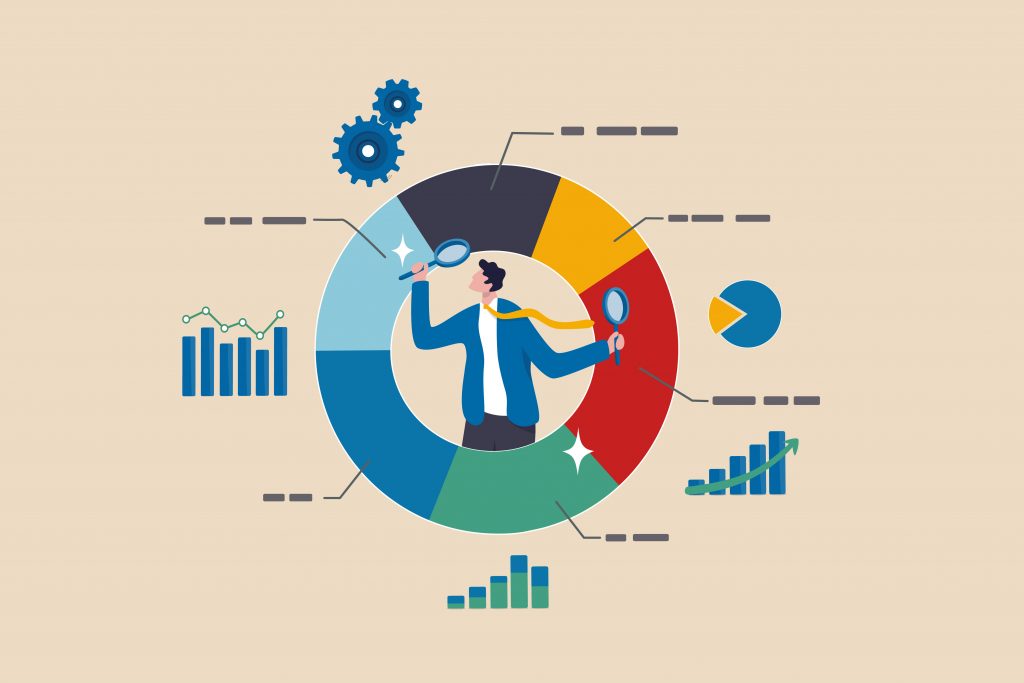
Banks, insurers, payment providers, and investment firms use AI to detect fraud, assess risk, review documents, assist customer-service teams, and monitor transactions for suspicious activity.
Predictive models can identify unusual spending patterns, estimate credit or insurance risk, and help financial institutions prioritize cases for human investigation. Generative AI can summarize research, draft customer communications, extract information from applications, and help employees search policies and regulatory documents.
Financial decisions require careful oversight. An AI model can produce discriminatory or otherwise unlawful outcomes when it relies on biased data or poorly selected variables. Organizations remain responsible for explaining adverse lending decisions and complying with consumer-protection, privacy, and anti-discrimination requirements, regardless of whether AI participated in the decision.




Healthcare and life sciences
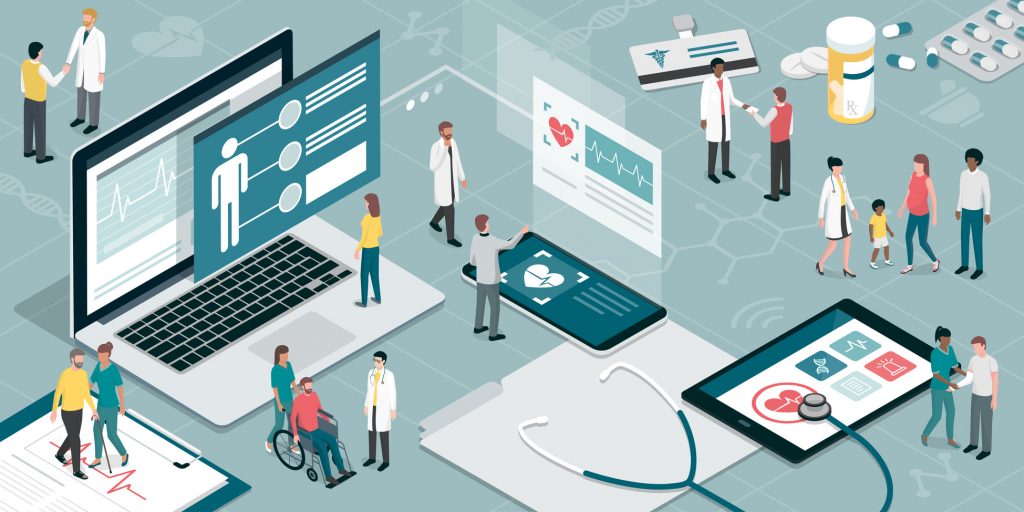
Healthcare organizations use AI for medical imaging, clinical decision support, patient-risk assessment, drug development, documentation, scheduling, billing, and administrative communication.
Computer vision systems can help clinicians analyze scans, while predictive models can identify patients who may require additional monitoring. Generative AI tools can summarize clinical notes, prepare draft documentation, and make medical information easier for authorized employees to retrieve.
The U.S. Food and Drug Administration maintains a list of AI-enabled medical devices authorized for marketing. Current applications include image processing, disease detection, diagnosis, prognosis, risk assessment, and treatment-response prediction. AI used in patient care must be evaluated for safety, clinical validity, bias, and performance changes after deployment.
Read more




Manufacturing
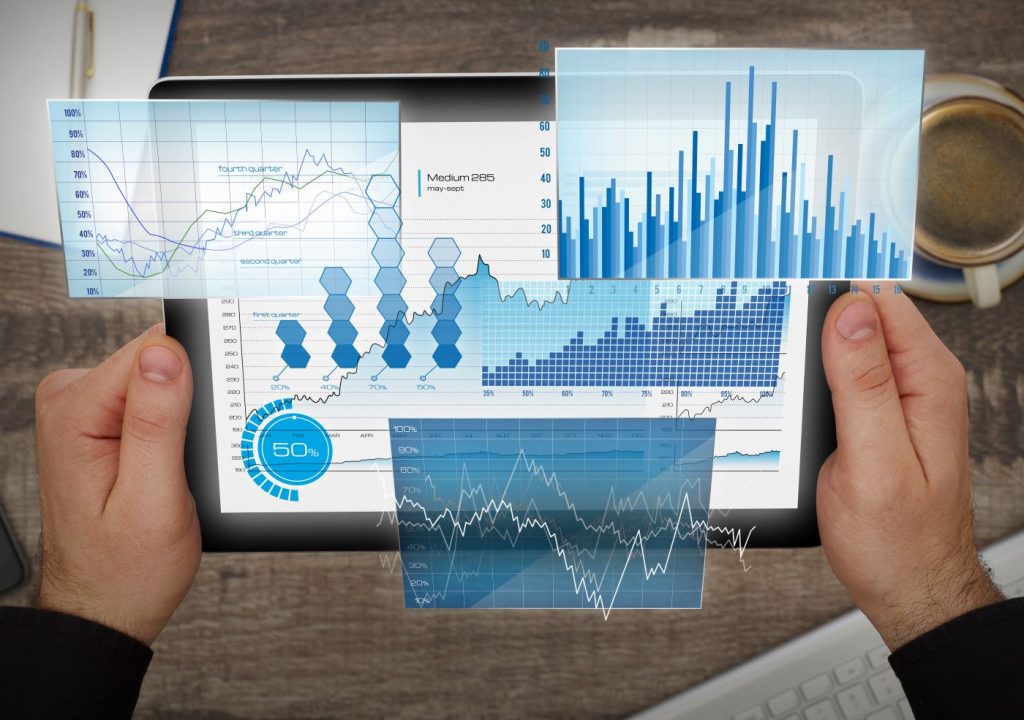
Manufacturers use AI to inspect products, predict equipment failures, optimize production schedules, manage inventory, improve supply chains, and support industrial robots.
Computer vision can identify defects that may be difficult or time-consuming for workers to detect manually. Predictive-maintenance software analyzes sensor and equipment data to estimate when machinery may require servicing. Generative AI can assist with equipment instructions, product design, maintenance documentation, and troubleshooting.
Digital twins and AI models can also simulate factories, production lines, and supply networks before an organization makes physical changes. NIST’s 2026 smart-manufacturing roadmap identified industrial analytics, sensing, autonomous systems, digital twins, robotics, supply-chain optimization, and sustainable manufacturing as important AI application areas.


Retail and e-commerce
Retailers use AI to forecast demand, manage inventory, recommend products, optimize prices, identify fraud, and provide customer support.
Recommendation engines analyze purchases and browsing behavior to rank products a customer may find relevant. Forecasting systems help retailers determine how much stock to order and where to place it. Computer vision can support self-checkout systems, shelf monitoring, and warehouse operations.
Generative AI is increasingly used to create product descriptions, summarize reviews, power shopping assistants, and help service agents respond to customers. Retailers must ensure that generated product information is accurate and that personalization practices comply with privacy requirements.






Marketing, sales, and customer service
Marketing teams use AI to segment audiences, analyze campaign performance, personalize messages, and generate first drafts of text, images, audio, and video.
Sales software can summarize calls, update customer records, identify promising leads, and recommend follow-up actions. Customer-service applications classify requests, retrieve relevant knowledge, draft responses, and route complex cases to human agents.
AI agents may be able to complete multistep tasks such as reviewing a request, checking an account, updating a record, and preparing a response. These systems require stricter controls than basic chatbots because they can access customer data and take actions in connected applications.
Read more





Information technology and cybersecurity
IT departments use AI to monitor systems, analyze logs, troubleshoot incidents, automate support requests, and manage infrastructure.
AI operations tools can correlate alerts from multiple systems, identify unusual activity, and suggest possible causes of an outage. Service-desk assistants can answer common questions, summarize tickets, and guide employees through routine fixes.
Cybersecurity teams use machine learning to detect suspicious network, identity, email, and endpoint activity. Generative AI can help analysts summarize alerts, explain malicious code, and prepare incident reports. However, attackers can also use AI for phishing, impersonation, vulnerability research, and malware development, making security controls and human verification increasingly important.


Software development
Developers use AI assistants to generate code, explain unfamiliar software, create tests, find potential defects, document applications, and translate code between programming languages.
These tools can reduce the time required for routine development work, but their output may contain insecure code, incorrect logic, outdated dependencies, or licensing concerns. Developers should treat generated code as a draft that requires review, testing, and security scanning.
More advanced development agents can modify multiple files, run tests, and propose changes across a software repository. Organizations should restrict their permissions and require human approval before generated changes reach production systems.
Professional services
Legal, accounting, consulting, and research organizations use AI to search large collections of documents, extract clauses or figures, summarize evidence, draft routine material, and identify patterns across cases or engagements.
AI can reduce the time professionals spend locating and organizing information, but it cannot independently assume professional responsibility. Lawyers, accountants, analysts, and consultants must verify citations, calculations, interpretations, and recommendations before presenting them to clients.
Confidentiality is another major concern. Organizations should understand whether prompts and uploaded documents are retained, used for model training, or accessible to third parties before employees enter sensitive client information.
Transportation and logistics
Transportation companies use AI for route planning, shipment forecasting, fleet maintenance, warehouse automation, and estimated delivery times.
Predictive systems can account for traffic, weather, demand, vehicle capacity, and historical delivery performance. Computer vision can inspect vehicles, monitor packages, and help automated equipment navigate warehouses.
Autonomous vehicles and delivery systems represent a more advanced application, but their deployment depends on safety testing, regulation, operating conditions, and the ability to respond reliably to unexpected situations.
Government and the public sector
Government agencies use AI to process documents, deliver public services, detect fraud, analyze infrastructure, respond to emergencies, and make public records easier to search.
Generative AI assistants can help employees summarize policies or draft routine communications. Predictive models may help agencies allocate resources or identify cases that require review.
Public-sector uses require transparency and accountability, particularly when AI affects access to benefits, employment, law enforcement, immigration, or other consequential decisions. Agencies must also consider records-retention rules, procurement requirements, cybersecurity, accessibility, and the public’s ability to challenge automated decisions.
Across industries, the most appropriate AI applications are generally those with a clearly defined purpose, reliable data, measurable results, and an established process for human review. The greater the potential effect on a person’s health, finances, employment, safety, or legal rights, the stronger the organization’s testing, documentation, and oversight should be.
What AI software cannot reliably do
Current AI is narrow rather than generally intelligent. A system may perform well within a particular task while failing when the context, data, or instructions change.
AI software cannot be assumed to:
- Produce factual or complete answers every time.
- Understand an organization’s intent unless it receives sufficient context.
- Distinguish causation from correlation without an appropriate research design.
- Apply human judgment, ethics, or accountability independently.
- Remain accurate when data or operating conditions change.
- Recognize every harmful, biased, or insecure output.
- Safely perform unrestricted actions across business systems.
Generative models can “hallucinate,” or produce incorrect information that appears plausible. Predictive models can reproduce bias in their training data, while agentic systems can misunderstand instructions or be manipulated into using connected tools improperly.
Benefits of AI software
When used appropriately, AI can process information at a scale and speed that would be difficult to achieve manually. It can reduce repetitive work, make organizational knowledge easier to find, improve forecasting, and help employees identify patterns across large datasets.
AI can also make existing software easier to use by allowing employees to ask questions in natural language instead of learning complex menus or query languages.
Those benefits are not automatic. The value of an AI system depends on the quality of its data, its integration with real workflows, the reliability of its output, employee adoption, and whether the use case saves enough time or improves results enough to justify its cost.
Risks and governance considerations
Organizations evaluating AI software should examine more than model performance. They should also consider data privacy, cybersecurity, intellectual property, regulatory obligations, explainability, bias, reliability, and the consequences of an incorrect output.
The National Institute of Standards and Technology’s AI Risk Management Framework organizes AI governance around four functions: govern, map, measure, and manage. NIST also publishes a separate generative AI profile addressing risks specific to generative systems.
Important controls include limiting what information the system can access, testing it against realistic scenarios, monitoring its behavior after deployment, documenting how it is used, and establishing when a human must review or approve an output.
Data governance is especially important because inaccurate, poorly classified, or unauthorized data can undermine both predictive and generative systems.
How to choose AI software
Businesses should begin with the problem they need to solve rather than with a general directive to “adopt AI.” Evaluation questions should include:
- What specific task or decision will the software support?
- What data does it require, and where will that data be processed?
- Does the product generate recommendations, or can it take actions?
- How will the organization test accuracy and business value?
- Can administrators control access, permissions, retention, and integrations?
- How are outputs, prompts, and agent actions logged?
- What happens when the system is uncertain or wrong?
- Can employees override, correct, or escalate its decisions?
- How is usage priced, and could costs rise as adoption increases?
The best AI product is not necessarily the one using the largest or most advanced model. A smaller, specialized system may be faster, less expensive, easier to govern, and more reliable for a narrowly defined task.
AI software has expanded well beyond predictive analytics and basic chatbots. It now includes generative models, multimodal applications, copilots, and agents that can interact with enterprise systems. That broader capability increases its potential value and makes careful selection, testing, security, and oversight more important.
