

Key takeaways
- Inclusive holiday parties are end-of-the-year workplace celebrations that are respectful and attempt to accommodate employees’ various cultural, ethnic, religious, or personal beliefs.
- Build an inclusive holiday party by planning with cultural awareness and involving a diverse group of employees who can flag religious, dietary, or accessibility considerations early.
- Use engagement and surveying tools to crowdsource ideas, collect dietary and accessibility needs, and gather post-event feedback to continuously improve future celebrations.
Update notes
- Nov. 17, 2025: Hanna Sillo updated this article to improve page elements and overall structure, add additional DEI considerations, and incorporate fresh statistics along with a new FAQ section.
9 ways to make your holiday party more inclusive
Inclusive holiday parties give all employees, regardless of religious, moral, cultural, or personal beliefs, the opportunity to participate in a fun, end-of-year company bash.
Besides that, inclusive holiday parties can strengthen your company’s culture and values by illustrating your dedication to workplace cultural competency and diversity, equity, and inclusion (DEI).
And this matters now more than ever. As today’s workforce becomes more diverse, employee expectations and attitudes toward holiday parties are evolving too.
A 2024 Harris Poll survey found that although most employees (74%) enjoy holiday parties, Gen Z shows significantly lower enthusiasm, with only 37% say they’re very likely to attend. Most of them also gravitate toward more interactive or hybrid-style celebrations.
Taking all these into account, here are the top tips and tricks for holiday-inclusive workplace parties:
1. Create a diverse planning committee
A diverse planning committee of individuals from differing beliefs, cultures, and identities can provide valuable perspectives during party brainstorming and logistics discussions. If you already have DEI committees or employee resource groups (ERGs), use them to source willing party-planning participants.
With a diverse group of party planners, you can avoid any major cultural, ethnic, or religious faux pas and gain insight into the small ways your year-end party can include everyone. This includes considering other religious events, neutral holiday messages, serving a restriction-friendly menu, and choosing inclusive holiday decorations.
Consider other religious events
Your diverse planning committee can identify the holidays traditionally celebrated at the end of the year in other cultures and faiths and advise on ways to include them in your company event. Besides the Western tradition of Christmas, consider other holiday celebrations like:
- Hanukkah
- Kwanzaa
- Diwali
- Bodhi Day
- Yule/Winter Solstice
- Lunar New Year
Additionally, moving the party closer to New Year’s Eve or January can shift the emphasis away from specific religious events toward celebrating company year-end achievements. It also ensures the company party is separate from these holidays so employees may take time off through your floating holiday policy.
Your diverse planning committee may also work with your human resources (HR) or learning and development (L&D) departments to construct DEI training and other awareness activities about these events during the holiday season.
Use neutral holiday messaging
Your committee can advocate for neutral event names like “holiday party” or “end-of-year celebration” instead of specifying one holiday. They can also help with the language you use during the season to use more inclusive sentiments, such as “Season’s Greetings” instead of “Merry Christmas.”
Examples of inclusive holiday messages
For L&D purposes, you may want to provide training opportunities about the greetings and messages staff can use for different winter holidays. But outside of these circumstances, be sure to monitor to keep your workplace holiday messaging neutral, and don’t assume anyone’s cultural, ethnic, or religious background.
Here are some examples of neutral diversity and inclusion holiday messages:
- Season’s greetings
- Happy holidays
- Wishing you a happy holiday season and a wonderful New Year
- Thanks for all of your hard work this year
- All the best to you and yours this holiday season
Serve a restriction-friendly menu
When deciding what food to serve at the holiday party, be mindful of employees’ dietary restrictions.
For example, individuals of different nationalities may avoid eating foods like pork or beef, while practitioners of the Islamic and Jewish faiths may only eat halal or kosher foods, respectively. Others may only eat vegetarian, vegan, or pescatarian dishes because of their beliefs or preferences. Still others may have allergies to certain foods, such as peanuts or gluten.
The party committee can survey staff to understand these restrictions and develop a menu with a range of options for all attendees to enjoy.
Choose inclusive holiday decorations
The planning committee can help decorate the party with secular, seasonal, or company-themed decorations instead of religious iconography like nativity scenes, crosses, or menorahs. Decorations with religious subtext risk making individuals of other faiths uncomfortable and limit the capacity for inclusivity.
Avoid putting financial pressure
Avoid activities or expectations that could create financial pressure, such as gift exchanges, themed attire, or paid add-ons. Keeping the event cost-free and low-pressure ensures all employees can participate comfortably regardless of financial situation.
Pro tip for small companies:
If your company is too small for a DEI committee or ERGs, don’t fret — you can still create a diverse party planning committee. But, in this instance, use your employee base as your sounding board.
mployee surveying platforms, like SurveySparrow, can be a great way to source and evaluate party ideas before implementing. Making them anonymous also allows all employees, even those afraid to challenge the status quo, to offer suggestions and voice concerns without fear of retaliation.
Even if most of your employees come from similar cultural or socio-economic backgrounds, you may learn about how different your traditions are from one another. Use the results of your survey as the basis for your party and recruit members in your organization willing to help in event planning.
Interested in employee surveying? Check out an overview of SurveySparrow below:
2. Make the party optional
Making the holiday party optional helps ensure employees don’t feel pressured to attend an event that may conflict with their personal beliefs, comfort levels, or schedules. It also cuts into their personal time and raises labor law compliance issues.
For example, certain religions, like Jehovah’s Witnesses, do not allow participation in parties. Forcing such employees to attend a company holiday party could be the basis of a religious discrimination case under Title VII of the Civil Rights Act.
Plus, mandating an employee to attend a party could be construed as “work” under the Fair Labor Standards Act (FLSA). In these scenarios, you must pay employees for their time at the party. And if this means non-exempt employees are working overtime, they should be compensated accordingly.
3. Provide rides and hotel accommodations
Outside of regular working hours, not all employees may have access to transportation to and from an offsite venue. Provide employees with an equal opportunity to participate by organizing or reimbursing shuttle, ride-sharing, or taxi services to and from the party venue.
Plus, if you serve alcohol at the event, company-sponsored transportation and hotel accommodations can lower your liability in the event an employee injures themselves at some point during or after the event.
4. Develop a holiday party agenda
Create a holiday party agenda that includes the following:
- Time and date of the party
- Venue name and location
- List of activities with time frames
By outlining these events, you allow employees to choose their level of participation beforehand. You should also consider making the holiday party a daytime or a two-event affair so employees have even more flexibility.
For example, a celebration during the workday that’s centered around employee achievements may be a better option for employees who do not want to dance or drink. A second event that includes alcohol could be scheduled later for those who are also interested in a more informal, social affair.
5. Offer ways to participate virtually
If you have remote teams, throwing a party at your headquarters could exclude much of the workforce. Moreover, some in-person employees may feel more comfortable participating in company festivities if they can attend a remote ceremony during their off-hours instead.
Host a remote event concurrently with in-person celebrations and provide remote employees with food or drink vouchers so they may participate. Examples of remote-friendly activities include the following:
- Scavenger hunts
- Award shows
- Group video games
- Virtual classes
- Sporting events
- Concerts
How do I host a virtual event?
A virtual event may require more technical know-how, but you can leverage some of the tools you use daily to help. Video conferencing platforms, like Zoom, Microsoft Teams, or Google Meet, are a must since they allow for screen sharing and multiple participants to join the same call.
Meanwhile, employee recognition and rewards platforms can make virtual events more fun through appreciation and prizes. For example, Empuls lets you gift points to employees, which they can collect and redeem for gift cards or Amazon products. You can use this functionality to get employees excited and ready to participate in company events, even virtual ones.
Learn more about Empuls in the video below:
6. Focus on team bonding activities
Focus on games that create opportunities for team bonding through collaboration and problem-solving. Examples include:
- Escape rooms
- Scavenger hunts
- Board games
- Trivia
During development, the planning committee can also survey the company to make sure the proposed activities will respect and include everyone.
With that in mind, remember to avoid games or other inappropriate activities that risk making attendees uncomfortable. For example, holding “Olympic” games may exclude employees with physical disabilities and could lead to a disability discrimination claim.
Similarly, adult games involving undressing, touching, or revealing personal information are likely to lead to claims of sexual harassment, even if unintentional. Such activities could also create distress among employees and damage your company’s culture and brand image.
7. Consider skipping the alcohol
Not everyone wants alcohol at workplace events. In fact, research from the Institute for Public Policy Research shows that nearly a quarter of employees (24%) feel pressured to drink when alcohol is present — and that number climbs to 38% among younger workers.
With the rise of substance abuse following the COVID-19 pandemic, employers should make their holiday parties about more than alcohol consumption. Parties focused on drinking disproportionately affect employees trying to recover from a substance abuse disorder, those wanting to cut back on their drinking, or those who are pregnant.
If you decide to serve alcohol at your party, take the following precautions:
- Hire professional bartenders who know how to spot and work with individuals who have had too much to drink.
- Allow employees to bring a guest to reduce the likelihood of inappropriate behavior.
- Advertise mocktails just as much as regular cocktails on the menu.
- Plan activities that steer the focus away from drinking alcohol.
8. Set up a code of conduct and party monitors
Preparing and sending out an employee code of conduct can remind employees that company policies, including workplace violence and harassment, will still be enforced during the company holiday party.
Along with the code of conduct, be sure to acknowledge the positive behaviors you want to encourage during the party, such as:
- Maintaining an appropriate physical distance from others.
- Asking others for consent before touching or hugging.
- Drinking responsibly.
- Engaging in polite conversations that avoid inappropriate comments on appearance.
As a final safety measure, consider asking trusted employees — either from the HR department or leadership team — to act as monitors during the event. These volunteers can prevent unruly behavior by intervening in situations or redirecting behavior as necessary. Monitors can enforce company policies and take appropriate disciplinary action should things get out of hand.
9. Collect post-party feedback
Not every holiday party will be perfect, even with all the best intentions and planning. By gathering feedback from employees after the fact, you can see what worked and what didn’t and strive to be better in the future.
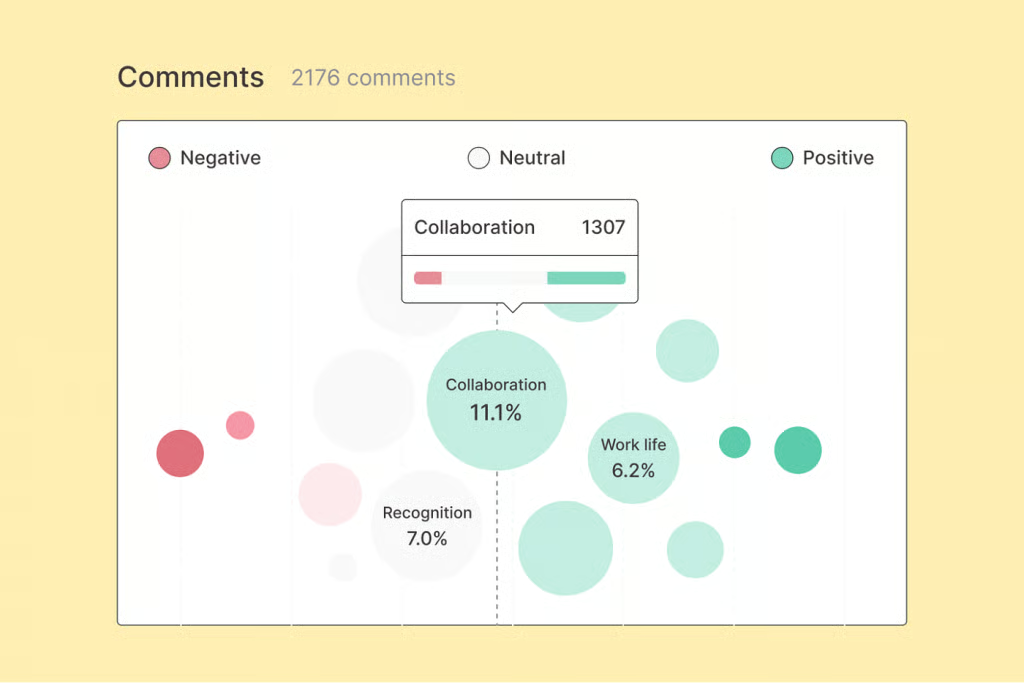
Most employee engagement solutions offer post-event feedback survey templates, plus tools to analyze the results. Culture Amp, for example, helps you identify employee sentiment in different key areas. With this information, you can identify and track various DEI metrics and goals to drive future change.
How do inclusive holiday parties benefit company culture?
Holiday parties are a great way to show appreciation for your employees’ hard work during the year. Designing an inclusive holiday party shows appreciation for employees of diverse backgrounds and increases company-wide participation in the event.
Inclusive holiday parties also give employees a chance to acknowledge the various beliefs, traditions, cultures, and religions of their peers and promote allyship. In turn, you demonstrate your commitment to a company culture built on respect and open-mindedness, improving employee morale and reducing turnover.
FAQs on inclusive holiday parties
Why should attendance be optional?
Optional attendance helps avoid religious, cultural, and personal conflicts and prevents parties from being considered work under the Fair Labor Standards Act (FLSA). It also respects employees’ schedules, comfort levels, family obligations, and personal boundaries.
How do we include remote or hybrid employees?
Provide a virtual or hybrid option with a livestream, shared activities, digital vouchers, and a moderator dedicated to remote participants. Activities like trivia, hybrid scavenger hunts, award ceremonies, and virtual photo booths work well for mixed teams.
What decorations are considered inclusive?
Stick to secular or seasonal décor like winter greenery, lights, snowflakes, or company branding. Avoid religious symbols (e.g., nativity scenes, menorahs, crosses) that might unintentionally exclude employees of other faiths.
How do we make sure the food is inclusive?
Send a quick survey to gather dietary restrictions and preferences, such as vegan, vegetarian, kosher, halal, gluten-free, or allergy-friendly needs. Offer clear labeling and multiple options so everyone feels safe and included.
Holiday parties take a lot of team effort and planning to create a memorable end-of-the-year experience. You can streamline and simplify this process by checking out the tools available in our Employee Engagement Software Guide.