Key takeaways
- You can streamline your onboarding processes by developing a preboarding program, crafting an orientation schedule, and providing consistent and thoughtful training to their new hires.
- A successful new hire onboarding program can lead to faster time to productivity rates, higher overall company satisfaction, and better employee retention.
Take a look at our Onboarding Software Guide for platforms to help streamline your employee onboarding processes.
What are the best practices for onboarding new employees?
Onboarding is an important time to introduce new hires to your company’s core values, history, culture, and employees. By developing a set of employee onboarding best practices for your company, you can excite, motivate, and retain talent so that they can contribute to the productivity and success of your business.
Whether you are onboarding onsite or remote employees, some onboarding best practices to reduce employee turnover include the following:
- Preboard them before day one
- Prepare their workspace
- Get the whole team excited
- Create an orientation schedule
- Develop and track their training
- Provide opportunities for feedback
Check out our list of the Best HR Software for Small Business to explore all-in-one HR software solutions to make your onboarding processes more efficient. Or, watch our video round-up below:
Step 1: Preboard them before day one
Preboarding is that in-between period after the employee accepts the job offer and before their first day of work. They’ve signed up, but they’re not quite your employees yet. You can leverage this time by:
- Completing the paperwork associated with onboarding
- Providing new hires with their first week’s schedule, organizational charts, handbook policies, and codes of conduct
- Acquainting them with team members, company culture, and expectations
Human resources (HR) software makes this process much easier with its preboarding elements that bridge the gap between the new hire’s interview stage and orientation. For example, BambooHR allows new hires to enter all of their information and e-sign necessary paperwork, such as employment contracts, W-4s, and I-9s, ahead of time. This way, you spend less time on administrative tasks during the new hire’s first day and more time training them for their new role.
Step 2: Prepare their workspace
HR staff or managers should remove old notes, paperwork, memorabilia, or equipment from the new hire’s workspace so that it is free of all remnants of the former employee. IT staff should also make sure the new employee has the equipment needed to be successful, such as:
- A desktop computer or laptop with all necessary software
- Monitors, cables, and adapters
- Company cellphones
If the new hire is not working at a desk, clear their workstation of all items aside from the materials they need to perform their role. Managers should also ensure the new hire has a safe place to store personal belongings, such as a locker or cubby.
Besides technology, HR staff and managers should ensure new employees have all the right auxiliary equipment, such as:
- Employee handbooks or manuals
- Safety gear and pamphlets
- Name badges
- Uniforms
- Business cards
- Headsets
Additionally, IT departments will need software to manage remote employee equipment from afar. Rippling, for example, offers device management software to help ship, maintain, and off-board remote employee devices.
Watch an in-depth review of Rippling in the video below:
Step 3: Get the whole team excited
HR staff and managers should work together to get current employees excited about the new hire’s arrival.
Managers should prepare direct teammates to be open and gracious toward the new hire as they acclimate to their new role. Meanwhile, HR staff should give the new hire a taste of company culture to ease their anxiety before their first day.
Get direct team members excited
- Assign a new hire buddy: Enlist a peer as the new hire’s go-to for questions to promote your company core values and team spirit.
- Notify stakeholders of the new hire’s schedule: Provide team members with the new hire’s schedule to let everyone know what the new member’s first few weeks will look like.
- Schedule team icebreaker activities: Give new hires and team members opportunities to bond over fun activities can help foster important working relationships.
Get the new hire excited
- Send a countdown or preboarding reminder emails before their first day.
- Have the onboarding buddy introduce themselves via email and offer to answer any questions.
- Ship a welcome package with company-themed trinkets and gifts. (HR teams should check if the new hire has any allergies or restrictions before sending food-related items.)
Step 4: Create an orientation schedule
Avoid dropping your new hires into the deep end on their first day and expect them to swim. Instead, the HR department and the new hire’s manager should work closely to develop an orientation schedule for the new hire’s first day to a few weeks.
The orientation schedule should focus on introducing the new hire to the main aspects of their position and your company. For example, employee orientation schedules could include the following:
- Introductions to team members and executives
- A tour of the company facility and workspace
- Explanation of hot desking procedures, if applicable
- Time to explain company procedures, values, history, and employee handbooks
- Lunch with their supervisor and teammates
- Training and self-guided learning opportunities
- One-on-one supervisor meetings
Some companies may include unique orientation experiences in their schedule. For example, some businesses hold group orientation sessions, including activities and training with several new hires.
Others may have office employees do ride-alongs with service technicians, shadow line workers, or watch sales associates sell the company product so new hires understand the business from end to end.
Whatever the case, orientation schedules are essential to easing new hires into their new positions while providing a cushion to make mistakes and ask questions as they learn.
Step 5: Develop and track their training
Extensive and personable training is essential to the new hire’s onboarding. Great training can help your new hires feel confident and productive in their roles quickly, resulting in a higher chance of employee retention. On the other hand, inadequate training can cause them to feel stressed and frustrated in their position, produce poor work, or start looking elsewhere for a job.
Depending on the role, training could involve several things, including:
- Software programs
- Safety
- Workplace violence and harassment prevention
- Company culture
- Diversity, equity, and inclusion (DEI)
- Phone etiquette
You should expect a ramp-up period for new hires as they slowly handle more responsibilities over the first few months to a year.
HR teams and managers should work with their new hires to develop KPIs or SMART goals to measure the new hire’s success in acclimating to the role. You can leverage learning management systems (LMSs) and performance management software to create and track training.
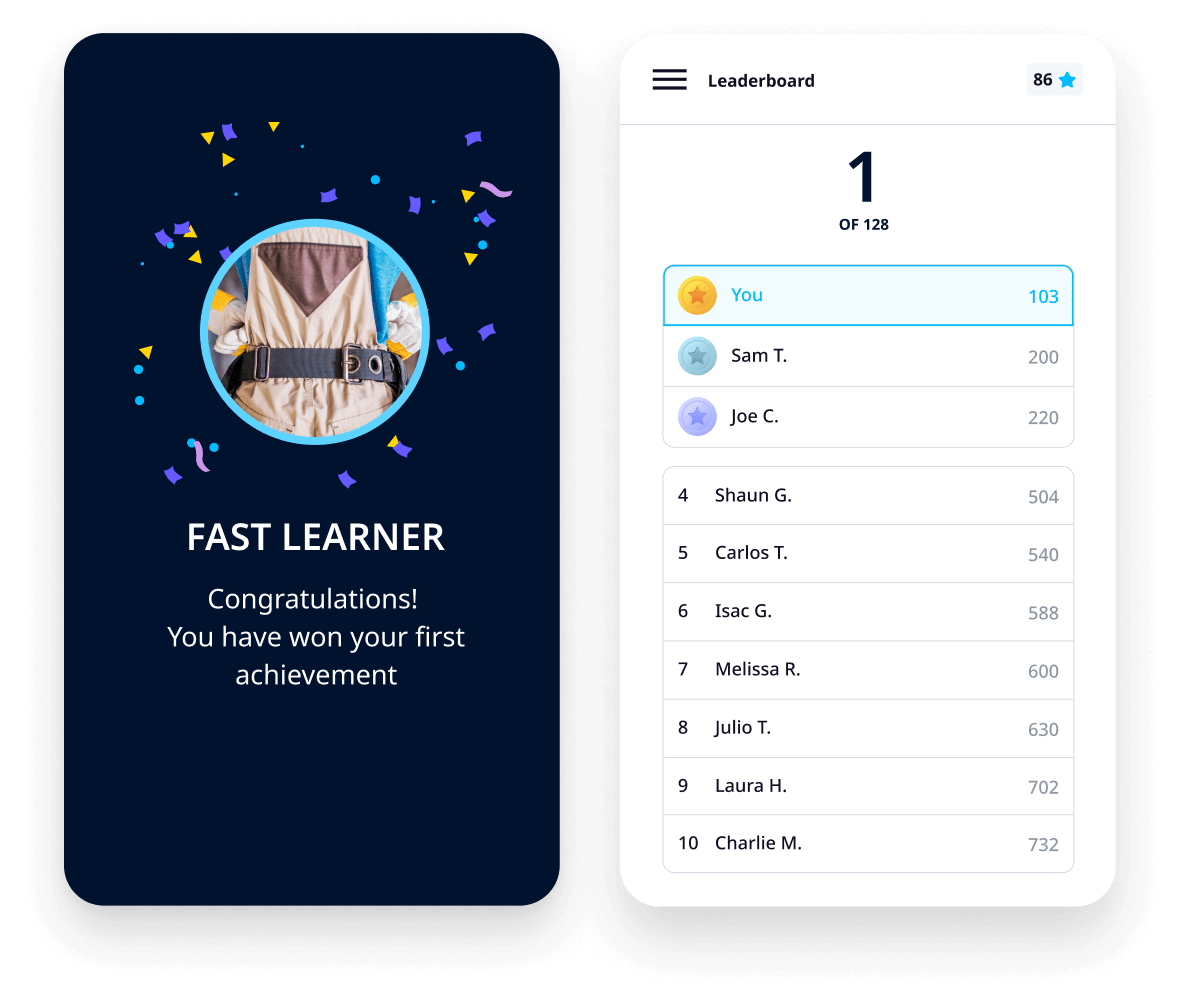
Some solutions even include gamified elements to make learning feel less like a chore. EdApp, for instance, allows employees to learn on their mobile devices and unlock lesson-specific achievements.
Step 6: Provide opportunities for feedback
You can learn how to develop and improve onboarding programs by following up with new hires after the onboarding period has ended. Allowing new hires to provide feedback on their onboarding experience gives you critical information on what worked and what didn’t.
For instance, anonymous new hire feedback could pinpoint unhelpful lessons or reveal knowledge gaps that could benefit from additional training. You can then use this feedback to create more effective onboarding processes.
You can also use engagement software solutions to gather and track new hire feedback with little effort. 15Five, for example, supports pulse surveys and continuous feedback cadences so you can take action to improve inadequate training or initiatives immediately.
What software can help with employee onboarding?
Software can help you start onboarding before your new employees even walk through your company door. However, knowing what platforms to choose for each aspect of onboarding is not so black and white. Take a look at our guides below to get started.
- Onboarding Software Guide: Use this to find the best onboarding solutions for the employee experience.
- Top HR Management Systems (HRMS) Software: Check out platforms that can help you manage the employee life cycle from onboarding to offboarding.
- Performance Management Software Guide: Research the best vendors for tracking employee performance, training, and career development.
- Learning Management System Software Guide: Select platforms to help you develop, implement, and track successful training programs.
By investing in the right software solutions, you can create dynamic and successful onboarding experiences to help new hires feel comfortable and productive in their new roles faster.
Featured partners