

Key takeaways
- Preboarding marks the time between a new hire accepting an offer and their first day on the job.
- The goal of the preboarding process is to engage new employees and set them up for success on day one.
- Effective preboarding boosts new-hire retention and makes onboarding easier for HR staff.
Update notes
- Oct. 30, 2025: Hanna Sillo updated the article to include new statistics, an expanded preboarding checklist, an HR callout on accessibility and inclusion, and a new FAQ section.
First impressions start before day one. Forward-thinking companies are rethinking onboarding with a powerful new phase: preboarding.
What is employee preboarding?
Preboarding is the employee life cycle phase that starts when a new hire accepts a job offer and transitions to onboarding on the employee’s first day. The preboarding process involves a range of various administrative tasks and engagement activities that generate enthusiasm and help new hires feel more comfortable in their new roles.
Why should you preboard new hires?
In recent years, onboarding has evolved from a pain point to a highlight of the employee journey. Qualtrics’ Employee Experience Trends report found that onboarding outperformed all other major moments, with 43% of employees saying it exceeded expectations—a notable shift from earlier surveys that showed widespread dissatisfaction.
Starting onboarding earlier through an engaging preboarding experience can help reduce the new employee’s anxiety and set a positive tone from the outset. When a new hire can come in on day one with clarity and confidence, the odds of retaining that employee go up.
From an administrative perspective, preboarding also reduces the pressure to complete necessary compliance tasks within a narrow timeframe. In the U.S., federal law and most states require employers to submit new hire paperwork within 20 days of the employee’s start date. Starting this paperwork beforehand adds some cushioning to prevent fines or other penalties in case of delays.
How to build a preboarding process
The right combination of preboarding activities will look different from one business to another. Consider these factors when building your process:
- Business size
- Job location
- Training requirements
1. Tailor preboarding to your business size
Your company’s scale shapes how personal—or automated—your preboarding can be.
Small businesses
Two-thirds (66%) of employees in small businesses are more likely to provide lackluster preboarding and onboarding experiences for new employees according to Paychex’s report. This is likely due to a lack of staff and resources, but that can be an advantage.
New hires in smaller teams can meet key people faster and form connections early. Focus on personalized touches, like a team welcome video or coffee chat, and use simple digital tools (like Google Workspace or Slack) to streamline paperwork and check-ins.
Larger organizations
Larger organizations should lean on automation to handle volume efficiently. Use HR software or ATS integrations (such as BambooHR or Rippling) to trigger document workflows, equipment orders, and system access automatically while keeping communication warm and human.
2. Adapt preboarding based on job location
Remote employees are more prone to feeling disconnected before day one. Paychex’s workforce survey also found they’re 117% more likely to leave within the first three months if onboarding feels confusing or impersonal. Send tech setups early, offer virtual office tours, and schedule pre-day-one video meetups to help them feel included.
New remote employees need extra time to receive and configure the technology they need to do their jobs. Plus, there’s a risk that remote employees may feel more isolated since they miss out on the impromptu engagement opportunities that happen in an office.
On ther other hand, onsite and hybrid employees benefit from knowing where to be and what to expect. Share parking details, dress codes, and day-one agendas so logistics don’t overshadow the excitement of joining the team.
3. Define early learning and training milestones
Certain roles, like customer service or sales, might require specialized day-one training to prepare them for the job. In fact, Paychex’s survey reported that more than half of surveyed employees feel undertrained in their new position.
Establishing milestones for the employee’s first 30, 60, and 90 days—including what training they will be required to complete—helps align expectations and create a clear way to measure the new hire’s success. Some learning management systems like iSpring Learn allow new hires to get a head start on training courses before their first day.
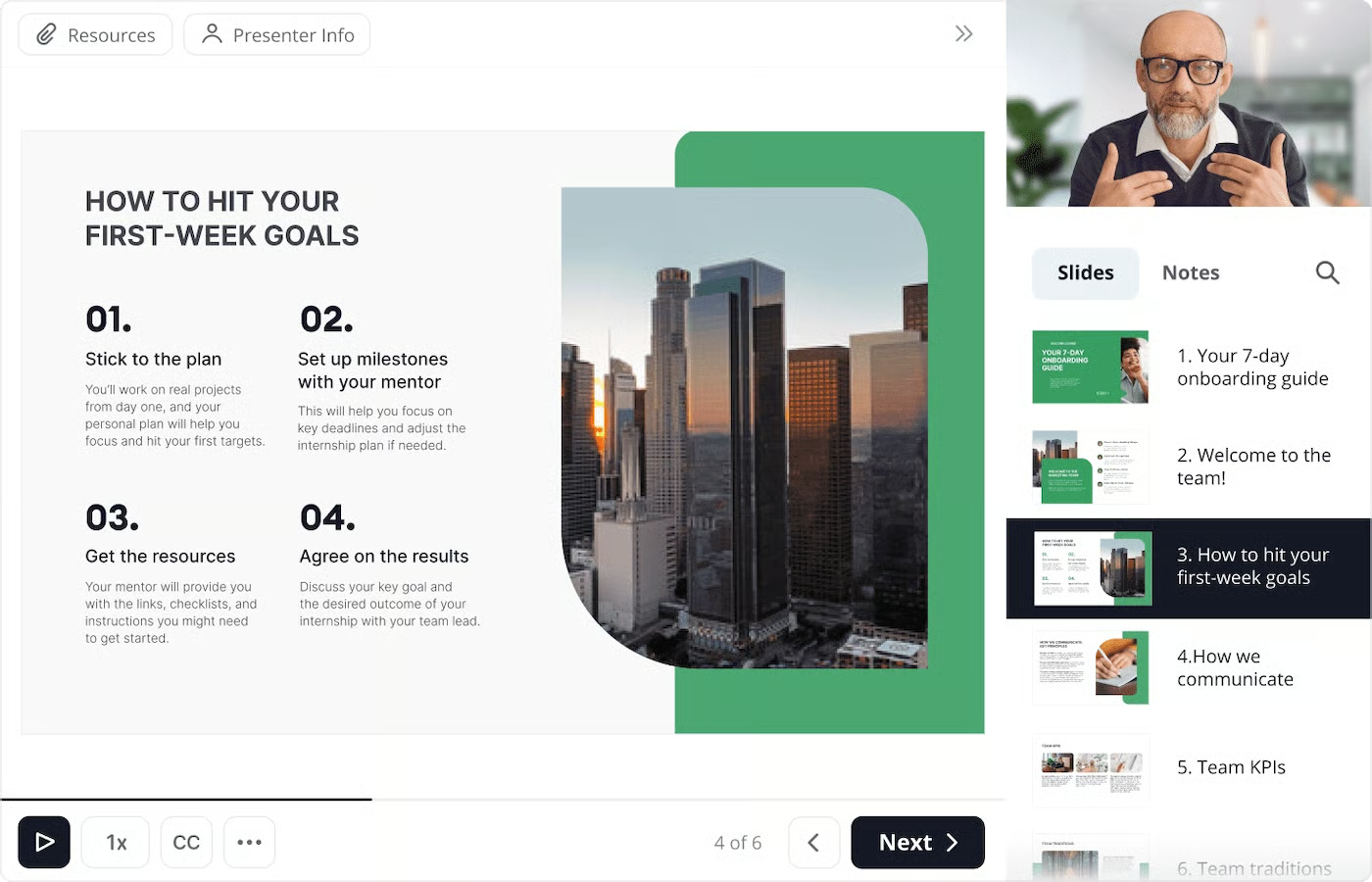
Preboarding checklist example
A good preboarding checklist goes beyond logistics. It helps new hires feel seen, supported, and set up for success from day one. Use this as a starting point and adapt it to your company’s size, tools, and culture:
1. Set up tools and access
Handle the tech before the first day to reduce downtime and stress:
- Order hardware and accessories (laptops, headsets, external monitors).
- Provision accounts and permissions for email, Slack, and required apps.
- Test access early to confirm login credentials and security settings work.
- Automate where possible: Many HRIS and IT systems (like Rippling or Deel) can sync provisioning workflows for faster setup.
2. Complete documentation and compliance
Knock out the red tape so day one can focus on people:
- Send and collect digital tax, insurance, and I-9 and W-4 forms through e-signature software.
- Share employee handbooks and policy acknowledgments in advance.
- Provide details on payroll setup, benefits enrollment, and time-off policies.
- If your company operates globally, ensure all preboarding materials meet local labor and data privacy regulations.
3. Build connection and culture early
Help new hires feel part of the team before they even log in:
- Send a welcome email or short video from the team or CEO.
- Assign an onboarding buddy to answer informal questions.
- Mail a welcome package with branded swag or a handwritten note.
- Invite them to pre-start Slack channels or virtual coffee chats.
4. Prep for learning and performance
Get them thinking about growth, not just orientation:
- Develop a short preboarding training module covering culture, tools, and key policies.
- Outline 30-60-90-day goals with the manager.
- Share access to your learning management system (LMS) for optional pre-start courses.
- Include a “day one survival guide” — where to log in, who to meet, and what to expect.
5. Gather feedback and improve the process
Use feedback loops to refine the experience over time:
- Send a brief preboarding survey asking how supported they feel before starting.
- Track completion metrics (documents, tasks, tech setup) in your HR platform.
- Iterate quarterly—employee experience begins before day one, and your process should evolve as fast as your team does.
Preboarding is an opportunity to improve employee retention
Preboarding isn’t only about efficiency and completing paperwork ahead of time — it also presents a critical opportunity to engage new employees and set them up for success.
When developing a preboarding plan, consider what’s most important to new hires joining your company. Pay special attention to remote employees who might be more likely to feel disoriented or disconnected when starting a new job. Brainstorm ways to promote team culture early and build excitement for the new hire to jump in on day one. Prioritizing these elements will help avoid new hire turnover.
Frequently asked questions on preboarding
How long should preboarding last?
Preboarding usually begins right after a new hire accepts their offer and continues until their first day. For most companies, that’s about one to two weeks, though some extend it to a month for senior or remote roles. The key is to stay engaged without overwhelming the new hire.
What should be included in a preboarding process?
A strong preboarding plan includes compliance paperwork, tech setup, introductions, and early engagement. You can also add training modules, a welcome package, and a “day-one guide.” The goal is to remove uncertainty and build excitement before the first day.
How is preboarding different from onboarding?
Preboarding happens before day one. It’s about preparation and connection. Onboarding starts after the employee joins and focuses on integration, culture, and role success. Think of preboarding as the “warm-up” that makes onboarding smoother and faster.
Browse our Onboarding Software Guide for solutions that can help optimize your onboarding process.