Key takeaways
- Employee satisfaction measures how happy employees are with their jobs.
- Employee Net Promoter Score (eNPS) and Employee Satisfaction Index (ESI) are two popular ways to measure employee satisfaction, but there are other methods that may be just as or more effective for your organization’s employees.
- Employee engagement software can help you quantify and keep track of employee satisfaction scores over time.
Thriving businesses have one thing in common: satisfied employees. When people are happy at work, they bring their best ideas, their loyalty, and their energy to the table and everyone wins.
What is employee satisfaction and why does it matter?
In a nutshell, employee satisfaction measures how happy employees are with their jobs. Measuring employee satisfaction is a strategic effort to quantify what is usually considered more qualitative data; tactically, it helps determine the underlying causes of dissatisfaction and possible solutions that can improve employee satisfaction.
Depending on the business’s goals and available tools, business leaders can measure employee satisfaction directly, or they can take a more indirect approach by looking at variables like employee retention and turnover rate. Numerous factors impact employee satisfaction, including work-life balance, salary, and opportunities for advancement.
The global context
While the World Happiness Foundation found that 70% of employees say they are happy at work, Gallup’s latest data reveals that employee engagement dropped to 21% across the globe when 2024 closed. This highlights the urgent need for proactive tools and measurements to keep a pulse on the well-being of your workforce.
Methods to measure employee satisfaction
There are many strategies and tools for measuring employee satisfaction, including employee engagement surveys, suggestion boxes, one-on-one meetings, formal evaluations like eNPS and ESI, and other workplace analytics.
Check out our video overview below.
1. Employee engagement surveys
One of the easiest ways to learn what employees think about the company is to ask them directly.
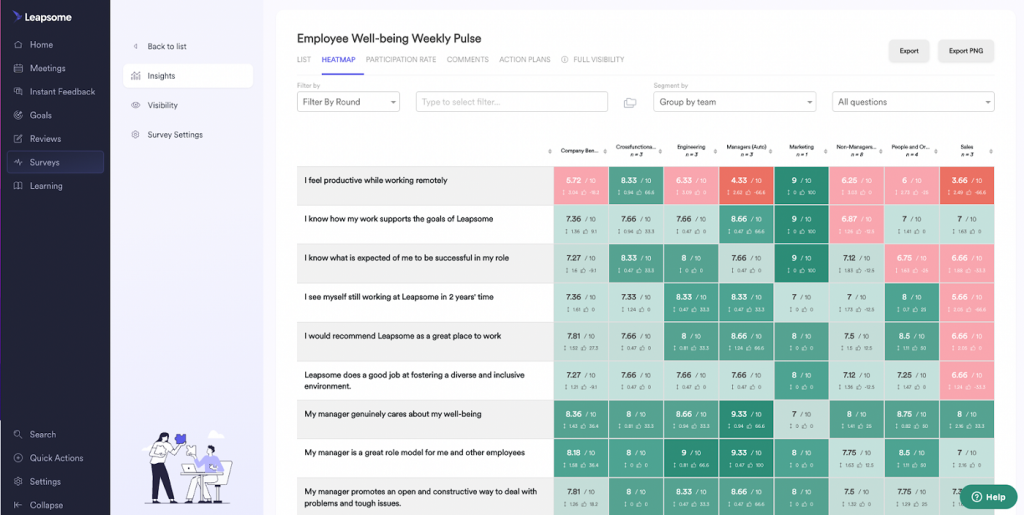
Employee engagement surveys can be customized to include a combination of numerical ratings and long-form responses. They can be sent at specific times of the year — such as once a quarter — or left open around the clock to gather feedback throughout the year.
Potential questions to incorporate in an employee engagement survey include the following:
Google Forms and similar free tools offer a simple way to create and send surveys and track results. However, these basic tools aren’t specifically designed for employee engagement and won’t provide the same insight as a more advanced tool. They also may not integrate with your HR reporting system, a necessary piece of the puzzle to maximize the data’s value.
A dedicated employee engagement software solution such as Leapsome makes it easy to generate employee surveys and calculate results. Likewise, robust HR software suites, such as Workday, also include employee engagement modules as a core functionality or optional add-on.
2. Suggestion boxes and forms
Employee suggestion boxes give employees a place to make open-ended comments and suggestions about what’s working and what can be improved within the company. Suggestion boxes are typically open year-round and may be used in conjunction with employee engagement surveys that are sent out at specific times.
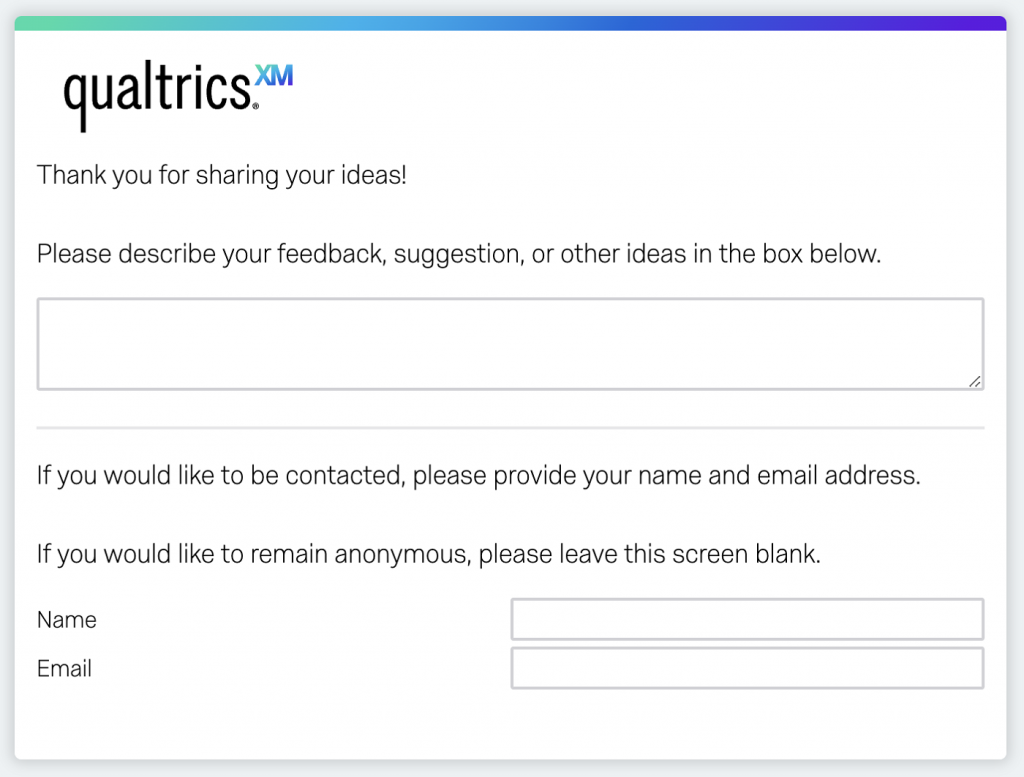
Suggestion boxes are usually anonymous, giving employees more freedom and security to voice their thoughts. You can also configure suggestion boxes to include optional contact information fields that employees can fill out if they want to receive a follow-up message.
For onsite employees, you can set up a physical suggestion box with note cards and pens in common areas such as the break room. You can also create a form to collect responses virtually using software such as Google Forms or Qualtrics. This option may be preferable if your company is remote or hybrid, or if paper responses would be logistically tricky because you have multiple locations.
3. One-on-one meetings
If your business aims for a company culture based on transparency and trust, then managers should gauge employee satisfaction during the performance review process and other one-on-one meetings. Some questions to ask during these meetings include:
- How do you feel about your job?
- What changes would you like to see at the company?
- Do you consider your salary to be fair?
- Do you feel like you have opportunities for advancement?
Performance management software can help supervisors document employees’ answers to these questions as well as other notes for future reference. These systems also remind managers when it’s time to schedule a check-in, reducing manual follow-up requirements for HR staff.
When used consistently, performance management software allows managers and companies to track employee satisfaction both individually and in aggregate.
Find the right tool for your organization in our Performance Management Software Guide.
4. Employee Net Promoter Score (eNPS)
The Employee Net Promoter Score is inspired by the original Net Promoter Score, which measures customer loyalty. To calculate eNPS, ask employees the following question, verbatim: “On a scale of zero to 10, how likely are you to recommend [company name] as a place to work?”
Responses are then sorted into three groups:
- Promoters: People who answered nine or 10.
- Neutral: People who answered seven or eight.
- Detractors: People who answered zero through six.
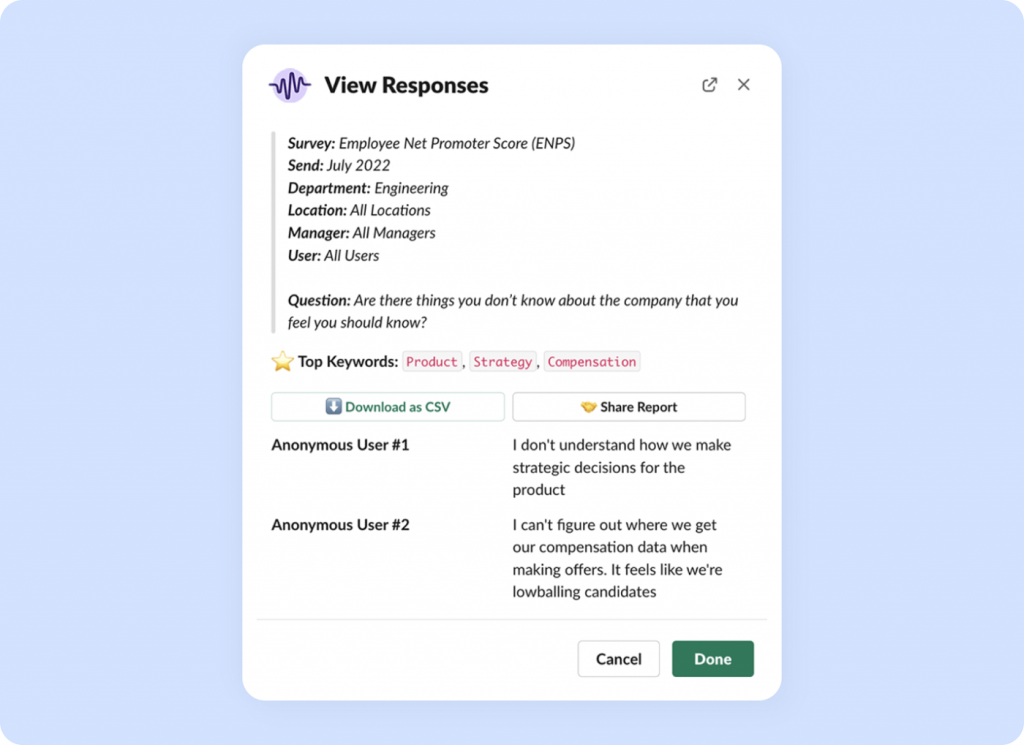
The eNPS equals the percentage of detractors minus the percentage of promoters. If doing all that math sounds complicated, then try using an HR system such as Deel, which already has built-in eNPS capabilities. This software makes it simple to send out a survey, compile responses, and calculate the eNPS in just a few clicks.
5. Employee Satisfaction Index (ESI)
Another popular HR metric is the Employee Satisfaction Index, or ESI. This measurement determines employee satisfaction levels based on three questions instead of one, so it’s slightly more complex and nuanced than eNPS.
Employees must rank the following questions from one to 10:
- How satisfied are you with your current workplace?
- How well does your current workplace meet your expectations?
- How close is your current workplace to the ideal one?
The following formula calculates your ESI:
(Question mean value/3) x 100 = ESI
As you can see, calculating ESI isn’t as straightforward as eNPS, which is why we recommend leveraging software tools instead of doing manual calculations.
6. Other workplace analytics
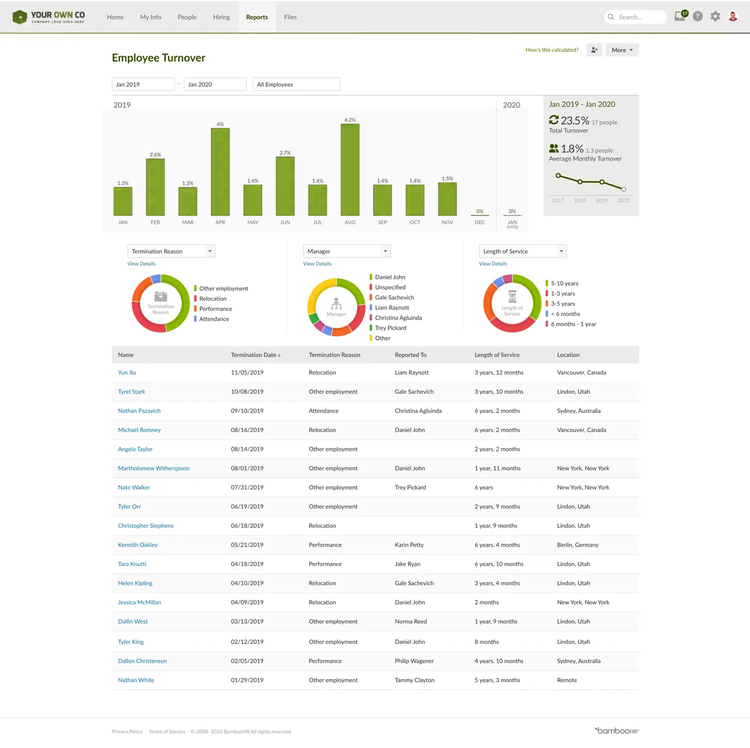
Other HR metrics that indirectly measure employee satisfaction help create a fuller picture of your employees’ fulfillment and happiness in their roles. Some metrics to track include turnover rate, retention rate, and absenteeism.
Workforce analytics tools like BambooHR’s reporting module can track these variables for you and compile them into easy-to-understand charts.
Benefits of measuring employee satisfaction
Here the benefits of measuring employee satisfaction for both workers and employers:
- Catch blind spots and drive improvement: From a business perspective, measuring employee satisfaction is a chance to uncover issues that might otherwise go unnoticed. Honest feedback can reveal gaps in leadership communication, process inefficiencies, or cultural misalignments that, once addressed, can lead to better business outcomes.
- Show employees you care: Taking the time to ask for and act on employee feedback sends a powerful message that their voices matter. This fosters trust, strengthens morale, and boosts overall engagement and productivity.
- Turn assumptions into data: Measuring satisfaction gives HR and leadership tangible, actionable insights instead of relying on gut feelings or anecdotal evidence. With real data, teams can make informed decisions about policies, programs, and initiatives that directly impact the employee experience.
- Track the impact of change: Whether it’s rolling out a new benefits package, launching a DEI initiative, or implementing a flexible work policy, satisfaction metrics make it possible to measure whether those changes are truly moving the needle. This helps ensure resources are invested in what actually makes a difference.
Ready to get started with improving employee satisfaction? Check out our top picks for the best employee engagement software to improve your employee satisfaction management processes.
Featured partnersFeatured employee engagement partners