

Key takeaways
- Some creative options to find employees include attending job fairs and parties, browsing diverse job boards, and using social media.
- You can also engage existing and passive candidates through email and text campaigns, podcasts, and videos.
- Partnering with apprenticeship programs can help produce qualified, loyal talent who stay at the company longer.
- Creative sourcing methods can increase profits, improve company culture, and produce a more diverse and innovative workforce.
Update notes
- Oct. 3, 2025: Hanna Sillo expanded each talent-sourcing method with more detail, added tips and nuances, updated statistics, included an overview for every method, improved visual flow for easier reading, and added an FAQs section.
An applicant tracking system (ATS) can help source, organize, and hire your next employee—check out our complete list of solutions in our ATS Software Guide.
Want better hires without throwing more money at ads? Here are six low-cost, high-impact sourcing tactics that reach hidden talent pools, plus when to use each, how long they take, and the KPIs to track.
6 creative ways to find employees
Creative sourcing methods can give you a competitive edge if conventional recruitment strategies fail to produce your desired talent.
By using these employee sourcing methods, you can create a more diverse, dedicated, and innovative workforce. However, they often involve more upfront work than simply posting job ads to online job boards or leaning on internal referral networks.
Most creative sourcing techniques require executive buy-in, specialized recruitment tools, or other time and budget commitments. Nevertheless, expanding your talent pools to reap quality new hires is worth the increased investment.
Explore strategies to improve your recruitment process in this video:
Looking for ways to improve your process? See how AI can help your recruiting strategies.
1. Leverage email and text campaigns
- When to use: High-volume roles, re-engaging silver-medalists, and nurturing passive candidates
- Timeline: Days to weeks
- Key metric to track: Apply rate from campaign (UTM) and reply rate
- Cost: Low to medium cost for the tool and compliance
Marketing texts and emails remain highly effective ways to reach active and passive candidates with little effort. In fact, email marketing return on investment is £42 for every £1 spent ($42 for every $1 spent), according to Data & Marketing Association’s 2025 Email Benchmarking Report.
How to customize email and text campaigns:
- Nurture silver-medalists: Build a short automated drip for candidates who reached interviews but didn’t get the role. Use friendly check-ins, role updates, or “we’d like to keep you in mind” messages.
- Rehire more easily: Use targeted outreach to boomerang employees as they ramp faster and often need less onboarding.
- Nudge completions: Send quick SMS reminders for unfinished applications or use text-to-apply for deskless candidates.
- Show culture, not just jobs: Quarterly newsletters that spotlight people, projects, and perks turn passive readers into applicants over time.
Tip: Always capture consent and offer easy opt-out links. Alternatively, you can route replies into your ATS or a candidate care queue so follow-ups don’t fall through the cracks.
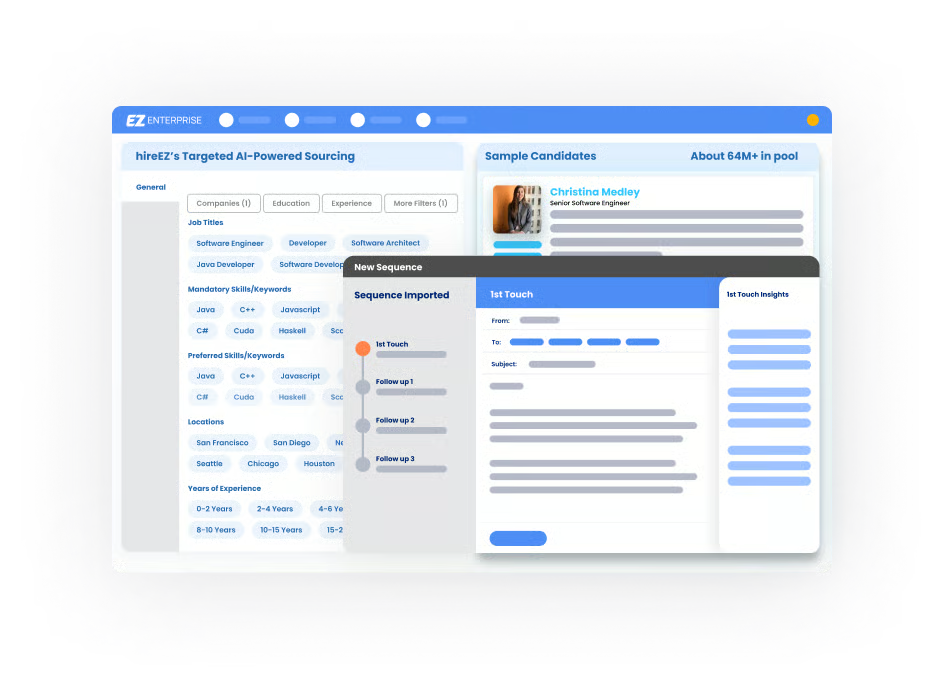
Software can simplify the process of creating email and text campaigns. For example, HireEZ can source qualified candidates’ email and phone numbers from over 800 million profiles. From there, you create candidate email sequencing, save email templates, and track click-through and reply rates to measure the success of your campaigns.
Pros of text and email campaigns
- Convenient for candidates to respond and apply.
- Inexpensive for recruitment teams to implement.
- Opportunity to market employer brand and drive traffic to the company site.
- Automated candidate engagement with drip campaigns.
- Lower incomplete job applications.
Cons of text and email campaigns
- Requires software to develop and maintain efficiently.
Are you using email correctly for recruiting? Here are some of the recruiting email mistakes you should avoid.
2. Attend job fairs and parties
- When to use: Campus, entry roles, employer-brand building, local hiring push
- Timeline: Weeks to months
- Key metric to track: Qualified interviews per event and cost per qualified lead
- Cost: Medium cost for both, travel, and swag
High school or university job fairs allow recruiters to interact directly with candidates actively looking for work. As a result, these candidates are typically eager to start work with employers that are willing to offer the training and guidance to succeed in their fields of choice.
Industry job fairs like TechExpo can help advertise your role, create valuable networks of industry specialists, and increase your chances of meeting candidates with the right expertise. You can also promote your brand and entice candidates to apply by highlighting your company’s innovations and benefits.
Here’s what to do in these fairs:
- Quick pitch: Bring a 30–60 second role hook that explains what success looks like on day one.
- What to showcase: Hiring pathways, training, entry-level support, and clear next steps. Students and recent grads respond to tangible signals, such as mentorship, clear progression, and paid training.
- Capture tip: Use a QR-to-apply link with UTM tags or a simple one-page form so candidates can apply on the spot.
Informal events like parties, concerts, or volunteer opportunities are less rigid and promote open dialogue among prospects and recruiters. In fact, a recent LinkedIn study found that casual acquaintances, such as those from parties, influence jobseekers’ next job decisions more often than close friends.
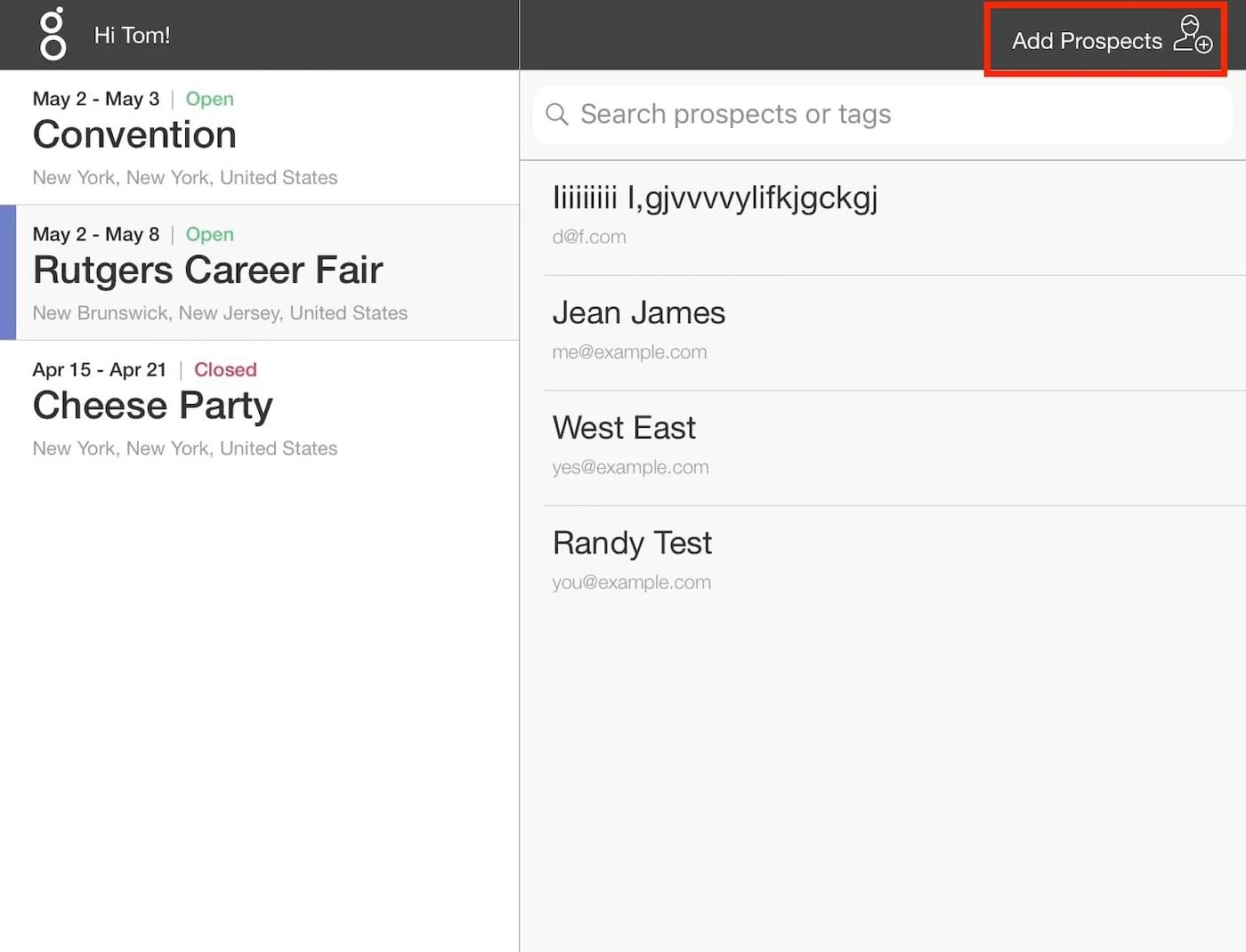
Software also helps capture candidate information from in-person events. For example, Greenhouse’s Mobile Events App for iOS saves candidate applications, takes photos of applicant résumés, and adds their information to your hiring pipelines for screening follow-up. Recruiters can then focus on creating engaging events rather than collecting paperwork.
Pros of job fairs and parties
- Create genuine connections between prospects and your brand.
- Appeal to students and Gen Z.
- Potential for big sourcing payoffs in the future.
Cons of text and email campaigns
- Not practical for hiring roles in urgent need.
- Limited to talent in local areas.
Find more ways to connect with more job candidates with our guide.
3. Use social media
- When to use: Creative or brand roles, broad passive pools, diversity outreach
- Timeline: Days to weeks
- Key metric to track: Click-to-apply rate and time-to-hire from platform
- Cost: Low to medium for ads and creative
In a 2024 report by Handshake, 73% of the graduates surveyed say they are more likely to apply to a job if they see employers showcasing day in the life and other work culture videos.
Now more than ever, social media platforms, such as Facebook, X (formerly Twitter), Instagram, and TikTok, can help companies cast a wider net when searching for top talent. While this may seem overwhelming, crafting strategic social media campaigns can help attract job candidates who fit your company’s culture and values.
Companies can even refine where their job ads post to target the most relevant candidates through hashtags. For instance, if you are looking for a website designer for your company, you might tag your social media post with #designerjobs or #webdesign so that your ad reaches the right communities.
Alternatively, you can try micro-targeted creative. Think short role walkthrough reels, behind-the-scenes clips, and employee-hosted AMAs. Test one creative concept per platform for two weeks and measure response rate.
Eyeglass company Warby Parker, for example, uses TikTok to showcase their “Halloweenies” event, highlighting their fun company culture to potential hires.
Additionally, companies may consider partnering with social media influencers to advertise their open roles. Influencer recommendations carry a lot of weight with their dedicated followers, so companies can expect application upticks through these partnerships.
TechnologyAdvice, for example, experienced a surge of applications to our Program Coordinator role after TikToker Shaque’l promoted the job on her channel. Although we did not partner with Shaque’l, her callout was a tremendous help and illustrates the power of leveraging social media influencers for talent sourcing.
Check out Shaque’l’s callout of our role:
Pros of social media
- Potential to shorten time-to-fill and other recruiting metrics.
- More democratic usage compared to other job boards or career sites.
- Opportunity to source unique and diverse individuals.
- Can advertise your company culture and values.
Cons of social media
- Data and privacy concerns, both for the company and candidates.
- Shifting cultural trends and best practices around social media use.
Learn more on how to leverage social media to find the best talents for your organization.
4. Scout diverse job boards
- When to use: Intentional DEI hiring or niche demographic outreach.
- Timeline: Typically takes weeks
- Key metric to track: Percent of diverse candidates in pipeline and offer rate
- Cost: Low to medium for posting fees or manual time
If you want to intentionally build a more diverse workforce, posting your open role to diversity job boards is an excellent way to find talent from traditionally underrepresented groups.
For example, online job boards catering to women, people of color, people with disabilities, immigrants, veterans, people with criminal records, or LGBTQIA+ folks can provide qualified candidates and expose companies to varying points of view and unconventional ideas.
If you’re interested in posting your open positions to these broads to promote your diversity, equity, and inclusion (DEI) efforts, below are some sites to get started:
- Diversity.com: Focus on race, ethnicity, disability, age, gender, religion, immigration, and LGBTQIA+.
- PDN Recruits: Focus on race, ethnicity, disability, women, veterans, and LGBTQIA+.
- Fairygodboss: Focus on women.
- Pink Jobs: Focus on LGBTQIA+.
- VetJobs: Focus on veterans.
- Honest Jobs: Focus on the formerly incarcerated.
Some ATS apps already integrate with popular diversity job boards. BreezyHR, for example, syncs with both Diversity and Professional Diversity Network, as well as women, disability, and veteran-focused boards, to simplify your inclusive hiring efforts.
Pros of diverse job boards
- Cultivate a diverse talent pool.
- Access individuals with unique skills, backgrounds, and perspectives to spark company growth.
Cons of diverse job boards
- Recruiters may need to manually post job ads on these sites if not integrated with their ATS or recruitment platforms.
5. Offer apprenticeships
- When to use: Strategic skill building, succession planning, long-term pipeline
- Timelines: Months to years
- Key metric to track: Retention at 6–12 months and cost-per-skilled-hire over time
- Cost: Medium to high for training and manager time
Although you may think apprenticeship programs are just for trades such as plumbing, electricity, or construction, this is a myth. Modern apprenticeship programs cater to businesses of all sizes and industries, including manufacturing, technology, and hospitality.
Apprenticeships can help you build diverse talent pipelines since many apprentices come from varying industries. Additionally, they help individuals without the means to complete higher education requirements to compete for positions in higher-paying fields, such as engineering.
“Apprenticeship graduates have skills that are currently in demand, and most have coveted soft skills employers look for,” as Paula Mathias-Fryer, Director at the non-profit SLO Partners puts it. “Apprentices also tend to be hungry for new opportunities and have the attitude, aptitude, and drive to succeed, making them desirable job candidates,” she says.
Although apprenticeship programs require dedicated time to train new recruits, apprentices tend to stay longer. Apprenticeships also foster a culture of learning as your managers develop crucial mentorship and training skills.
In fact, for Dr. Ximena Hartsock, co-founder of BuildWithin, hiring apprentices helped her previous company fill much-needed technical roles, including software development. Eight years later, apprentices made up 30% of her team.
“Apprenticeships gave us access to a diverse, highly underrated talent pool with transferable skills and the ambition to learn a new career,” says Hartsock. Moreover, hiring and training apprentices was more cost-effective than competing with big tech companies for talent.
How to source talent through apprenticeships:
- Invest in training and time: Apprentices need structured training and manager time. It will take a while before you see ROI, but it often leads to stronger retention.
- Secure funding and resources: Check federal, state, and local apprenticeship resources, including the U.S. Deptarment of Labor for funding and registration guidance.
- Have proper tools and measurement: Consider platforms like BuildWithin to build curricula and track progress to measure metrics like retention at 6–12 months and cost-per-skilled-hire over time.
Pros of apprenticeships
- Access talent with a strong set of soft skills.
- Provide an alternative method of succession planning.
- Increase control of candidates’ skill development.
- Improve internal teams’ mentorship abilities.
- Receive tax credits in participating states.
Cons of apprenticeships
- Increase ramp-up times to get employees to work at full capacity in the role.
- Unlike some internships, employers must pay apprentices during their training and offer benefits equivalent to regular employees.
6. Produce podcasts and videos
- When to use: Employer branding, culture storytelling, passive candidate attraction
- Timelines: Weeks to months (as brand lift accumulates)
- Key metric to track: Apply rate from episode (UTM) and engagement to conversion funnel
- Cost: Medium to high for production
Podcasts and videos are fun ways to drum up interest in your company by showcasing company values and offering first-hand accounts of your organization’s work life. Like social media platforms, producing a company podcast or video appeals to a broader audience and provides a personal view of the company.
Moreover, podcasts and videos can be paired with other recruitment methods to boost engagement. For example, you can link company podcast episodes or videos to your job ads, feature them on your career site, or make them the center of your email campaigns.
Bradley Evans, managing director of people at Prefect, describes adding hiring manager videos to their recruitment emails as the “winning formula.” Their videos provide insights into their open roles by highlighting the position’s appeal and the work life of other employees. “Giving candidates a glimpse of the hiring manager and the role through an authentic, engaging video significantly boosts our response rate of qualified applicants,” says Evans.
Like videos, podcasts can help companies feel more down-to-earth and personable. Their easily digestible format caters to individuals not tied to a desk or who do not have time for long-form video content.
April White, founder and CEO of Trust Relations, developed a podcast about the dark side of the public relations (PR) industry to connect with PR and marketing professionals through relatable content. Despite jobseekers making up only a small proportion of the podcast’s audience, the candidates it attracts exemplify their brand.
Many ATS solutions allow companies to include customized video and podcast content directly on their career site. Teamtailor, for example, allows companies to build out their career pages with videos through a simple block editor. Such content can market roles while leading candidates further down the hiring funnel.
Pros of podcasts and video marketing
- Expand brand awareness.
- Demonstrate the company’s values, career development opportunities, and benefits in action.
- Combine with email campaigns or other sourcing methods for extra visibility.
Cons of podcasts and video marketing
- More work on the backend for recruiters to develop and maintain.
- Could expose important information to competitors.
Creative sourcing boosts retention and diversity
Using creative ways to find employees can help you build more diverse candidate pipelines and increase retention.
Getting creative with your hiring is one of the most obvious ways to show, not tell, your company’s commitment to DEI initiatives. And, with a more diverse team, be prepared for increased innovation to drive your company’s success.
If you’re unsure where to start your talent search, check our Recruitment Software Guide for a complete list of solutions on the market.
Talent sourcing FAQs
Is texting candidates legal?
Often, yes. But it hinges on consent and the law where your candidates live. In the U.S., the TCPA requires prior express written consent for many recruiting or marketing texts and recent FCC rule changes tightened how consent and opt-outs must be handled. As a best practice, keep a timestamped record of consent and honor opt-out requests immediately.
How do I measure recruitment from podcasts or videos?
Treat podcast and video as a tracked campaign: use UTM-tagged links or a unique apply code inside the episode, capture a “How did you hear about us?” field on the application, and measure things (e.g., applies → interviews → hires in a 30–90 day window to get a true view of downstream impact).
Which method is best for urgent hiring?
For speed, use email and SMS outreach plus paid social ads since these generate the fastest volume and quickest candidate responses. Reserve apprenticeships, podcasts, and long-form content for pipeline and brand-building because those take longer to convert.
How much should I budget for these channels?
It varies by channel. Expect low-to-medium tooling costs (email and SMS platforms, creative templates) for campaign pilots, medium event costs for fairs (booth, travel, swag), and higher ongoing investments for apprenticeships (training time + manager bandwidth) and quality video production. Start with small pilots (one campaign or event), measure cost-per-qualified-hire, and scale the channels that beat your targets.