Key takeaways
- On-the-job training involves teaching employees about their new position through hands-on learning.
- If done correctly, on-the-job training can speed up new employees’ ramp-up times and increase retention.
- Strategies like creating training plans or investing in learning management systems can enhance your on-the-job training so employees acclimate to their new roles faster.
- Nov. 24, 2025: Hanna Sillo updated this article with more recent workforce training statistics, removed outdated information, added new examples, inserted a comparison table under types of on-the-job training, and included a new section outlining when on-the-job training is most effective and when it may be less suitable for certain roles.
- Jul. 24, 2023: We revised the article to define on-the-job training and provide strategies for implementing it in your business.
What is on-the-job training?
On-the-job training (OTJ) is a practical way to teach employees new skills while they perform real work. It’s becoming more essential as companies face widening skills gaps, pressure to shorten ramp-up times, and increasing competition for talent. In short, OTJ training focuses on experiential learning—learning through doing—compared to offsite training.
According to the 70-20-10 learning model, 70% of learning occurs through hands-on experience. This is because employees receive immediate feedback on their mistakes, think critically in each situation, and test and refine their skills in real time. Thus, if done effectively, OTJ training is one of the most critical areas of your company’s learning and workforce development functions.
Typically, on-the-job training includes the following steps:
- Observation: Employees take notes and ask questions while observing their managers, trainers, or peers perform their duties.
- Supervision: Employees perform or practice their duties in the presence of their managers or trainers, who provide constructive feedback.
- Independence: Employee performs their duties unassisted, with occasional questions or follow-ups.
On-the-job training vs. off-the-job training
Compared to on-the-job training, off-the-job training involves learning away from the work site. This could include:
- Instructor-led courses
- One-on-one sessions with trainers offsite
- Simulations
- Role-playing
- Vestibule training
Compared to OTJ training, off-the-job training focuses more on theoretical than practical learning. However, for some positions, learning theory before practice is necessary.
In manufacturing roles, for example, learning first about safety procedures and how the machines they will use work can limit the chance of workplace injuries or accidents.
What are the benefits of on-the-job training?
OTJ training is inexpensive, can be implemented quickly, and may result in faster time-to-productivity rates for new employees compared to self-taught methods. As a result, it is the go-to training technique for most employers.
Even when investing in the right tools for successful job training—such as learning management systems (LMSs)—OTJ training is still less expensive than off-the-job training. This is because it does not require renting outside facilities to host training sessions, hiring consultants to conduct training, or paying for employee travel or training costs.
Example: A machine operator trainee practices under close supervision at their assigned station instead of attending separate classroom sessions. They learn setup, shutdown, and safety checks in real time, eliminating the need for extra training materials or facilities.
Because OTJ training occurs in the same environment where new employees will perform their roles, it doesn’t always require additional materials, equipment, or workspaces. Likewise, your trainers are usually internal staff, meaning you do not have to research, hire, and craft your unique training program with outside services.
Example: A customer support team trains new hires by having them shadow experienced reps at their regular workstations. The training takes place in the same environment with the same tools they’ll use on the job and uses existing team members as trainers. As a result, the company avoids setting up separate classrooms, purchasing extra equipment, or hiring external facilitators.
OTJ training does not divert new employees from productive output to attend lecture-led training sessions. As a result, you benefit from the new employee’s labor even as they learn. Moreover, since employees can correct mistakes while they work, OTJ training means faster time-to-productivity rates for your new hires. In turn, you improve your recruitment metrics and speed up the onboarding process.
Example: A new store associate shadows a shift lead during their first few shifts, practicing POS transactions and basic inventory steps while serving real customers. They’re contributing to workflow as they learn and are also receiving immediate correction on small mistakes. This allows them to reach independent productivity much faster than they would in a classroom-style training program.
What are the challenges of on-the-job training?
OTJ training can reduce productivity, especially if conducted by ineffective coaches. Also, OTJ training does not accommodate every type of learner.
OTJ training requires managers, peers, and trainers to leave everyday activities behind to dedicate time to training new recruits. This could result in delayed responses to customers, clients, or coworkers and slower output as your team integrates the new hire into their role.
For example, in a small dental practice, when hygienists train new hires chairside, appointment times run longer and daily patient volume temporarily drops.
Not everyone possesses the skills to teach. Directing employees to train new hires about their roles solely based on their tenure or stellar performance does not always translate to great coaching.
Ineffective coaching could end up discouraging new employees, increasing the chance of turnover. Even worse, trainers more concerned with returning to their daily work than the new hire could instill bad or unsafe habits from rushing instructions or failing to correct mistakes.
For example, a high-performing warehouse lead struggles to explain processes clearly in a logistics company. The new hire copies their shortcuts that can lead to safety risks and rework.
Although OTJ training is a great way to learn, it is not the only way. For some new hires, being forced to work immediately in their role without gradual integration can feel overwhelming.
Moreover, sticking to one learning style at the expense of others could alienate new hires who think or work differently. Neurodivergent folks, for example, may appreciate learning in a less-distracting, simulated environment before stepping into real-world scenarios.
A neurodivergent new hire in a bustling restaurant kitchen may become overwhelmed during peak hours. Without a structured, step-by-step orientation beforehand, the trainee may struggle to absorb instructions amid noise and pace.
What are the types of on-the-job training?
| Training type | Duration | Who conducts it? |
|---|---|---|
| Orientation | 1–2 days | HR teams, hiring managers |
| Mentoring | A few weeks minimum | Experienced peers or senior employees |
| Job Rotation | Days to several weeks per role | Department leads or cross-functional managers |
| Apprenticeship | Months to years | Certified experts, master practitioners, or technical leads |
| Internship | 8–12 weeks on average | Team leads, supervisors, or designated mentors |
There are five main types of OTJ training: orientation, mentoring, job rotation, apprenticeship, and internship.
- Orientation: This training takes place during the employee’s first one to two days and involves managers or HR departments giving a general overview of the business, its culture, benefits, and work expectations.
- Mentoring: In this type of OTJ training, new employees are paired with seasoned employees to learn the practical skills of their jobs and freely ask questions outside of the manager-employee dynamic.
- Job rotation: Often used in industries like manufacturing or retail, this OTJ training involves employees moving between different positions to understand how they function as part of the larger whole or to become competent in multiple areas.
- Apprenticeship: This OTJ training involves teaching and paying employees to learn how to perform duties in highly technical positions, such as electricians, plumbers, or software engineers.
- Internship: Whether paid or unpaid, internships involve onsite training for students or recent graduates in a temporary capacity.
5 strategies for an effective on-the-job training program
By using the strategies below, you can craft an OTJ training program that is effective and increases the likelihood of employee satisfaction and retention.
1. Understand the new hire’s learning style before their first day
Employers should not assume that employees will know what to do when they walk in the door on their first day. Instead, collaborating and understanding their learning style ahead of time can ease their nervousness and adjust your expectations.
Dr. Liz Wilson, a behavioral scientist and founder of Include Inc., notes that asking new hires about their learning preferences ensures you give them the tools to do their best work. “Never assume all people have the same lived experience or inclusion needs,” she says, “[and] provide a range of alternative delivery methods to accommodate people’s preferences for learning.”
Why this works
When employees learn in the manner best for them, the likelihood of them retaining and acting on their training improves. And according to Michelle Rhee, cofounder of BuildWithin, it prevents one of the biggest mistakes of OTJ training: assuming.
“When employers make assumptions about what new workers can or can’t do (or what they know or don’t know), it can often lead to confusion and frustration for both the employee and manager,” says Rhee. Instead, understanding the new hire’s strengths and limitations beforehand can help temper expectations while boosting the new hire’s time-to-productivity, among other HR metrics.
Similarly, Barbara Schifano, Senior Director of Learning and Development at the University of Phoenix, argues that exploring different learning preferences can help employees better understand their purpose in the company and keep them engaged during training. As a result, new hires are more likely to feel supported by their organization and willing to do well.
2. Create a training plan
A training plan should include an agenda of when and what the new hire will learn and any standard operating procedures (SOPs) or manuals. Providing these materials to employees beforehand, such as during preboarding, can mentally prepare new employees. It even gives them the space for self-learning.
Why this works
With a training plan and other written materials, new employees can see and follow along with their training expectations.
Moreover, incorporating written materials into your OTJ training can help reinforce their position’s practical and theoretical elements. And training plans create consistency, serving as a guide for your trainers and managers during onboarding.
3. Train the trainers
Managers and trainers aren’t always the best coaches because they sometimes lack the soft skills needed for effective teaching. To combat this, you or your HR department should invest in training your trainers by reviewing employee training procedures and expectations.
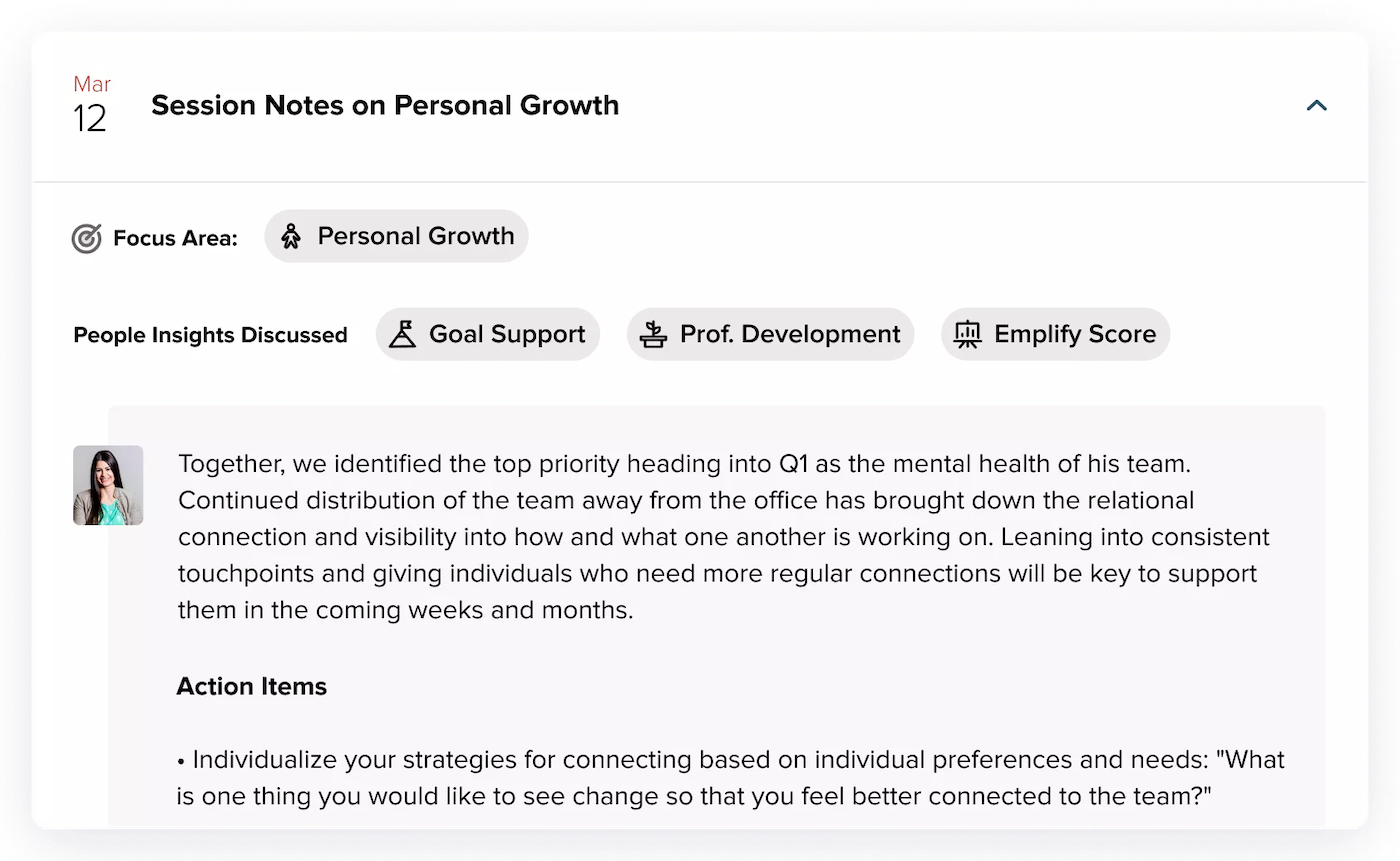
Additionally, provide them opportunities to learn how to train. Performance management software 15Five, for instance, offers a coaching module to help managers become better trainers and drive engagement.
Why this works
Effective trainers motivate new employees to do well and understand how their contributions matter to your organization. And, because well-trained trainers understand how to adjust to different learning styles, control frustration levels, and leverage encouragement and positive reinforcement, trainees are more likely to feel safe, take risks, and increase their productivity.
4. Evaluate the program and adjust
Evaluation and feedback cycles should be a critical part of your OTJ training to understand how well it works. You should also not limit feedback to post-training surveys.
Mary Ann Haskins, senior HR consultant for Flex HR, notes that adjusting your teaching style during OTJ training can help align it to the new hire’s preferred way of learning.
Why this works
Learning what works—and what doesn’t—during onboarding helps you constantly refine your training approach to meet new hires’ needs.
According to Pew Research’s 2024 study, 28% of workers say learning on the job is the most effective way to gain training and education. Yet nearly a third (30%) still feel they need additional training to move forward in their careers.
Regularly evaluating your OTJ training program ensures you can spot gaps early, adapt your process, and boost new employees’ confidence as they ramp up.
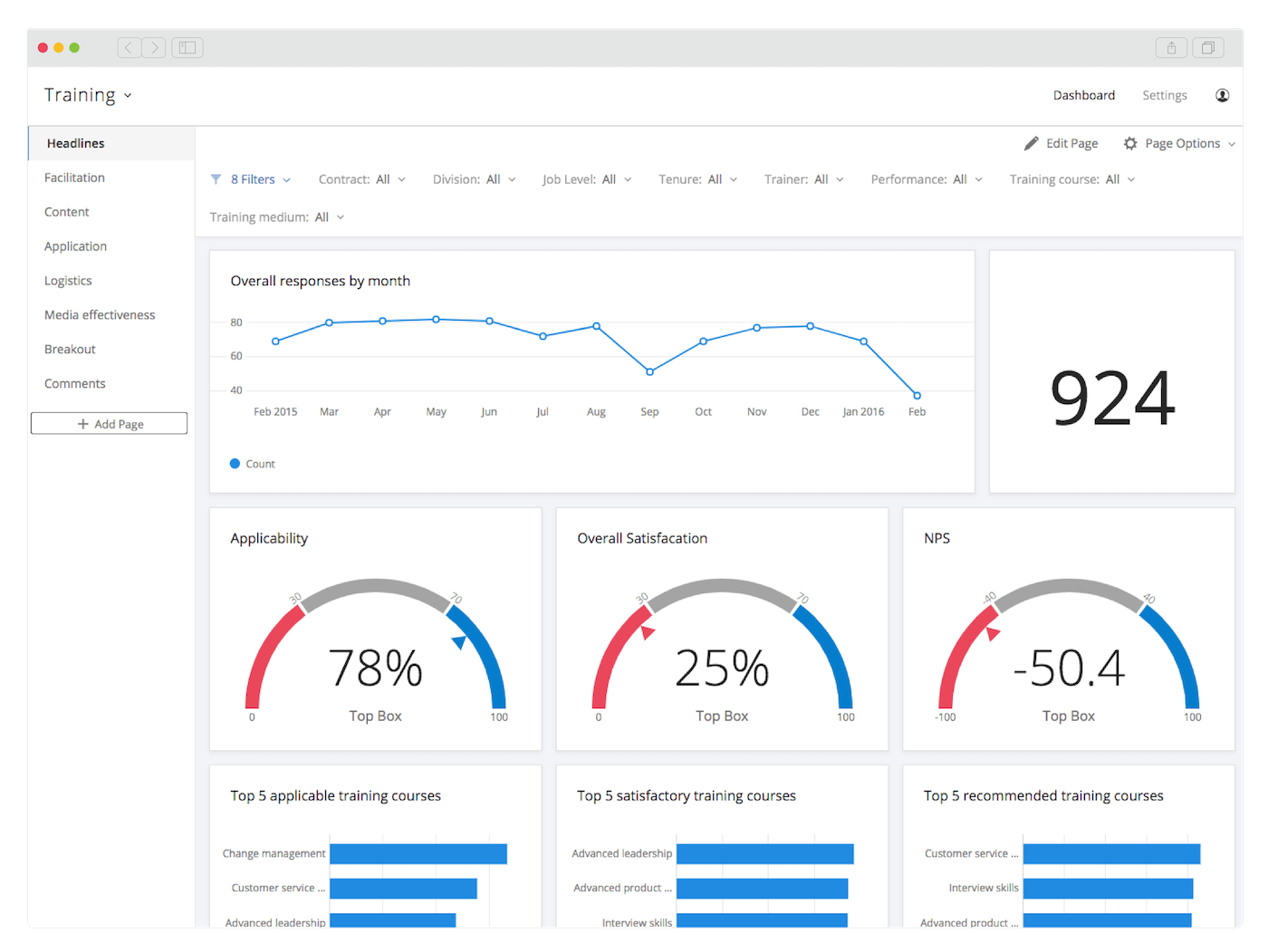
If you need a way to evaluate the effectiveness of your training, Qualtrics EmployeeXM offers training surveys to track what worked and what didn’t throughout employee training.
5. Leverage learning management systems
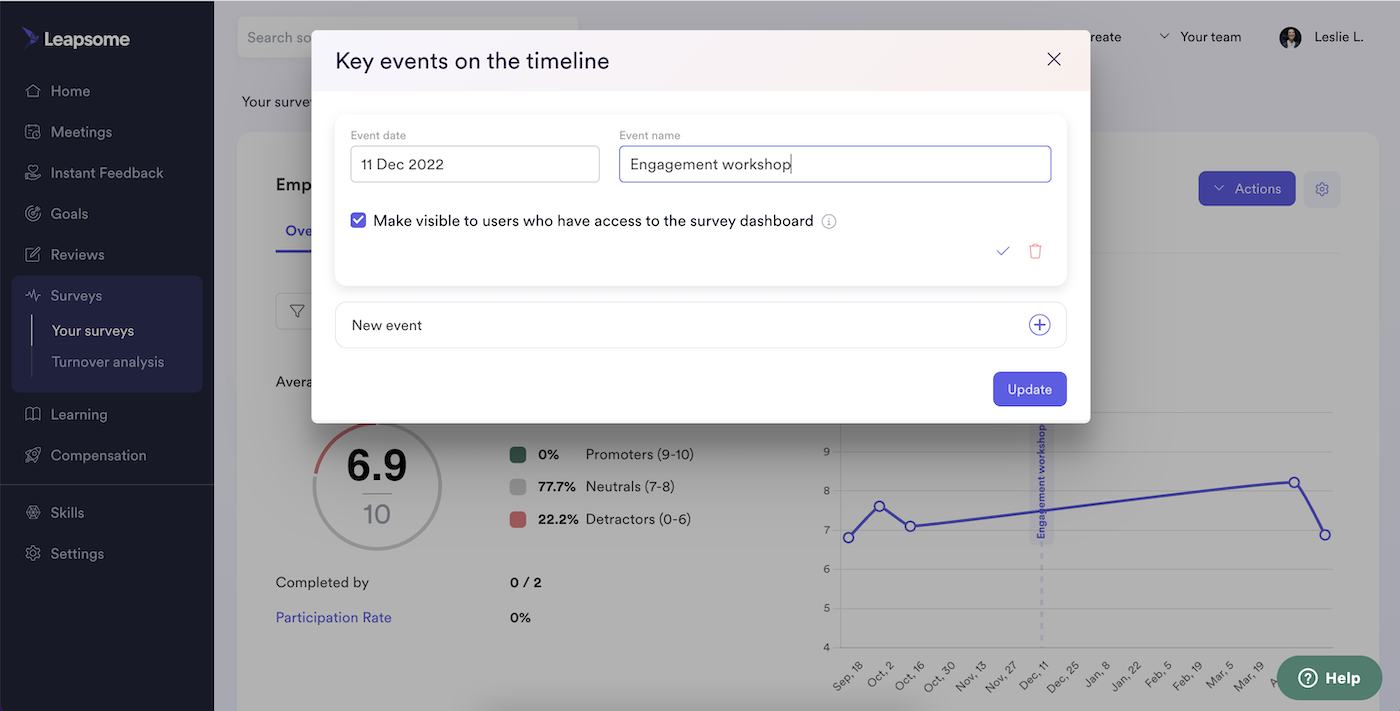
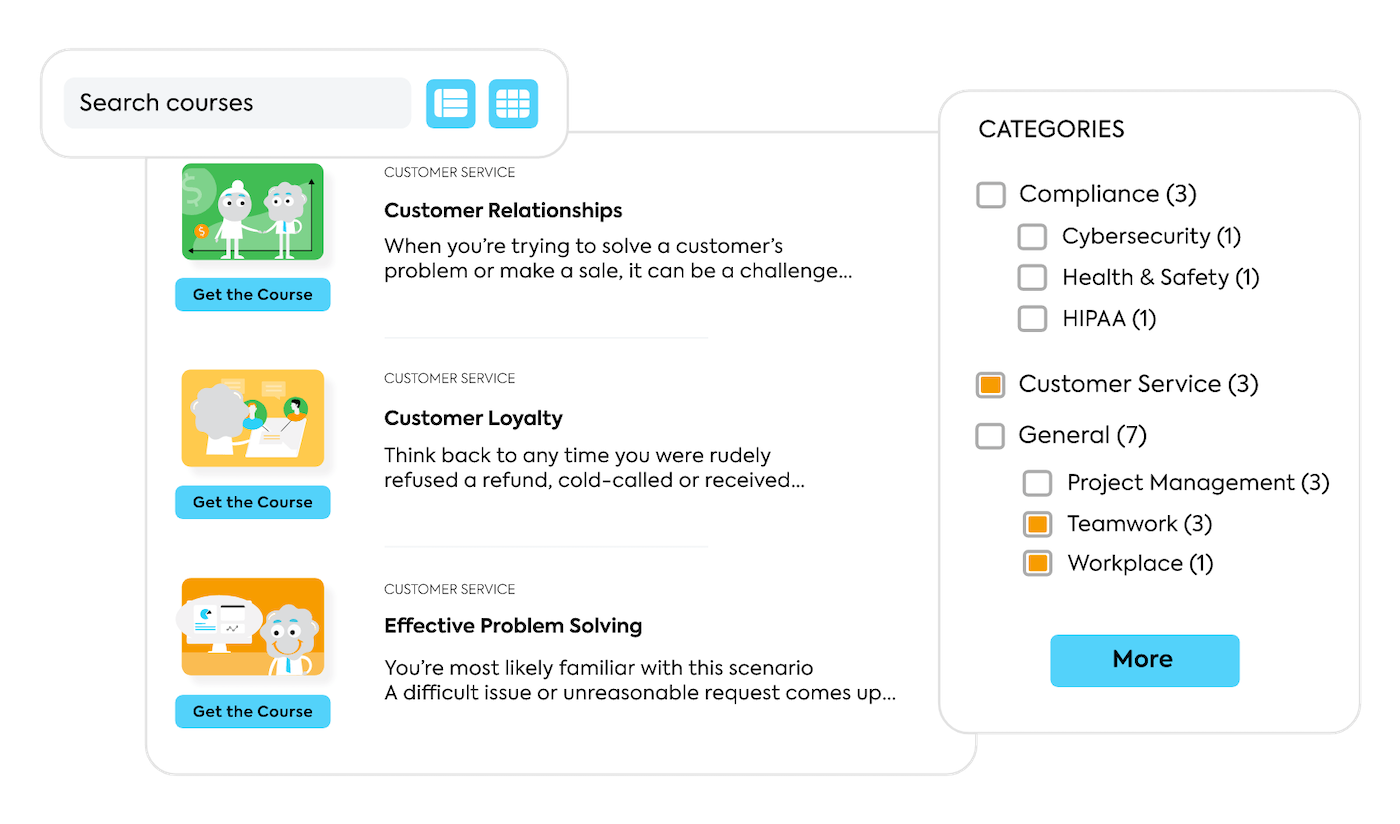
LMS solutions can help you create courses to augment your OTJ training while accommodating different learning styles. You can use pre-built courses or create your own to fit your company’s industry and needs. Plus, most LMS integrate with human resources (HR) software to preserve employee data as they progress from onboarding modules to training and retention.
Why this works
Learning management systems close the loop between training plan creation, execution, and continuous development. LMS solutions also allow employees to control their personal career development paths and when and how they learn.
Some examples:

Also read: Game-Based Learning To Improve Employee Engagement
Who can benefit the most from on-the-job training?
On-the-job training is effective for many roles, but it’s especially valuable in environments where employees learn best by watching, practicing, and receiving real-time feedback. It tends to work well when the day-to-day tasks are observable, repeatable, and can be safely practiced under guidance. These include:
- Roles with high repetition or predictable workflows, such as customer service, retail operations, and administrative functions.
- Small businesses or lean teams that need new hires to ramp quickly without formal training infrastructure.
- Positions where shadowing is a core learning method, including hospitality, field services, and sales support.
Where OTJ may not be as efficient
There are regulated or safety-sensitive roles, such as heavy manufacturing, aviation, energy, construction, and healthcare, where employees must first complete formal instruction before touching equipment or interacting with patients or customers.
These roles often require mastery of safety protocols, compliance standards, technical theory, and certification-based learning before any hands-on work begins.
In these environments, off-the-job training, like classroom instruction, simulations, or VR practice helps reduce risk, meet regulatory requirements, and ensure every trainee meets minimum competency before moving into real-world scenarios.
Start optimizing your business’s on-the-job training
Effective OTJ programs prepare new hires for their roles through hands-on experience, relevant content, and quick feedback. With the right instructors, OTJ training can acclimate new hires to their roles faster with little downtime.
Pairing your OTJ training with LMS software also maximizes the efficiency of your training programs while ensuring consistency among your organization and complying with labor laws.
If you’re unsure where to start looking for your training software, check out our Learning Management System Software Guide for a complete list of solutions.
Featured partnersFeatured LMS partners