AI sales agents are autonomous or semiautonomous assistants that research prospects, update CRM records, prepare follow-ups, monitor deals, and execute defined sales workflows. Unlike basic AI assistants that respond to individual prompts, agents can complete multistep tasks using business data, integrations, and predefined rules.
The best AI sales agents combine reliable customer context with practical automation, human oversight, security controls, and measurable outcomes. After evaluating six platforms, Salesforce Agentforce ranked first with 4.54 out of 5, followed by Microsoft Dynamics 365 Sales AI agents and HubSpot Prospecting Agent.
| Provider | Best for | Starting price, billed annually |
|---|---|---|
| Salesforce Agentforce | Enterprise sales workflow automation | Free or $125/month* |
| Microsoft Dynamics 365 Sales AI agents | Microsoft-centric revenue teams | $150/user/month |
| HubSpot Prospecting Agent | CRM-connected autonomous prospecting | $1 per researched lead** |
| Gong Agents | Conversation-driven deal execution | Custom quote |
| Outreach AI Agents | Revenue workflow orchestration | Custom quote |
| Oracle Fusion Sales AI Agents | Complex opportunity-to-revenue workflows | Custom quote |
*Requires a separate Salesforce license.
**Requires a separate HubSpot license.
What is an AI sales agent?
An AI sales agent analyzes sales data, selects the next best action, and completes approved tasks. Depending on its permissions, it can research prospects, personalize outreach, update CRM records, prepare sellers for meetings, identify pipeline risks, and support follow-ups or forecasts.
AI SDR tools mainly automate prospecting and outreach. AI sales agents work more broadly across the revenue cycle, from lead qualification and deal management to renewals and expansion.
Overview of the best AI sales agents
| Provider | CRM-native execution | Autonomous prospecting | Deal execution agents | Expert score out of 5 |
|---|---|---|---|---|
| Salesforce Agentforce | ✓ | ✓ | ✓ | 4.52 |
| Microsoft Dynamics 365 Sales AI agents | ✓ | ✓ | ✓ | 4.39 |
| HubSpot Prospecting Agent | ✓ | ✓ | ✕ | 4.29 |
| Gong Agents | ✕ | ✕ | ✓ | 4.20 |
| Outreach AI Agents | ✕ | ✓ | ✓ | 4.13 |
| Oracle Fusion Sales AI Agents | ✓ | ✓ | ✓ | 4.08 |
How do the best AI sales agents compare?
What makes Salesforce Agentforce the best for enterprise sales workflow automation?
Overall score:
4.52/5
Pricing and value:
3.74/5
Autonomous execution:
4.75/5
Sales workflow coverage:
4.53/5
Data and integrations:
4.87/5
Governance and security:
4.60/5
Analytics and measurement:
4.59/5
Support and usability:
4.31/5
Expert score:
4.55/5
Pros
- Broad, reliable autonomous execution
- Deep access to Salesforce CRM context
- Granular approvals, permissions, and audit controls
- Flexible agent building and orchestration
Cons
- Usage-based costs can be difficult to forecast
- Configuration may require Salesforce expertise
- More infrastructure than most small teams need
Why I chose Salesforce Agentforce
In my evaluation, Agentforce delivered the strongest overall combination of autonomous execution, CRM context, extensibility, and enterprise governance. Agents can complete multistep tasks, update Salesforce records, trigger follow-ups, and support prospecting and active opportunities without moving work into a disconnected platform.
Its biggest drawback is implementation complexity. Teams must configure permissions, actions, data access, escalation paths, and usage limits before allowing agents to operate independently. However, those requirements give enterprise administrators meaningful control over what agents can access and change. For organizations already running complex sales processes in Salesforce, that balance makes Agentforce the most complete option in this guide.
Salesforce Agentforce is the agentic AI layer within the broader Salesforce Customer 360 ecosystem. Businesses can create and deploy agents across Sales Cloud, Service Cloud, Marketing Cloud, Commerce Cloud, and other Salesforce applications using CRM data, automation, and approved actions.
- Agent Builder: Defines an agent’s role, instructions, topics, actions, and operating boundaries.
- CRM-connected execution: Lets agents research and update leads, accounts, contacts, opportunities, and activities.
- Sales workflow automation: Supports prospecting, follow-up, record maintenance, seller guidance, and pipeline workflows.
- Customer context: Grounds actions in approved Salesforce and connected business data.
- Governance controls: Provides permissions, guardrails, monitoring, approval rules, and audit trails.
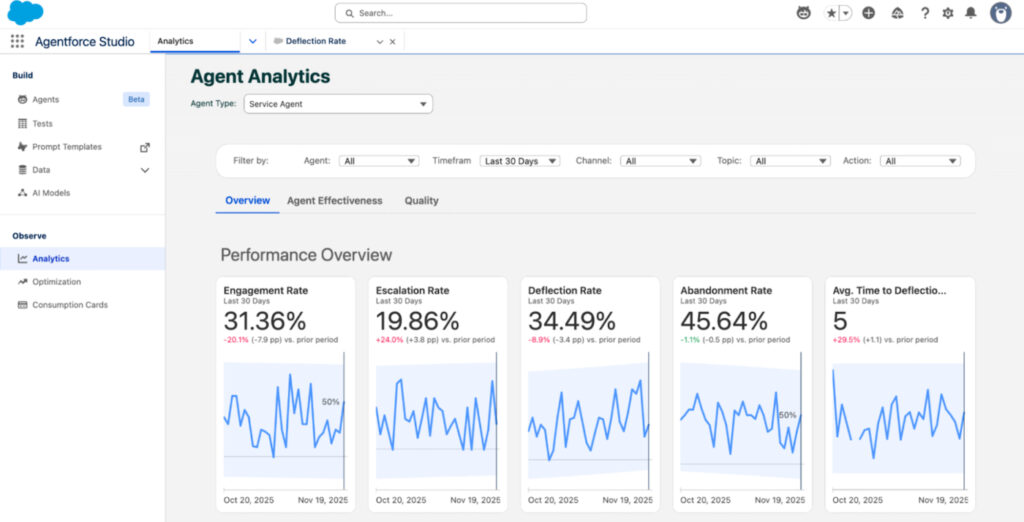
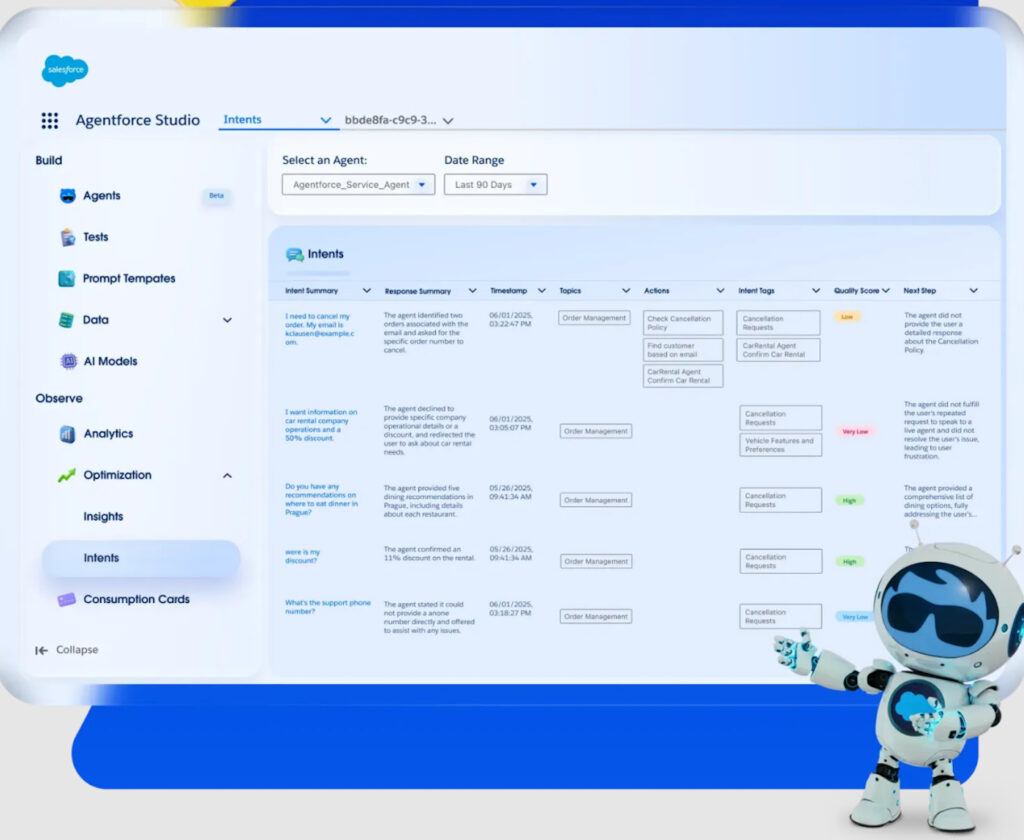
Salesforce Agentforce offers the following consumption-based pricing for any use case:
- Salesforce Foundations: $0 (Available for Salesforce Enterprise edition and above)
- Flex Credits: $500 per 100,000 credits
- Conversations: Customized (for existing Agentforce Conversations customers)
It’s also available as an add-on for employee-facing use cases:
- Agentforce add-on: $125/user/month (for Sales, Service, and Field Service Clouds)
- Agentforce Industries add-on: $150/user/month (for Industried Clouds)
- Agentforce 1 Editions: From $550/user/month
Also read: Best AI Sales Automation Tools

What makes Microsoft Dynamics 365 Sales AI agents the best for Microsoft-centric revenue teams?
Overall score:
4.39/5
Pricing and value:
3.40/5
Autonomous execution:
4.58/5
Sales workflow coverage:
4.46/5
Data and integrations:
4.65/5
Governance and security:
4.90/5
Analytics and measurement:
4.50/5
Support and usability:
3.93/5
Expert score:
4.73/5
Pros
- Purpose-built agents spanning multiple sales stages
- Native access to Dynamics 365 sales data
- Strong Microsoft 365 and Power Platform connectivity
- Excellent governance and security controls
Cons
- Licensing and capacity requirements can be complicated
- Deployment may require Dynamics expertise
- Less compelling outside the Microsoft ecosystem
Why I chose Microsoft Dynamics 365 Sales AI agents
Microsoft’s suite makes the most sense for revenue teams already using Dynamics 365, Microsoft 365, Copilot, and Power Platform. I found substantial coverage across qualification, opportunity analysis, seller research, recommended actions, and closing workflows, all supported by data and productivity tools many Microsoft customers already use.
Licensing and deployment are the principal hurdles. Buyers must determine which Dynamics edition, Copilot functionality, agent capacity, and implementation resources each workflow requires. For established Microsoft environments, that complexity is balanced by unified data access and the highest governance and security score in the rubric.
Microsoft Dynamics 365 Sales AI agents are part of the wider Dynamics 365 Sales, Microsoft Copilot, and Power Platform ecosystem. The portfolio includes agents for qualification, opportunity management, closing, sales research, and recommended actions.
- Sales Qualification Agent: Researches, evaluates, and engages leads.
- Sales Opportunity Agent: Monitors opportunities and surfaces risks or promising deals.
- Sales Close Agent: Supports product recommendations, objection handling, follow-up, and closing workflows.
- Sales Research Agent: Answers questions using sales and CRM data.
- Recommended Actions Agent: Prioritizes actions sellers can take to advance opportunities.
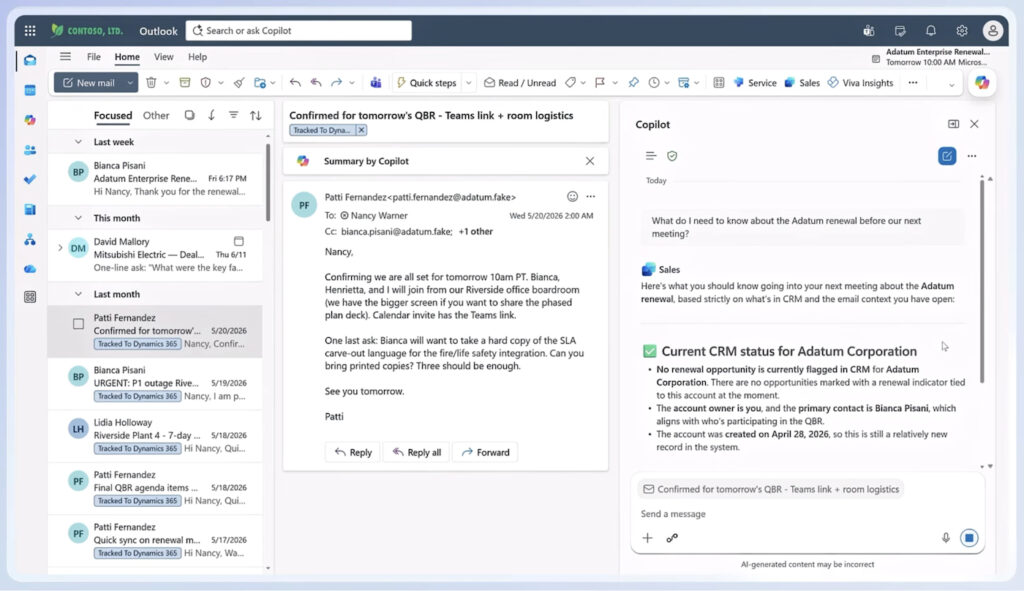
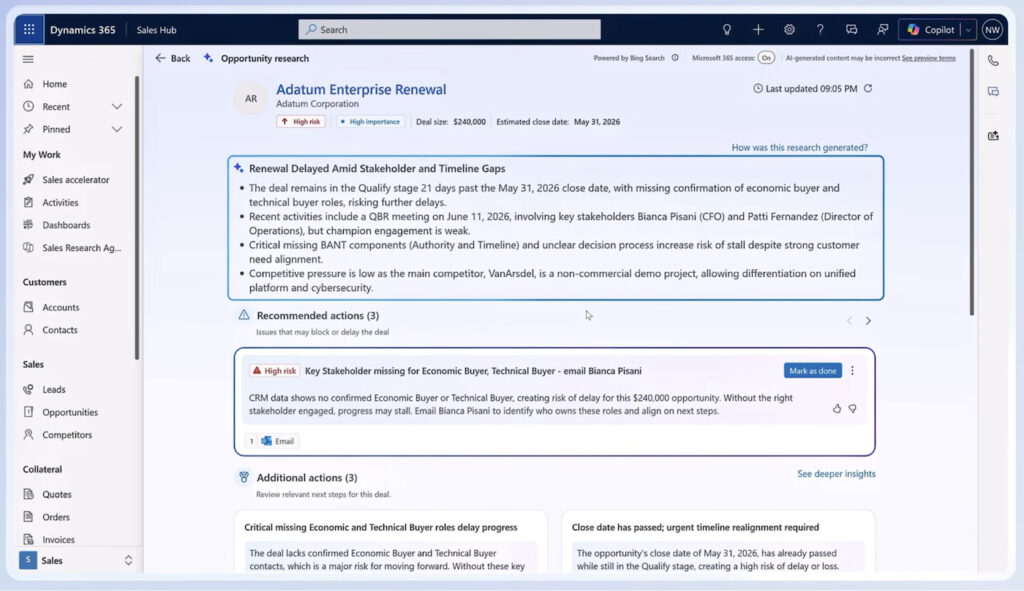
Microsoft’s sales AI agents are included with Dynamics 365 Sales Premium, which costs $150/user/month when paid annually. Each license comes with 1,000 Copilot Credits per user per month for running prebuilt and custom agents.
Businesses that exceed their included credits have two options:
- Pay-as-you-go: Pay for the Copilot Credits consumed at the end of each monthly billing period. This option requires an active Azure subscription but no upfront commitment.
- Pre-purchase: Buy Copilot Credit Commit Units upfront based on anticipated usage. Microsoft advertises savings of up to 20% with this option.
Copilot Credits power Microsoft’s Sales Qualification, Sales Opportunity, Sales Research, and Sales Close agents.
Also read: The Best AI Chatbots for Work
What makes HubSpot Prospecting Agent the best for CRM-connected autonomous prospecting?
Overall score:
4.29/5
Pricing and value:
4.65/5
Autonomous execution:
4.15/5
Sales workflow coverage:
3.57/5
Data and integrations:
4.80/5
Governance and security:
4.33/5
Analytics and measurement:
4.16/5
Support and usability:
5/5
Expert score:
4.51/5
Pros
- Works directly from HubSpot Smart CRM data
- Strong prospect research and personalization
- Offers review-based and autonomous operation
- Straightforward setup and outcome-based pricing
Cons
- Primarily focused on email prospecting
- Limited forecasting and post-sale workflow coverage
- Requires an eligible HubSpot subscription and credits
Why I chose HubSpot Prospecting Agent
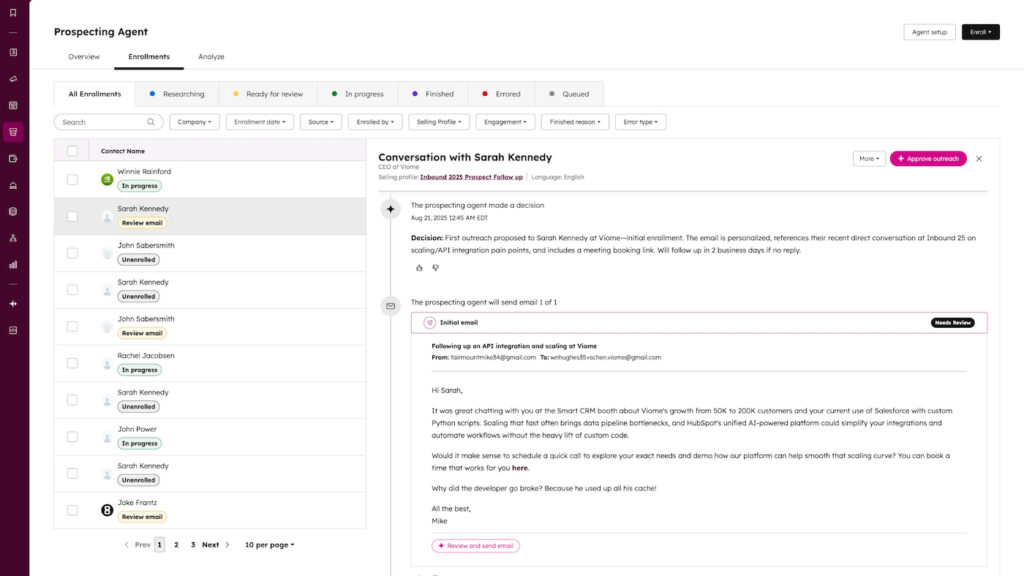
I found HubSpot Prospecting Agent particularly practical for teams that want to automate prospect research and outreach without introducing another disconnected platform. It uses contact, company, engagement, and pipeline data from HubSpot Smart CRM to research leads, prepare personalized emails, and recommend qualified prospects.
Its focused scope explains its lower sales workflow score. The agent is not designed to manage forecasting, quoting, renewals, or complex opportunity workflows. However, that narrower remit contributes to its excellent usability and value. For eligible HubSpot customers that primarily need prospecting support, it offers an accessible entry point into autonomous sales execution.
HubSpot Prospecting Agent is part of HubSpot’s broader customer platform and Agent Hub ecosystem. It works with HubSpot Smart CRM and Sales Hub data to research prospects, generate personalized outreach, and recommend qualified leads.
- CRM-based research: Uses HubSpot contact, company, and engagement context.
- Personalized outreach: Creates emails based on prospect and business information.
- Autonomous mode: Executes approved prospecting workflows within configured rules.
- Review mode: Allows sellers to review and edit emails before sending.
- Lead recommendations: Qualifies prospects and hands appropriate leads to sales representatives.
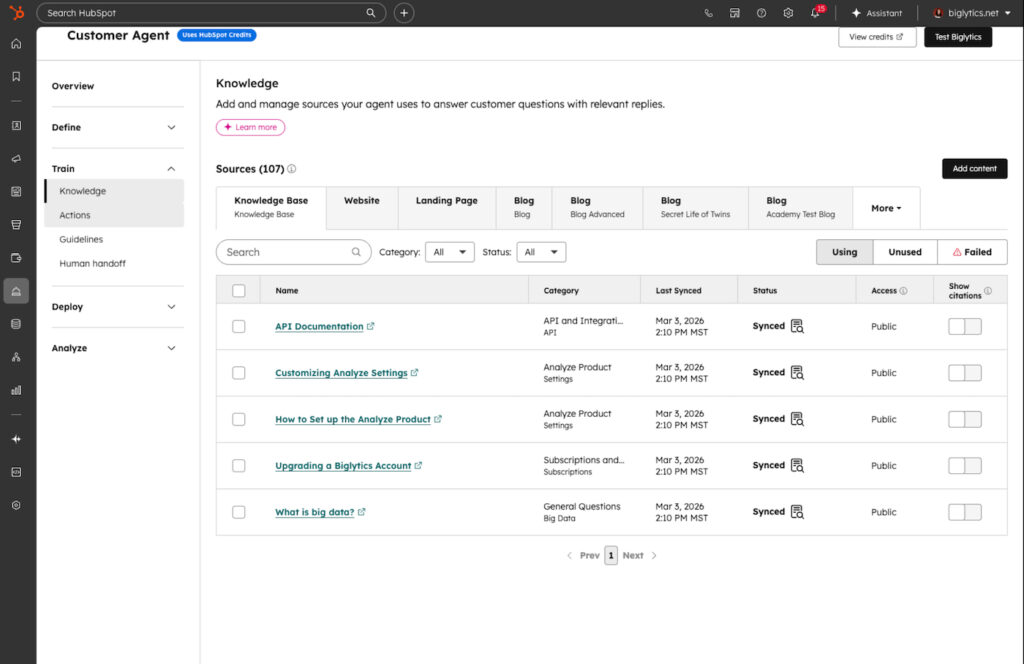
HubSpot charges through HubSpot Credits, with prospect research and message drafting priced at approximately $1 per lead. Prospecting Agent is available with the following plans:
| HubSpot Sales Hub plans | Starter | Professional | Enterprise |
| Monthly price, billed annually | $7/user | $90/user | $150/user |
| Monthly price, billed monthly | $10/user | $100/user | N/A |
| AI credits | 500 | 3,000 | 5,000 |
Also read: Best AI Prospecting Tools

What makes Gong Agents the best for conversation-driven deal execution?
Overall score:
4.20/5
Pricing and value:
3/5
Autonomous execution:
4.29/5
Sales workflow coverage:
4.41/5
Data and integrations:
4.50/5
Governance and security:
4.38/5
Analytics and measurement:
5/5
Support and usability:
4/5
Expert score:
4.63/5
Pros
- Deep conversation and deal intelligence
- Excellent reporting and measurement
- Strong risk detection and next-step guidance
- Grounds recommendations in buyer interactions
Cons
- Pricing is available only by quote
- Less focused on top-of-funnel prospecting
- Results depend on consistent activity capture
Why I chose Gong Agents
Gong received a perfect analytics score because its agents turn customer conversations and opportunity activity into measurable sales guidance. In reviewing the platform, I saw a clear fit for teams that want to automate meeting preparation, call summaries, follow-up tasks, risk detection, and coaching using evidence from actual buyer interactions.
Its dependence on captured conversation data is the principal limitation. Incomplete call recording or poorly synchronized CRM activity weakens the context available to its agents. For teams that already record customer interactions consistently, Gong can convert that data into timely actions that help sellers manage active deals.
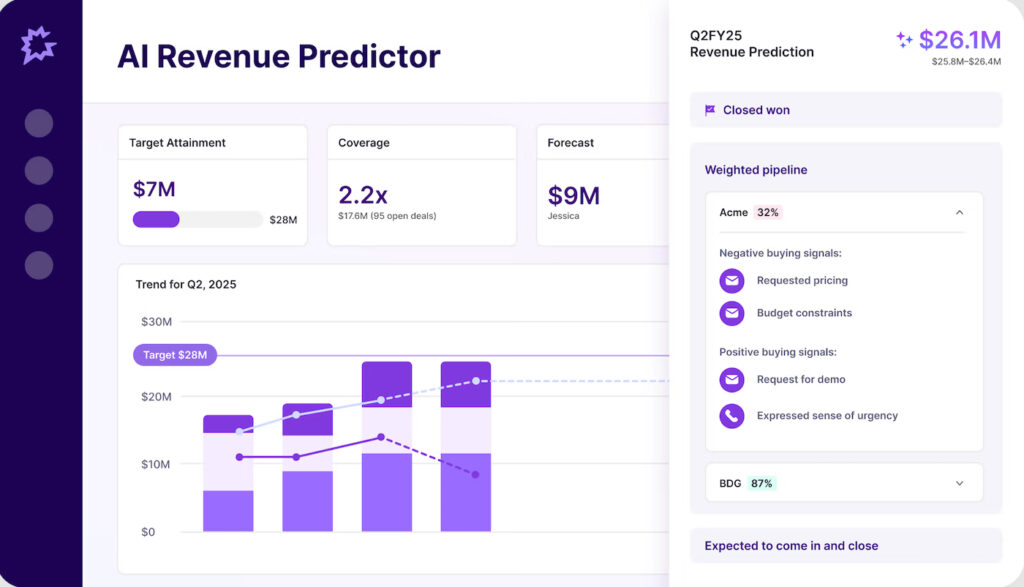
Gong Agents operate within Gong’s broader revenue intelligence platform. They use calls, meetings, emails, CRM records, and opportunity data to support preparation, follow-up, coaching, forecasting, and deal-management workflows.
- Meeting preparation: Produces briefs using account history, opportunities, and previous interactions.
- Conversation intelligence: Captures and analyzes calls for objections, commitments, and buyer themes.
- Deal-risk detection: Identifies missing activity, weak engagement, and other warning signs.
- Next-step guidance: Recommends actions based on conversations and opportunity context.
- Coaching insights: Helps managers identify patterns and improve seller performance.
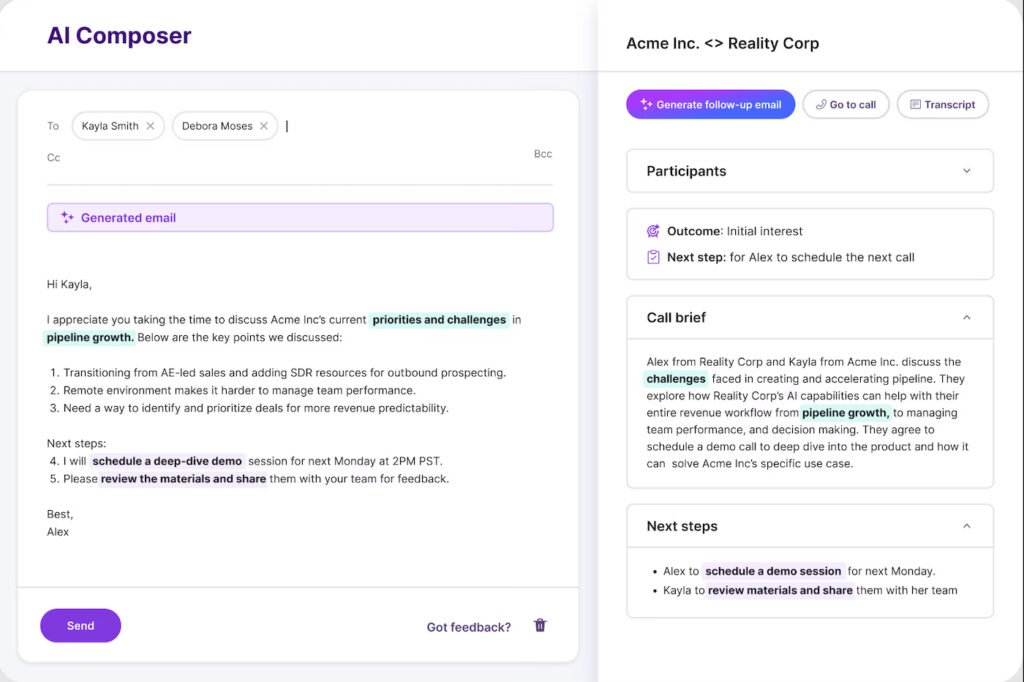
Gong uses custom pricing based on platform capabilities, team size, and implementation requirements. Contact Gong to request a custom quote that identifies agent access, conversation intelligence, CRM integration, onboarding, and any platform or seat fees.
Also read: Best Revenue Intelligence Software

What makes Outreach AI Agents the best for revenue workflow orchestration?
Overall score:
4.13/5
Pricing and value:
2.83/5
Autonomous execution:
4.45/5
Sales workflow coverage:
4.29/5
Data and integrations:
4.50/5
Governance and security:
4.38/5
Analytics and measurement:
4.65/5
Support and usability:
3.80/5
Expert score:
3.91/5
Pros
- Strong trigger-based automation
- Covers prospecting, deals, coaching, and renewals
- Detailed workflow and outcome reporting
- Configurable controls with action histories
Cons
- Pricing is not publicly disclosed
- Requires mature processes and clean data
- May be excessive for basic outreach needs
Why I chose Outreach AI Agents
Outreach is well suited to established revenue organizations that need to coordinate activity across multiple stages of the customer lifecycle. I found strong coverage for prospecting, meeting preparation, pipeline inspection, next-best actions, coaching, forecasting, and renewal-risk workflows.
Its pricing transparency and configuration experience lowered its overall result. Teams need clean data, well-defined sales processes, and clear rules for agent actions, approvals, and handoffs. When those foundations are in place, Outreach’s autonomy and analytics can help connect sales workflows that might otherwise remain fragmented across separate tools.
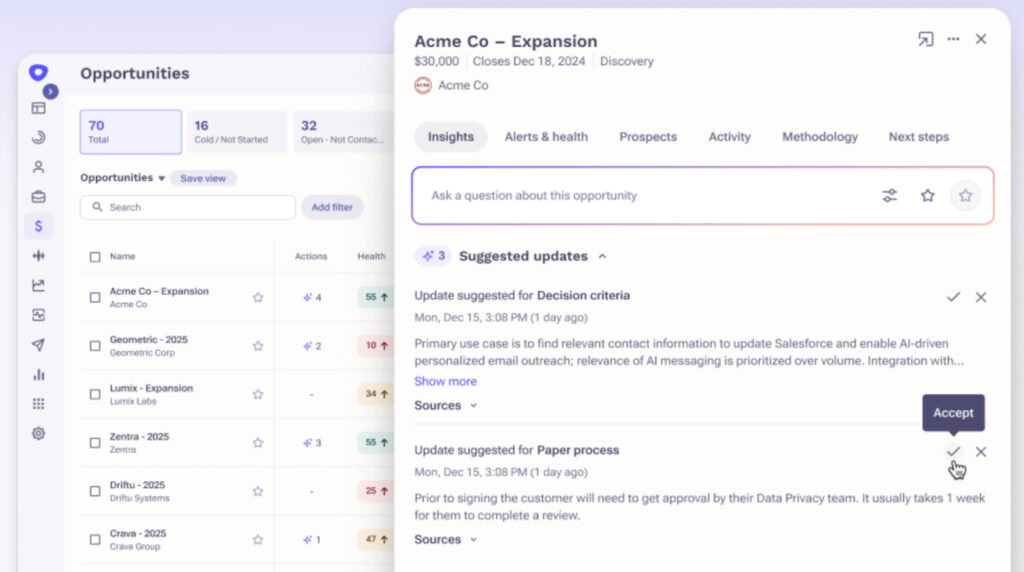
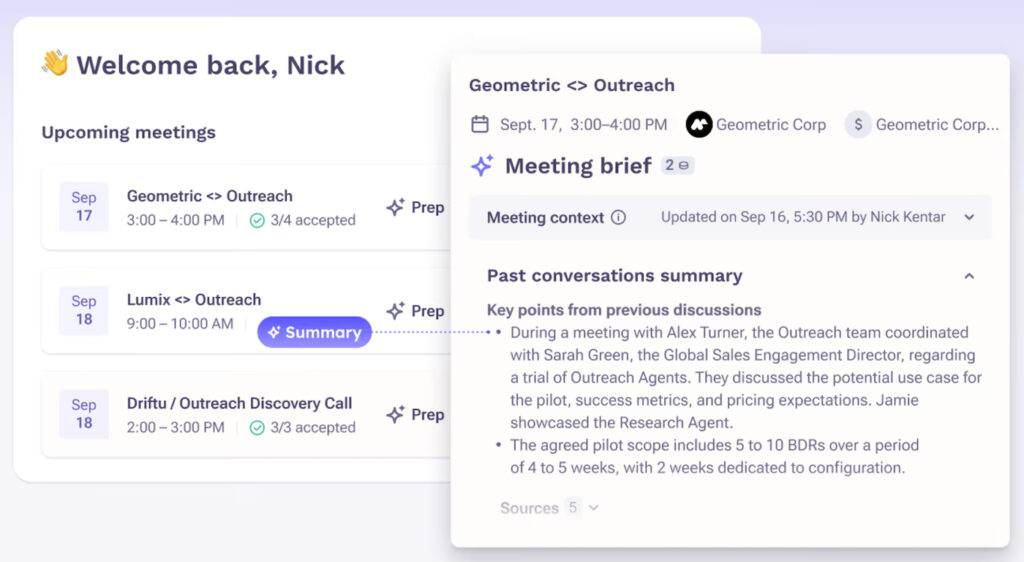
Outreach AI Agents are part of the larger Outreach AI revenue orchestration platform. The ecosystem combines sales engagement, deal management, conversation intelligence, forecasting, coaching, and account expansion tools with configurable agents and workflow automation.
- Agent Studio: Configures ready-made and custom workflows in a visual canvas.
- Outreach Omni: Lets sellers query and act across prospects, accounts, opportunities, and meetings.
- Meeting Prep Agent: Produces account, participant, and opportunity briefings.
- Deal and renewal monitoring: Flags pipeline, churn, and expansion risks.
- Knowledge grounding: Uses approved sales and positioning content to guide AI outputs.
Outreach provides custom pricing for the following packages:
- Amplify Essentials: AI-powered intelligence coaching + 10,000 AI credits
- Amplify Core: AI-powered sales execution + 25,000 AI credits
- Amplify Plus: AI-powered revenue acceleration + 50,000 AI credits
- Amplify Pro: AI-powered revenue orchestration + 100,000 AI credits
Contact Outreach to request a quote covering platform access, AI agents, required modules, implementation, support, user minimums, and potential usage charges.
Also read: Best Multi Channel Marketing Campaigns for B2B Brands

What makes Oracle Fusion Sales AI Agents the best for complex opportunity-to-revenue workflows?
Overall score:
4.08/5
Pricing and value:
2.50/5
Autonomous execution:
4/5
Sales workflow coverage:
5/5
Data and integrations:
4.48/5
Governance and security:
4.81/5
Analytics and measurement:
4.20/5
Support and usability:
3/5
Expert score:
3.75/5
Pros
- Complete opportunity-to-revenue coverage
- Strong quoting, renewal, and post-sale support
- Enterprise-grade permissions and governance
- Native access to Oracle application data
Cons
- Complex implementation and administration
- Pricing requires a custom quote
- Best suited to existing Oracle Fusion customers
Why I chose Oracle Fusion Sales AI Agents
Oracle Fusion Sales AI Agents can support processes beyond prospecting and seller assistance. Its ecosystem connects lead qualification, opportunity management, forecasting, quoting, renewals, and post-sale operations — important capabilities for enterprises whose revenue workflows span multiple departments.
That breadth comes with a substantial implementation burden. Teams may require Oracle specialists, data preparation, integration work, and structured change management. For organizations already managing customer, finance, quoting, and operational data in Oracle Fusion, that complexity is balanced by comprehensive workflow coverage and rigorous governance.
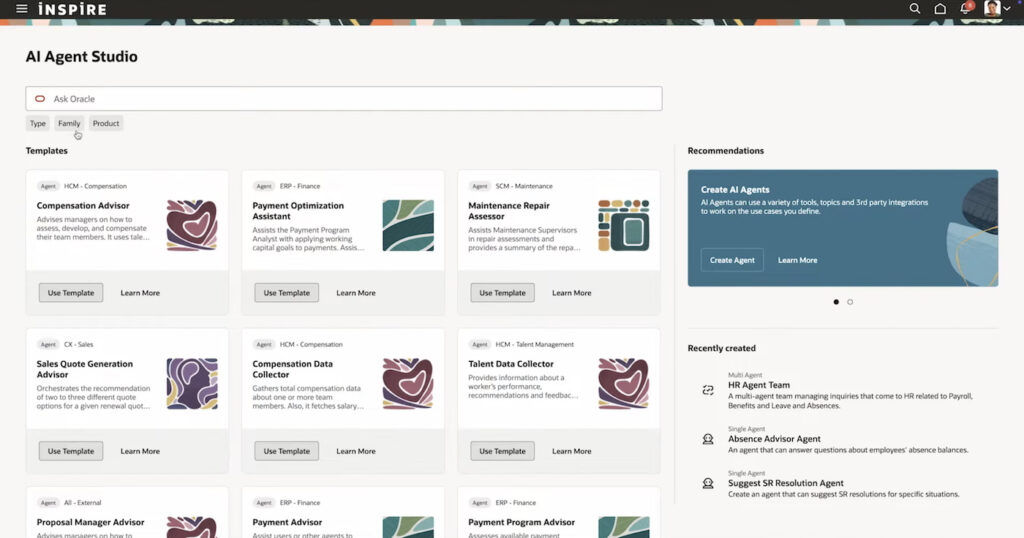
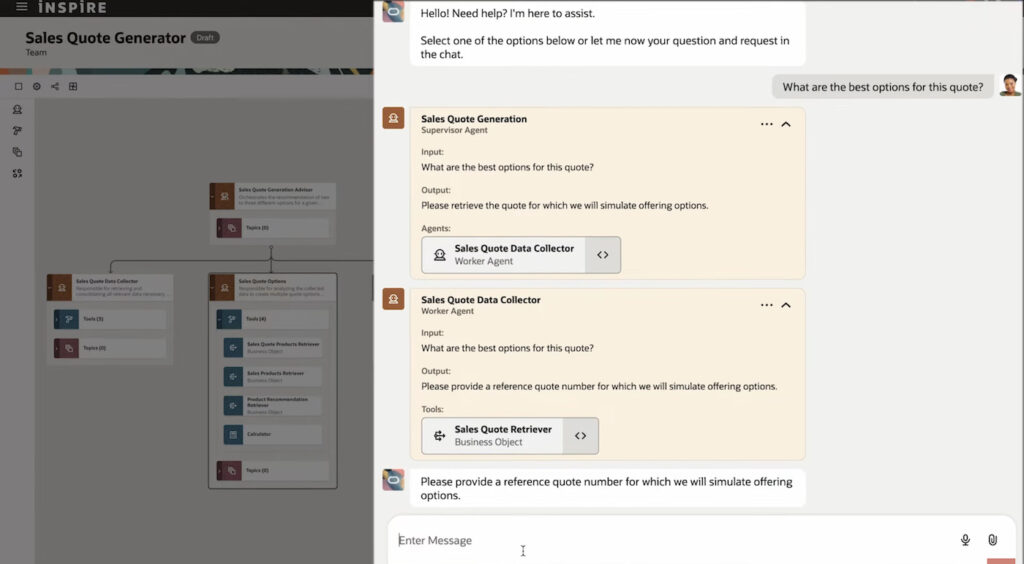
Oracle Fusion Sales AI Agents are part of the broader Oracle Fusion Cloud Applications ecosystem. They work with Oracle sales, service, finance, quoting, and customer data to support revenue processes from initial qualification through closing, renewal, and expansion.
- Lead and opportunity support: Helps research, qualify, and advance prospects and deals.
- Seller guidance: Recommends actions using customer, opportunity, and transaction context.
- Forecasting and risk analysis: Surfaces pipeline changes and potential revenue risks.
- Quote-to-revenue workflows: Connects sales activity with quoting and downstream commercial processes.
- Enterprise governance: Uses Oracle permissions, security policies, controls, and audit histories.
Oracle prices Fusion Sales and related AI capabilities according to the selected services, modules, user licenses, and contract terms. Contact Oracle to request a quote covering required Fusion applications, AI-agent access, implementation, integrations, support, and usage.
Also read: AI in ERP Systems: Use Cases, Benefits & Enterprise Impact
How to choose an AI sales agent
- Define the workflow.
Start by identifying the process the agent should improve, such as prospect research, CRM maintenance, meeting preparation, deal-risk monitoring, forecasting, quoting, or renewals. Focus on a narrow workflow with a measurable outcome — such as reducing research time or improving forecast accuracy — rather than a broad goal like “increase sales.”
- Confirm data and integration requirements.
Determine which systems the agent must access, including your CRM, email, calendar, call recordings, marketing activity, product usage data, or quoting platform.
Make sure the underlying data is accurate, current, and properly permissioned. Connecting more data will not improve performance if that information is incomplete or unreliable.
- Set the appropriate autonomy level.
Decide whether the agent should recommend actions, prepare work for human approval, or complete approved tasks autonomously. Routine, low-risk tasks may support greater autonomy, while actions involving pricing, contracts, negotiations, or strategic accounts should retain human review.
- Review governance and security.
Look for role-based permissions, audit trails, approval controls, action monitoring, escalation procedures, and clear data-retention policies. Also review regional data handling and whether the provider uses customer data for model training.
Limit the agent’s access to what its assigned workflow requires. Your team should also be able to pause activity, investigate errors, and reverse actions when needed.
- Calculate the total cost.
Account for user licenses, usage credits, data enrichment, email or calling infrastructure, required CRM editions, implementation, integrations, and ongoing administration — not just the advertised subscription.
Compare the total investment with measurable outcomes such as time saved, cleaner data, more qualified meetings, higher pipeline conversion, improved forecast accuracy, or stronger renewal rates.
Benefits of AI sales agents
AI sales agents can reduce repetitive work and help sellers respond to opportunities more consistently. Their greatest value comes from turning existing sales data into timely, governed actions.
- Less administrative work: Agents can summarize meetings, update CRM fields, create tasks, and maintain opportunity records. For example, an agent can log a call summary and schedule the next follow-up automatically.
- More consistent execution: Agents can apply approved research, qualification, follow-up, and escalation rules across eligible accounts, reducing missed steps and uneven execution.
- Faster responses: Agents can act on buyer signals or meeting outcomes without waiting for manual intervention, such as alerting a rep when a target account visits a pricing page.
- More actionable sales data: Agents can convert CRM records, engagement history, and conversations into recommended actions — for example, flagging a stalled deal that may need executive outreach.
- Broader workflow coverage: Specialized agents can support prospecting, opportunity management, forecasting, quoting, renewals, and seller coaching.
Risks of AI sales agents
AI sales agents can also scale errors as quickly as they scale productive work. Businesses need reliable data, limited permissions, human oversight, and clear accountability before allowing agents to act autonomously.
- Incorrect actions: Incomplete or outdated data can produce poor recommendations. An incorrect job title, for instance, may lead to irrelevant outreach.
- Excessive automation: Strategic accounts, complex objections, pricing decisions, and sensitive negotiations still require human judgment.
- Poor customer experiences: Generic, inaccurate, or overly frequent communication can damage trust, such as sending a prospecting email to an existing customer.
- Data exposure: Agents may access sensitive customer, pricing, contract, and pipeline information, making strict permissions and data controls essential.
- Unclear accountability: Organizations must assign responsibility for configuration, approvals, monitoring, incident response, and business outcomes.
Frequently asked questions