


B2B buyers move across paid media, research, events, partner channels, and sales conversations before making a decision. The best multi channel marketing campaigns connect these touchpoints around one audience, message, and measurable goal.
Each channel should have a clear purpose. It might earn attention, educate buyers, provide proof, or prompt action. A multi channel marketing campaign coordinates these roles without repeating the same creative everywhere.
The eight examples below show how B2B brands put this approach into practice. The order reflects strategic variety, not a universal ranking. Reported results are examples, not guaranteed benchmarks.
Brands marketing through dealers, distributors, franchisees, or local teams must also coordinate content, funding, execution, and measurement. Ansira is one platform built around that brand-to-local workflow.
- What is a multi channel marketing campaign?
- 1. Full-funnel demand generation
- 2. Brand-to-local partner marketing
- 3. Research-led industry marketing
- 4. Integrated digital and offline marketing
- 5. Globally localized marketing
- 6. Partner-executed campaigns
- 7. Developer-community marketing
- 8. Segment-specific education
- What makes the best multi channel marketing campaigns work?
- How to plan a multi channel marketing campaign
- Frequently asked questions
What is a multi channel marketing campaign?
A multi channel marketing campaign uses several channels to achieve one goal. Its audience, message, timing, and measurement remain aligned across formats.
Multichannel marketing reaches buyers in different places. Omnichannel marketing also connects their data and interactions. Either approach can work when every touchpoint supports the same outcome.
1. Full-funnel demand generation
What it is: A coordinated campaign that supports buyers from awareness through evaluation and purchase. Content changes by buying stage and stakeholder rather than repeating one message throughout the funnel.
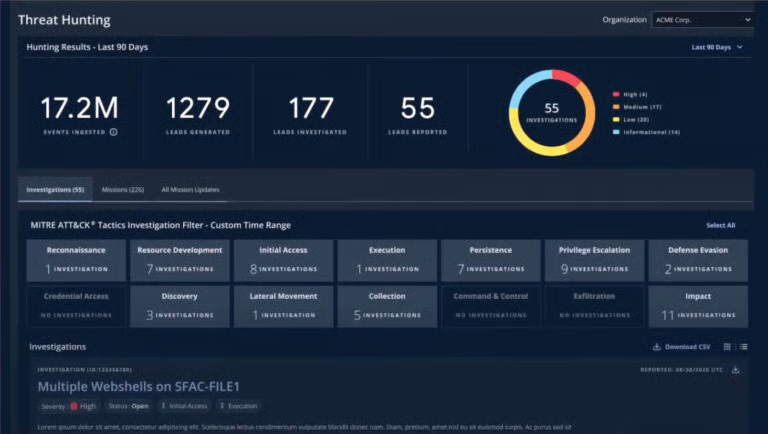
Example: Google Cloud’s Security Operations Marketing Program combined paid and organic media, ROI content, migration playbooks, customer stories, and partner enablement. Separate messages addressed executives and technical practitioners. The campaign resulted in higher conversion rates, larger deals, and engagement above benchmarks.
Takeaway: Map the buying committee before developing assets. Give executives business evidence, practitioners implementation guidance, and internal advocates materials they can share.
2. Brand-to-local partner marketing
What it is: A campaign model that connects corporate strategy with execution by dealers, franchisees, agents, or local teams. It preserves brand standards while allowing targeting and tactics to reflect local demand.
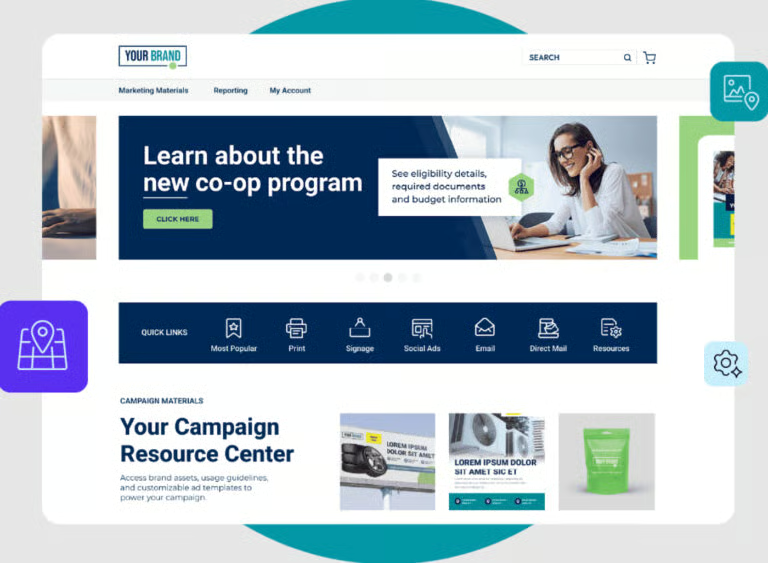
Example: Ansira developed a B2B media program for a compact-equipment manufacturer. It coordinated paid media across participating dealers and routed calls and form submissions to local teams. Ansira reports that the three-month campaign generated more than 4,500 conversions and delivered a 51% lower cost per lead than the other products measured.
Takeaway: Use shared KPIs across locations, but allow local targeting where demand differs. Send leads directly to the teams responsible for following up.
3. Research-led industry marketing
What it is: A campaign built around original research into a commercially relevant industry problem. The findings become the foundation for content, events, executive outreach, and sales conversations.
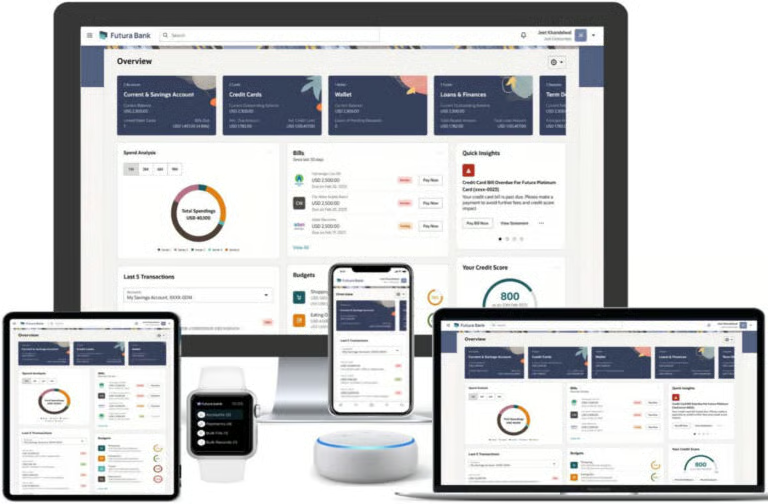
Example: Oracle’s Digital Bank of the Future campaign examined gaps between customer expectations and banking capabilities. Oracle extended the findings through workshops, influencers, videos, blogs, infographics, and nurture. B2B Marketing reports that a later phase generated $28 million in pipeline against a $16 million target.
Takeaway: Treat research as a campaign engine, not a one-time report. Plan how the findings will support events, social content, sales outreach, partner activity, and nurture.
Also read: Account-Based Marketing (ABM) Software Guide
4. Integrated digital and offline marketing
What it is: A campaign that combines precise digital targeting with offline channels that build visibility and credibility.
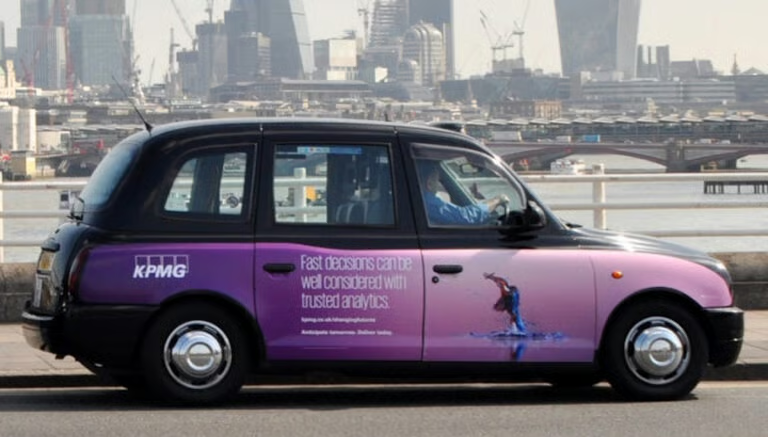
Example: KPMG’s Changing Futures campaign used email, programmatic ads, social media, webinars, events, website content, Financial Times takeovers, outdoor placements, and branded taxis. The case study reports 840 marketing leads, more than 330 sales-accepted leads, and £35 million in influenced business.
Takeaway: Give online and offline channels different roles. Use prominent placements to build recognition, then connect them with targeted digital content that can be measured and followed up.
Also read: Marketing Software Guide
5. Globally localized marketing
What it is: A global campaign that preserves one central idea while adapting its language, tone, content, and channel mix for regional audiences.
Example: F5 Networks’ Hug a Hacker campaign ran across 48 countries and six languages. It combined distinctive creative with original cybersecurity content and a two-stage awareness and nurture program. The case study attributes $500,000 in sales, $1.6 million in pipeline, and a 19% conversion rate to sales-accepted leads to the campaign.
Takeaway: Localize more than the words. Adapt the tone, content, channel emphasis, and nurture to regional buyer behavior while protecting the central campaign idea.

Also read: Best SEO Tools for Keyword Research & Site Audits
6. Partner-executed campaigns
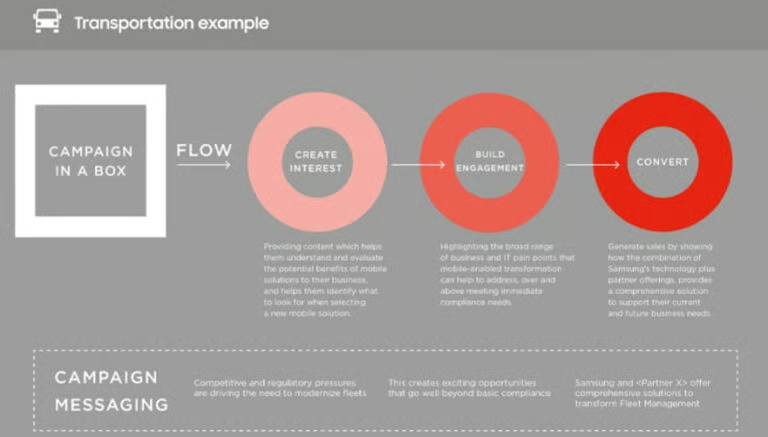
What it is: A ready-to-run campaign that gives partners the strategy, content, media guidance, lead workflow, and sales materials required for execution.
Example: Samsung and OneGTM created a campaigns-in-a-box program for service-provider partners. Sector-specific packages connected digital lead generation with nurture and sales follow-up. Partners could fund media through their own budgets or market development funds. B2B Marketing reports a 32.5:1 ROI.
Takeaway: Give partners complete workflows rather than folders of disconnected assets. Include targeting, content, media guidance, lead capture, nurture, follow-up, and reporting.
Also read: 8 Best AI Marketing Tools
7. Developer-community marketing
What it is: A technically credible campaign that reaches practitioners through the channels and communities they already use. It also gives them evidence they can share with business decision-makers.
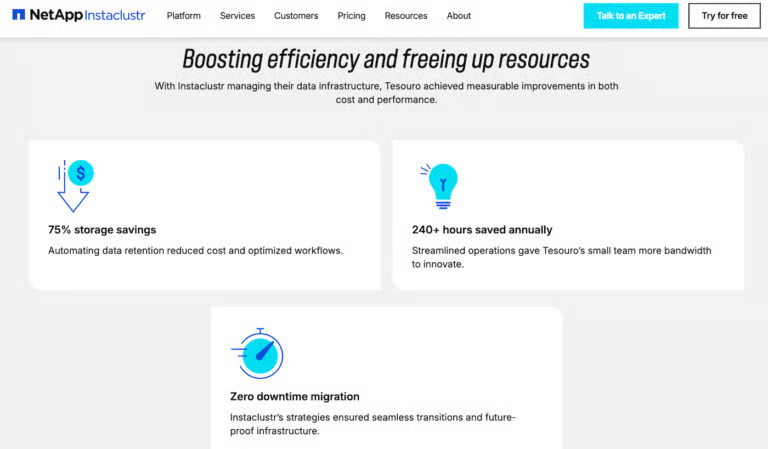
Example: NetApp Instaclustr’s “Loved by Developers, Trusted by Enterprises” campaign combined workshops, open-source events, technical content, GitHub, documentation, LinkedIn, newsletter articles, customer evidence, an ROI calculator, and ABM nurture. Positive results included improved lead-to-SQL conversion and pipeline growth at target accounts.
Takeaway: Pair technical education with a clear business case. Documentation, workshops, calculators, and customer evidence should reinforce one another.
Also read: Top 5 Security-as-a-Service Providers
8. Segment-specific education
What it is: A campaign designed around a specific audience’s knowledge gap, operational challenge, or barrier to adoption.
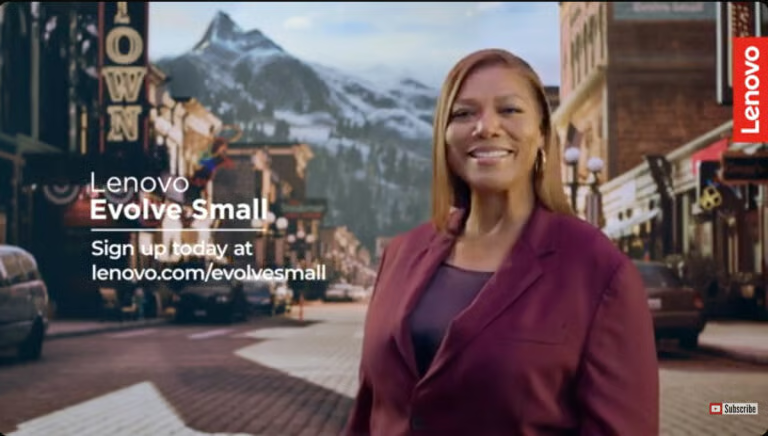
Example: Lenovo and Assembly Global developed Evolve Small to make AI more accessible to small business owners. The campaign combined digital media, customer stories, workshops, hands-on training, in-person activities, and grants. TechnologyAdvice reported engagement and conversion results above industry benchmarks.
Takeaway: Build segment marketing around a specific problem, not a broad demographic label. Combine scalable education with practical participation and credible customer voices.
Also read: Best AI SEO Tools
What makes the best multi channel marketing campaigns work?
Five elements separate a coordinated campaign from a collection of disconnected tactics:
- A defined audience problem: “Generate awareness” is too broad. Identify what buyers need to understand, believe, or do next. Lenovo, for example, focused on making AI more accessible to small business owners.
- A purpose for every channel: More channels do not guarantee better results. Paid media can build awareness, research can establish authority, and events can educate. Sales outreach or partner follow-up can then prompt action.
- Content matched to each buyer: Executives may prioritize risk and financial impact. Practitioners need technical and implementation details. Partners need materials they can use with customers. Adapt the content while keeping the core message consistent.
- Planned sales and partner handoffs: Define who receives each lead, what triggers follow-up, and how quickly teams should respond. Samsung connected partner media with nurture and sales activity. Ansira routed local leads to participating dealers.
- Measurement tied to business results: Impressions, clicks, and downloads help diagnose performance, but they do not prove impact. Track the outcomes that support the campaign’s objective, such as qualified leads, opportunities, pipeline, revenue, partner participation, and local conversions.
How to plan a multi channel marketing campaign
Planning a multi channel marketing campaign starts with the buyer and business goal, not a list of channels your team wants to use.
1. Define the audience and outcome.
Identify the target industry, company profile, buying role, problem, and stage of consideration. Avoid broad audiences such as “IT leaders.” Next, choose a measurable outcome. This might be qualified opportunities, partner-sourced pipeline, product adoption, local leads, or faster deal progression.
2. Map the buying group.
Document what each stakeholder needs to make a decision. Practitioners may prioritize compatibility and implementation. Executives and finance leaders may focus on risk, cost, and return. Determine what evidence each person needs and where they are likely to seek it.
3. Give every channel a purpose.
Decide whether each channel should build awareness, educate buyers, capture demand, provide proof, or support follow-up. Remove channels that do not serve a distinct role.
4. Build a campaign system.
Start with one central message and supporting evidence. Adapt them into social posts, educational content, landing pages, sales materials, partner assets, and decision tools. Keep essential claims and brand elements consistent while adjusting the format and level of detail.
5. Plan handoffs before launch.
Define how leads move among marketing, sales, partners, and local teams. Set ownership rules, qualification criteria, response times, and escalation paths. Test forms, lead routing, CRM fields, notifications, and partner access before launch.
6. Connect campaign data.
Use consistent campaign names and tracking parameters. Connect advertising, marketing automation, event, partner, and CRM data where practical. Attribution will not always be perfect. However, disconnected reporting makes it difficult to see how channels contribute to results.
7. Optimize the complete journey.
A high-performing advertisement does not guarantee a successful campaign. Check whether buyers reach the right content, receive timely follow-up, and advance toward the intended outcome.
Compare audience segments and channel combinations. Shift resources toward the paths producing qualified opportunities, pipeline, and revenue.
The best multi channel marketing campaigns make these decisions before launch. They use performance data to improve the complete journey rather than optimizing each channel in isolation.
Frequently asked questions
What is an example of a multi channel marketing campaign?
Google Cloud’s Security Operations Marketing Program combined paid and organic media, ROI content, migration playbooks, customer stories, partner enablement, and separate messaging for executives and practitioners. The channels served different stages of evaluation while supporting one demand generation objective.
Which channels work best for B2B campaigns?
The right mix depends on the audience and goal. Common B2B channels include search, paid media, email, social media, webinars, events, partner marketing, content syndication, direct mail, and sales outreach. Select channels based on the role they play in the buyer journey rather than their popularity.
How many channels should a campaign use?
Use the smallest combination that can reach the audience and support the intended journey. Three well-coordinated channels can outperform eight disconnected ones. Add a channel only when it reaches an important audience or performs a job the existing mix cannot.
What is the difference between multichannel and omnichannel marketing?
Multichannel marketing uses several channels to reach an audience. Omnichannel marketing connects data and interactions across those channels so the experience can continue with greater context. Multichannel refers to the presence of several routes; omnichannel refers to how tightly those routes work together.
How should B2B marketers measure multichannel campaigns?
Track diagnostic metrics such as reach, engagement, and conversion alongside qualified leads, target-account engagement, opportunity creation, pipeline, deal velocity, revenue, and partner participation. Evaluate the full journey instead of crediting only the first or final touch.