Key takeaways
- HR’s role in change management includes assessing employees’ preparedness, verifying legal compliance, facilitating clear communication, providing training, and reviewing the impact of the change.
- Some examples of workplace changes that involve HR are mergers and acquisitions, new policy roll-outs, layoffs, and leadership changes.
- Oct. 8, 2025: Hanna Sillo revised some of the discussions, incorporated illustrative examples, refreshed the key takeaways, removed mentions of outdated providers, and added a new FAQ section.
- Apr. 9, 2024: Irene Casucian rewrote the article to provide a clear and concise explanation of HR’s role in change management, illustrate examples of change management scenarios that directly involve HR, and recommended software tools to support HR change management.
What is HR change management?
HR change management refers to the human resources department’s efforts to help employees transition and adapt to organizational changes. These changes can be related to business processes, structures, policies, or culture. Some HR change management activities include conducting surveys, creating training programs, and addressing employee wellness risks.
HR change management aims to minimize disruptions, maintain productivity, and keep employees motivated despite the recent adjustments.
What is HR’s role in change management?
HR is more than just a facilitator during change. Most of the time, they runs the people layer of the project. That means translating business decisions into clear expectations, safety nets, and measurable steps so people actually adopt the new way of working.
1. Evaluate the employees’ preparedness
Before developing a plan to communicate and implement a change, it is essential to gauge how the employees might react. Create a plan for the upcoming changes by:
Big-picture strategy updates work best in an all-hands or video from leadership, while role-specific process changes belong in manager briefings and short how-to emails. For example, announce a company-wide reorg via a town-hall that’s also recorded followed by manager-led 1:1s for direct team impact and a pinned FAQ in the intranet for ongoing reference.
Translate the new ways of working into the specific skills people will need, then surface who already has them and who doesn’t so training can be targeted, not generic. For example, if a shift to a new CRM means account reps must run reports, map skill levels to required tasks and roll out a focused two-hour reporting workshop for the lowest-scoring cohort.
Audit not just headcount, but also tools, budget, and manager capacity to support rollout. A great plan that assumes three extra hours of manager time per week will fail if managers are already overbooked. For example, if IT estimates two weeks to migrate systems, build that lead time into the launch plan and reserve temporary support contractors for first-month troubleshooting.
Use past change episodes as a model and compare pre vs. post metrics like time-to-productivity, pulse sentiment, and short-term attrition to set realistic targets and early-warning thresholds. For example, if prior tool launches caused a 10-point dip in engagement for two months, plan additional manager check-ins and a faster training cadence to prevent the same drop this time.
Taking these steps will help introduce the change without overwhelming the team.
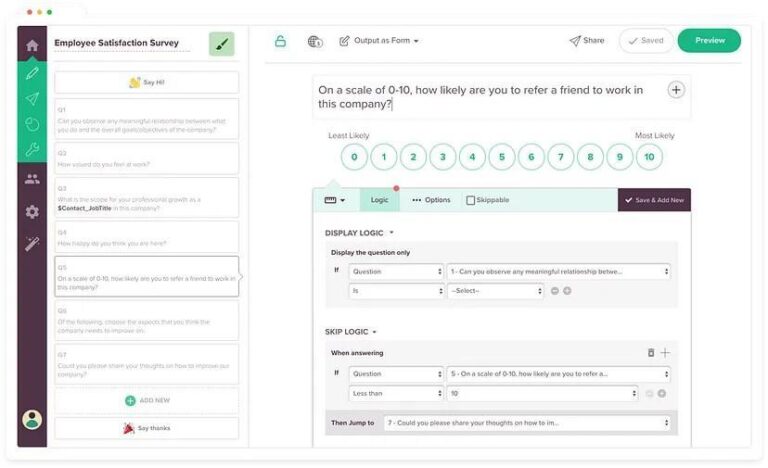
One way to check an organization’s receptiveness and readiness to change is to conduct surveys. Survey tools, such as SurveySparrow, can streamline this process. After collecting survey responses, SurveySparrow provides detailed analytics that you can use to make informed decisions when planning next steps. Another best practice is to use historical data to forecast the impact of change.
2. Monitor legal compliance
One of HR’s most vital roles in change management is ensuring that impending changes are in full compliance with the law. This responsibility includes verifying existing contracts and ensuring that the changes align with legal frameworks country-wise and state-wise. This involves checking employee rights, compensations, anti-discrimination policies, and health and safety standards. If there’s a threat of compliance risk, you should implement safeguards to avoid negative repercussions.
In line with this, HR must also see that everything is well-documented. Processes such as planning a change, communicating with stakeholders, and consulting legal experts should have proper documentation in case of a future audit or legal challenge.
3. Communicate impending changes
Aside from considering the readiness of the employees for a change, you should also plan how to communicate to employees, while keeping in mind the importance of maintaining transparency. Doing so will help build trust and reduce resistance. Be clear and honest, and set proper expectations.
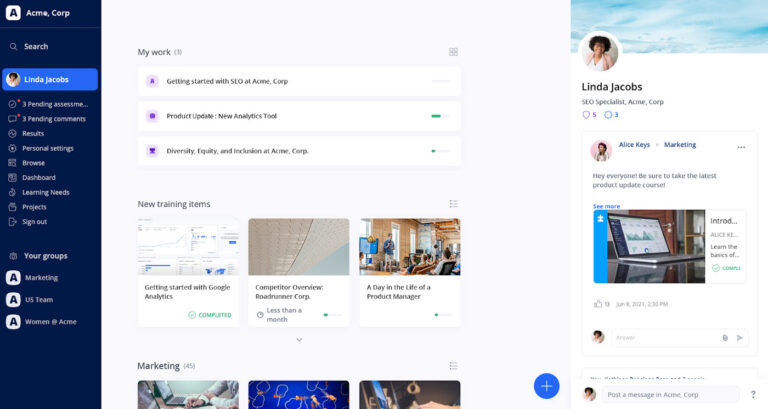
It is also best practice to maintain communication both ways. Make sure your employees know you hear them by offering different ways to express concerns or questions. Workvivo, an employee experience tool, centralizes communication, allowing companies to easily update and share information in one location.It can also measure employee engagement and track sentiment.
4. Provide training
HR should provide change management training to minimize operational disruption by equipping employees with the necessary tools to adapt to the change. Anyone who is tasked with new responsibilities as a result of the change should receive some type of training — otherwise, they won’t be set up for success.
Apps like 360Learning help foster collaborative change management training. 360Learning lets you create and customize training courses to ease transitions, and its analytics and tracking features to help your team monitor progress and completion rates.
5. Track and review the effects of the change
Another part of HR’s role in change management is tracking the change’s effects. Monitoring the impact helps evaluate the success of the change management strategy and the efficacy of the change. This process also helps identify any areas for improvement.
Collect data you can use to gauge the impact; you can use methods like surveys, feedback forms, or interviews. With the help of the gathered data, you can adjust the change management strategy accordingly.
How does HR make change management easier?
As your company evolves, your HR team should be prepared to implement changes with as little disruption as possible. Below are four common scenarios with practical examples you can emulate.
1. Mergers and acquisitions
While mergers and acquisitions are common in the business world, these events can trigger anxiety in employees. Clear communication that explains the motivation behind the merger or acquisition helps employees understand it is a strategic move for the organization that will benefit their own careers in the long run. It will also help to provide a clear path forward and align the employees’ expectations.
Example: A company acquires a mid-market competitor. HR’s first tasks following this change were as follows:
- Week 0: HR briefing the acquiring company’s leadership and agreed on a two-week “information freeze” for non-essential changes, published an interim org chart and a 30-day integration timeline, and opened a single shared “integration hub” with an FAQ and calendar of town halls.
- Week 2–8: HR ran role-mapping workshops with each manager to identify duplicate roles and critical talent, locked in 90-day retention pay for revenue owners, and held weekly office hours to answer questions.
2. New policy roll-out
Implementing a new policy requires a comprehensive approach to change management. Start with developing a plan that outlines the entire policy implementation process, including the goals of the rollout and what problem that the new policy will address.
All stakeholders must review and agree on the new policy to prevent misunderstandings. You must also check the new policy at this point to ensure it complies with laws and regulations.
As always, a strong communication plan is vital. You should utilize digital channels and platforms to distribute the details of the new policy and for training purposes.
Example: Before a companywide hybrid-work policy, HR piloted a single customer-facing team for six weeks to see real operational trade-offs:
- Week 0–2: Design pilot criteria, train pilot managers, and publish a one-page expectation sheet.
- Week 3–6: Collect daily manager check-ins and a five-question pulse for the pilot team.
- Week 7: Iterate the policy language based on pilot feedback, prepare manager talking points, and schedule a town hall and microtraining for all teams.
3. Layoffs
Layoffs are some of the most challenging changes to manage because they require holistic strategies involving:
- Thorough planning and compliance checks.
- Careful and empathetic communication.
- Reputation management.
- Morale management.
By considering these strategies, you can manage layoffs in a way that respects the dignity of all employees, minimizes negative impacts, and positions the organization for recovery and future growth.
Read more: How to Gracefully Layoff an Employee with Compassion
Example: When the company needed to reduce headcount, HR ran a legal and ethical triage before the first announcement.
- Day −7 to 0: Finalize severance math and individualized letters, train managers in a two-hour “delivery and empathy” session, and prebook outplacement resources.
- Day 0: Managers conduct one-on-ones with HR present, affected employees receive written packages, and HR publishes a company statement focused on next steps and support.
- After Day 3: HR runs manager check-ins, offers counseling and redeployment clinics, and launches a “stay” communication for remaining employees outlining short-term goals.
4. Leadership changes
Changes in leadership can significantly impact employees, and a smooth transition of power requires familiarity and trust from the ground-up. Meet-and-greets and town hall meetings provide a low-stakes environment where employees can ask questions and learn more about the new leader.
In addition to explaining why the leadership change happened and what we expect from it, you should first inform key team members about the change, outlining the reasons and expected outcomes. Then, to build a positive work environment, organize team-building activities for all employees.
Example: When a new executive was hired, HR sequenced communications to prevent chaos: first brief direct reports and key stakeholders privately, then a small cross-functional Q&A, then a recorded town hall.
- Week −2 to 0: prepare a 90-day priorities memo with the new leader, run manager coaching on how to align team goals, and schedule “speed-meet” sessions across functions.
- Week 1–4: host meet-and-greets and publish a living 90-day plan so employees see progress.
Implementing change management as an HR strategy
Change management strategies make sure workplace changes meet the organization’s goals and follow legal and ethical standards. Poor change management means you’ll spend more money on recruiting and onboarding new employees in the long run
HR role in change management FAQs
Adoption timing depends on the change. For example, new software expect meaningful usage signals in 30–90 days, while process or cultural shifts often take 6–12 months. Use early indicators, such as 30-day adoption rate, training completion, and a quick sentiment pulse to decide whether to double down on coaching or change the rollout cadence.
Include your HRIS for headcount or turnover, LMS for training assignment and completion, pulse and engagement tools for sentiment, and the affected business system for feature usage or process metrics so you can correlate people and product signals. Make sure data ownership, refresh cadence, and a single dashboard view are agreed up front so leaders see the same signals.
Give managers short, scriptable talking points, a 30-minute coaching session, and clear escalation paths so they can address pushback without guessing. Involve them early in pilots, remove administrative friction using templates/calendar slots, and track manager-level KPIs to reward and correct quickly.
Featured partnersFeatured HR software partners