

RingCentral is a leading VoIP provider offering unified communications as a service (UCaaS) and cloud-based contact center solutions. With an impressive suite of features, including business phone, video conferencing, and messaging tools all included in the base plans, RingCentral is a favorite among businesses of all sizes.
But what truly sets RingCentral apart are its cutting-edge artificial intelligence (AI) capabilities and robust contact center solutions, making it an invaluable asset for teams looking to enhance collaboration and efficiency. In this RingCentral review, I’ll dive into the pros and cons, pricing tiers, and use cases for both small startups and large enterprises. Then, I’ll explore what actual users have to say about their experiences with this powerful platform before delivering my final verdict.
What is RingCentral?
RingCentral is a comprehensive communication platform that offers business phone plans, unified communication solutions, and contact center capabilities. While many VoIP providers are incorporating artificial intelligence into their services, RingCentral distinguishes itself by integrating AI assistance across its plans, streamlining tasks and enhancing team collaboration.
Additionally, RingCentral is well-regarded for its extensive compatibility, featuring access to over 500 workspace apps and integrations, making it an ideal choice for companies that prioritize customer service, respond to high call volumes, and utilize various collaborative tools.
RingCentral at a glance

RingCentral
Pros
- Unlimited domestic calling in the United States and Canada
- Integrations with over 500 third-party integrations
- Highly reliable service with a 99.999% SLA uptime guarantee
Cons
- Limited SMS credits compared to other VoIP providers
- Automatic call recording isn’t available on the base plan
- Most AI features incur an additional monthly fee to access
Offering a variety of AI-backed communication systems, RingCentral provides comprehensive support and compliance for businesses across various industries, including healthcare, finance, retail, and customer service. For a brief overview of RingCentral’s offerings, please see the sections below.
Best for
Small businesses and enterprise teams that need scalable, cloud-based communication solutions for various use cases.
Pricing
- RingEX plans: Business phone systems starting at $30 per month ($20 per month, annually).
- RingCX plans: Contact center solutions starting at $65 per agent per month, billed annually.
Integrations
- Salesforce
- Microsoft Teams
- HubSpot
- Zapier
- Google Workspace
- Zoho CRM
Compliance
Single sign-on (SSO), end-to-end encryption, and access to HIPAA-compliant RingCentral for Healthcare plans
Support and reliability
99.999% SLA uptime with 24/7 support and implementation across plans.
RingCentral plans and pricing
RingCentral offers a variety of plans to meet your communication needs, but there are two primary ones to consider: business phone and contact center plans. The business phone plans include RingEX subscriptions, which offer unified communication features, while the contact center plans provide cloud-based omnichannel solutions. To learn more about these plans, you can explore the tables below.
Business phone plans
RingEX offers a range of business phone plans designed to enhance call management and team collaboration. Each plan comes with unlimited domestic calling minutes and includes a toll-free number, which provides a designated number of minutes each month. However, it’s important to note that there are certain limitations regarding business messaging and the capacity for video meetings.
Teams that require more advanced offerings in these areas should consider add-ons, such as high-volume SMS for expanded messaging and RingCentral Webinars for larger meetings. Additionally, features that utilize artificial intelligence, such as the AI Receptionist, incur additional monthly fees.
RingCentral plans (per user) | Core | Advanced | Ultra |
|---|---|---|---|
Best for | Small team collaboration | Customer experience tools | Call monitoring and analytics |
Monthly pricing | $30 | $35 | $45 |
Annual pricing | $20 | $25 | $35 |
SMS messages (per user/month) | 25 | 100 | 200 |
Toll-free minutes | 100 toll-free minutes | 1,000 toll-free minutes | 10,000 toll-free minutes |
Video meeting capacity | 100 participants | 100 participants | 200 participants |
Multilevel autoattendant | ✔ | ✔ | ✔ |
CRM integrations | X | ✔ | ✔ |
Additional features |
|
|
|
Contact center plans
Businesses that manage high call volumes or require omnichannel contact center solutions should consider the contact center plans. The RingCX plan offers advanced call routing with smart dialing, call monitoring, and access to over 20 digital channels, like email, chat, and SMS messaging. Therefore, this plan is ideal for businesses seeking basic contact center services.
In contrast, the RingCentral contact center plan includes advanced quality management and workforce engagement tools, making it easier to supervise a team of agents and evaluate interactions. While both plans provide access to artificial intelligence features, such as Agent Assist, it’s important to note that these features incur an additional monthly fee.
RingCentral plans | RingCX | RingCentral Contact Center |
|---|---|---|
Best for | Omnichannel contact center solutions | Workforce engagement management |
Annual | $65 per agent/month | Contact sales |
Call recording | ✔ | ✔ |
CRM integrations | ✔ | ✔ |
Digital channels | 20+ | 30+ |
Additional features |
|
|
RingCentral vs competitors
While RingCentral is an excellent choice for business phone systems and contact center solutions, several competitors in the market also stand out. Whether you prefer inclusive access to international calling or a range of customer experience tools, check out the table below to learn more about RingCentral’s top competitors and what makes them distinctive in the market.
RingCentral competitors | Starting price (monthly) | Best for | Key features |
|---|---|---|---|
 | $23 per user | Customer experience |
|
 | $10 per user for metered calling | Video conferencing |
|
 | Contact sales | International calling |
|
Key features of RingCentral
Now that you have a good understanding of what RingCentral offers, let’s delve deeper into the platform’s standout features to see what makes RingCentral stand out from other providers. Specifically, the following sections will give brief overviews of both core and advanced features as well as their use cases.
VoIP calling
The central feature of all RingCentral plans is the ability to send and receive virtual calls from various devices. While some businesses may prefer to use RingCentral’s desktop or mobile apps to manage communication, RingCentral also offers accessories such as VoIP phones and headsets, which are beneficial for managing multiple extensions and business phone numbers for both in-person and remote employees.
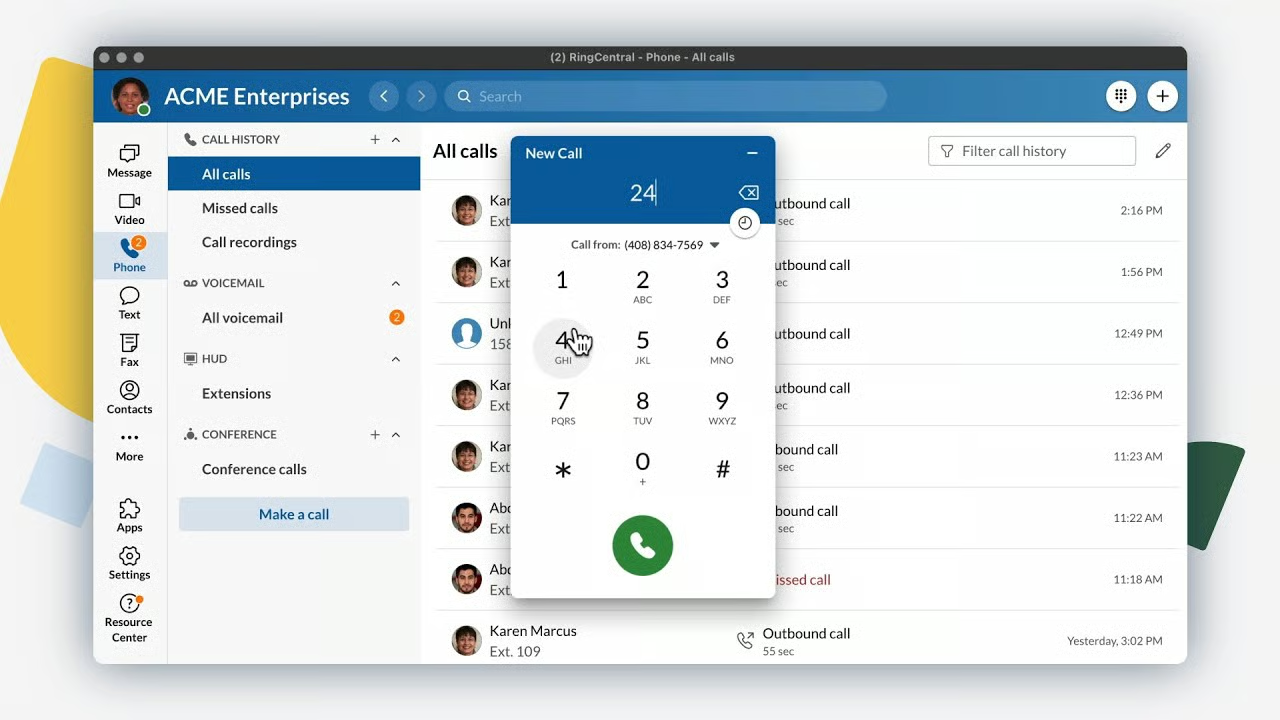
RingCentral also offers advanced call management features designed for businesses that require more sophisticated call flows. These features include advanced routing, multi-level auto attendants, and interactive voice response. With an intuitive call flow designer, businesses can easily set up and customize these systems to enhance their communication efficiency.
Video meetings
Video conferencing is a core component of RingCentral’s unified communications as a service (UCaaS) offerings. All business phone plans offer access to a video meeting platform via desktop or mobile apps, along with an AI assistant that transcribes video meetings and tracks action items and individual contributions.
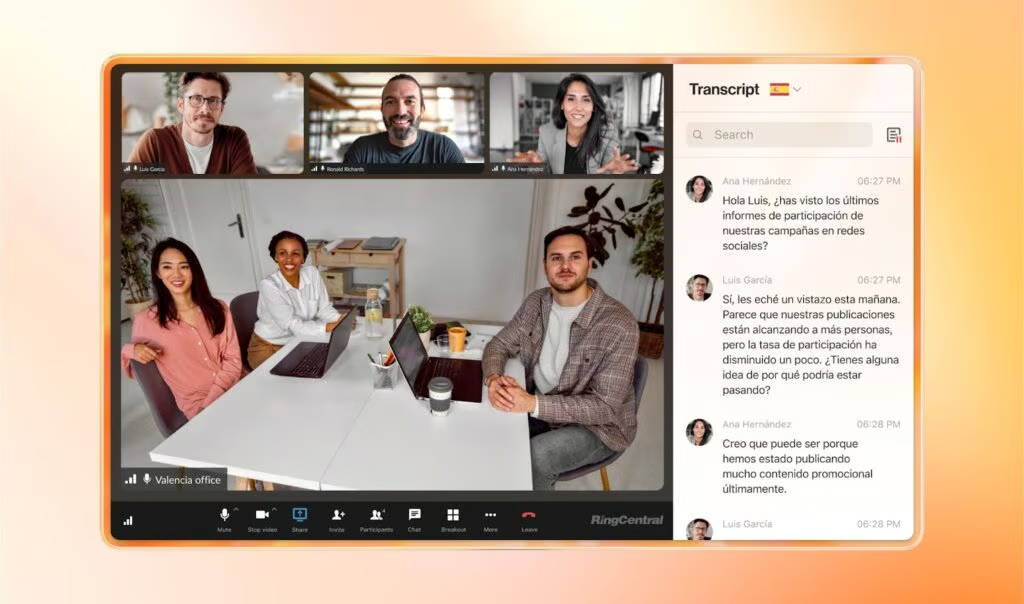
RingCentral also offers event and webinar subscriptions for larger meetings and training sessions. For healthcare providers, RingCentral for Healthcare plans include HIPAA-compliant video meeting access, enabling virtual appointments and consultations. For hybrid teams and event planning, RingCentral Rooms integrates with video conferencing hardware, making it easier for in-person and virtual team members to collaborate in multiple locations or languages.
Business messaging
For businesses that use SMS messaging to manage marketing campaigns, RingCentral offers a business messaging service that complies with regulations regarding bulk messaging. For example, this service includes opt-out procedures for potential clients and customers, as well as automated responses for specific interactions.
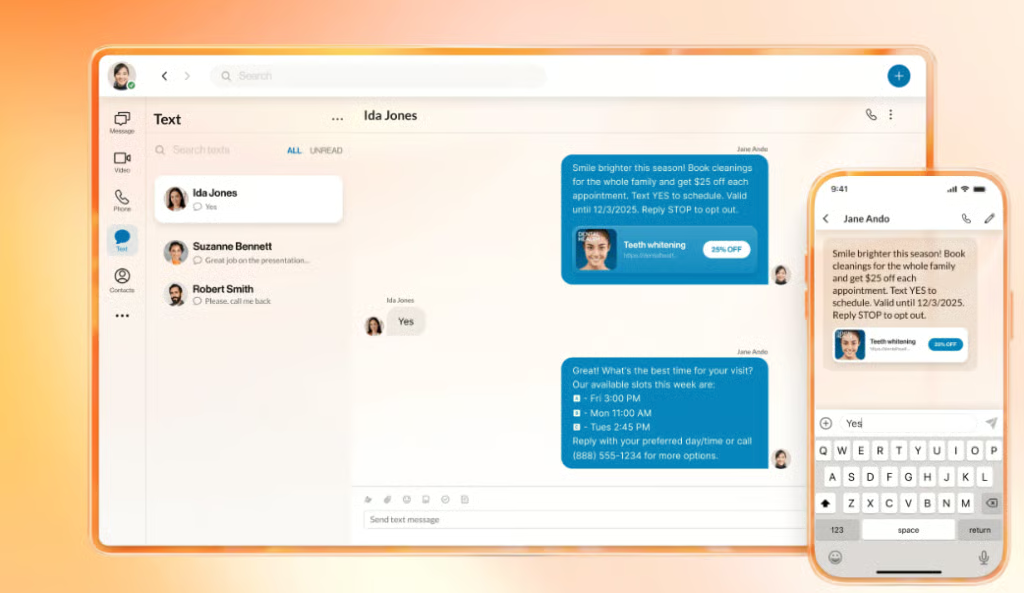
Business messaging is also an effective tool for managing customer service and support, offering a more immediate way to handle customer inquiries. Instead of waiting for an email or phone response, customers can message your business directly and receive an automated or live response. Additionally, the messaging features offer secure payment processing, which is particularly beneficial for sales and marketing teams promoting products and services online.
Artificial intelligence
RingCentral positions itself as an AI communications platform, meaning that every subscription includes some form of AI-powered feature designed to enhance efficiency and productivity. These features begin with AI assistance available on business phone plans, which helps transcribe voicemails and calls, as well as generate message content for team members or customers with access to language translation.
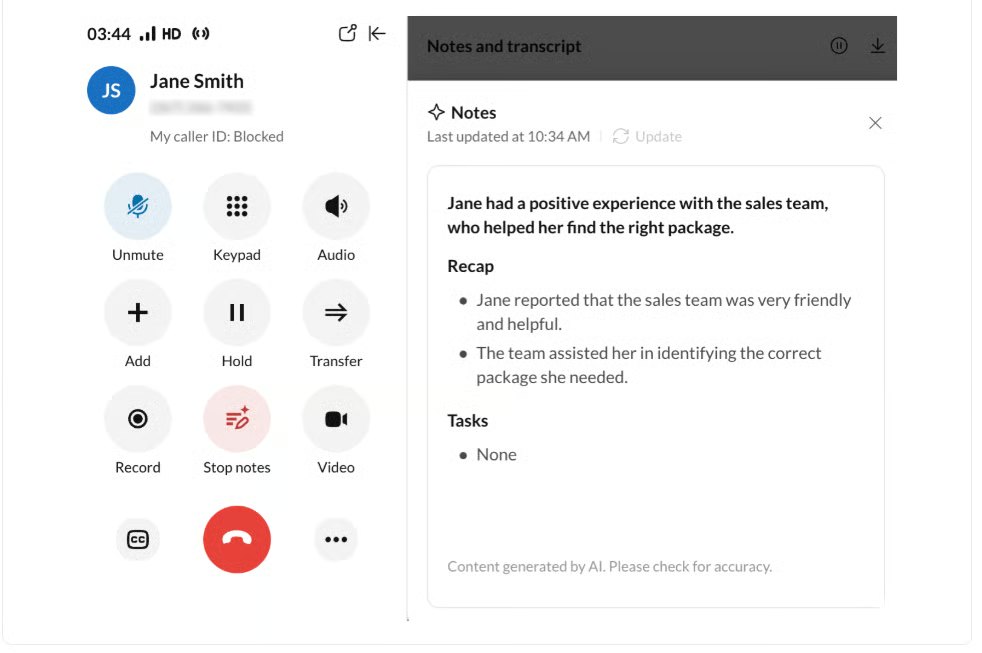
For higher-tier plans, RingCentral offers AI-powered features, including call routing and analytics. For example, the AI receptionist is an add-on feature that helps answer and route your calls 24/7, providing after-hours support. Additionally, the contact center plans utilize conversation intelligence to analyze the sentiment of customer interactions, as well as offering detailed insights from your CRM and workspace data.
Third-party integrations
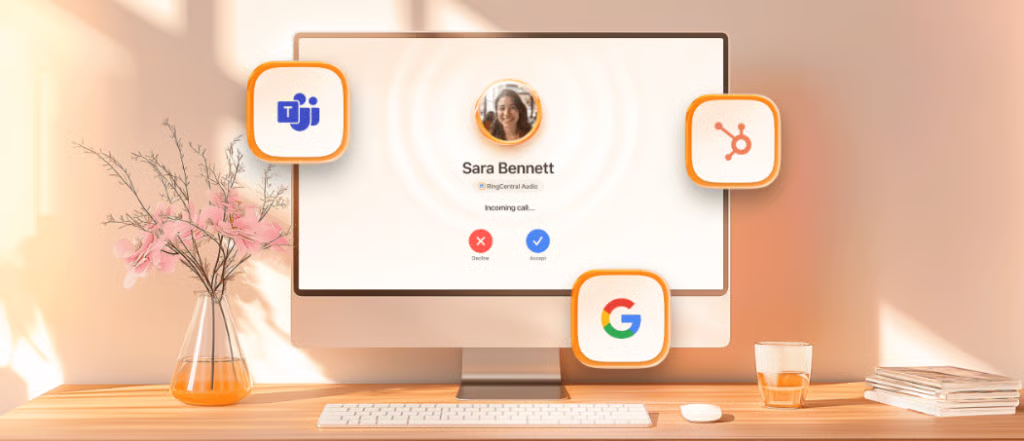
My favorite aspect of RingCentral is its extensive catalog of native integrations and third-party applications. Users can access over 500 third-party apps and integrations, including popular customer relationship management platforms like Salesforce and HubSpot, as well as workspace productivity tools such as Microsoft Teams and Google Workspace.
Team collaboration
No matter the size of your team, RingCentral offers a variety of team collaboration features that make it easier to work on projects and gather feedback from colleagues. As mentioned above, RingCentral integrates with various workspace communication apps, including Slack and Microsoft Teams. The platform also provides team chat features, allowing you to send files and images directly within the desktop or mobile app.
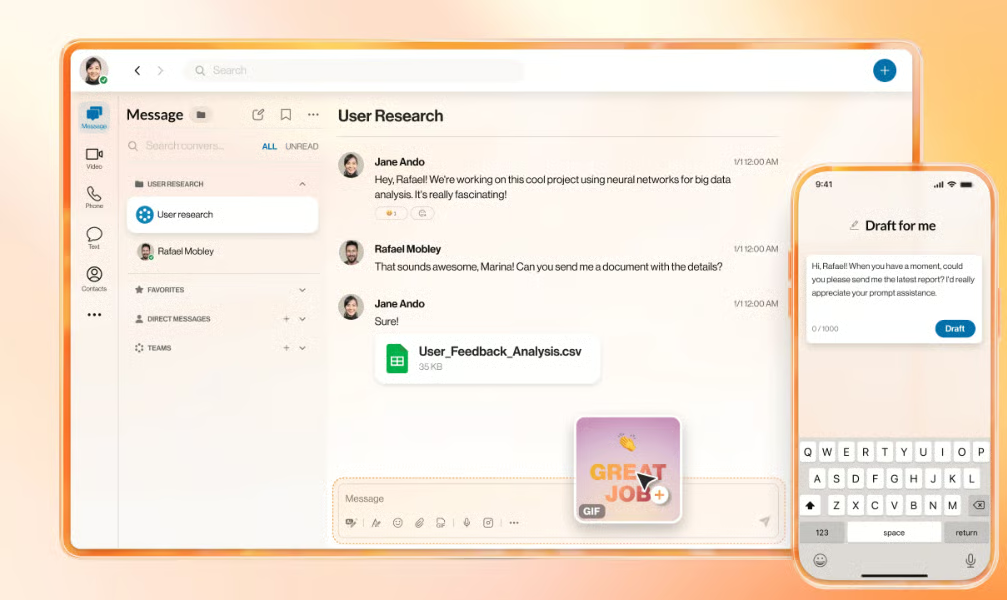
Within team chat, you can elevate calls and messages to video meetings, as well as keep track of your projects and to-do list with artificial intelligence assistants. These assistants can help you draft messages to your team members, making it easier to search through the team chat to find specific details or essential information for more efficient communication and collaboration.
Contact center solutions
RingCentral’s contact center solutions offer omnichannel, cloud-based tools that efficiently manage interactions across various support channels. Additionally, they provide features that facilitate call monitoring and agent supervision. For example, the performance dashboards offer real-time insights and reports on key call center metrics, including average handle time and call abandonment rate. The predictive dialers also provide additional support to agents and supervisors managing high call volumes.
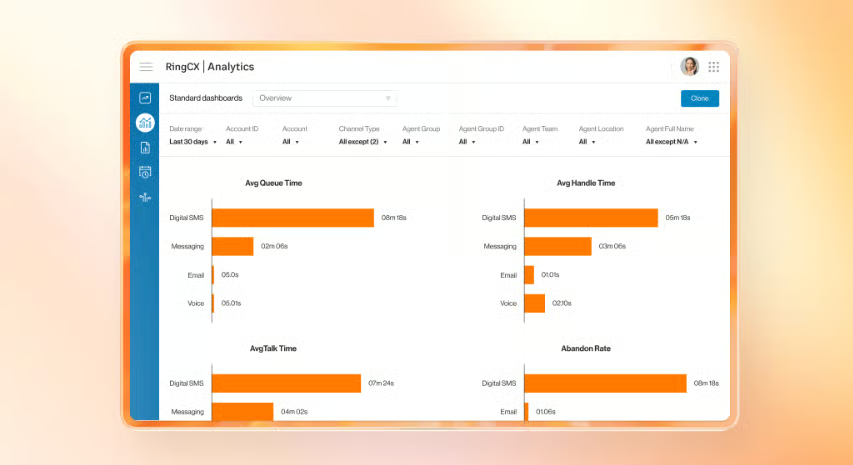
Like all RingCentral plans, the contact center subscriptions also provide access to AI tools, such as Agent Assist, which offers feedback on customer interactions and recommendations for improving them. Supervisors are also supported with Workforce Engagement Management tools that make it easier to schedule agents, monitor performance, and handle fluctuating call volumes.
RingCentral reviews and user ratings
RingCentral is known for its robust features and a wide range of business phone plans. However, it has slightly lower user ratings compared to other VoIP and unified communication providers. As of the date of this review, RingCentral holds a rating of 2.2 out of 5 on Trustpilot, primarily due to customer complaints regarding service quality and contract terms.
Although RingCentral offers 24/7 customer support and professional implementation, many customers have expressed difficulties in receiving assistance, citing long wait times and an inability to have their concerns effectively addressed. More than anything, customers dislike the automatic renewal of contracts. Once customers sign contracts, they often find it difficult to modify or cancel their services, leading to dissatisfaction with being locked into contracts that do not work well for the entire year.
While RingCentral offers plans for smaller teams, the software can also be overwhelming and some new users find the RingCentral platform challenging to navigate due to the numerous dashboards and features available. For example, the contact center plans have different settings for agents and administrators, which can lead to difficulties in managing daily tasks, such as accessing voicemail transcriptions and utilizing other call monitoring features.
At the same time, there are more than just negative reviews. Users who have left positive reviews for RingCentral often highlight the platform’s dependable service, characterized by minimal dropped calls and high-quality audio. This reliability is backed by an impressive 99.999% Service Level Agreement (SLA) uptime guarantee.
Additionally, the RingCentral interface is regarded as intuitive and user-friendly, with both mobile and desktop applications particularly praised by new users for their ease of navigation across the various unified communication features offered on the platform. So, while you should consider the contract concerns, these reviews shouldn’t take away from how well RingCentral works as a VoIP provider.
Ease of use & setup experience
RingCentral is generally regarded as an easy-to-set-up platform, particularly for small businesses that require only a business phone plan. Like many VoIP phone systems, setting up a RingCentral account can be done quickly online, with professional setup training included for those who want more hands-on support. Those who prefer a self-service option can also complete express setup or visit RingCentral University to access a detailed knowledge base and live training videos.
The platform offers intuitive features in its mobile and desktop apps, supporting non-technical users in managing and monitoring calls. For example, the drag-and-drop visual IVR editor is a no-code method of creating custom call flows. The Analytics Portal also provides access to customizable dashboards that deliver real-time reporting on customer and call data, utilizing widget tiles that can be easily dragged into place.
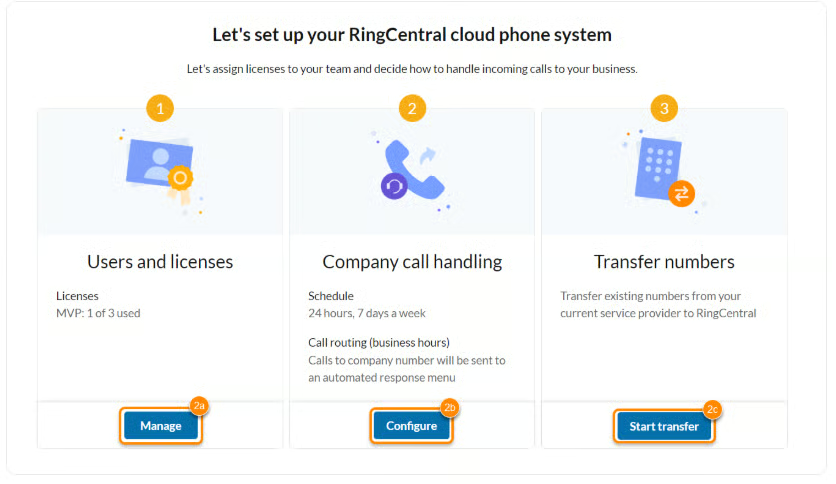
Set up your RingCentral account online with ease. (Source: RingCentral)
In addition to its user interface, RingCentral provides 24/7 customer support, which includes email, phone, and live chat services, to assist users during the implementation and migration process. However, some users have found that migrating or onboarding to RingCentral can be more challenging when porting previous numbers, managing larger accounts, or deploying contact center subscriptions.
When switching from another VoIP phone system, RingCentral provides phone number porting along with a compatibility checker. This tool allows users to verify if their phone numbers are compatible with the RingCentral platform. Generally, this migration process takes two to seven days for fewer than 100 numbers. However, if you are transferring more than 100 numbers from the same carrier, project-based porting is required, which can take several weeks to complete.
Deployments involving over 200 seats or those that include RingCX contact centers may take even longer. I would suggest that those with more complex call flows or contact center solutions consider RingCentral’s professional services, which offer three different support packages that could save you both time and money while assisting your team throughout the implementation process.
Methodology
To evaluate RingCentral’s offerings, I analyzed the provider against several key criteria relevant to cloud-based communication tools. This review included a detailed examination of RingCentral’s core and advanced features, with a focus on conversational intelligence and call management. I then compared RingCentral’s pricing with that of other market providers, paying close attention to the value it offers businesses of different sizes.
To assess the user experience, I looked at the platform’s ease of use, including the functionality of RingCentral’s dashboards, as well as its mobile and desktop applications. I also evaluated the range of available integrations, considering how well RingCentral supports compatibility with various workspace environments compared to competitors. User feedback from third-party review sites was also incorporated to gather user ratings, emphasizing insights from customers familiar with the platform.
Finally, my review included an analysis of RingCentral’s security and reliability measures, particularly its enterprise-grade features, such as advanced data encryption and uptime SLA guarantees. I concluded with a review of customer support options and the accessibility of assistance for both current account holders and new customers.
Final verdict — Is RingCentral worth it?
If you’ve made it this far, you likely have some idea of whether you want to choose RingCentral (or perhaps you just skipped to the end to hear my conclusions). Either way, whether RingCentral is worth it for you depends on how much weight you place on the opinions of others.
On the rating scale, RingCentral excels in core and advanced VoIP and unified communication features. It stands out for providing access to artificial intelligence through AI assistance and intelligent call routing. With a 99.999% SLA uptime guarantee and 24/7 customer support, RingCentral is also known for its reliable service.
However, RingCentral struggles in user ratings and reviews, with complaints across various sites regarding contract terms and difficulties in canceling the service. Additionally, some users raised concerns regarding the navigation and implementation of the contact center software.
So, if you plan to commit long-term to a VoIP or UCaaS provider and have no problem with taking the time to learn a new platform, RingCentral could be a great choice for you. However, if you prefer a short-term contract or a simpler phone system, check out the section on RingCentral’s alternatives in this article.
Frequently asked questions (FAQs)
How much does RingCentral cost?
The cost of RingCentral depends on the type of plan you need. For business phone systems, the RingEX series of plans starts at $30 per user per month, or $20 per user per month when paid annually. However, for contact center solutions, the RingCX plan begins at $65 per agent per month when paid annually.
Is RingCentral good for small businesses?
Yes, RingCentral is an excellent option for small businesses, especially those that require unified communication tools or a call management system. This is because RingCentral offers scalable plans for different users and a comprehensive set of features designed for businesses of all sizes.
Does RingCentral have a free trial?
Yes, RingCentral provides a 14-day free trial for new users interested in trying out one of the RingEX business phone plans.