

Agent assist is an artificial intelligence (AI) feature built into modern contact center software that helps agents respond faster and more accurately during live customer interactions. It works in the background to analyze conversations, summarize calls, compose responses, and recommend next best actions. A contact center agent assist tool helps reduce manual effort, cut down on handle time, and improve service consistency across channels.
What is agent assist?
An agent assist is an AI tool offering support to customer service agents during live calls or chats. It is widely offered in contact center software featuring intelligent tools like response suggestions and knowledge base surfacing to help agents work more efficiently. Agent assist boosts agent performance and enhances customer experience by minimizing manual tasks and offering real-time guidance during conversations.
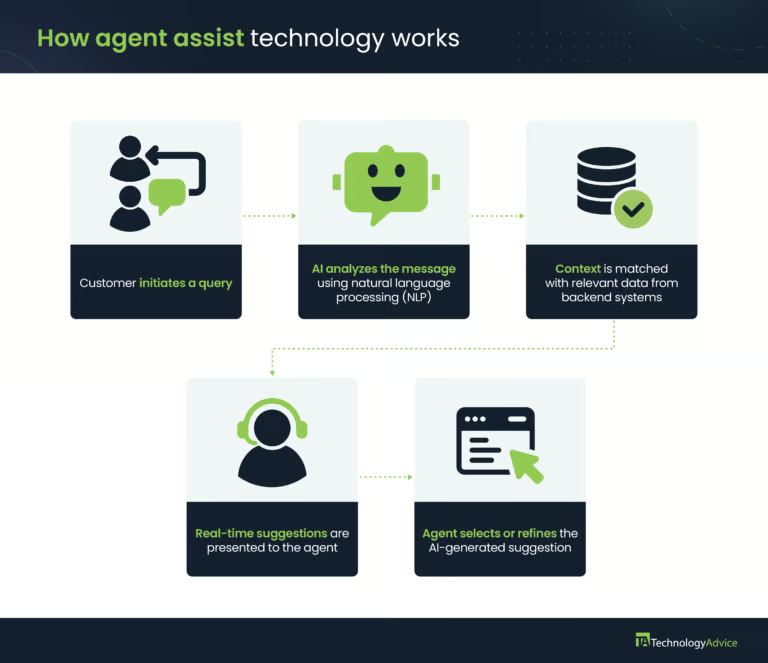
How agent assist technology works
In a typical agent assist workflow, the process starts when a customer initiates a query through voice or chat. If a customer says, “I need help with a refund, it’s been over a week,” the agent might respond with, “Thanks for your patience. I can help with that now.” In that instant, AI surfaces the refund policy, the customer’s order history, and a reply template.
AI uses natural language processing (NLP) to analyze the message, identifying the customer’s intent, emotional tone, and urgency level. Context is also matched with relevant data pulled from your integrated third-party tools, such as customer relationship management (CRM) or knowledge base.
Within a few seconds, the agent then receives real-time suggestions like articles, actions, or even auto-filled forms, which they can customize before sending to the customer. Finally, the system captures the interaction outcome to improve future prompts, support agent coaching, and refine quality scoring over time.
Throughout the process, agent assist boosts an agent’s ability to respond faster and more precisely by providing AI-driven suggestions. Compared to chatbots, it doesn’t completely replace human touch, but instead, it supports the conversation by reducing manual tasks and streamlining the agent’s workflow behind the scenes.
Key features of agent assist platforms
Not all agent assist tools offer the same functionality, so it’s important to know which features actually help your agent team. This is especially true as more AI call center platforms continue integrating intelligent automation into frontline tools. As you evaluate agent assist tools, here are the key capabilities to look out for:
Writing assistant
Many agent assist tools come with generative AI to help agents craft clearer, more professional messages in real time. It suggests tone adjustments, grammar fixes, and concise phrasing to improve communication across chat, email, or messaging platforms. This reduces errors, speeds up response time, and helps maintain a consistent brand voice across your team.
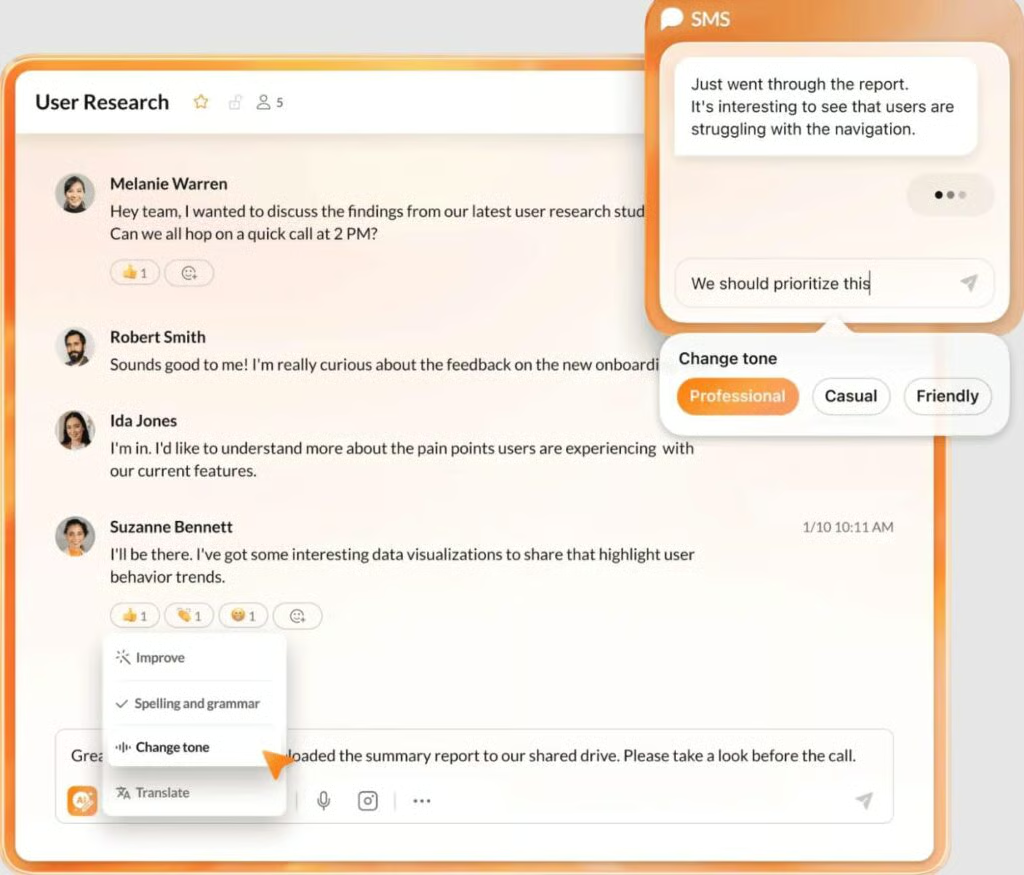
RingCentral’s AI writing assistant streamlines communication by helping agents craft, translate, and personalize messages in real time across six languages. It adapts to your preferred tone and message length, making every chat or SMS clear, polished, and tailored to the conversation.
Performance insights
Performance insights provide agents and supervisors with a real-time view of key metrics, including response speed, sentiment trends, and adherence to scripts. Instead of waiting for post-call reviews, you get actionable data during or immediately after conversations.
Agent assist tools tie directly into broader contact center analytics, giving leaders a clearer picture of how agent behaviors align with business goals. These insights support smarter coaching and help identify areas for improvement before they impact the customer experience.
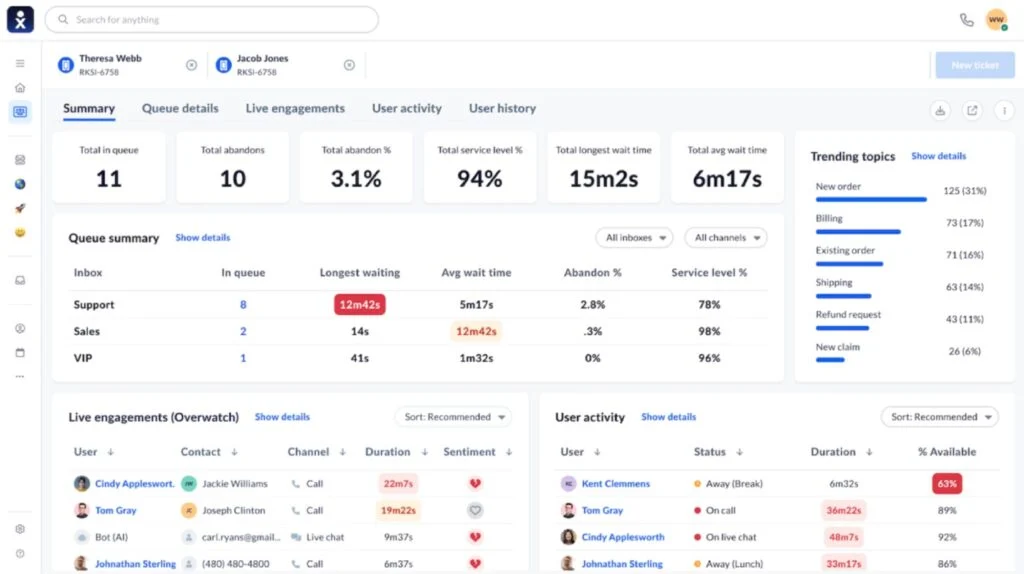
Nextiva’s advanced analytics leverages AI to analyze customer interactions and generate patterns in agent performance, sentiment, and service quality. By turning voice and text conversations into data-driven insights, your team can identify training opportunities, improve response strategies, and optimize overall contact center efficiency.
Interaction summary
Agent assist tools can automatically generate a summary of each call or chat, including key points, actions taken, and next steps. This saves agents from manually writing notes or ticket updates after every conversation. It also helps supervisors and teammates quickly understand what happened without needing to listen to the full recording.
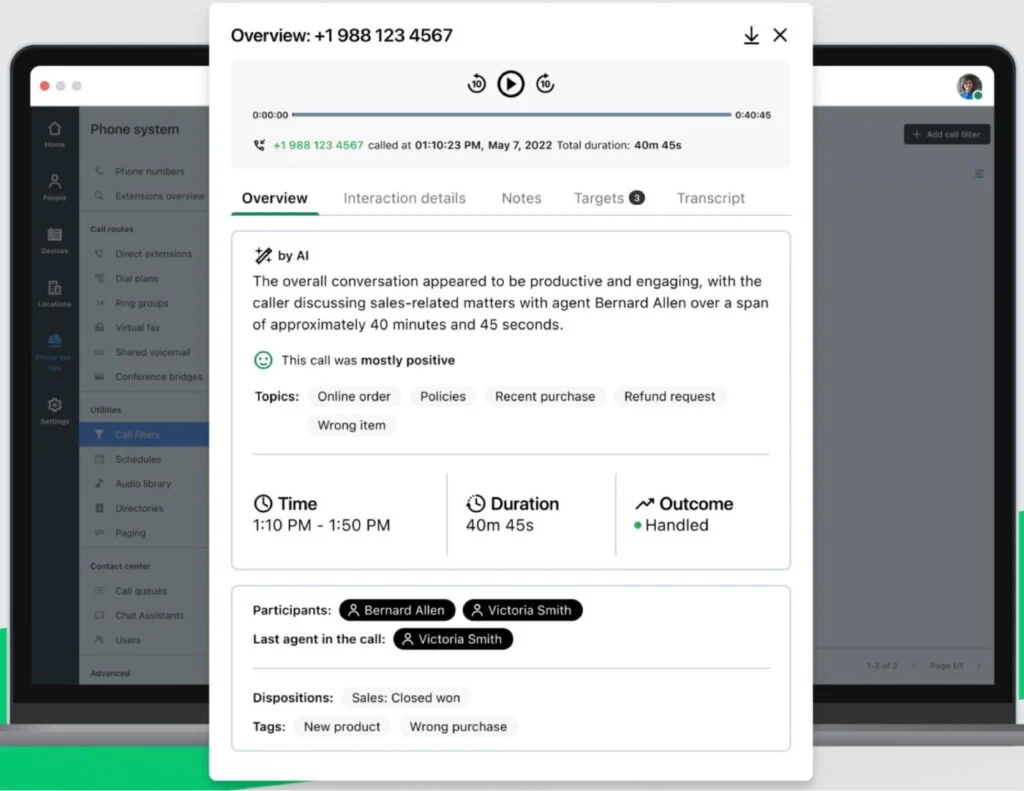
GoTo Connect’s AI summary feature streamlines post-call workflows by generating concise, accurate summaries from full call transcripts. This reduces average handling time and helps agents stay focused, while giving managers quick visibility into key details for faster decision-making.
Agent recommendations
During a live conversation, real-time agent assist suggests next steps, resources, or responses based on context and intent. These AI-generated recommendations help agents navigate complex questions and reduce decision-making friction. This approach is becoming more common among AI-driven customer engagement platforms that prioritize real-time support and personalization.
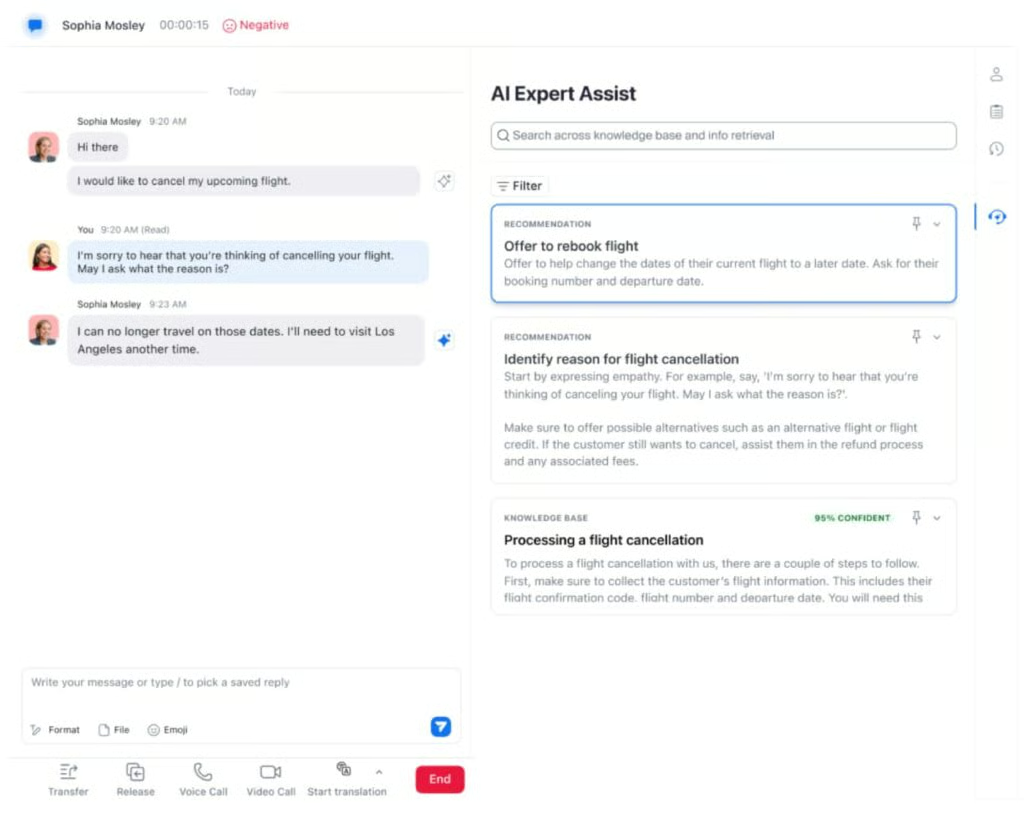
Zoom’s AI Expert Assist empowers agents with real-time guidance, surfacing relevant knowledge base articles, recommended actions, and auto-selected dispositions based on customer intent. It streamlines conversations with automatic note-taking, language translations, and instant access to third-party data.
Automated scorecards
Automated scorecards evaluate conversations against pre-set quality standards, such as clarity, tone, and compliance. Instead of manually reviewing each interaction, supervisors can quickly assess performance with AI-generated scores and feedback. This speeds up QA workflows and prioritizes coaching where it’s needed most. It also complements your broader contact center quality assurance strategy by ensuring consistency across every customer interaction.
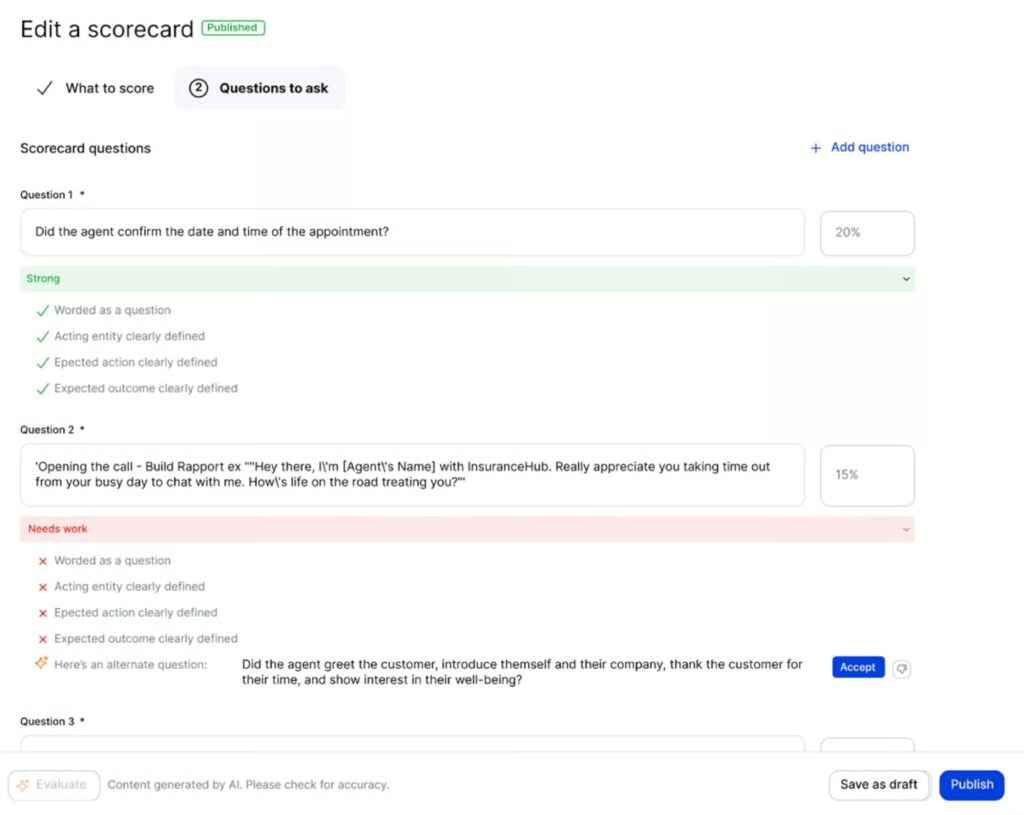
RingCentral’s AI-driven scorecards take the manual work out of call evaluations by automatically scoring interactions based on your preset criteria. By incorporating AI-powered decision logic, these evaluations can also inform ongoing CRM strategy and performance improvement initiatives. The system applies the right scorecard for each call, factors in weighted questions, and even pre-fills answers when possible, making quality assurance faster and more consistent.
How agent assist compares to other support models
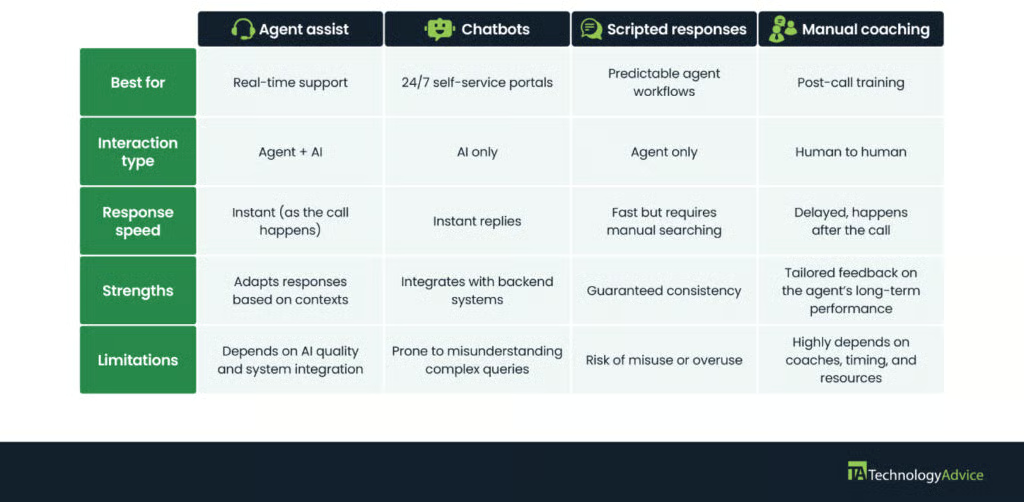
When evaluating support tools in contact centers, it’s easy to view agent assist as a replacement for pre-made scripts or manual coaching. However, it’s worth noting that each model serves a distinct role, and learning how to combine them can offer greater value for your agents.
Agent assist vs chatbots
AI chatbot platforms are built to handle interactions on their own, automating basic tasks like FAQs, order status, and account updates. Agent assist, on the other hand, supports human agents by offering live suggestions and knowledge lookups during real-time interactions.
While chatbots are useful for deflecting low-effort inquiries, they struggle with nuance, tone, or complex issues. Agent assist steps in when a real person is needed, helping your team respond faster without replacing the human element.
Agent assist vs scripted responses
Scripted responses give agents prewritten answers to common questions, but they’re often rigid and lack real-time adaptability. Agent assist goes further by suggesting responses based on the current conversation, customer history, and sentiment. While scripts are excellent for maintaining compliance, agent assist adds speed, context, and personalization that canned responses can’t deliver.
Agent assist vs manual coaching
Manual coaching focuses on training agents through recorded calls and one-on-one feedback, usually after the interaction. Agent assist uses that same strategy in the conversation, guiding agents with live support and recommendations. It won’t replace a human coach, but it reinforces training and improves performance as the call happens.
Using agent assist with other support models
There’s no need to choose between agent assist, chatbots, scripts, or coaching because they’re even more effective when used together. For example, a chatbot might handle the initial customer question, then escalate to an agent using assist tools for more complex issues. Scripts can still be part of the mix, but agent assist helps adapt them to the specific conversation. And instead of replacing coaching, assist tools can reinforce what agents have already learned by turning your support stack into a smarter, more connected system.
Pros & cons of agent assist tools
Agent assist tools can improve how your team handles live support, but they’re not a one-size-fits-all solution. Before you roll one out, it’s worth understanding both the advantages and the areas where these tools might fall short.
Agent assist pros
- Faster response times: Agent assist delivers relevant information while your agents are engaged in calls. This reduces wait time and keeps the interaction going without forcing agents to multitask and dig through knowledge bases.
- Consistent customer service: Agent assist operates across channels like phone calls, live chat, and messaging, ensuring standardized replies and guidance no matter who’s handling the interaction. Even during peak volume, customers receive a consistent experience that builds trust and reinforces your brand voice.
- Improved response accuracy: By pulling the most relevant data in real time, agent assist reduces guesswork and prevents misinformation. It’s useful when agents need to navigate complex services, pricing, or compliance-related topics.
- Real-time insights for smarter decisions: Agent assist tools often highlight trends, sentiment, or escalation risk as calls happen. This level of visibility gives supervisors and agents a better understanding of performance and customer experience without waiting for post-call reviews.
- Shorter training and onboarding time: New agents can get up to speed faster when they receive real-time guidance and recommended replies. It’s like having a live coach with them, which lowers stress and speeds up time to full productivity.
Agent assist cons
- Potential data privacy concerns: Since agent assist tools rely on live call data, transcripts, and integrated systems, they introduce new privacy and security considerations. You’ll need to ensure your setup follows industry regulations and internal policies to avoid compliance risks.
- Limited understanding of full context: AI tools still struggle with nuance, especially in complex or emotionally sensitive conversations. If a customer switches topics or refers to previous interactions, the tool might miss key context that a human would catch.
- Risk frustration: Some agents may feel monitored or undermined if the tool constantly suggests changes or prompts. Others might become too dependent on AI, leading to weaker decision-making when the system is unavailable.
Step-by-step agent assist implementation plan
Rolling out an agent assist tool requires more than a quick setup — it takes a thoughtful strategy to align the technology with your support objectives. Here’s a step-by-step strategy to help you launch effectively and set your agents up for success.
- Define clear goals and metrics
Start by identifying what you want agent assist to improve, such as average handle time, first call resolution, or wrap up speed. Having measurable goals helps you track success and justify the investment to supervisors. - Involve key stakeholders early
Gather contact center managers, QA leads, and IT early in the process to ensure alignment and cross-team buy-in. This also uncovers platform needs or workflow issues that AI integration can solve. - Choose the right platform
Evaluate agent assist providers based on features, integrations, pricing, and industry fit. Make sure the tool supports your communication channels and ties into your CRM or knowledge base for maximum impact. - Pilot the tool with a small group
Start with a limited rollout involving experienced agents who can provide feedback on usability and accuracy. Their input will help you fine-tune the setup before deploying across the company. - Train your agents and supervisors
Offer practical training on how to use the tool and explain how it supports agents instead of replacing their jobs. Setting the right expectations reduces resistance and builds trust in the system. - Monitor performance and adjust
Regularly track key metrics and gather agent feedback to identify areas for improvement. Most tools offer custom settings, allowing you to tweak recommendations, scripts, or workflows as needed. - Scale gradually and optimize
Once you’ve ironed out early issues, expand adoption across your support team in phases. Continue refining your strategy based on analytics, performance insights, and evolving business needs.
A well-planned agent assist implementation can improve service quality, reduce response time, and boost agent confidence. With the right setup and ongoing optimization, it becomes a powerful part of your long-term support strategy.
Top agent assist software
If you’re looking to bring real-time support into your contact center, the right agent assist software can make all the difference. The providers below are full-featured contact center platforms that use AI to power their agent assist tools. These solutions often include robust voice, messaging, and auto dialing capabilities for high-volume outreach. Each one helps your team respond faster, improve accuracy, and deliver a more consistent customer experience.
Agent assist software |  |  |  |  |
|---|---|---|---|---|
Best for | All-in-one communications | Customer journey management | Lightweight call center platform | Video-optimized contact center |
Agent assist features |
|
|
|
|
Monthly starting cost | $30 per user | $36 per user | Custom pricing | $10 per user |
Learn more |
Future of agent assist technology
The future of agent assist technology is rapidly evolving, with generative AI playing a bigger role in how contact centers function. As AI models become more advanced, you can expect agent assist tools to provide deeper context, develop better emotional intelligence, and understand various cultural nuances.
To support continuous learning, agent assist tools will increasingly integrate with AI CRM platforms, business intelligence systems, and omnichannel support tools. According to a report by Sutherland, agents will be better equipped to personalize interactions in real time by tapping into live sentiment analysis to resolve more complex issues with less need for human intervention.
The shift toward this kind of automation and insight isn’t years away. You can start now by choosing agent assist software with the right features to guide your team. With the right setup and strategy, you can boost agent performance and deliver faster, more personalized support across every channel.
FAQs
What is agent assist in contact center?
Agent assist in a contact center is an AI-powered tool that provides live agents with real-time suggestions, resources, and insights to help them resolve customer issues more efficiently.
What is the difference between agent assist and virtual agent?
Contact center agent assist supports human agents during live interactions, while a virtual agent is a fully automated chatbot that handles customer inquiries without the need for a human operator.
What do agent assistants do?
Agent assistants deliver real-time guidance, surface relevant knowledge articles, suggest next best actions, and automate tasks like call summaries and note-taking to boost agent performance.