


Email SMS marketing is one of the most common and most consequential choices small businesses make. Email can scale, support longer messages, and drive repeat purchases over time. SMS can cut through the noise with urgent, high-visibility messages.
Both can perform well, but they serve different purposes. Using the wrong channel can lead to wasted budget, higher unsubscribe rates, and frustrated customers.
This ultimate guide breaks down email and SMS marketing using a practical decision framework. You’ll learn how to choose the right channel based on audience expectations, message urgency, frequency, cost, and SMS marketing laws.
I’ve also included real-world examples and how automation can support smarter decisions.
- Email vs SMS marketing: Key differences small businesses need to know
- SMS marketing laws and regulations businesses should know
- The email vs SMS marketing decision framework
- How Mailchimp supports smarter email and SMS marketing decisions
- Email vs SMS marketing use cases for businesses
- Frequently asked questions (FAQs)
Email vs SMS marketing: Key differences small businesses need to know
Email and SMS are often grouped because they’re both direct marketing channels, but they serve very different roles. Understanding what each channel is best used for and where it falls short helps small businesses avoid overusing one and underutilizing the other.
| Decision point | Email marketing | SMS marketing |
|---|---|---|
| Best for | Ongoing communication that benefits from context and detail | Messages that need immediate attention |
| Common use cases | Newsletters, promotions, onboarding, and lead nurturing | Reminders, delivery updates, and time-sensitive alerts |
| Message format | Longer content with visuals and links | Short, text-first messages |
| Frequency and scalability | More flexible and easier to scale | Should be used selectively and sparingly |
| Compliance considerations | Generally easier to manage | Higher responsibility due to SMS regulations and carrier rules |
While these differences are easy to compare, performance metrics alone don’t tell the full story.
Why there’s no single ‘best’ marketing channel
It’s easy to look for a clear winner in email vs SMS marketing, especially when metrics like open rates make SMS appear more effective. But marketing channels aren’t interchangeable, and open rates alone don’t reflect whether a channel is the best fit for a given message.
Open rates don’t account for message intent or urgency, cost per message, customer tolerance for interruptions, long-term engagement (or unsubscribe risk), or compliance considerations. A high open rate means little if customers opt out shortly afterward or if the message didn’t require immediate attention in the first place.
Instead of chasing a “best” channel, small businesses get better results by matching each message to the channel that fits the moment. Email is often better for richer content and ongoing engagement, while SMS works best for urgent, time-sensitive communication used selectively.
Practical constraints — like budget, list size, internal resources, and SMS marketing laws and carrier rules — also shape what’s sustainable.
Also read: Marketing Automation Software Guide
SMS marketing laws and regulations businesses should know
SMS marketing offers high visibility and fast engagement, but it also comes with stricter rules than email marketing. For businesses, understanding these rules is essential before launching or expanding an SMS program.
In the U.S., SMS marketing is primarily governed by federal consumer protection laws and reinforced by mobile carriers. These rules are designed to protect consumers from unwanted or misleading messages and to ensure businesses use text messaging responsibly.
Key SMS marketing requirements
While specific requirements can vary, most SMS marketing programs are expected to follow a few core principles on opt-ins and transparency.
- Explicit opt-in: Customers must clearly agree to receive marketing text messages.
- Clear opt-out options: Every message should include an easy way for recipients to stop receiving texts.
- Purpose transparency: Businesses should communicate what types of messages subscribers can expect.
- Reasonable frequency: Excessive or unexpected messaging increases the risk of complaints and opt-outs.
Failure to follow these guidelines can result in fines, carrier penalties, or account suspension, which is why using SMS marketing platforms typically requires more operational discipline than email.
How regulations affect the email vs SMS decision
For many small businesses, regulatory considerations influence the purpose and frequency of SMS sends. Email marketing generally allows for more flexibility, higher message volume, and lower compliance risk, making it a common starting point for audience communication.
SMS marketing, on the other hand, tends to work best when it’s reserved for high-value, time-sensitive messages where immediacy matters and customer consent is clear.
Rather than choosing one channel over the other, successful small businesses factor compliance requirements into their overall strategy and use each channel intentionally.
Note: This content is for informational purposes only and does not constitute legal advice. Businesses should consult qualified legal counsel or official regulatory guidance when developing SMS marketing programs.
The email vs SMS marketing decision framework
Choosing between email and SMS marketing works best when you evaluate each campaign individually. Rather than guessing or defaulting to habit, this framework helps small businesses decide which channel fits a specific message based on urgency, context, scale, and operational readiness.
Also read: Mailchimp Overview: Pricing, Ratings, and Details
Audience expectations and consent
Email subscribers generally expect ongoing communication, such as promotions, updates, or educational content. SMS subscribers typically expect fewer messages and clearer value per send.
Because SMS is more interruptive, clear consent and aligned expectations are critical. If audience permissions or expectations are unclear, email is usually the lower-risk option.
Message type and urgency
Email is well-suited for messages that require explanation, context, or multiple links. SMS is most effective for messages that are time-sensitive or transactional and benefit from immediate visibility.
If a message does not require fast action, email is often the more appropriate channel.
Frequency, cost, and scalability
Email supports higher frequency and larger audiences with relatively low incremental cost. SMS typically costs more per message and should be used selectively to avoid opt-outs and fatigue.
For many small businesses, this makes email the foundation of ongoing communication, with SMS used strategically.
Risk, compliance, and operational readiness
Email marketing is generally easier to manage from a compliance standpoint. SMS marketing involves stricter consent requirements and ongoing responsibilities under text marketing laws and carrier rules.
Before expanding SMS efforts, businesses should assess whether they have the processes and tools needed to manage opt-ins, opt-outs, and message frequency consistently.
Email vs SMS marketing: Quick decision checklist
Use this quick checklist to evaluate each campaign before you send it. By answering a few practical questions about your audience, message, and readiness, you can decide whether email, SMS, or a combination of both is the best fit.
Ask these questions before choosing a channel:
1. What does the audience expect?
☐ Ongoing updates or detailed content → Email
☐ Limited, high-value messages → SMS
2. Does the message require immediate action?
☐ No, it can be read later → Email
☐ Yes, timing is critical → SMS
3. How often will this message type be sent?
☐ Regular or recurring → Email
☐ Occasional or one-off → SMS
4. How large is the audience?
☐ Large or growing list → Email
☐ Smaller, highly opted-in list → SMS
5. Is the business prepared for compliance and oversight?
☐ Minimal operational overhead preferred → Email
☐ Clear consent tracking and opt-out management in place → SMS
If multiple answers apply, a coordinated email and SMS approach may be the best fit.
How Mailchimp supports smarter email and SMS marketing decisions
Choosing between email and SMS only works if businesses can execute those decisions consistently. For many small businesses, the challenge is managing channels, audiences, and opt-in requirements without adding complexity.
Mailchimp supports both email and SMS in one platform, which helps teams manage audiences, preferences, and campaign workflows in a single place.
Centralizing subscriber data and permissions makes it easier to align messages with customer expectations, especially when SMS programs require clear consent and opt-out handling under SMS marketing laws and carrier rules.
Turning the framework into action with automation
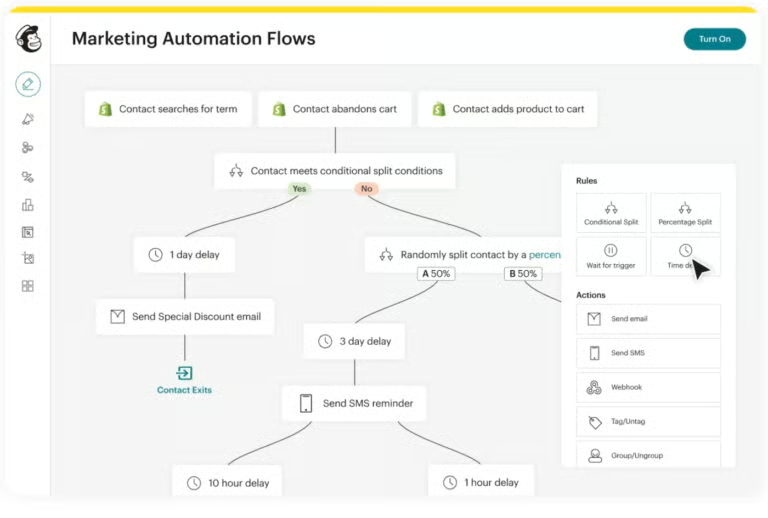
Automation helps remove guesswork from day-to-day decisions. A simple email and SMS automation flow often follows this pattern:
- Trigger: A signup, purchase, or appointment
- Email: A welcome message, explanation, or offer
- Delay: One to two days
- SMS: A reminder or urgency-based nudge
- Stop: No further messages unless the customer takes action
This structure reinforces the framework by design. Email handles explanation and context, while SMS is reserved for action and timing. Automation also reduces decision fatigue, keeps messaging consistent, and helps businesses scale without increasing manual effort.
Also read: Mailchimp Alternatives: The Best Email Marketing Tools
Email vs SMS marketing use cases for businesses
Email and SMS marketing can both support growth, but they tend to work best in different situations. Below are common use cases by business type, along with guidance on which channel typically fits best and why.
Retail and ecommerce
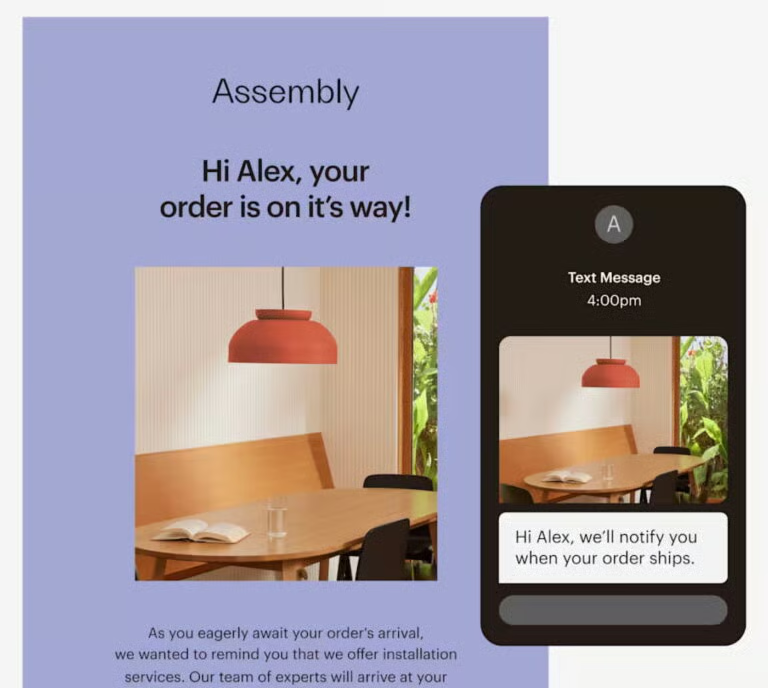
Retail and ecommerce businesses often benefit from a combined email and SMS approach. Email is effective for promotions, product launches, and post-purchase communication where visuals and detail help influence buying decisions. SMS works best when timing is critical.
- Primary channel: Email (promotions, product updates, loyalty programs)
- Support channel: SMS (flash sales, order confirmations, shipping alerts)
Service-based businesses
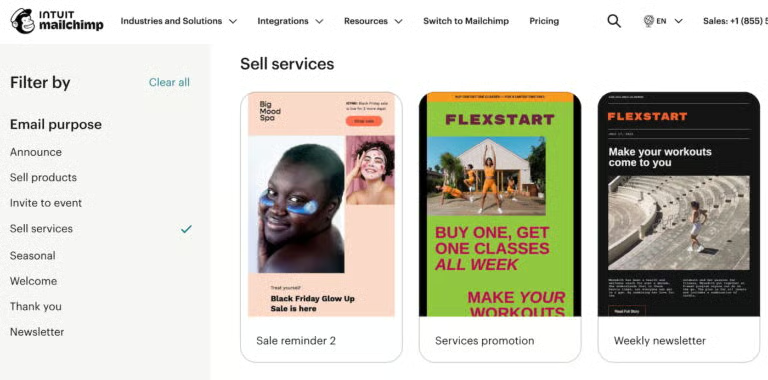
Service-based businesses rely heavily on trust and clear communication. Email supports onboarding, service explanations, and follow-ups, while SMS is best reserved for messages tied directly to appointments or schedules.
- Primary channel: Email (onboarding, service updates, follow-up communication)
- Support channel: SMS (appointment reminders, confirmations, last-minute changes)
Local businesses
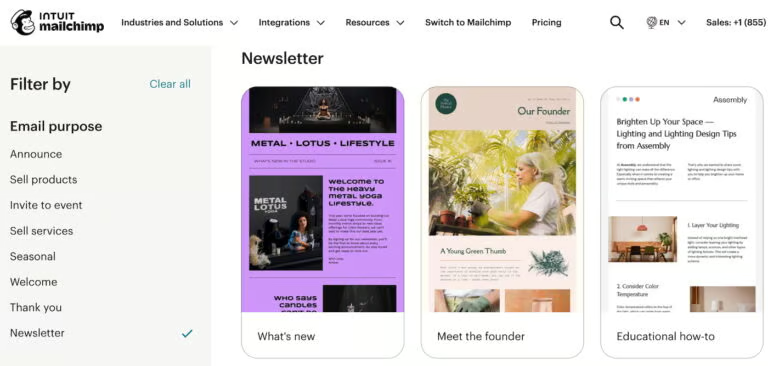
Local businesses often use email to stay connected with their community over time. SMS can add value when messages are closely tied to timing or location, but it should be used selectively.
- Primary channel: Email (newsletters, events, promotions, loyalty updates)
- Support channel: SMS (same-day offers, event reminders, urgent updates)
B2B companies
In B2B, email remains the core marketing channel. Buyers typically expect detailed information and longer sales cycles, which email supports well. SMS plays a more limited role.
- Primary channel: Email (lead nurturing, product updates, thought leadership)
- Support channel: SMS (meeting reminders, event logistics, account notifications)
Frequently asked questions (FAQs)
What is email SMS marketing?
Email SMS marketing refers to using both email and text messaging as part of a coordinated marketing strategy. Email is typically used for longer-form communication, promotions, and customer education, while SMS is best suited for short, time-sensitive messages. Many small businesses use both channels together, depending on the message and audience expectations.
What happens if a business violates SMS marketing laws?
Violations of SMS marketing laws or carrier rules can result in fines, account suspension, or loss of messaging privileges.
How does list size affect email SMS marketing strategy?
Email can support larger lists and frequent communication more easily. SMS list growth tends to be slower because opt-in requirements are stricter and customers are more selective. Smaller, highly engaged SMS lists often outperform larger, unfocused ones.
How should businesses measure success in email SMS marketing?
Success should be measured against goals, not just open rates. For email marketing, that might include engagement, conversions, and long-term customer value. For SMS, metrics like response rate, opt-outs, and conversion from urgent actions are often more meaningful.
Is Mailchimp better suited for email marketing or SMS marketing?
Mailchimp supports both, but many small businesses use email as their primary channel and SMS as a complementary one. The platform is well-suited for scalable email campaigns while also supporting selective, high-impact SMS use when urgency or immediacy matters.
How does Mailchimp help prevent overusing SMS?
Mailchimp’s audience management and automation tools make it easier to control frequency, segment recipients, and avoid sending unnecessary messages. This is especially important for SMS marketing, where overuse can lead to opt-outs or customer dissatisfaction.