

The best business cell phone plans in 2026 combine reliable nationwide coverage, unlimited talk and text, scalable pricing, and business-focused features like mobile hotspot data, international roaming, and advanced security tools. But choosing the right business cell phone plan depends on how your team works, how much mobile data you use, and whether you need features such as shared data plans, call management tools, or global coverage.
In this guide, I compared the top business cell phone plans for pricing, coverage, usability, security, and mobile features. After reviewing leading providers, Verizon stands out for network reliability, T-Mobile is best for unlimited data, AT&T works well for growing teams, RingCentral supports remote workforces, and Google Voice offers affordable VoIP communications.
| Business cell phone plan providers | Best for | Monthly starting price |
|---|---|---|
| Verizon | Network reliability and coverage | $70 per line |
| AT&T | Small to medium-sized teams | $70 per line |
| T-Mobile | Unlimited data and high-volume usage | $21 per line |
| RingCentral | Mobile and remote teams | $30 per user |
| Google Voice | Basic VoIP communications | $10 per user |
Methodology: How I evaluated the best business cell phone plans
To identify the best business cell phone plans for 2026, I evaluated leading wireless carriers and business communication providers across several core categories, including pricing, network reliability, mobile features, scalability, customer support, and security capabilities.
I compared each provider based on:
- Monthly pricing and long-term value
- Unlimited data and hotspot allowances
- Business communication tools
- Security and compliance features
- International coverage
- Ease of administration
- Customer reviews and usability
I also reviewed plan flexibility for small businesses, hybrid teams, and enterprise organizations to determine which providers delivered the strongest overall value for different business needs.
Why you can trust TechnologyAdvice
At TechnologyAdvice, our editorial team independently researches and reviews business technology providers using standardized scoring criteria and hands-on analysis to help businesses make informed buying decisions. Therefore, my recommendations are based on provider capabilities, real-world usability, and long-term scalability.
For this guide, I evaluated the best business cell phone plans by comparing pricing, network reliability, mobile features, hotspot allowances, security tools, international coverage, customer support, and overall business value. To learn more about my evaluation criteria, visit the methodology section at the end of this guide.
What is a business cell phone plan?
A business cell phone plan is a mobile service plan designed specifically for companies that need reliable voice, text, and data services for employees. Unlike personal mobile plans, business cell phone plans include features that support team collaboration, customer communication, device management, and scalable account administration.
Most business phone plans include unlimited calling and texting, mobile hotspot access, shared data options, international roaming, spam protection, and centralized billing. Higher-tier plans may also include advanced business tools, such as call recording, device security controls, and priority network access during congestion.
Comparing my top five business cell phone plans
The best business cell phone plans differ in pricing, network reliability, international coverage, and collaboration features. While some providers focus on nationwide 5G coverage, others prioritize VoIP flexibility or unlimited premium data. To learn more about my top five picks, review the comparison table and provider cards below.
Best business cell phone plans | Mobile hotspot | Key features | Expert score (out of 5) |
|---|---|---|---|
✔ |
| 4.61 | |
✔ |
| 4.56 | |
✔ |
| 4.50 | |
✖ |
| 3.82 | |
✖ |
| 3.59 |

Verizon: Best for network reliability & coverage
Pros
- Extensive nationwide 5G and Ultra Wideband coverage
- Flexible My Biz Plan customization options
- Strong mobile security and spam protection tools
- Generous international roaming coverage in 210+ countries
- Excellent device ecosystem and BYOD support
Cons
- Base plan includes limited hotspot data
- Pricing is less transparent than some competitors
Why I chose Verizon
Verizon stands out for its extensive network coverage and reliability, making it an excellent choice for small and large businesses requiring consistent connectivity across different locations. When I compared providers, Verizon offers dependable connectivity, business-grade security tools, and customizable plan options that scale well for both small teams and larger organizations.
I also like that Verizon’s My Biz Plan gives businesses more flexibility than traditional fixed-tier plans. Instead of forcing companies to pay for bundled features they may not use, Verizon lets businesses add capabilities like premium hotspot data, international connectivity, and Google Workspace tools as needed. For teams with traveling employees or field-based workers, that level of customization can help control costs while still delivering enterprise-level mobile performance.
Gallery
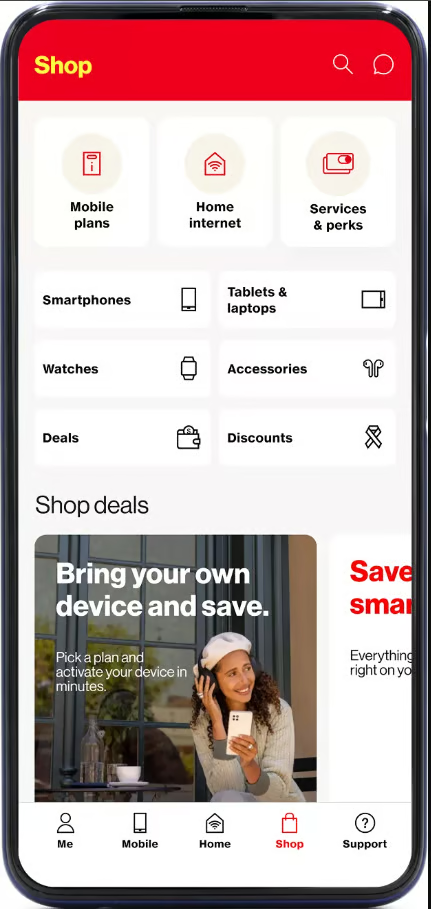
Key features
- Premium network access: Ensures businesses receive priority access to Verizon’s network, ideal for maintaining productivity during high-traffic periods.
- 5G Ultra Wideband: Get ultra-fast speeds in select areas for quick file transfer and efficient video conferencing. All plans have access to Verizon’s 5G network.
- Business Mobile Internet Security: Includes built-in protection against phishing, ransomware, malware, and unsafe Wi-Fi connections.
- Mobile hotspot data: Add up to 100GB of high-speed hotspot access with Premium Network Experience add-ons.
- International coverage: Supports business travel in more than 210 countries and destinations with international connectivity add-ons and TravelPass options.
Pricing
| Plans and pricing (per line)* | MyBiz Plan (1 line) | MyBiz Plan (5+ lines) |
|---|---|---|
| Monthly | $70 | $34 |
*Pricing listed reflects the plan without AutoPay; discounts are available.

AT&T: Best for small to medium-sized teams
Pros
- Unlimited talk, text, and data in the US, Canada, and Mexico
- Shared and customizable data plans for growing teams
- Built-in ActiveArmor security tools
- Strong business account management features
- Unlimited texting to 200+ countries
Cons
- Hotspot speeds slow after premium data limits
- Some advanced security features cost extra
- Best performance features are locked behind higher tiers
Why I chose AT&T
AT&T made my list of best business cell phone plans because it offers one of the more flexible wireless structures for small and midsize teams. Specifically, its shared-data and mix-and-match unlimited plans are useful for businesses that need different usage levels across employees without managing separate accounts or providers.
I also think AT&T does a strong job balancing security, scalability, and international connectivity. Features like AT&T ActiveArmor, AT&T Turbo for Business, and unlimited usage across the US, Canada, and Mexico make the provider a practical fit for companies with hybrid teams, traveling employees, or growing operational needs. Businesses that want centralized billing and flexible device management options will likely appreciate how customizable AT&T’s plans have become in 2026.
Gallery
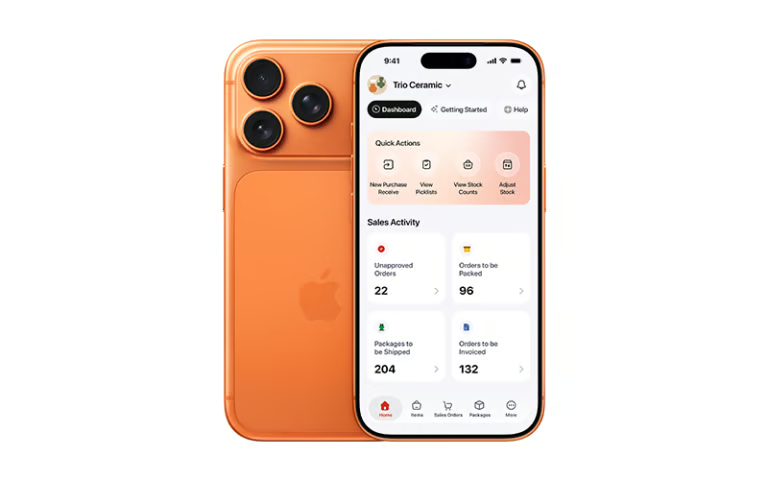
Key features
- Flexible plans: Customizable data options to match the needs of growing businesses. AT&T provides discount programs for medical, military, and education professionals.
- AT&T ActiveArmor: Includes spam call blocking, public Wi-Fi protection, identity monitoring, and security alerts.
- AT&T Turbo for Business: Prioritizes business application traffic during periods of network congestion.
- Unlimited international texting: Supports texting to more than 200 countries and territories.
- Mobile hotspot access: Includes hotspot data allowances across most unlimited business plans.
Pricing
| Monthly plans | Per line pricing* |
|---|---|
| AT&T Business Unlimited Standard | $70 |
| AT&T Business Unlimited Advanced | $80 |
| AT&T Business Unlimited Premium | $90 |
| Business Unlimited Premium 2.0 – Turbo | $105 |
*Promotional pricing is available. Visit the website for discounts on plans.

T-Mobile: Best for unlimited data & high-volume usage
Pros
- Large premium data and hotspot allowances
- Strong value for multi-line business accounts
- Built-in Scam Shield spam protection
- Unlimited talk, text, and data in North America
- Extensive international travel coverage
Cons
- Network performance varies more in rural areas
- Device upgrade benefits depend on plan tier
Why I chose T-Mobile
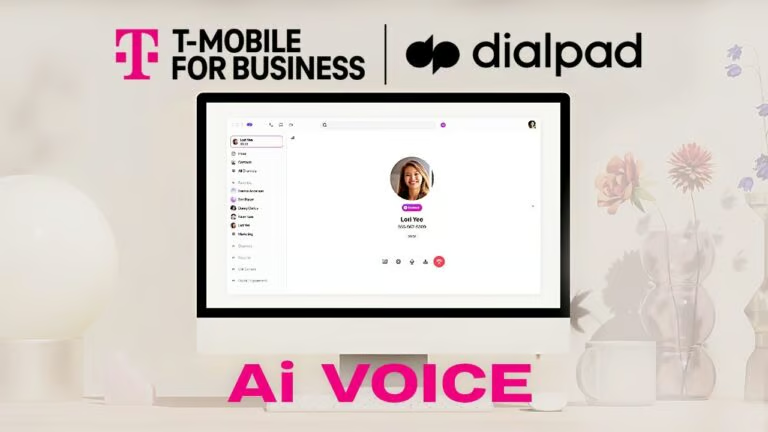
T-Mobile is an excellent option for businesses with heavy mobile data usage because its plans include some of the largest premium data and hotspot allowances available from major carriers. When I reviewed its current business offerings, I found the provider particularly well-suited for sales teams, field employees, remote workers, and businesses that rely heavily on cloud applications and virtual calling, including integration with AI-powered providers like Dialpad.
I also like that T-Mobile focuses heavily on flexibility and mobility rather than locking business features behind enterprise-only pricing. Its business plans include international connectivity, Wi-Fi calling, hotspot functionality, and built-in spam protection without requiring extensive add-ons. For businesses managing multiple mobile employees, the combination of unlimited data and scalable multi-line pricing delivers strong overall value.
Gallery
Key features
- Unlimited premium data: Supports high-bandwidth activities like video meetings, cloud collaboration, and mobile productivity.
- Mobile hotspot access: Includes hotspot data allowances across business plans for remote work and travel connectivity.
- Scam Shield protection: Helps block spam calls, scam attempts, and unwanted robocalls automatically.
- International roaming and data passes: Offers coverage and temporary high-speed data upgrades in more than 215 countries and destinations.
- Dialpad integration: T-Mobile partners with Dialpad to provide AI-powered business calling, messaging, and collaboration tools for hybrid and mobile teams.
Pricing
| Plans and pricing* (per line) | Core Mobile | Pro Mobile | Super Mobile |
|---|---|---|---|
| Monthly starting price | $21/per line | $34/line | $41/line |
| Pricing for six lines | Pricing for 6 lines ($125/mo) plus taxes & fees | Pricing for 6 lines ($200/mo) plus taxes & fees | Pricing for 6 lines ($250/mo) plus taxes & fees |
| Auto-pay pricing | Autopay for lines 1-4 & 3rd line free for lines 3-12 | Autopay for lines 1-4 & 3rd line free for lines 3-12 | Autopay for lines 1-4 & 3rd line free for lines 3-12 |
*Promotional discounts are available. Check the T-Mobile website and links for more information.

RingCentral: Best for mobile & remote teams
Pros
- Strong mobile and desktop app experience
- Built-in video meetings and team messaging
- Advanced call routing and auto attendant tools
- Supports business and toll-free numbers
- AI-powered call and meeting features
Cons
- Higher pricing than traditional mobile carriers
- Toll-free minutes are capped by plan
- Hardware rentals often require long-term agreements
Why I chose RingCentral
RingCentral ranks among the best cell phone plans for businesses with remote and mobile teams, thanks to its hybrid phone system, which offers flexibility and robust VoIP features. Instead of focusing primarily on cellular data and coverage, RingCentral combines VoIP calling, video meetings, team messaging, and mobile collaboration tools into one unified communications platform.
After years of reviewing RingCentral, I have always found its mobile experience particularly strong for businesses managing distributed employees across multiple devices and locations. Features like call flip, AI meeting summaries, shared business numbers, and advanced call routing make it easier for remote teams to stay connected without relying on separate communication apps. For businesses that prioritize flexibility and collaboration, RingCentral is consistently one of my top choices.
Gallery
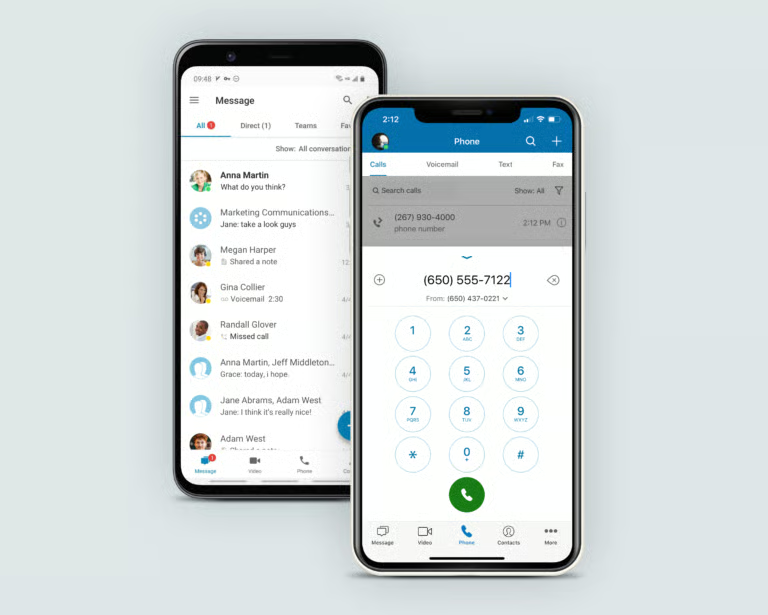
Key features
- Unified communications platform: Combines business calling, SMS, video conferencing, and team messaging in one application.
- Mobile app integration: Allows employees to manage business calls and messages from smartphones, tablets, and desktops.
- AI-powered meeting tools: Includes live transcription, meeting summaries, recording, and video collaboration features.
- Call flip and advanced routing: Seamlessly transfer live calls between devices while managing inbound calls with auto attendants and queues.
- Toll-free business numbers: Includes toll-free and local business numbers with monthly toll-free minute allowances.
Pricing
| Plans & pricing (per user) | Core | Advanced | Ultra | Customer engagement bundle |
|---|---|---|---|---|
| Monthly | $30 | $35 | $45 | Contact sales for pricing |
| Annually | $20 | $25 | $35 |

Google Voice: Best for basic VoIP communications
Pros
- Affordable pricing for small businesses
- Seamless Google Workspace integration
- Easy setup and intuitive interface
- Supports calling from desktop and mobile devices
- Includes voicemail transcription and call forwarding
Cons
- Requires internet connectivity for full functionality
- Limited advanced call center features
- Fewer customization options than competitors
- Customer support is less robust on lower tiers
Why I chose Google Voice
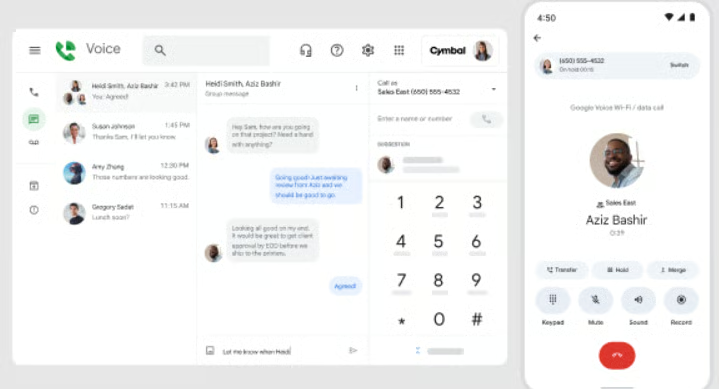
Google Voice is one of the more practical VoIP solutions for startups, solopreneurs, and small businesses that already rely on Google Workspace. In my Google Voice review, I found the platform especially appealing for teams that want straightforward business calling, texting, and voicemail management without paying for enterprise-level communication tools they may never use.
I also like how easy Google Voice is to deploy across remote teams and personal devices. Employees can manage calls from a browser, smartphone, or tablet while staying connected to other Google tools like Gmail, Google Meet, and Google Calendar. For businesses prioritizing affordability, simplicity, and lightweight collaboration, Google Voice delivers a clean and accessible communication setup for small teams.
Gallery
Key features
- Google Workspace integration: Connects directly with Gmail, Google Meet, Google Calendar, and other Google productivity tools.
- Voicemail transcription: Automatically converts voicemail messages into readable text sent to email or the Google Voice app.
- Call forwarding: Routes calls across multiple devices so users can answer business calls from anywhere.
- Number porting: Allows businesses to keep existing phone numbers while transitioning to Google Voice.
- Cross-device calling: Supports calling and messaging from desktops, smartphones, and tablets.
Pricing
Plans | Personal | Google Workspace add-on | ||
|---|---|---|---|---|
| Starter* | Standard | Premier | ||
| Monthly cost | Free | $10 | $20 | $30 |
*Google Voice also offers a stand-alone Voice plan for $10 per user/month.
Key features in business cell phone plans
The best business cell phone plans should support daily communication, employee mobility, and secure business operations. Before choosing a provider, prioritize functionality that matches how your team works by considering the following list of key features.
Unlimited calling and texting
Unlimited calling and texting eliminate overage fees and support uninterrupted communication between employees, customers, and vendors. This feature is essential for businesses with high outbound call volumes or customer-facing teams.
Mobile hotspot access
Mobile hotspot functionality allows employees to connect laptops and tablets to cellular data networks while traveling or working remotely. Teams that frequently work in the field benefit most from high-speed hotspot data allowances.
Call management
VoIP-focused providers often include advanced communication tools like:
- Call forwarding
- Auto attendants
- Voicemail transcription
- Call recording
- Call routing
These features improve customer communication and team responsiveness.
Shared or unlimited data
Some providers offer shared data pools across multiple lines, while others include unlimited premium data. Shared plans help control costs, while unlimited plans are better for businesses with heavy mobile data usage.
Security and spam protection
Many modern business phone plans include built-in security tools such as:
- Spam call blocking
- VPN support
- Device management
- Wi-Fi protection
- Anti-phishing tools
These protections help businesses secure sensitive company data across employee devices.
International roaming
Businesses with remote employees or international operations should prioritize plans with affordable roaming, international texting, and global data coverage.
Choosing the best cell phone business plans
The best business cell phone plan depends on your company size, employee work style, and monthly data needs. Businesses that rely heavily on remote work, field operations, or unified customer communication should prioritize reliability, scalability, and mobile productivity features.
When comparing business cell phone plans, consider the following factors:
1. Network coverage
Choose a provider with strong coverage in the regions where your employees work. Reliable connectivity is especially important for remote teams, field technicians, and traveling employees.
2. Data usage requirements
Estimate how much mobile data your business uses monthly. Teams that frequently use video conferencing, cloud applications, or mobile hotspots may require unlimited premium data plans.
3. Scalability
Growing businesses should look for plans that make it easy to:
- Add new lines
- Upgrade devices
- Adjust data allowances
- Manage users centrally
4. Device options
Some providers offer device financing, leasing programs, and bring-your-own-device support. These options can reduce upfront hardware costs.
5. International features
If employees travel internationally, prioritize plans with:
- International texting
- Global roaming
- Affordable travel passes
- Cross-border data usage
6. Customer support
Reliable support matters when managing multiple lines and devices. I recommend prioritizing providers that offer:
- 24/7 business support
- Dedicated account management
- Online admin portals
- Fast troubleshooting assistance
Frequently asked questions (FAQs)
How to get a business phone plan?
To get a business phone plan, start by comparing providers and selecting one that offers the pricing and features you need, such as call volume and data. Then, port your existing number or set up a new one with the provider. Finally, contact your provider to finalize your plan.
How much do business cell phone plans cost in 2026?
Most business cell phone plans in 2026 cost between $25 and $90 per line monthly, depending on the provider, data allowances, and included features. Entry-level plans typically include unlimited talk and text with limited premium data, while premium business plans include unlimited high-speed data, advanced security, and international features.
Can I use my cellphone as a business phone?
You can add a business line to your cell phone using software like Google Voice. This straightforward virtual phone service provider offers a virtual phone system for managing voice calls, texts, and voicemails. It lets you separate your calls, text messages, voicemail, and contacts from your personal information without an additional phone.
Are unlimited data options included in the best business cell phone plans?
Yes, many of the best business cell phone plans include unlimited data, though speeds may slow after a usage threshold is reached. Premium plans usually provide higher-priority data, mobile hotspot allowances, and international benefits.