Payroll should be predictable. But often, it’s the opposite. HR teams scramble over missing overtime, late approvals, outdated employee information, and last-minute corrections that turn a routine process into a high-stakes and rescue mission.
To complicate the issue, most errors don’t arise in payroll itself. They usually start with incorrectly entered workforce data, stalled approvals, or info that falls between the cracks of disparate HR tools. When payroll chaos keeps happening, it’s usually a sign that your process lacks accuracy, ownership, and validation up front and holistically.
Paycom supports this prevention-first approach through its single-database human capital management (HCM) platform and employee-led data entry. By giving workers visibility into the information that affects their pay before submission, Paycom helps prevent payroll errors before they harm employees.
Key Takeaways
Payroll errors usually begin as data problems
Every successful pay cycle depends on employee data flowing from multiple sources across the organization. That includes onboarding records, tax forms, attendance, PTO balances, employee benefits, compensation changes, and manager approvals. If any of those inputs are incomplete, inaccurate, or delayed, payroll becomes harder to process as a whole.
The consequences extend beyond corrections, potential penalties, and compliance risks. Pay-related errors can also damage employee trust and retention.
Did you know? According to a 2025 HiBob survey, 21% of employees said they had lost trust in their employer because of payroll issues, and 53% said they would consider leaving if mistakes continued. Employees may never see the systems and workflows behind payroll, but they’ll likely notice immediately when their paycheck is wrong.
This makes repeated payroll errors worth tracking as more than one-off mistakes. When the same issues keep showing up, the problem usually sits somewhere in the process feeding payroll: how data is collected, approved, transferred, or corrected.
I’d treat that pattern as data debt: the buildup of payroll risk caused by short-term fixes, duplicate entry, disconnected systems, and manual workarounds that keep the process running without solving the root problem.
Common sources of payroll chaos & how to prevent them
Left unchecked, data debt often turns into recurring payroll issues. The same late approvals, mismatched records, manual updates, and last-minute fixes appear cycle after cycle. HR teams often absorb the cleanup, even when they didn’t create the issue. In many organizations, payroll becomes the place where data debt finally comes due.
The table below breaks down the most common sources of payroll chaos and how they impact the way you pay employees.
| Issue | How it affects payroll |
| Inaccurate time data | Missing hours, overtime disputes, paycheck corrections |
| Disconnected systems | Duplicate entry, outdated records, sync failures, missing data |
| Manual employee updates | Delayed or incorrect payroll information |
| Approval bottlenecks | Last-minute payroll changes and processing delays |
| Compliance changes | Increased risk of payroll errors that spur fines and penalties |
1. Late or inaccurate time data
Missed punches, unapproved overtime, shift differentials, schedule changes, and retroactive edits can all affect employee pay. When those issues aren’t identified until payroll is actively running, HR and payroll teams often end up investigating discrepancies under tight deadlines.
The challenge grows as organizations add locations, work shifts, pay rules, and employee types. One inaccurate time entry can trigger corrections across pay, overtime, PTO, and even labor reporting.
How to prevent it: Tighten time data before payroll week, not during it. Set clear deadlines for timecard reviews, exception reporting, and time-entry corrections before processing begins. HR should also track recurring timecard issues by location, manager, or employee group to check whether the problem lies in training, scheduling, or a lack of accountability.
2. Disconnected HR and payroll systems
Many organizations still manage workforce data across multiple platforms. Employee records may live in an HR information system (HRIS), time tracking in another software, benefits administration somewhere else, and payroll in a completely separate experience.
Each handoff creates an opportunity for information to become outdated, duplicated, or lost. For example, a pay change may be approved in a compensation planning tool but never make it to payroll on time. An employee’s status may change in one system but remain unchanged in another.
That kind of fragmentation is not rare. HR.com identified the lack of technology integration as the top payroll processing challenge.
The bigger issue isn’t just integration issues or system count, but how organizations identify a single source of truth. When HR, employees, and managers rely on different records, pay accuracy depends on people noticing mismatches themselves. That isn’t a reliable. It’s a workaround that increases the likelihood of errors.
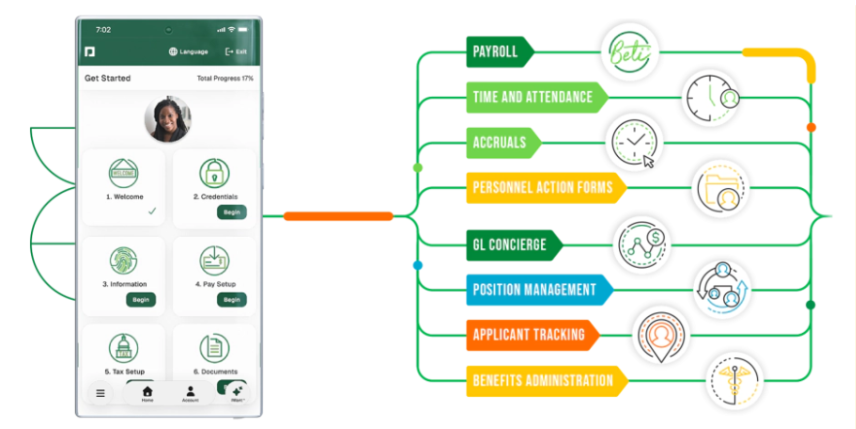
What to do instead: Reduce the number of systems involved in payroll workflows and eliminate unnecessary data transfers. A single-database HR software like Paycom allows all employee data to flow through one database, helping reduce handoffs that can create payroll errors and compliance risk.
3. Manual employee updates
Employee information changes constantly. Addresses, tax elections, banking details, emergency contacts, and benefits selections can all affect payroll in some way.
When employees submit updates through emails, forms, or tickets, HR teams often become responsible for manually reentering information into one or more systems. Every extra touchpoint adds delay and increases the chance of error.
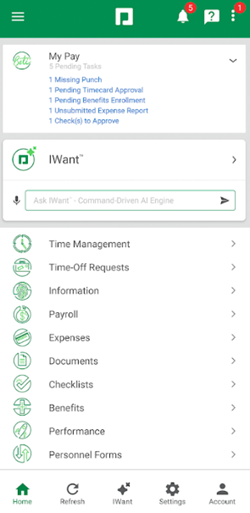
It also keeps HR stuck in administrative work that employees could often handle directly with the right tools and guardrails. This is where employee ownership matters. With well-designed employee self-service tools, workers proactively contribute to accuracy by spotting and correcting issues early.
How to fix it: Give employees a secure way to review and update payroll-related information, such as direct deposit details, tax forms, addresses, time entries, and personal records. Pair that access with the appropriate restrictions, payroll audit trails, and clear escalation paths so leaders and HR still maintain control over sensitive changes.
Paycom’s employee-first approach is a useful example of this shift because it gives workers more visibility into and access to the information that affects their pay while reducing duplicate data entry.
4. Approval bottlenecks
Payroll often inherits delays created elsewhere. A manager forgets to approve timecards. A pay raise sits in an inbox awaiting approval. A PTO request gets approved after payroll deadlines have passed.
None of these situations originates inside payroll, but payroll teams are usually expected to resolve the resulting issues before employees get paid.
How to prevent it: Create clear payroll cutoff dates and make approval deadlines visible to managers before each pay period closes. Automated workflows should make ownership obvious, flag late items early, and escalate unresolved approvals. HR teams should also track repeated approval delays to identify whether the issue lies in a specific manager, department, policy, or workflow design problem.
5. Compliance updates that don’t reach payroll quickly enough
Organizations must continuously adapt to changing wage laws, leave regulations, tax requirements, classification rules, and jurisdiction-specific regulations. The challenge isn’t simply understanding regulatory changes. It’s translating them into operational workflows.
Someone still needs to make sure employee records, pay rules, documentation, approvals, and system settings reflect those changes. Otherwise, HR teams may not catch the gap until payroll is already in motion.
For example, a minimum wage increase, new leave accrual requirement, or tax change can create risk if the policy changes but the software an organization relies on doesn’t adapt, too.
What to do instead: Treat compliance updates as workflow changes, not just policy updates. HR, payroll, and finance should also have a clear process for reviewing how regulatory changes affect employee records, pay calculations, approvals, reporting, and system configurations.
See: HR Compliance Checklist: Must-Have Steps & Beyond
Shift payroll from error detection to error prevention
Many payroll processes are built around catching problems late in the cycle. HR teams review records, follow up on missing items, make corrections, and push the payroll across the finish line.
That review still matters, but it should not be the primary defense against errors. Every correction represents work that could have been avoided if the issue had been caught closer to its source.
A prevention-first process focuses on reducing errors where workforce data is created, reviewed, or approved. The model below shows how that shift changes the day-to-day work behind each pay run.
Payroll prevention model
| Traditional payroll review | Prevention-first payroll process |
| Payroll catches errors near the deadline | Errors are flagged when data is entered, approved, or shortly after payroll self-starts |
| HR teams chase missing information | Responsibility is shared across employees, managers, and HR |
| Corrections happen after payroll runs | Validation happens throughout the pay cycle |
| Systems require manual comparison | Related workflows share cleaner, more consistent data |
| Payroll measures success by completing the run | Payroll also tracks recurring issues and root causes |
Also read: Who Should Own Payroll in 2026? Hint: It’s Not HR or Accounting
What prevention looks like in practice
- Clarify each stakeholder’s role in payroll accuracy: Payroll may process the final output, but it should not own every input. Accuracy depends on employees keeping information current, managers approving changes on time, HR maintaining clean records, and monitoring recurring issues.
- Validate data before it reaches payroll: Reduce errors by adding validation checkpoints before pay processing begins. Missed punches should be flagged before payroll week, compensation changes should be confirmed before their effective dates, and employee records should be reviewed before they affect pay, taxes, or benefits.
- Give employees more ownership: Employees are often the first people to notice when their information is wrong. A prevention-first process gives them a secure way to review information that affects their pay and flag issues before processing begins. That may include verifying direct deposit details, checking tax information, or correcting missing time entries.
- Build connected workflows: Payroll accuracy improves when related workflows sit closer together. A compensation change should not require several emails, spreadsheet updates, and separate system checks. A PTO approval should not leave HR and managers comparing different records.
- Track repeat issues after each payroll run: The goal is not just to complete payroll on time. It is to learn from every correction. HR and payroll teams should review recurring errors by type, source, department, and workflow stage. That gives them a clearer view of where payroll risk is building before it becomes a larger compliance or trust issue.
Payroll accuracy should never be an afterthought. It’s often a reflection of how well HR workflows are designed. A prevention-first approach shifts payroll from a cycle of corrections to a process built around accuracy from the start. Paycom’s employee-first approach aligns with that by moving more accuracy checks closer to the people and data that shape each pay cycle.
Frequently asked questions (FAQs)
Looking for more payroll software options? Check out our payroll software guide to see our top picks.