Payroll rarely belongs to a single team in practice, but the ownership conversation too often turns into an HR-versus-accounting debate. HR manages employee data, runs payroll, and fields questions when pay looks off. Accounting funds payroll, reconciles totals, and records expenses.
Both teams matter, but neither can reliably own pay accuracy on its own.
Instead of looking only at departments, I think the better question is: why not give employees a bigger role in the payroll process?
Too often, they’re excluded until payday, when errors are already visible. That’s backward. Many pay issues start with details employees can verify before payroll closes, such as overtime hours, reimbursements, and benefit deductions.
Giving workers straightforward ways to review the pay-impacting details that belong to them helps reduce errors and catch problems closer to where they start.
HR and accounting can’t own it alone
Most organizations run payroll like a relay. Employees submit hours or pay-related updates, managers approve time off and overtime, HR reviews the data and processes payroll, and finance reconciles the numbers.
That standard setup puts most of the control at the end of the process. It works when every handoff is clean. It becomes risky when:
- Time approvals come in late
- Bonuses, rate changes, or reimbursements are approved outside the payroll cutoff
- Paid time off (PTO), leave, or schedule updates don’t sync with payroll
- Benefits deduction changes aren’t captured correctly
- Employee-entered updates, like direct deposit or tax status changes, sit in another system
HR and accounting can’t fully control or prevent these issues on their own. Many of them happen before HR reviews the pay data or before accounting sees the totals. The team running payroll can only work with the information that reaches the process in time.
This is where payroll ownership often breaks down. Companies organize accountability by department, but payroll accuracy depends on decision points: who entered the data, who approved it, who reviewed it, who funded it, and who caught the exception before the pay run closed.
For the business, this may look like a process gap. For employees, it can feel much bigger. Payroll errors affect their livelihood, and over time, they can damage trust, retention, and productivity.
Did you know? 45% of employees said the financial stress from delayed paychecks affected their job performance, according to a 2025 HiBob survey. The same report also found that 21% of employees lost trust in their employer due to payroll issues, and 53% would consider leaving if the problem continued.
Also read: 5 Costly Payroll Errors and How to Avoid Them
Is the standard setup failing?
Not really, and not always. The traditional payroll workflow still works when pay processing is relatively simple: one location, mostly salaried employees, limited bonuses or reimbursements, few schedule changes, and minimal employee-entered updates.
The cracks usually show when payroll gets more variable. Multiple locations, mixed worker types, overtime, employee benefits updates, and direct deposit or tax status changes all add more places for information to arrive late, get reentered, or miss the pay run.
That is the real risk. Traditional payroll does not fail simply because HR or accounting dropped the ball. It fails when payroll variability outpaces the controls around it.
If you still depend on manual inputs, disconnected systems, or rekeying employee-owned data, the standard setup becomes harder to trust at scale. HR automation and integration are what keep it from turning into a correction cycle.
Many companies still aren’t there. According to an IRIS-sponsored HR.com 2025 research, only 39% of organizations said they had automated payroll to a high or very high level, while 43% cited the lack of technology integration as their top payroll management challenge.
Employee-involved payroll: What it looks like
Employees don’t need to own compliance, calculate wages and taxes, or sign off on the final payroll run. But they’re often the most qualified people to verify the inputs that drive their own pay, such as:
- Regular and/or overtime hours logged
- PTO or leave taken
- Expense or reimbursement claims
- Direct deposit details
- Tax status or withholding
- Benefits deductions
- Benefit election changes after a life event
Most of these are details employees either entered, requested, or generated themselves. Usually, they can tell when something looks off in any of these areas. The problem is that many payroll workflows don’t give employees one clear place to review those details before the pay run.
This is the core idea behind payroll tools like Paycom’s Beti. It gives employees a guided way to review and approve their pay before the submission window closes, while surfacing items that need attention, such as missing punches or unapproved requests.
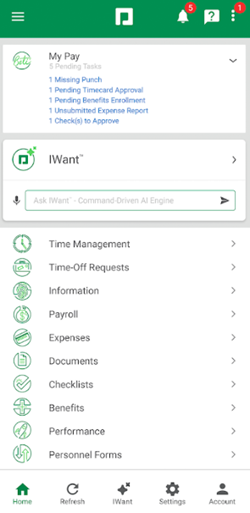
It’s a natural extension of what employees already do. They manage their own timesheets, submit expense claims, and update their own direct deposit and personal information. Beti connects those inputs to the paycheck, so employees can see how it all comes together before payroll runs—not after.
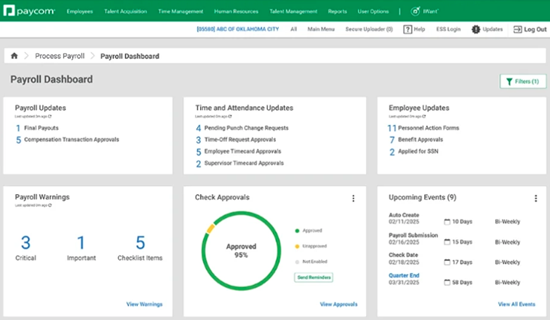
Beti also automatically starts the payroll each pay period, pulling together the work hours, expense claims, and compensation/deduction details it needs. It also doesn’t leave employees guessing how to fix errors or you wondering what’s left to resolve. Beti walks employees through the process, while giving you a dashboard to monitor the progress in real-time.
How payroll delivery affects ownership
Companies handle payroll in different ways. Many run it entirely in-house via software, while some outsource it to a third-party provider. Others use a combination of both: partnering with an external processor to handle tax filings while an in-house HR team manages the data inputs.
While these setups change who processes payroll, they shouldn’t make the employee’s role confusing. Their responsibility should stay simple: review what belongs to them, quickly and securely. The same goes for people managers who are tasked with approving time or pay-related requests.
Done well, the service model becomes invisible to the employee, and the ownership model becomes obvious.
Unsure which model is best for your business? Check out our in-house vs outsourcing payroll guide.
What this means for the employee experience
This is where payroll becomes part of the employee value proposition (EVP). Employees may not use that phrase, but they know what it feels like when pay is easy to understand and released on time.
Payroll visibility is becoming part of employee experience because employees increasingly expect workplace systems to give them the same clarity they get from banking apps, benefits portals, and expense tools. When they can see the details that shape their paycheck before payroll is finalized, they’re not left guessing about changes to their take-home pay. They’re also not waiting on HR to explain what happened after payday.
So, what does this mean for you?
Payroll improvements shouldn’t focus only on faster processing or cleaner back-office reporting. While those matter, employees also need simpler ways to check pay information and resolve questions without being routed through three people.
In fact, ADP’s 2026 global payroll survey found that employee experience is becoming a bigger payroll priority as leaders focus on better visibility, accuracy, and responsiveness to improve employee trust and engagement.
This is where payroll software can help. Paycom’s Employee Self-Service, for example, puts that visibility directly into employees’ hands, giving them access to their pay history, personal information, benefits elections, documents, and other HR tools in one place.
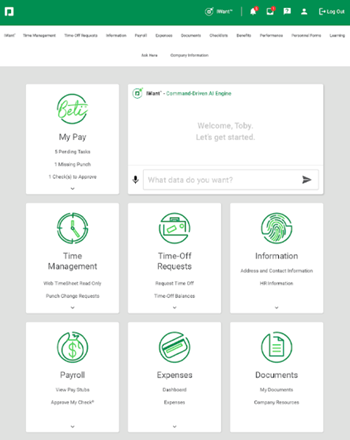
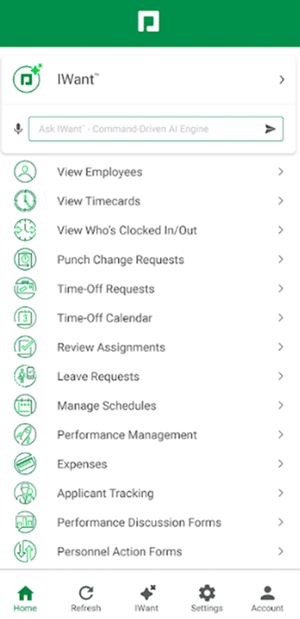
Paycom adds another layer with IWant, its command-driven AI tool that pulls employee data from Paycom’s single database. Instead of going to HR for basic answers, employees can ask IWant about time off balances, pay, taxes, or how to update their information. This frees HR to focus on other higher-value work, such as improving process controls.
Getting pay right is the foundation
Every payroll ownership debate comes back to the same basic expectation: employees should be paid correctly, clearly, and on time.
That sounds simple, but it requires more than one team running the pay cycle. Payroll still needs an operational owner to manage deadlines, compliance, exceptions, and final processing. The details behind each paycheck, however, come from several places.
I believe payroll ownership should be designed around who controls the data at each step, not around which department historically ran the process.
The cleanest ownership model is practical:
- Employees own the accuracy of their own inputs, such as hours, expenses, and personal data. Give them a pre-submission window and the tools to verify it.
- Managers own timely approvals for time, PTO, overtime, and schedule changes.
- HR owns the process, compliance oversight, training, and escalations. With a cleaner system, HR shifts from manual error-chasing to monitoring and exception handling.
- Finance owns the ledger, funding, reconciliation, and controls. That work gets easier when the underlying data has already been verified by the people closest to it.
- The platform connects the workflow so inputs, approvals, and reviews don’t depend on manual handoffs.
This is payroll governance, not just administration. It turns payroll from a processor-led function into an exception-based workflow where the right people verify the right information at the right control points.
When payroll is designed this way, it becomes less reactive and easier to trust. Everyone knows what they own before payday, instead of sorting it out after something goes wrong.
Also read: 14 Must-Have HR System Features
Frequently asked questions
Payroll transparency helps employees understand how their pay is calculated, what deductions were applied, and whether key details look correct. It can reduce confusion, lower the number of HR questions, and build trust in the payroll process.
No. Outsourcing payroll can reduce processing and compliance work, but the employer still remains responsible for payroll tax obligations in case the third-party provider fails to make required deposits or filings. Employers also still need clean employee data, timely approvals, and clear employee communication.
Payroll self-service helps HR by giving employees direct access to routine pay and personal information. This can reduce basic questions, manual updates, and back-and-forth requests that HR would otherwise handle.