

Key takeaways
- Voice analytics is the process of using AI to interpret not only what customers say, but also how they say it by capturing tone, emotion, and intent.
- Key capabilities include real-time sentiment detection, automated quality assurance, agent coaching insights, and uncovering the root causes behind customer frustration.
- Adopting voice analytics enables call centers to reduce escalations, enhance customer satisfaction, and foster more empathetic and personalized interactions.
- In 2025, voice analytics is a must-have tool for contact centers looking to strengthen CX and gain a competitive edge.
In 2025, voice analytics has evolved from an exciting new tool to a foundational component of contact center speech analytics. Rather than simply logging calls or transcribing speech, leading platforms now interpret tone, emotion, pauses, and other nonverbal cues. This means that voice analytics isn’t just a “nice to have.” It’s a force multiplier for customer satisfaction and agent performance.
This guide walks you through what voice analytics is, how it works, and use cases for voice analytics software. Whether you’re evaluating if your team is ready to adopt voice analytics or simply building awareness within your organization, this piece will provide you with the research and insights needed to make informed decisions.
- What is voice analytics, and why does it matter?
- Spot issues before they escalate: Real-time sentiment detection
- Turning conversations into connections: Personalization through emotion and intent
- Find the “why” behind customer frustrations: Root-cause analysis
- QA without the guesswork: Automating call reviews at scale
- Beyond the phone: Strengthening omnichannel CX with voice data
- Voice analytics as a CX essential in 2025
- Frequently asked questions (FAQs)
What is voice analytics, and why does it matter?
Voice analytics utilizes AI and natural language processing (NLP) to evaluate not only what customers say, but also how they say it. By analyzing pitch, pauses, stress, and tone, alongside spoken words, call centers gain a more complete understanding of customer sentiment and intent. However, those who are interested in the specifics of what customers are saying can look to speech analytics.
Speech analytics analyzes transcriptions of calls and interactions to assess customer sentiment and behavior. Within an artificial intelligence-powered call center, voice analytics is often combined with speech analytics to provide a comprehensive view of customer conversations, capturing both content and context.
| Speech analytics | Voice analytics |
|---|---|
| Focuses on transcribed content, tracking the words and phrases spoken | Focuses on context, interpreting vocal cues such as emotion, tone, and stress |
From call to insight: How the process works
When going through the call-to-analysis process, most call center analytics follow a four-step approach.
- Capture: Within a call center, customer interactions are either recorded or monitored in real-time to ensure quality and compliance.
- Transcription: During the calls, the conversation between the customer and agent is converted into text format for further analysis.
- Analysis: In real time or post-call, advanced AI models interpret the transcribed text along with vocal characteristics to derive meaning and sentiment from the conversations.
- Insight delivery: The results of this analysis are presented through dashboards, detailed reports, or live prompts, which agents and supervisors can access to enhance decision-making and improve customer service interactions.
Spot issues before they escalate: Real-time sentiment detection
Real-time emotion recognition is one of the most powerful capabilities of voice analytics software. By monitoring tonal shifts, raised voices, or signs of hesitation, AI can flag risks as a conversation is still in progress. In a 2024 study on speech emotion recognition (SER) for call centers, researchers noted:
“Identifying frustration can enable agents to employ de-escalation techniques or expedite issue resolution.” — Tao et al., 2024
For contact centers, this means supervisors can step in before a call escalates, or agents can get prompts to adjust their tone and pace. This reduces escalations, boosts first-call resolution (FCR), and raises customer satisfaction scores (CSAT). By spotting issues early, call centers can turn negative experiences into opportunities for stronger customer relationships.
Smarter coaching, stronger agents: Performance insights that stick
Although customer satisfaction is often the primary focus of voice analytics software, it can also benefit agents. By analyzing patterns such as talk-to-listen ratios, interruptions, and periods of silence, supervisors can pinpoint exactly where agents excel and where they need more support. Additionally, tools such as agent assistance and AI companions make it even easier to support agents during a call by providing real-time feedback and insights on their performance.
Then, supervisors can use voice analytics to provide more personalized post-call coaching based on data-driven insights. Instead of focusing solely on adherence to agent scripts, sentiment detection enables supervisors to provide feedback on the agent’s ability to empathize with customers and communicate effectively. This is especially important because agents’ soft skills greatly influence customer sentiment, according to a NICE State of CX Report.
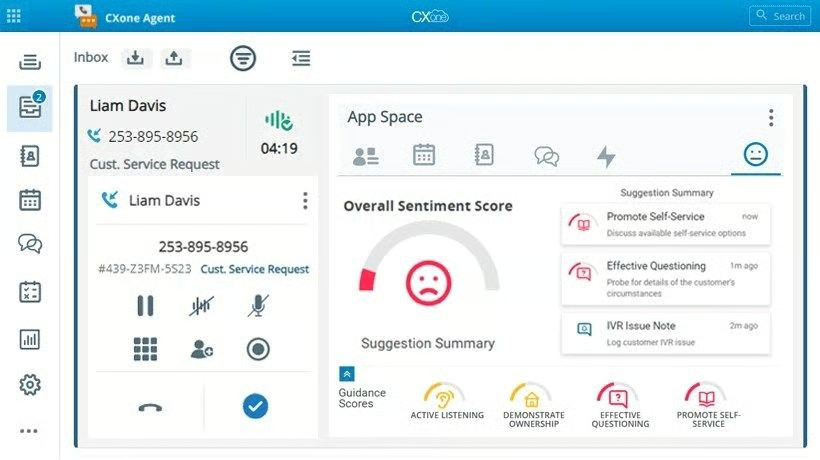
Supervisors and team leads can also utilize reporting and analytics features, such as performance dashboards, to identify trends over time, providing managers with visibility into team strengths and weaknesses. Voice analytics can even be integrated into agent leaderboards to gamify the process of improving sentiment detection scores.
Turning conversations into connections: Personalization through emotion and intent
Customers expect more than just quick problem-solving. They want interactions that make them feel truly understood. Voice analytics enables this by recognizing both the content of customer speech and the emotional cues embedded within it.
For example, a frustrated caller may need a concise, resolution-focused exchange to avoid further irritation. In contrast, a hesitant or uncertain caller may benefit from more patience, reassurance, and open-ended questioning. By flagging these emotional states in real time or highlighting them in post-call analysis, voice analytics software helps agents adapt their approach. This leads to outcomes that feel tailored, not scripted.
Find the “why” behind customer frustrations: Root-cause analysis
In addition to addressing customer frustrations in the moment, one of the greatest strengths of voice analytics is its ability to uncover patterns across thousands of calls. Common issues, such as billing confusion, product delays, or unclear instructions, emerge as themes that organizations can address at their root, which is where root cause analysis comes in.
Root cause analysis (RCA) identifies the fundamental reasons behind common issues in contact centers, often using voice analytics to review call data and pinpoint potential causes. These insights inform product, billing, or UX teams to resolve underlying problems. Over time, this approach also decreases recurring complaints and enhances the overall customer experience.
QA without the guesswork: Automating call reviews at scale
After the call, voice analytics is also a crucial component of call monitoring and assessment. While traditional quality assurance (QA) methods only review a small portion of calls, leaving gaps in oversight, voice analytics allow call centers to evaluate every interaction automatically. With quality assurance software, businesses can:
- Check for compliance: Ensure adherence to compliance standards, maintain consistency with the established script, and uphold the brand’s tone throughout all communications.
- Remove bias and subjectivity: To enhance the integrity of call evaluations, quality assurance software can help eliminate bias and subjectivity. This approach ensures that assessments are fair, objective, and based on consistent criteria, leading to more reliable outcomes.
- Assess sentiment scores: It is important to ensure that every interaction with customers meets the company’s established standards. This can be achieved by evaluating agent performance in conjunction with customer satisfaction levels, with scorecards for interactions.
- Increase efficiency: By automating QA, businesses achieve consistency and fairness, while enabling managers to focus on strategic improvements instead of manually assessing every call and customer interaction.
Beyond the phone: Strengthening omnichannel CX with voice data
While calls remain a vital touchpoint, most businesses now engage with customers through multiple channels, such as chat, email, SMS, and social media. Therefore, the true strength of voice analytics is most apparent when its insights integrate into this wider CX ecosystem or omnichannel contact center reporting.
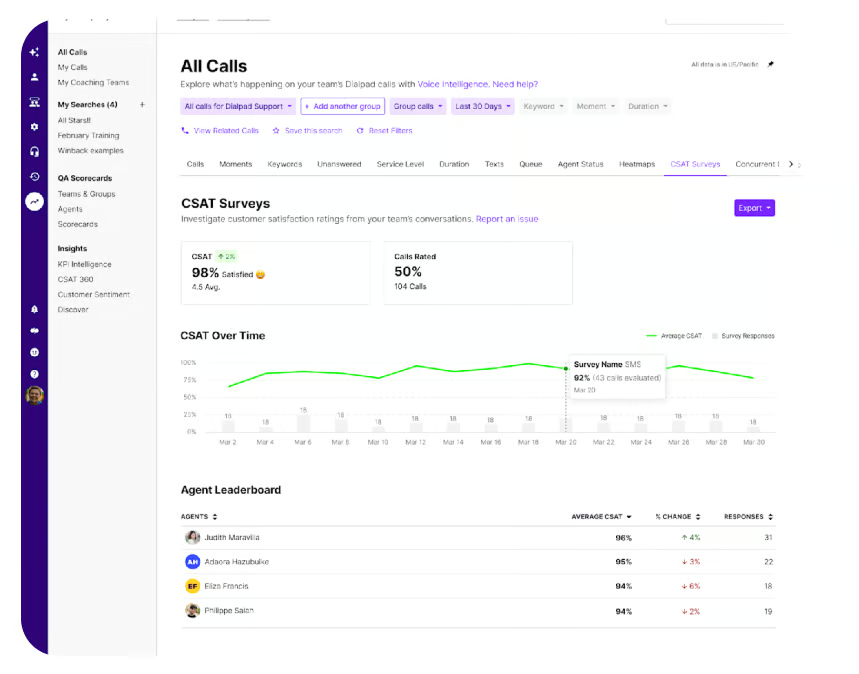
Integrating voice analytics with CRM and customer experience (CX) platforms enables organizations to enrich customer profiles with insights into emotions, intent, and context gleaned from phone calls. This is crucial for IT decision-makers because integration capability determines long-term value. In this context, a standalone voice analytics tool provides insights, but a solution that integrates into omnichannel workflows creates a unified customer view, which is where organizations realize real ROI.
Voice analytics as a CX essential in 2025
Overall, voice analytics has matured into a strategic enabler for call centers that want to deliver next-level customer experiences. By combining tone, sentiment, intent, and conversational context, it opens new pathways for early issue detection, scalable quality control, more relevant coaching, and personalization that feels intuitive rather than scripted.
However, there is more to this process than just adopting voice analytics software. Long-term success relies on careful implementation, clean data, agent transparency, and alignment with business goals. As you explore voice analytics, remember these key steps:
- Step 1: Instead of moving straight into the implementation process or rolling out voice analytics software across teams, begin with a pilot or proof of concept to determine how insights align with your real-world needs.
- Step 2: When researching new tools, focus on use cases that deliver immediate value (e.g., sentiment alerts, QA automation). This will ensure that you are using voice analytics in a way that delivers results.
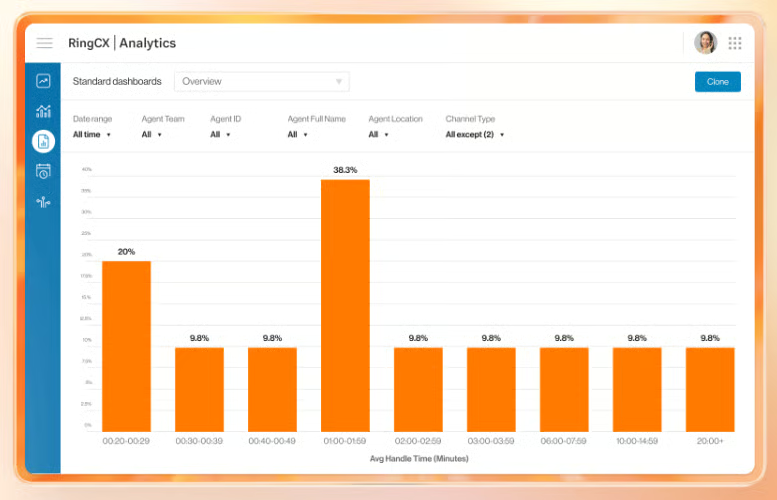
- Step 3: After you begin using voice analytics, measure the impact on key KPIs, including escalation rates, first-call resolution, and CSAT scores. This data will provide you with concrete evidence and actionable insights to improve how you are using voice analytics software and determine how it does (or does not) benefit your business.
- Step 4: Finally, it is always important to remember that implementation is an interactive process. You should adjust model thresholds and monitoring rules over time as you observe how the voice patterns within your organization change.
Used well, voice analytics doesn’t replace human judgment; it simply provides the data and insights to back up your statements. Looking forward, the teams that harness voice data intelligently will gain a meaningful edge in CX and customer loyalty.
Frequently asked questions (FAQs)
How does voice analytics affect agent mental health or burnout?
Voice analytics can reduce workloads by automating QA and identifying support needs, but excessive monitoring may increase stress. Strike a balance between relying on technology and incorporating more human-centered supervision. It is also essential to be transparent about how and where you are getting insights on agent performance.
Can voice analytics be biased based on accent, tone, or emotion?
Yes, bias can exist. It’s important to discuss the diversity of model training data with potential providers and understand their ongoing efforts to address and reduce potential bias. This may also involve selecting software that can be trained on the type of voice data commonly used within your organization.
Do customers need to consent to voice analytics?
Customers generally need to provide consent for voice analytics. This requirement is often influenced by regulations such as GDPR (General Data Protection Regulation), HIPAA (Health Insurance Portability and Accountability Act), or CCPA (California Consumer Privacy Act). Therefore, businesses should verify that their service providers adhere to these legal standards.
How does voice analytics differ from call transcription tools?
Transcription tools mainly focus on capturing spoken words, while voice analytics go further by analyzing tone, emotion, and context. This additional layer of analysis offers deeper insights into the content and sentiment behind spoken language.
Is voice analytics only useful for customer service teams?
No. Voice analytics offers valuable insights for multiple departments. For example, sales teams use voice analytics to refine their pitches, while collections teams can enhance their communication strategies. Additionally, compliance departments can ensure regulatory adherence through effective monitoring, and training programs can be enhanced by analyzing conversations to identify employee development needs.