


Key takeaways
- Toast and Square are among the most popular POS systems for restaurants, offering a range of features and capabilities to suit different business needs.
- Toast is ideal for mid- to large-sized restaurants due to its comprehensive, restaurant-specific features and advanced hardware designed to handle complex operations and high-volume environments.
- Square is suitable for small food businesses, with its affordable pricing, straightforward setup, and versatile hardware, making it a cost-effective solution for small restaurants, food trucks, and cafes.
Square and Toast are two of the most popular restaurant point-of-sale (POS) systems in the market. They are considered among the best restaurant POS systems because of their ease of use, comprehensive restaurant-specific features, and excellent hardware options.
When comparing Square vs Toast, consider their pricing, features, and key differences to know which would be best for your restaurant business.
Toast vs Square: Key differences
 |  | |
|---|---|---|
Contract length | Month-to-month | 2 years |
Entry-level plan |
|
|
Mid-tier plan |
|
|
High-end plan |
|
|
Features | Basic included, need to upgrade to a paid plan for many necessary tools | Robust base plan |
Industries | Any small business | Specifically for restaurants |
Customer support |
|
|

Toast: Best for mid- to large-sized restaurants
Pros
- Robust restaurant-specific features
- Industry-grade hardware
- Extensive integrations
- 24/7 customer support
Cons
- 2-year contract for all plans
- Add-on fees for most features
- Higher processing fees for the starter plan
When to choose Toast
In the Toast vs Square comparison, Toast stands out as the better choice for mid- to large-sized food businesses thanks to its restaurant-specific features and commercial-grade hardware. Designed exclusively for the food service industry, Toast supports a wide range of dining operations, from busy cafés to multi-location fine dining restaurants, with advanced tools for order management, payroll, and team scheduling.
Its hardware lineup, including the durable Toast Flex and portable Toast Go 2, is built to handle high-volume environments. Features like spill-resistant designs and self-service options, such as the Toast Kiosk, help streamline operations and improve customer flow. These tools can reduce bottlenecks and improve efficiency during peak hours.
Toast also offers flexible pricing, including $0 upfront hardware options in exchange for higher processing rates. When comparing Square vs Toast, I recommend Toast for restaurants that need a purpose-built, all-in-one system capable of scaling with their growth.
Restaurant-specific features
Toast is specifically designed for food businesses, offering an extensive range of restaurant-specific features that cater to the unique needs of dining establishments. While Toast provides a comprehensive suite of tools to enhance operations, it’s important to note that not all features are included in every plan; many require an add-on fee.
Below is a list of some of the key features that make Toast a powerful solution for restaurants.
- Table management
- Menu management
- Order and course management
- Kitchen display system (KDS)
- Offline mode
- Integrated online ordering
- Delivery management
- Loyalty programs
- Gift cards
- Employee management
- Team scheduling
- Payroll
- Inventory management
- Reporting and analytics
- Customer relationship management
- Self-service kiosks
- Mobile POS (Toast Go)
- Guest feedback
- Extensive integrations
Pricing
Toast Starter Kits come with your choice of Handheld, Countertop, or Guest Self-Service hardware.
| Starter Kit | Monthly fee | Payment processing fee | |
|---|---|---|---|
| Pay-as-you-Go | Basic | $0 | 3.09% + 15 cents |
| Core | $0 | 3.39% + 15 cents | |
| Growth | $0 | 3.69% + 15 cents | |
| Traditional Pricing | Basic | $69 | 2.49% + 15 cents |
| Core | $219 | 2.49% + 15 cents | |
| Growth | $578 | 2.49% + 15 cents | |
| Point of Sale | Starts at $69 | 2.49% + 15 cents | |
| Build Your Own | Custom pricing | Custom pricing | |
Gallery

Toast’s Handheld Starter Kit includes a Toast Go handheld device, wireless access point, data security router, POS software, and free setup and installation. (Source: Toast) 
Toast’s Countertop Starter Kit includes a Toast Flex terminal, Toast Tap device, data security router, POS software, and free setup and installation. (Souce: Toast) 
Toast’s kitchen display system comes with restaurant-grade hardware which are highly durable and rated for higher temperature. (Source: Toast) 
Toast offers self-ordering kiosks for customers to easily customize and place their orders without queuing up. (Source: Toast)

Square: Best for small food businesses
Pros
- Always-free POS software with good features
- Free online ordering
- Quick and easy sign-up and set-up
- No contracts, cancel anytime
Cons
- Users reported occasional outages
- Fewer integration options
- Limited customer support hours
When to choose Square for Restaurants
When comparing Square and Toast, I find Square to be the best choice for small food businesses due to its affordability, simplicity, and flexibility. Whether you’re running a café, food truck, or single-location restaurant, Square offers a range of hardware options, from the compact Square Terminal and new pocketable Square Handheld to the iPad-compatible Square Stand, that can easily fit your setup and budget.
Each account includes a free POS plan and a mobile card reader, so you can start taking payments with minimal upfront costs. I really like how Square makes it easy to get up and running without needing a long sales call or contract. Its all-in-one system handles everything from orders and tipping to basic inventory and reporting.
In the Toast vs Square debate, Square clearly wins on price transparency and ease of setup. There’s no contract, and the flat processing fees are easy to understand. While Toast may offer deeper features for full-service restaurants, I recommend Square for small food businesses that need a fast, reliable, and low-risk way to start selling.
Restaurant-specific features
Square offers a variety of restaurant-specific features that cater to the needs of small food businesses, helping them streamline operations and manage their day-to-day tasks efficiently. Here’s a list of key features:
- Menu management
- Table management
- Order management
- Kitchen display systems
- Online ordering through Square Online
- Delivery management
- Loyalty programs
- Gift cards
- Employee management
- Inventory management
- Reporting and analytics
- Self-serve ordering
- Mobile POS
- Fewer integrations
Pricing
| Plan | Monthly fee | Processing fees |
|---|---|---|
| Free | $0 | In-person: 2.6% + 15 cents Online: 2.9% + 30 cents |
| Plus | $69 | In-person: 2.6% + 10 cents Online: 2.9% + 30 cents |
| Premium | $165 | In-person: 2.6% + 10 cents Online: 2.9% + 30 cents |
Hardware:
- Magstripe reader: Free
- Contactless and chip reader: $59
- Stand: $149 or $14 for 12 months
- Kiosk: $149 or $14 for 12 months
- Terminal: $299 or $27 for 12 months
- Handheld: $399 or $37 for 12 months
- Register: $799 or $39 for 24 months
Gallery

Square offers a free magstripe reader, a contactless and chip reader, and a standalone POS terminal. (Source: Square) 
Square Handheld is the newest addition to Square’s range of hardware options. (Source: Square) 
The Square Stand Restaurant Station includes a cash drawer, receipt printer, kitchen printer, paper, and an optional iPad. (Source: Square) 
Square’s kitchen display system is compatible with a list of Android devices. (Source: Square) 
Square’s self-ordering kiosk allows easy ordering and speedy payments. (Source: Square)
Square vs Toast: A detailed comparison
| | |
|---|---|---|
Contract length | Month-to-month | 2 years |
Monthly fee | Starts at $0 | Starts at $0 |
Payment processing fees |
|
|
Hardware options |
|
|
Customer support |
|
|
Looking for other options? Both Square and Toast are included in our list of the best restaurant POS systems.
Pricing: Square is the most affordable option
Weighing the cost of Square vs the cost of Toast POS, Square wins. Square is known for its zero-initial-cost affordability, making it an attractive option for small food businesses or those on a tight budget. It offers a free POS plan with basic functionalities, a free magstripe reader, the ability to accept contactless payments with just a compatible iPhone or Android mobile device, and a low flat-rate card-present processing fee of 2.6% + 15 cents per transaction.
While Square’s costs are generally lower than Toast’s, the basic functionality remains robust enough for quick-service operations. Additional features, such as payroll, marketing, and advanced reporting, can be added for a fee. However, even with these add-ons, Square tends to be more cost-effective for smaller businesses. Unlike Toast, Square’s pricing is straightforward, with no long-term contracts, making it easier for small businesses to start with minimal financial commitment.
On the other hand, Toast’s pricing model is structured to cater specifically to established food businesses, especially with its standard 2-year contract. Although it offers a Pay-as-You-Go option that comes with no monthly fees and a free hardware kit, it incurs processing fees that are much higher than Square’s standard processing fees. Also, while Toast’s basic plan includes essential POS features, many of Toast’s most sought-after features, such as online ordering, gift cards, and loyalty programs, require additional fees.
If your main priority for a restaurant POS system is affordability, you’d get the lowest cost with Square’s basic setup. It gives you essential functionalities while only paying for processing fees per transaction. However, for mid- to large-sized food businesses, Toast’s higher upfront and ongoing costs may be justified by its extensive restaurant-specific features, making it a better fit for full service restaurants that require more advanced tools and are willing to invest in a more specialized system.
Hardware: Toast is built for a kitchen environment
Both Square and Toast offer a range of devices designed to cater to the needs of restaurants, but they differ significantly in terms of customization, durability, and overall cost.
Toast’s hardware is specifically built for the restaurant environment, offering durability and functionality that aligns with the demands of busy kitchens, dining areas, and mobile food services.
Key Toast hardware devices include:
Toast Flex | Toast Go 2 | Toast Kiosk |
|---|---|---|
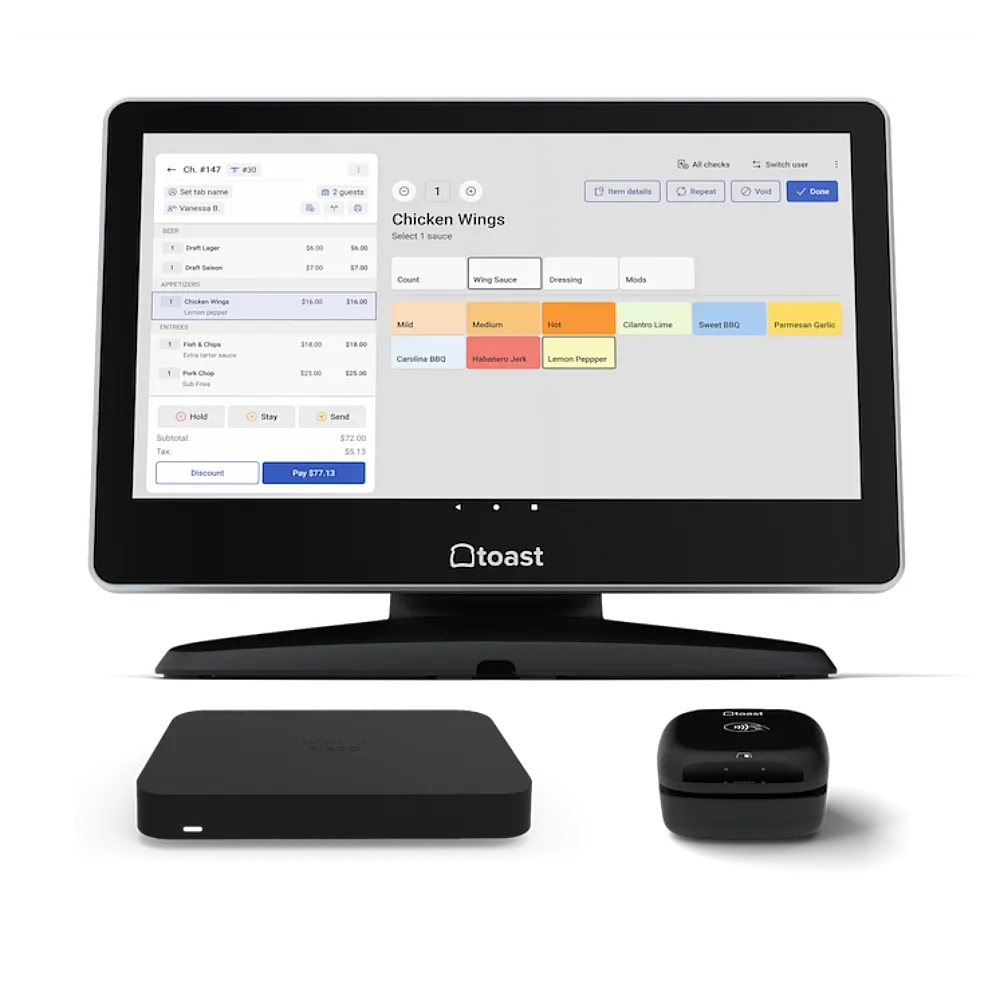 | 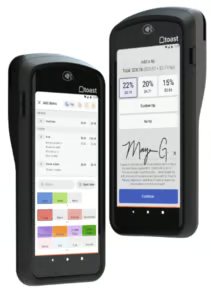 | 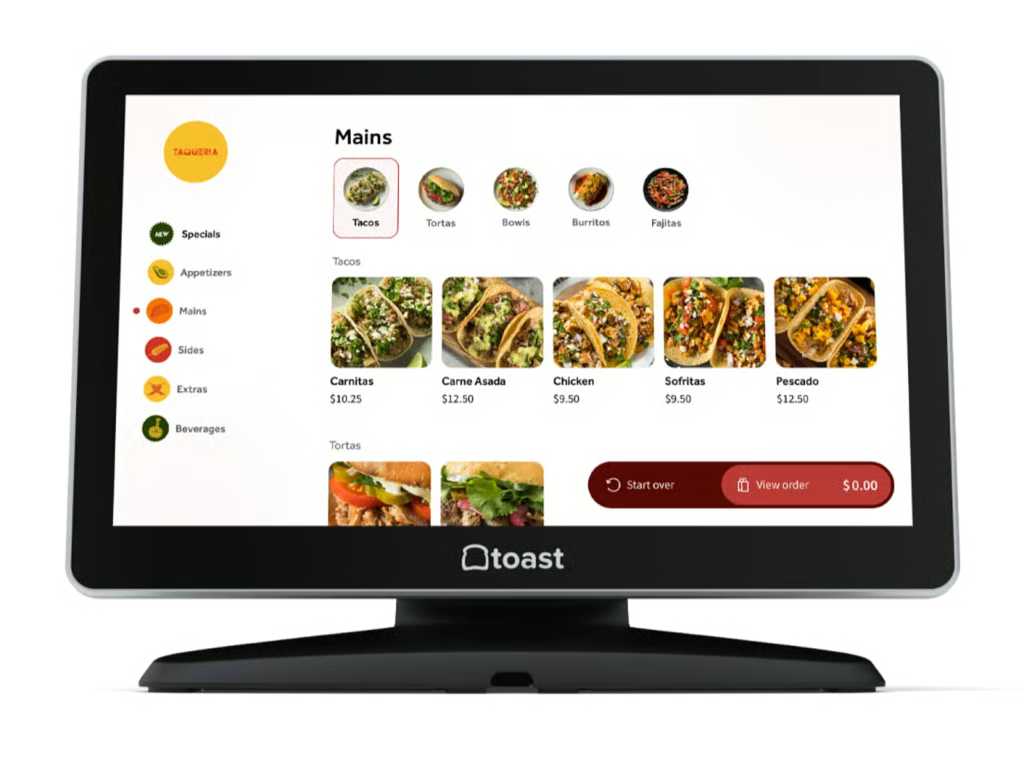 |
Outright purchase: $1,024.20 | Outright purchase: $995.20 | Outright purchase: $1,034.10 |
On the other hand, Square offers a variety of hardware options that are more generalized but still very effective for small food businesses.
Key Square hardware devices include:
Square Magstripe Reader | Square Contactless and Chip Reader | Square Stand | Square Terminal | Square Handheld | Square Register |
|---|---|---|---|---|---|
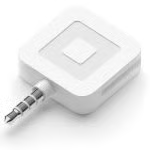 | 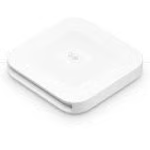 | 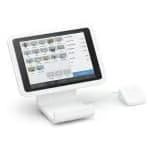 | 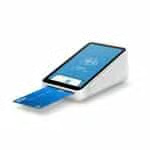 | 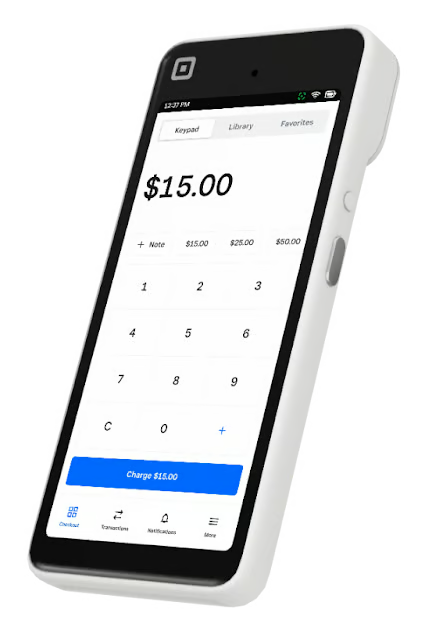 | 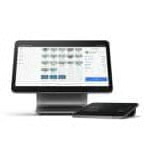 |
1st one: Free Additional reader: $10 | 1st generation: $49 2nd generation: $59 | $149 or $14 per month for 12 months | $299 or $37 per month for 12 months | $399 or $37 per month for 12 months | $799 or $39 per month for 24 months |
Square’s hardware is more affordable and versatile, designed to be easy to set up and use across various business types. It’s also more flexible, as it can be used with existing devices like iPads, reducing the need for significant upfront investment. However, Square’s hardware does not offer the same level of durability as Toast’s.
For small food businesses, Square’s hardware offers affordability, flexibility, and ease of use. It’s ideal for businesses that need a reliable system without making a large investment.
However, for mid- to large-sized restaurants, or simply those that want hardware that can endure drops, spills, and heat, Toast’s restaurant-specific hardware is better suited, offering the durability and advanced features necessary for high-volume, fast-paced environments.
Features: Toast is more robust
| | |
|---|---|---|
Table management | Paid plan | ✔ |
Menu management | ✔ | ✔ |
Order and course management | Paid plan | ✔ |
Kitchen display system | Paid plan | Add-on fee |
Online ordering | Per-order add-on fee | Add-on fee |
Delivery management | Via integrations | Add-on fee |
Loyalty programs | Add-on fee | Add-on fee |
Gift cards | Add-on fee | Add-on fee |
Employee management | Free up to 5 team members | Free for basic tools; |
Inventory management | Ingredient-level tracking requires a third-party integration | Add-on fee |
Reporting and analytics | ✔ | ✔ |
Restaurant CRM | ✔ | Add-on fee |
Mobile POS | ✔ | On Toast devices only |
Guest feedback | ✔ | ✔ |
Third-party integrations | 20+ integrations | 120+ integrations |
When it comes to restaurant-specific features, Toast, which is purpose-built for the restaurant industry, offers a deeply integrated suite of tools tailored to the unique needs of food service establishments. While Square provides many of the same features, its offerings are more basic in comparison. Toast’s features are more robust and designed to meet the heavier demands of larger and more complex food businesses, making it a better fit for restaurants requiring advanced capabilities.
Square, while not exclusively focused on restaurants, offers a versatile platform with many essential, very basic features included at no extra charge, making it an attractive option for small food businesses. Square provides over 30 restaurant-specific integrations to expand its capabilities.
However, Toast leads in third-party integrations with over 120 options, giving it an edge for larger or full-service establishments seeking a more tailored solution. Overall, Toast’s extensive feature set and deep industry integration make it better suited for larger restaurants looking for a more comprehensive, all-in-one system.
Toast vs Square: Which is best?
Choosing between Toast and Square ultimately depends on the specific needs of your food business. Toast is the clear winner for mid-to large-sized restaurants that require a comprehensive, restaurant-specific POS system. Its robust features, designed specifically for the food service industry, provide the depth and functionality needed to manage complex operations, from advanced inventory and employee management to integrated CRM and detailed reporting. Toast’s specialized restaurant-grade hardware and extensive integrations also make it an excellent choice for businesses with higher demands and the need for tailored solutions.
On the other hand, Square is best suited for small food businesses that prioritize affordability, ease of use, and flexibility. With its no-cost basic features, simple setup, and versatile hardware, Square offers a more accessible entry point for smaller operations or new businesses. While it may lack the advanced capabilities of Toast, Square provides enough functionality to efficiently run day-to-day operations, making it an ideal choice for cafes, food trucks, or small restaurants looking for a reliable and budget-friendly POS system.
If you’re running a small food business with straightforward needs, Square offers an excellent balance of functionality and cost-effectiveness. For larger, more complex restaurants, Toast provides the specialized tools and scalability required to support your growth and enhance your operations.
Frequently asked questions (FAQs)
Is Toast the same as Square?
Toast and Square are not the same, although they both offer point-of-sale systems for restaurants. Toast is specifically designed for restaurants with advanced, industry-focused features, while Square is a more versatile POS system used across various industries. Square offers basic restaurant tools, but Toast provides a more comprehensive solution tailored to the needs of food businesses.
What is the disadvantage of Toast?
The main disadvantage of Toast is its cost, as many of its advanced features and hardware require additional fees, and a two-year contract, making it more expensive than some other POS systems.
Who is Toast’s biggest competitor?
Aside from Square, Clover, TouchBistro, and Lightspeed are some of Toast’s biggest competitors. Each of these POS systems offers robust features tailored to the restaurant industry, with varying strengths in areas like hardware flexibility, user interface, and pricing options.