

Key takeaways
- There are six main project risk categories: project management risk, financial risk, operational risk, human resource risks, technical risks, and external risks.
- Some risk management and mitigation strategies include setting a clear project scope, establishing regular check-ins, and training all team members on necessary technology.
- Anticipating project management risk is crucial for a project’s accomplishment.
Project risk management helps teams identify, assess, and control issues before they disrupt timelines, budgets, or outcomes. Yet even with increased investment in risk tools and processes, many organizations are still struggling to keep up. A recent PwC Pulse Survey found that risk executives are falling behind in today’s fast-changing regulatory environment.
This gap highlights a growing need for stronger risk awareness and more proactive response strategies. In this guide, you’ll find real-world examples of project risks, along with practical ways to identify, manage, and mitigate them before they impact your work.
Project management risks
Risks can surface at any phase of project management, but they’re most often rooted in early planning decisions, especially when teams rely on assumptions, skip validation, or commit to timelines before fully understanding the work. In practice, these risks rarely show up all at once. Instead, they build gradually, leading to delays, budget overruns, or deliverables that miss the mark.
1. Inadequate resource allocation
When a project doesn’t have the right people, tools, or budget in place, execution quickly becomes reactive. In many cases, this shows up as team members juggling too many priorities, unclear ownership of tasks, or critical work getting delayed because no one has the capacity to take it on. This often leads to missed milestones and frustrated stakeholders.
How to mitigate this risk: Start with a resource plan that maps specific people, budgets, and tools to each task—not just at a high level, but at the work-package level. Using a work breakdown structure (WBS) helps uncover hidden effort that’s often missed in early estimates.
I found it also helps to pressure-test your plan by asking: “If this person is unavailable for a week, what breaks?” As the project progresses, hold regular resource check-ins (weekly or biweekly) to rebalance workloads before bottlenecks form, not after.
2. Scope creep
Scope creep often starts with well-intentioned requests, like small tweaks, quick additions, or “nice-to-have” features that don’t feel significant in isolation. The problem is that without clear documentation and review, these changes compound over time, stretching timelines and increasing costs.
How to mitigate this risk: Define the scope upfront, including what’s explicitly out of scope, and enforce a formal process for change requests. Even a simple “no work starts without documented approval” can prevent silent scope expansion. This technique will help you evaluate how changes will impact the timeline and budget before moving forward.
It is also not unusual to see successful teams revisit scope during key milestones to confirm priorities haven’t shifted before continuing execution.
3. Inaccurate time estimates
If your project timeline is built on guesses instead of data, you’re setting yourself up for bigger problems. Teams often rely on best-case scenarios or gut feel, especially under pressure to commit quickly. This creates a gap between planned and actual timelines that compounds as the project moves forward.
How to mitigate this risk: Use historical data from similar projects whenever possible, and validate estimates with the people actually doing the work, but be sure to adjust timelines to reflect current constraints and requirements. A practical tactic is to apply a buffer (e.g., 10–20%) to high-uncertainty tasks or use three-point estimation (best case, worst case, most likely) to create more realistic timelines. In any case, it is highly recommended that you break down work into smaller tasks to get more accurate numbers.
4. Unrealistic deadlines
When deadlines are set based on pressure instead of planning, quality and morale both take a hit. Rushing to meet an aggressive timeline usually means skipping important steps like testing or documentation. That can cause long-term issues even if the deadline is met.
How to mitigate this risk: Set timelines based on task complexity and team capacity, not just stakeholder demands. One practical approach is to walk stakeholders through the timeline assumptions so they understand the trade-offs. Also, build in lead and lag time between phases, especially for reviews or approvals. In most projects, these handoffs are where delays most often occur, so planning for them up front helps absorb disruption without derailing the entire schedule.
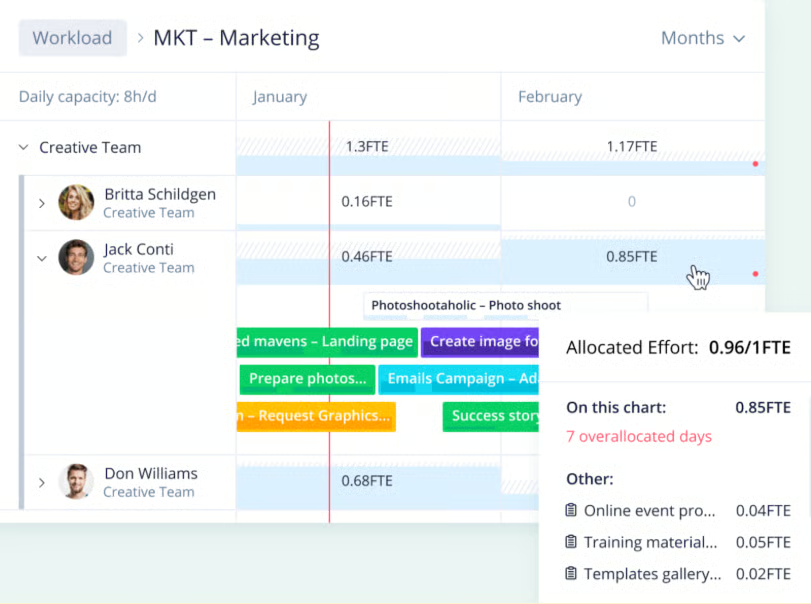
Wrike’s resource allocation tools help you manage resources by giving full visibility into team workloads, project timelines, and capacity for equal distribution of assignments. Through workload charts and time tracking, you can quickly spot overallocation and make real-time adjustments.
Financial risk
Financial risks are among the fastest ways a project can go off track. While they often start small in the form of slightly underestimated costs or overlooked expenses, they tend to compound over time. I’ve noticed these budget issues rarely come from a single mistake, but from a series of unchecked assumptions, delayed approvals, or a lack of visibility into spending.
Below are common financial risks and how to manage them proactively:
5. Unexpected cost overruns
Projects often go over budget when hidden costs emerge, or spending isn’t closely monitored. This can stem from inaccurate vendor estimates, change orders, or unexpected scope adjustments. In many cases, teams only realize they’re over budget once a significant portion of funds has already been spent—at which point recovery is difficult.
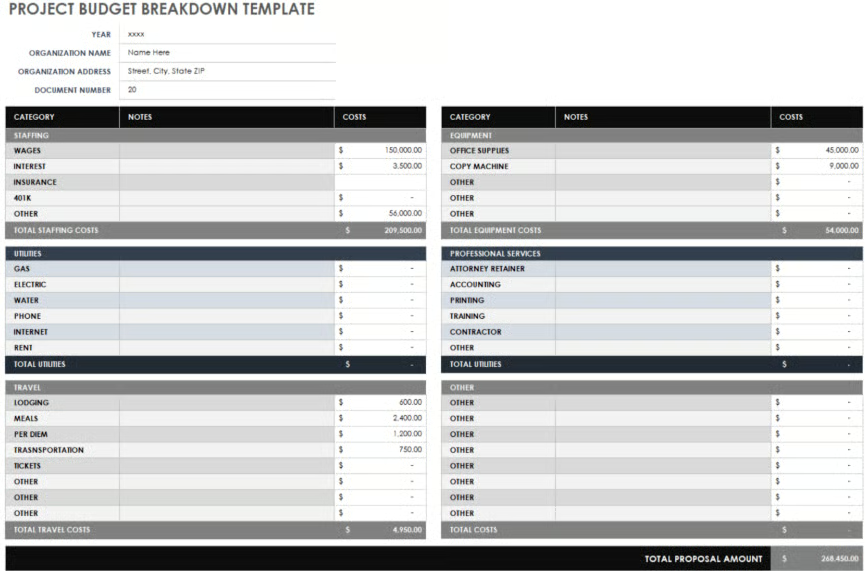
How to mitigate this risk: Track spending in real time and include a contingency reserve in your budget. Breaking down your budget by task or phase makes it easier to spot where costs are creeping up early. It also helps to set a contingency reserve (typically 10–20% of the total budget) to absorb unexpected expenses without disrupting the project. Approve any changes to cost only after assessing the impact. If you have change requests that support additional funding, make sure that is reflected in your budget.
6. Inaccurate budget forecasts
Budget forecasts often fall short when they’re based on outdated data, optimistic assumptions, or incomplete scope definitions. This is especially common in early project stages, where teams may rush estimates to secure approval.
Budgeting based on guesswork or outdated data can lead to serious funding issues later. If estimates don’t reflect actual project needs, you’ll likely face gaps that disrupt progress. This can erode stakeholder trust and stall deliverables.
How to mitigate this risk: Base forecasts on current market rates, recent project data, and input from finance or procurement teams. A practical approach is to revisit and refine your budget at key project milestones (e.g., after planning or vendor selection) rather than treating it as fixed. Regular financial reviews paired with simple variance tracking help catch deviations early before they become major issues.
Operational risks
These types of project risks stem from inefficiencies in everyday workflows, tools, or resource management. When operations break down, it affects the entire project’s momentum and consistency. Below are some of the most common examples of this type of project risks and what you can do to mitigate them and keep things running smoothly in your operations.
7. Equipment unavailability
If equipment is delayed, broken, or double-booked, all connected tasks may be paused. This slows down momentum and impacts dependent work.
How to mitigate this risk: Reserve equipment in advance and keep an updated inventory. Having backup options ensures your workflow stays on track.
8. Process inefficiencies
Outdated or poorly defined processes can lead to confusion, wasted time, and inconsistent outputs. This may cause teams to duplicate efforts or miss critical steps.
How to mitigate this risk: Map out workflows and identify bottlenecks before the project kicks off. Automating repetitive tasks can also boost efficiency. Revisit past projects and take note of any problem that may reoccur and can be avoided. Lessons learned from prior similar projects help ensure you do not repeat the same mistakes.
Automation also plays a growing role in managing operational risk. According to PwC, many organizations are increasing investment in automation to better track and respond to evolving risks. Tools that support automation can help teams maintain consistency while reducing the burden of repetitive work.
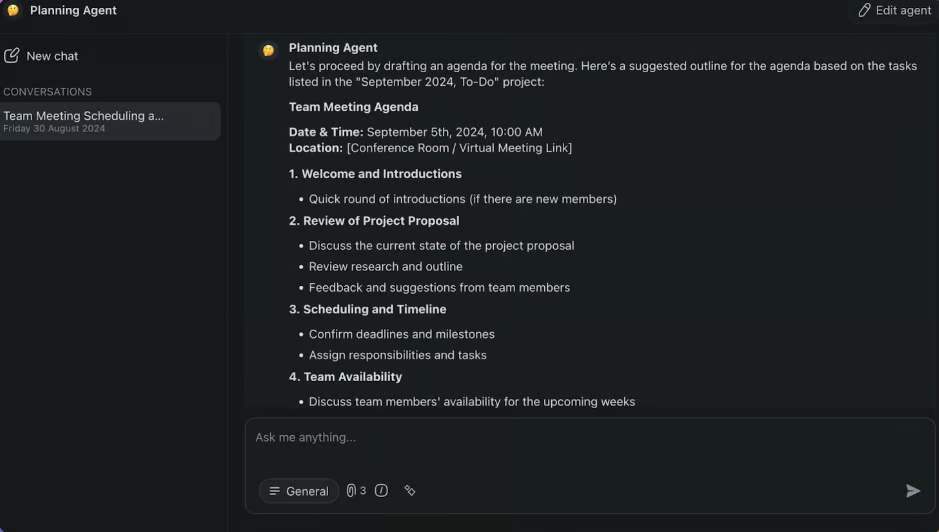
For example, AI-powered tools like Taskade can help streamline planning by generating structured meeting agendas or task lists based on existing project data. When integrated thoughtfully, these tools can support teams in handling routine tasks more efficiently, allowing them to focus on higher-value work.
9. Dependence on single individuals or teams
Relying too heavily on one person or a small team creates a single point of failure. If they leave or are unavailable, progress stalls.
How to mitigate this risk: Document key processes and decisions as the project progresses, not after the fact. Encourage knowledge sharing through regular check-ins, walkthroughs, or collaborative tools where information is accessible to the whole team.
Cross-training team members on critical tasks helps distribute responsibility and ensures continuity. A simple test: if one person is unavailable tomorrow, can someone else step in without significant disruption? If not, that’s a gap worth addressing early.
Human resource risks
Projects depend on people, and when key contributors are unavailable or overwhelmed, progress suffers. Misalignment, turnover, or skill gaps can lead to missed deadlines and uneven quality. Here are some project risks examples for human resources and how to address them before they hurt your team’s performance.
10. Skill gaps
When team members don’t have the right skills, quality drops and timelines stretch. Even strong performers may struggle if they’re working outside their expertise.
How to mitigate this risk: Conduct a skills assessment early and align tasks with each team member’s strengths. Where gaps exist, address them through targeted training, mentorship, or short-term external support. A practical approach is to flag high-risk tasks—those requiring specialized skills—and ensure they’re assigned to experienced contributors from the start.
11. Lack of collaboration
If departments or team members operate in silos, communication is impaired. This disconnect can lead to duplicated work, missed dependencies, or conflicting priorities.
How to mitigate this risk: Use shared tools and regular meetings to encourage transparency. Design a communication plan that everyone is familiar with and one that leverages the RACI matrix, so everyone understands their roles and is aware of who is responsible for what. Most importantly, create a work culture where open feedback is expected and valued.
12. Unclear roles and responsibilities
Without clarity on assignees, teams may overlook responsibilities or duplicate work. Confusion over accountability slows progress and complicates decision-making.
How to mitigate this risk: Define roles and responsibilities upfront using tools like a RACI matrix, and review them with the entire team. Revisit this alignment during key project phases, especially if scope or team structure changes. The goal is to always have a clear, immediate answer when somebody asks, “who owns this?”
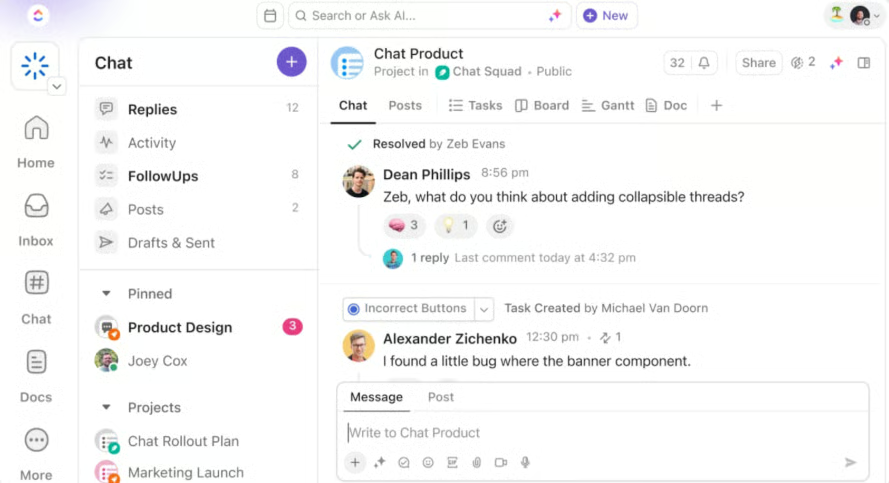
ClickUp boosts collaboration by keeping conversations across teams in one place. Under Task view, you can connect with other team members by leaving comments, sharing files, and assigning comments as action items.
Technical risks
Technology isn’t always predictable. Whether you’re using new software or integrating multiple systems, technical hiccups can cause unexpected complications. Listed below are typical examples of technical risks in project management and how to mitigate them before they create bottlenecks.
13. Integration issues between systems
Linking multiple platforms or tools can be more complex than expected. If systems aren’t compatible or data doesn’t transfer correctly, delays and rework pile up.
How to mitigate this risk: Plan integrations early and test them in phases rather than all at once. Look for project management software that readily integrates with your existing apps. A great example is monday.com, which offers over 200 third-party apps in its integration library. Another option is to use application programming interfaces (APIs) and app connectors like Zapier to support smooth data flow.
14. Data migration challenges
Transferring data between systems goes beyond simply moving files because it also requires maintaining the accuracy and integrity of the information throughout the process. Corrupt, incomplete, or misformatted data can disrupt operations and create reporting errors.
How to mitigate this risk: Run test migrations using sample datasets to identify issues early. Validate data both during and after migration, and don’t rely solely on automated transfers. A practical safeguard is to maintain a backup of the original data and define clear validation criteria before going live.
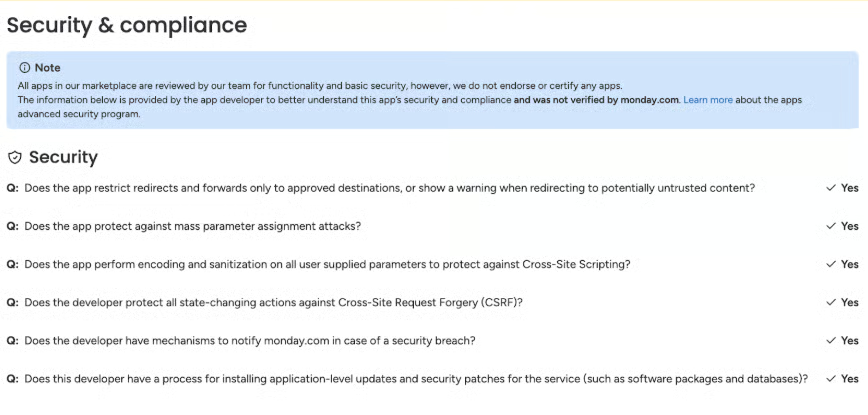
15. Security vulnerabilities
A weak security setup exposes your company to threats like data breaches or ransomware attacks. Even minor oversights, like default passwords or missing patches, can cause serious damage.
How to mitigate this risk: Build security into your project from the start by implementing access controls, encryption, and regular vulnerability checks. In practice, assigning clear ownership of security tasks and scheduling routine audits helps ensure nothing slips through the cracks as the project evolves.
16. Software or hardware failure
Tech breakdowns can grind your project to a halt. Whether it’s a server crash or corrupted files, these failures often cost both time and money.
How to mitigate this risk: Plan for failure by using redundant systems, regular maintenance schedules, and reliable backup solutions. Cloud backups and monitoring tools can help detect issues early and reduce downtime. As a best practice, always test your recovery process in advance to ensure your team can respond quickly when failures happen.
External hazard risks
Not all risks come from within your project team or your organization. External factors like market shifts, regulatory changes, or vendor issues can throw off your timeline and force fast pivots. Here are examples of external risks and strategies for reducing their impact on your project.
17. Vendor or supplier delays
Delays from third parties often have a domino effect on your project schedule. When deliverables from outside vendors don’t arrive on time, internal teams are left waiting. This can create resource bottlenecks and missed deadlines.
How to mitigate this risk: Set clear expectations upfront with vendor performance clauses and defined delivery timelines. Build buffer time around vendor-dependent tasks, especially for critical path activities. In practice, it’s also worth identifying backup vendors or alternative solutions early, so you’re not scrambling for options mid-project.
18. Regulatory or legal compliance issues
Failure to comply with laws or industry regulations can result in penalties or rework. This is especially risky in healthcare, finance, or data-driven industries where requirements are strict. Non-compliance also threatens your brand’s reputation.
How to mitigate this risk: Work closely with legal or compliance teams from the start rather than treating compliance as a final checkpoint. Schedule periodic reviews to ensure your project remains aligned with current regulations. A practical approach is to document compliance requirements alongside your project scope so they’re visible and tracked throughout execution.
19. Natural disasters or political instability
Disruptions like floods, strikes, or political unrest can bring your project to a standstill. These risks are unpredictable and outside your control, but they can severely impact timelines and budgets.
How to mitigate this risk: Develop a risk management plan that outlines how your team will respond to disruptions. During planning, assess location-specific risks and identify critical dependencies that could be affected. In practice, having remote work options, backup suppliers, or alternative locations can help maintain progress when disruptions occur.
20. Changes in customer priorities
When a customer shifts focus mid-project, deliverables may no longer align with their needs. This puts your team in a difficult position, often requiring scope adjustments or complete redesigns.
How to mitigate this risk: Stay connected to customer goals through regular check-ins. If changes are unavoidable, document and revalidate the project scope immediately. It also pays to have a reliable change control policy everyone has agreed to to manage these adjustments effectively.
Best practices for managing project risks
Effectively managing project risks can make the difference between a smooth delivery and a stalled project. Because no matter how effectively you apply your chosen project management methodology, risks can still emerge and affect your progress. By implementing a few proven strategies, you can minimize surprises and keep your team focused on delivering results.
- Start risk planning early
Risk management should begin during the planning phase, not after problems arise. Identifying potential risks upfront gives you time to assess impact and define responses before they escalate. Early planning also helps build team awareness and ownership from the start. Project plan examples can serve as a reference to help you spot risks early in the process.
- Create a detailed risk register
A risk register helps you track risks, assign owners, and document mitigation strategies. Keeping this document updated ensures your team knows what to watch for and how to respond. It also makes reporting easier for stakeholders who need to stay informed.
- Involve the right stakeholders
When you include team leads, clients, and other key players in risk discussions, you get a broader view of potential issues. Stakeholders can flag concerns you may not have considered and help prioritize what matters most. Their input also boosts buy-in for risk response plans. Using a stakeholder register, you can collect and organize all information about the stakeholders that may impact the project and use it to analyze their level of influence and nature of interest in relation to the project.
- Review and update risks regularly
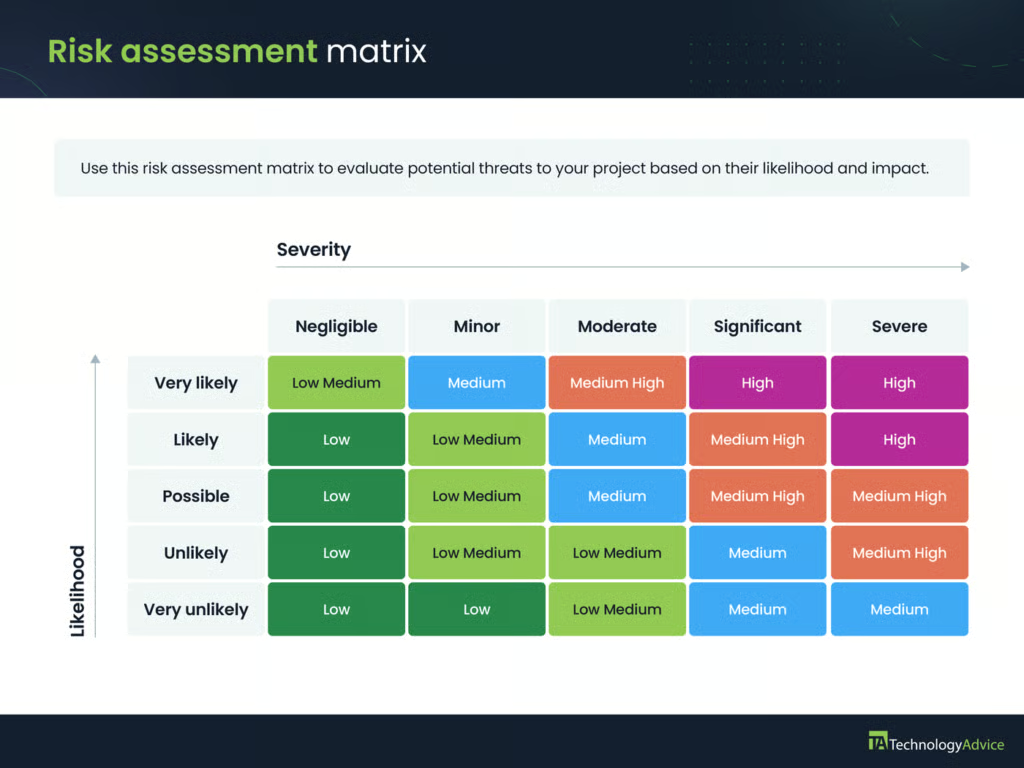
Risks evolve throughout a project, so your management strategy should too. Incorporating tools like a Strengths, Weaknesses, Opportunities, and Threats (SWOT) analysis or risk matrix can help identify emerging threats and positive risks more effectively. Make risk reviews part of your regular status meetings or sprint planning sessions to catch new issues early and adjust your plan without major disruption.
- Use project management tools to monitor risks
Tools like Wrike, ClickUp, or monday.com can centralize risk tracking alongside tasks and timelines. You can assign risk owners, set deadlines, and flag priorities in real time. Visual dashboards make it easier to spot red flags before they cause delays.
Crafting a well-thought-out project management strategy is essential to delivering projects on time, within budget, and within scope. When you plan ahead and stay proactive, you reduce the chances of being blindsided by unexpected issues. The more disciplined your approach, the more confident your team will be in tackling whatever comes next.
FAQs
What is project risk management with an example?
Project risk management is the process of identifying, analyzing, and responding to potential issues that could impact a project’s success. For example, if a project depends on third-party resources, a delay from that vendor is a risk that requires a mitigation plan.
What are five examples of risk management?
Project risk examples include setting aside budget reserves for unexpected costs, using backup vendors, assigning contingency time in the schedule, cross-training team members, and implementing security protocols to prevent data breaches.
What are the four types of risks in project management?
The four main project risk categories are technical risks, financial risks, external risks, and project management risks, each affecting different aspects of a project’s timeline, budget, or performance.