

Key takeaways
- A statement of work defines project objectives, scope, deliverables, timelines, payment terms, and success measures, serving as the foundation for project accountability.
- Avoid common mistakes like vague objectives, undefined deliverables, and unclear payment terms by implementing proven strategies and expert-backed tips.
- A statement of work template simplifies project documentation and provides a ready-made framework you can adapt to your workflow.
A statement of work (SOW) is one of the most important documents you can create when managing business projects, as it defines expectations and sets accountability for all parties involved. Learning how to create a statement of work involves identifying objectives, outlining scope, and setting measurable outcomes that guide delivery. In this guide, you’ll learn how to write a statement of work effectively and gain access to a free template you can use right away.
- What is a statement of work (SOW)?
- Why a statement of work matters in business projects
- What are the key elements of a statement of work?
- How to write a statement of work: A step-by-step guide
- Common SOW mistakes to avoid
- Tips for writing a clear and actionable statement of work
- Free statement of work template
- FAQs
What is a statement of work (SOW)?
A statement of work (SOW) is a formal document that defines the scope, objectives, deliverables, and timeline for a project. It usually takes the form of a detailed agreement with sections covering project management basics such as tasks, responsibilities, milestones, and measurable outcomes.
Companies use an SOW at the start of a project or a formal engagement to establish clear expectations between a client and a vendor or project teams. When implemented correctly, an SOW reduces misunderstandings and creates accountability by documenting commitments in detail. It is most often prepared and reviewed by business leaders, project managers, and service providers who need a clear roadmap for how work will proceed.
Why a statement of work matters in business projects
A statement of work establishes reference points to keep projects aligned and accountable, while fostering informed decision-making and trust among all parties involved. This type of documentation matters because organizations spend an average of four hours to a full day per month manually collating project status information. A well-written SOW reduces that reporting burden significantly by creating a shared reference for all stakeholders from the start.
Here’s why an SOW plays such an important role in keeping business projects on track.
- Creates clarity and alignment: An SOW eliminates guesswork by outlining multiple project requirements in plain terms. This ensures leadership and project teams share the same expectations from the start, reducing the risk of scope creep or missed objectives.
- Strengthens accountability: With responsibilities clearly assigned, teams know exactly who owns which deliverables. This reduces overlap in tasks and prevents disputes, making it easier for managers to track progress against commitments.
- Improves efficiency in planning and execution: By defining milestones and deadlines upfront, SOW enables teams to allocate resources effectively and avoid bottlenecks. The result is a smoother workflow that ensures timely project delivery.
- Supports vendor and client relationships: For projects involving outside providers, an SOW functions as a binding agreement that protects both sides. It helps vendors avoid doing unpaid work and ensures clients receive the agreed results without ambiguity.
What are the key elements of a statement of work?
An effective SOW contains key elements that shape the whole project lifecycle. These elements ensure expectations and responsibilities across the team are crystal clear, and give all parties involved a reliable framework to guide decisions throughout the process. Below is a breakdown of the most important components of a statement of work and how each one contributes to its successful implementation.
| Key element | Function |
|---|---|
| Project objectives | Defines the overall purpose of the project and sets measurable goals that all stakeholders can agree on |
| Scope of work | Outlines the boundaries of the project, clarifying which tasks are included and which ones fall outside the agreement |
| Deliverables | Lists the specific outputs or products expected, ensuring both sides know exactly what will be produced |
| Timeline and milestones | Establishes deadlines and progress markers to keep the project on schedule and provide checkpoints for review |
| Payment terms | Details how and when payments will be made to protect both clients and vendors from disputes. |
| Success criteria | Defines how project outcomes will be measured and clarifies what completion and quality look like. |
How to write a statement of work: A step-by-step guide
If you want to learn how to write an SOW, it’s important to understand that the process involves more than simply filling out a template. By working through each step carefully, you move from broad ideas to a detailed agreement that provides your team and stakeholders with a reliable guide for the entire project.
Step 1: Define project objectives
Begin with a description of the problem the project intends to solve and explain why the work is necessary. Instead of listing general goals, write objectives that tie directly to measurable outcomes, such as reducing turnaround time or increasing customer satisfaction. For example, a software rollout might aim to replace outdated systems and improve team productivity.
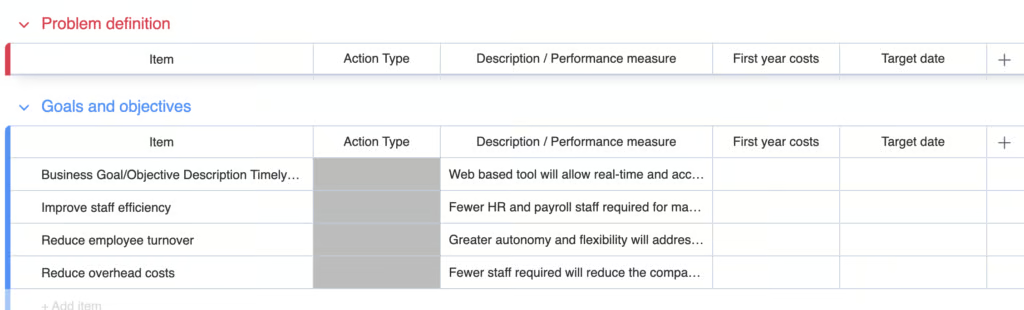
When drafting project goals for your SOW, a project management system like monday work management can guide you through the process using an easy-to-understand visual board. The single workspace shows your objectives alongside performance measures and costs. This setup makes it easier to document goals in measurable terms and customize fields so your SOW reflects the exact needs of your project.
Step 2: Establish the scope of work
Once goals are set, the next step is to clarify the scope of work by outlining the deliverables to be completed and the resources needed for the project. A 2025 report from project management consultancy Wellingtone lists frequent scope changes among the top five biggest challenges in project management, making it especially important to document boundaries. At this stage, you need to detail what falls outside the scope so that both parties understand the limits of their respective responsibilities and efforts.
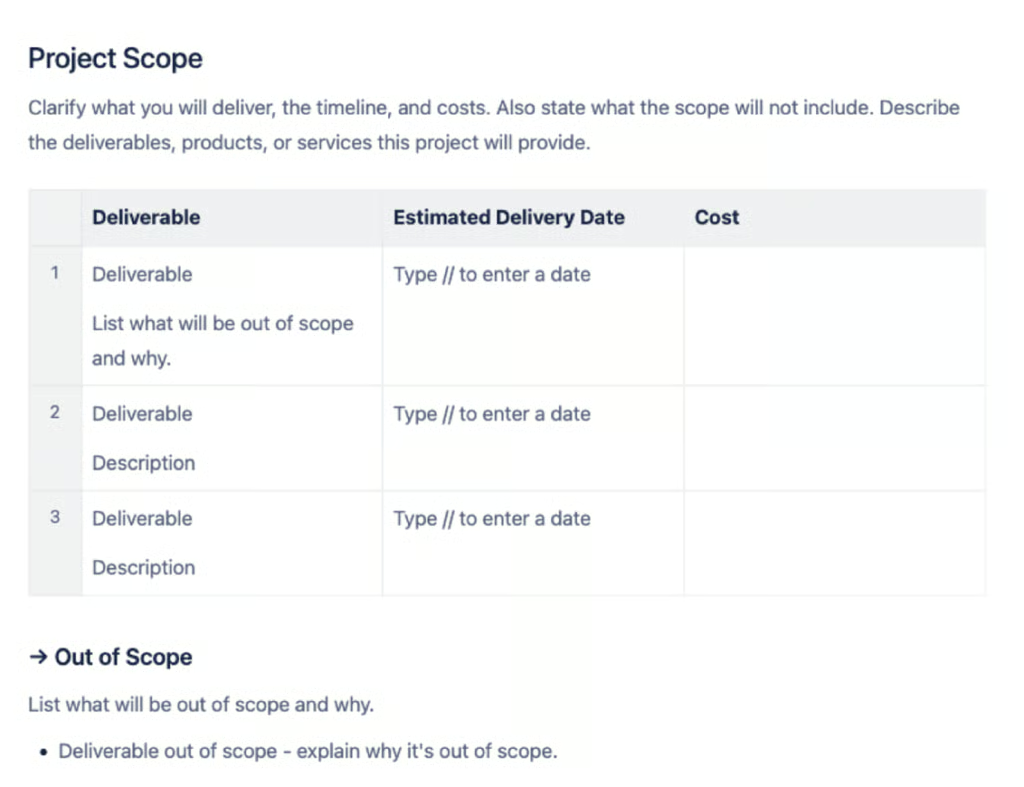
Confluence’s SOW template gives teams a dedicated space to capture the scope of work in detail, from specific deliverables to delivery timelines and costs By also including an “out of scope” section, Confluence’s SOW template ensures that both sides are aware of the boundaries of responsibility, which reduces the likelihood of scope creep during execution.
Step 3: List the deliverables
Every statement of work should specify what tangible results the project will produce. Describe each deliverable in enough detail so that anyone unfamiliar with the project can review the document and understand what to expect upon completion.
Step 4: Set the timeline and milestones
When managing large projects, make sure to break the schedule into discrete, measurable phases or checkpoints. From there, assign deadlines to these milestones so you can easily monitor progress and make corrections before problems impact final delivery. For instance, a product development team might set milestones for prototype completion and user testing rounds.
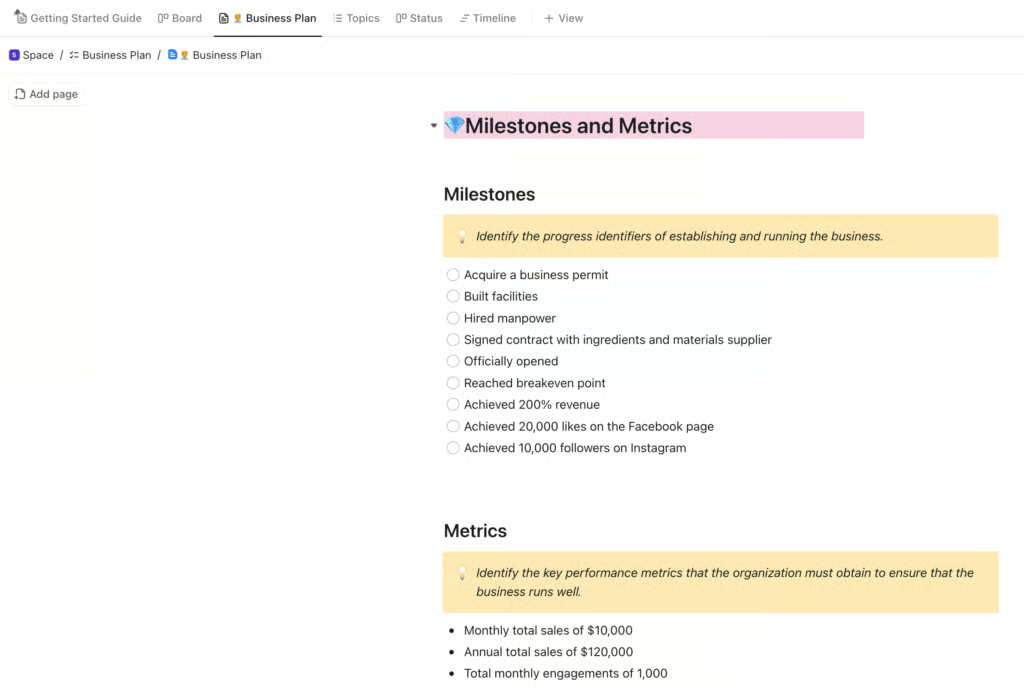
In ClickUp, users break a project into checkpoints, simplifying progress and performance tracking. By combining milestones with metrics on a single board, teams can view deadlines and revenue targets side by side, which helps keep delivery on schedule.
Step 5: Define payment terms
When it comes to financial details, everything must be documented accurately. State how fees will be calculated, when payments are due, and under what conditions they may be changed — this way, you’re protecting both the organization funding the project and the vendor completing the work. Budget control is a persistent challenge in project delivery, and with only 41% of organizations mostly or always completing projects on budget, documenting payment terms within the SOW becomes essential to reducing financial risk.
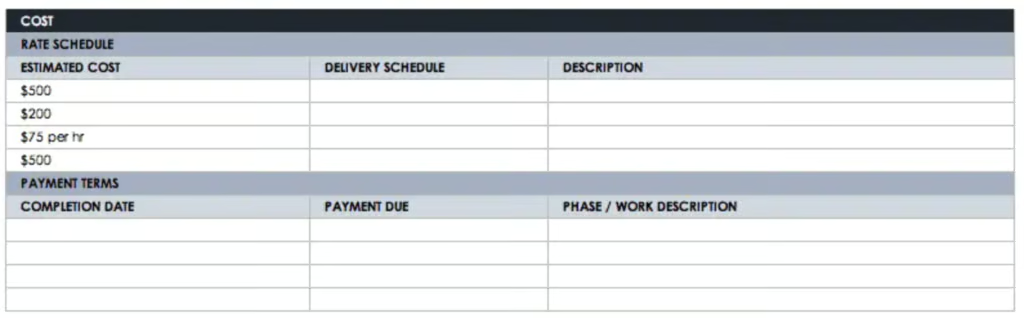
Smartsheet provides a state of work example with a section for documenting costs and payment terms, covering details like completion dates and payment due. By breaking down estimated costs alongside due dates and project phases, you give both clients and vendors a transparent record of financial expectations.
Step 6: Establish success criteria
Success should never be left to interpretation. Document the expected benchmarks or performance measures that will be used to verify completion, such as quality standards, delivery timelines, or performance improvements, to make sure the evaluation is consistent and fair. This could mean tracking delivery against deadlines and verifying that deliverables meet the client’s requirements.
Common SOW mistakes to avoid
Even with the best intentions, many statements of work fall short because of avoidable errors. Recognizing these mistakes upfront makes it easier to write a document that supports execution instead of slowing it down.
| Mistake | Consequence | How to avoid | ?Pro tip |
|---|---|---|---|
| 1. Writing vague objectives | Misaligned expectations lead to wasted time and resources. | Use measurable outcomes that define exactly what success looks like. | Tie objectives to KPIs such as customer satisfaction scores or turnaround times. |
| 2. Overlooking out-of-scope items | Teams take on unintended work, causing delays and extra costs. | Document exclusions so responsibilities are not misinterpreted. | Add an “Out of Scope” section to your SOW template to reduce ambiguity. |
| 3. Leaving deliverables undefined | Stakeholders disagree on what was promised versus what was delivered. | Specify outputs in detail so both sides know what will be produced. | Use concise and clear acceptance criteria wording (e.g., “Feature passes testing in three browsers”) to avoid disputes. |
| 4. Setting unrealistic timelines | The team consistently misses deadlines, resulting in frustration and budget overruns. | Break projects into phases with achievable deadlines. | Validate timelines with resource planning tools like Smartsheet or ClickUp. |
| 5. Ignoring payment details | Vendors face delayed payments, and clients risk scope disputes. | State costs, schedules, and terms in writing to protect both parties. | Align payment milestones with deliverables to encourage timely progress. |
| 6. Skipping success criteria | Project completion becomes subjective and difficult to measure. | Define performance benchmarks to ensure consistent evaluation. | Use SMART criteria to make success measurable and reviewable. |
Tips for writing a clear and actionable statement of work
A strong statement serves as both a practical guide and a reference document. The following tips will help you draft one that avoids ambiguity and drives projects forward without unnecessary delays.
- Involve stakeholders early: Engage key decision-makers while drafting the SOW so their requirements are captured before work begins. This prevents late-stage revisions and reduces the chance of overlooked priorities.
- Use consistent terminology: Define key terms near the beginning of the SOW so everyone uses the same language. Choose words that mean the same thing across teams and avoid jargon that different readers might interpret in their own way.
- Reference supporting documents: Link or attach related resources such as project charters, contracts, or technical requirements. Doing so prevents the SOW from becoming overloaded with detail while still providing readers with essential context.
- Review for legal and compliance requirements: Projects often cross into areas with regulatory or contractual obligations, and some may also require NDAs because of its sensitivity. Including a compliance review step helps you create a statement of work that addresses these obligations and protects both the organization and the vendor from legal or policy gaps.
- Build in change management procedures: Projects rarely unfold exactly as planned, so the SOW should specify how the team should request changes and who has the authority to approve them. The process should also align with any change management procedures already established by the PMO or other governing groups within the organization.
Free statement of work template
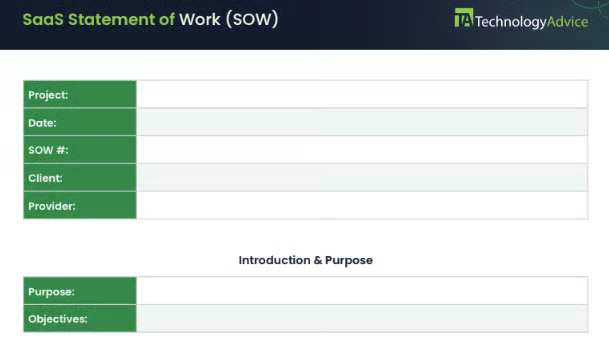
A well-written statement of work saves time and minimizes confusion by giving you a reliable starting point for project documentation. To help you get started quickly, download our free statement of work template available in both PDF and Google Docs format.
FAQs
How do you write a simple statement of work?
Start by defining the project objectives, then describe the scope, deliverables, and timelines. Add payment terms and success criteria to document responsibilities. For guidance on how to write a statement of work, use a framework that keeps details specific and avoids vague descriptions.
What is a properly written statement of work?
A properly written SOW is specific, measurable, and easy to reference throughout the project. When writing a statement of work template, it should outline what’s within scope and what’s not, state deliverables, and define how results will be evaluated. An effective SOW avoids ambiguity and serves as a contract-level agreement for all stakeholders.
What should be included in the statement of work?
A statement of work covers objectives, project scope, deliverables, timelines, payment terms, and success measures. These elements give stakeholders a shared reference point and protection against disputes. To simplify the process, you can use a free statement of work template that already includes these core components.