The best payment processor for your small business should make it easy to accept payments wherever you sell, while keeping costs and back-office work manageable. The best payment processing systems can support a simple mobile POS for a local service business, a native checkout for an ecommerce store, or lower interchange-plus rates for a company processing higher monthly volume.
I evaluated payment processing software based on pricing and contract terms, features, support and reliability, user experience, and user and expert scores. These payment processing software solutions vary widely in their costs, setup requirements, and ability to support in-person, online, and recurring payments.
Square is my top pick overall because it combines easy setup, flexible hardware, in-person and online payment tools, and a strong user experience. However, the right choice depends on how your business takes payments and the systems you already use.
Best payment processors at a glance
| Provider | Best for | Monthly starting price |
| Square | Easy all-in-one payments | $0 |
| Helcim | High-volume growing businesses | $0 |
| QuickBooks Payments | Payments and bookkeeping in one place | $0 (QuickBooks plan may be required) |
| Shopify Payments | Ecommerce-first businesses | $0 (Shopify plan required) |
| Stax | Higher-volume businesses | $99 |
| Stripe | Customizable payment workflows | $0 |
| Authorize.net | Flexible payment gateways | $25 |
| PayPal | Simple online payments | $0 |
| Payment Depot | Negotiable rates for high-volume businesses | Custom quote |
| CardX | Credit-card surcharging | $99 |
Payment processing software comparison
Use this comparison to identify the payment processing solution that best matches your current sales channels and future growth plans. A lower transaction rate is valuable, but the best fit should also simplify payment collection, reconciliation, and customer service.
| Provider | Transaction fee type | Payment features | Payout speed* | Overall score out of 5 |
| Square | Flat-rate processing | POS, invoicing, ecommerce, ACH | 1-2 business days; instant option | 4.29 |
| Helcim | Interchange-plus pricing | POS, invoicing, ACH, recurring billing | 1-2 business days | 4.26 |
| QuickBooks Payments | Flat transaction rates | Invoices, ACH, recurring payments, accounting sync | Next business day; instant option | 4.08 |
| Shopify Payments | Flat rates tied to Shopify plan | Native checkout, ecommerce, POS | 2-3 business days; next business day (via Shopify Balance) | 3.97 |
| Stax | Subscription plus interchange | Invoicing, recurring billing, ACH, reconciliation | Next business day | 3.97 |
| Stripe | Flat-rate, pay-as-you-go pricing | Custom checkout, APIs, payment links, recurring billing | 2-7 business days; instant option | 3.96 |
| Authorize.net | Gateway fee plus processing rates | Gateway, eChecks, fraud tools, recurring billing | Varies by merchant account | 3.86 |
| PayPal | Flat-rate processing | Online checkout, digital wallet, invoices | 1-3 business days; instant option | 3.82 |
| Payment Depot | Custom interchange-plus pricing | Virtual terminal, payment links, recurring payments | 1-2 business days | 3.80 |
| CardX | Surcharge-based pricing | Compliant surcharging, virtual terminal, online payments | 1-2 business days | 3.04 |
*Payout timing can vary by payment method, business eligibility, banking details, cutoff times, and account status.

Square: Best overall payment processor
Overall score
4.29/5
Price and contract terms
4.00/5
Features
4.44/5
Support and reliability
3.63/5
User experience
5.00/5
User and expert scores
4.88/5
Pros
- Free starting plan with no long-term contract
- Strong in-person, online, invoice, and mobile payment tools
- Wide range of POS hardware and Tap to Pay options
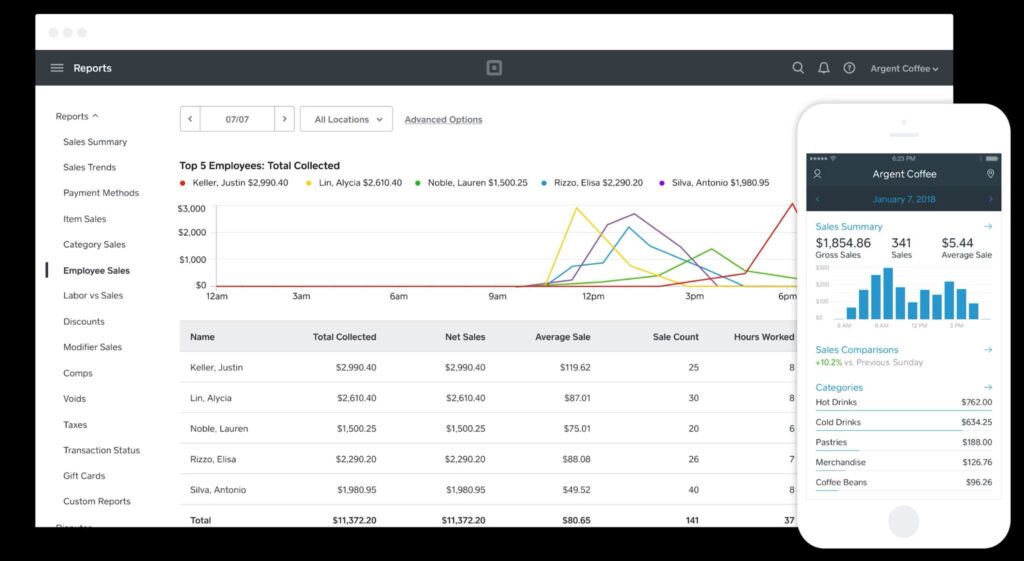
- Easy-to-use dashboard for payments, refunds, customers, and reporting
Cons
- Flat-rate transaction fees can become less competitive at higher volume
- Advanced features and priority support require paid plans
- Add-ons such as marketing, payroll, and industry-specific POS tools can raise total cost
- Businesses with complex underwriting needs may prefer a traditional merchant account
Why I chose Square
I chose Square as the best overall payment processor because it offers small businesses a complete payment toolkit without complicated setup. A business can start with no monthly software fee, accept payments in person or online, send invoices, take ACH payments, and add hardware only when it needs it. That flexibility works especially well for businesses that are still deciding how they want to sell.
Square is also especially strong for businesses that want one payment software ecosystem for POS, online checkout, invoices, customer management, and reporting instead of connecting several separate tools.
Square has one of the easiest experiences for owners and staff. Its POS, mobile tools, payment links, invoices, customer records, and reporting all sit in the same ecosystem. While it is not the lowest-cost option for every high-volume business, it is the strongest all-around choice for businesses that want straightforward payments today and room to add more tools as they grow.
Monthly software fees
- Square Free: $0 per month
- Square Plus: Starts at $49 per month, per location
- Square Premium: Starts at $149 per month, per location
- Custom pricing: Available for businesses processing more than $250,000 annually
Payment processing rates
- In-person card payments: 2.4% to 2.6% plus 15 cents, depending on plan
- Online and invoice card payments: 2.9% to 3.3% plus 30 cents
- ACH bank transfers through invoices: 1%, with a $1 minimum
- Manual entry or card-on-file payments: 3.5% plus 15 cents
- Afterpay: 6% plus 30 cents
- Next-day transfers: Free
- Instant transfers: Additional fee applies
Additional terms
- Installation fee: None. Setup is do-it-yourself with guided onboarding resources
- Contract length: Month-to-month; no long-term commitment required
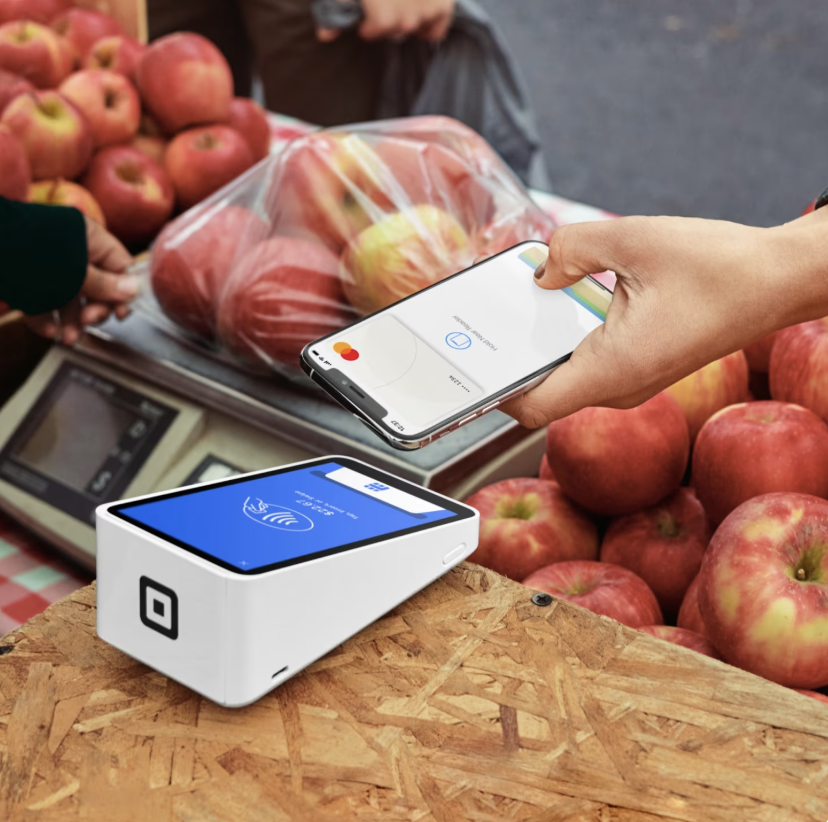
- Flexible payment acceptance: Square supports in-person card payments, Tap to Pay on iPhone and Android, online checkout, invoices, payment links, manual card entry, and ACH transfers.
- POS and hardware options: Businesses can start with a phone or tablet, then add a card reader, Terminal, Register, Handheld, kiosk, or other hardware as their needs change.
- Invoicing and remote collection: Send estimates, contracts, and invoices, then let customers pay online by card or ACH.
- Business tools beyond payments: Square includes customer management, inventory, reporting, scheduling, loyalty, marketing, and industry-specific POS tools for businesses that need them.
Related: What Is Square?

Helcim: Best for high-volume growing businesses
Overall score
4.26/5
Price and contract terms
4.81/5
Features
4.31/5
Support and reliability
3.81/5
User experience
4.31/5
User and expert scores
3.53/5
Pros
- No monthly account, software, PCI compliance, or cancellation fees
- Interchange-plus pricing with automatic volume discounts
- Invoicing, recurring payments, ACH, POS, payment links, and APIs are included
- Next-business-morning deposits for credit and debit transactions
Cons
- Processing costs are less immediately predictable than simple flat-rate pricing
- Recurring payments add a 0.4% fee per transaction
- Hardware is purchased separately
- User review volume is lower than that of Square, Stripe, and PayPal
Why I chose Helcim
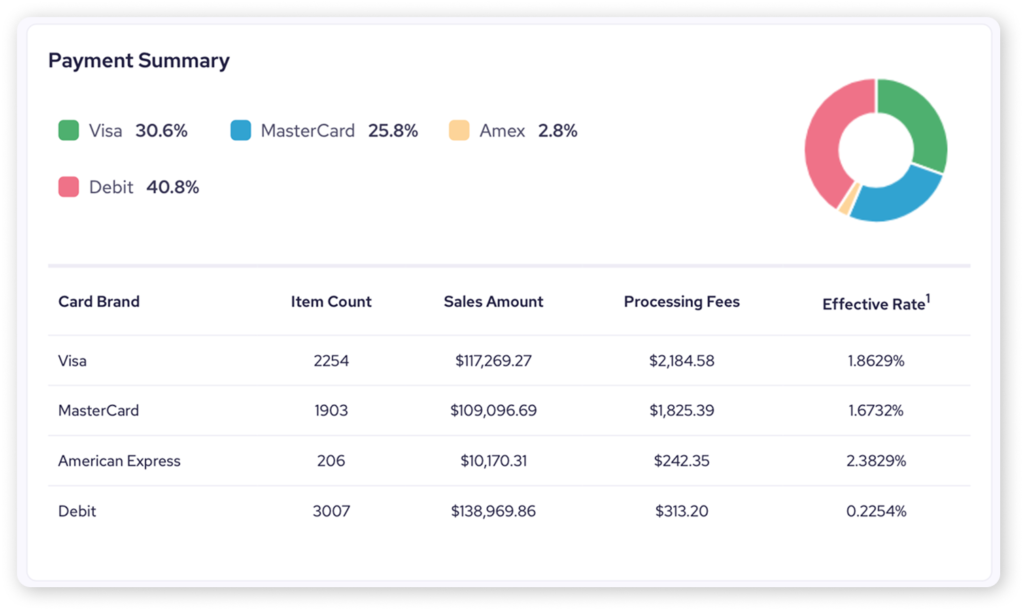
Helcim is the best option for high-volume growing businesses because its interchange-plus model becomes more compelling as payment volume increases. Instead of charging one flat rate for every transaction, Helcim passes through interchange and adds a published margin. Its automatic volume discounts reduce that margin as a business processes more.
Helcim also includes the tools that many growing businesses would otherwise pay for separately. Businesses can use POS, invoicing, payment links, online checkout, recurring billing, ACH, customer vault tools, accounting integrations, and APIs without a monthly software fee or a paid add-on.
That combination makes Helcim especially appealing for businesses that have outgrown starter flat-rate pricing but still want straightforward credit card payment processing software with room to scale.
Monthly software fees
- Helcim account: $0 per month
- POS, invoicing, virtual terminal, payment links, online checkout, and reporting: Included with no monthly software fee
- PCI compliance fee: $0
- Optional 4G wireless data for supported hardware: $7 per month
Payment processing rates
- In-person card payments: Interchange plus 0.40% and 8 cents per transaction for businesses processing up to $50,000 per month. Helcim’s margin decreases automatically at higher volume tiers
- Keyed and online card payments: Interchange plus 0.50% and 25 cents per transaction for businesses processing up to $50,000 per month. Helcim’s margin decreases automatically at higher volume tiers
- ACH bank payments: 0.5% plus 25 cents per transaction, capped at $6. An additional 0.05% applies to amounts above $25,000
- Recurring payments: Additional 0.4% per transaction
- Tap to Pay on iPhone: Additional 10 cents per transaction
- Chargebacks: $0 when resolved in your favor; $15 when lost
- Rejected ACH payments: $5 per rejected transaction
Additional terms
- Installation fee: None. Businesses can create an account and begin setup online, with support, documentation, and migration resources available.
- Contract length: Month-to-month; no long-term contract, cancellation fee, or equipment lease required.
- Interchange-plus pricing with volume discounts: Helcim automatically lowers its published markup as a business processes more card volume, helping higher-volume merchants reduce their effective processing cost.
- Included payment tools: Use a virtual terminal, POS, invoices, payment links, online checkout, recurring payments, and a customer vault without paying a recurring software fee.
- ACH and recurring billing: Accept ACH payments and automate subscription or installment payments. This is useful for service businesses, B2B sellers, and businesses with repeat billing needs.
- Integrations and APIs: Helcim supports accounting and ecommerce integrations, including QuickBooks Online, Xero, and WooCommerce, alongside APIs and HelcimPay.js for customized workflows.

Related: 8 Cheapest Credit Card Processing Providers

QuickBooks Payments: Best for payments and bookkeeping in one place
Overall score
4.08/5
Price and contract terms
3.75/5
Features
4.31/5
Support and reliability
4.06/5
User experience
4.81/5
User and expert scores
3.17/5
Pros
- Payments automatically sync with QuickBooks bookkeeping records
- Strong invoicing, recurring payments, ACH, and payment-reminder tools
- Supports cards, digital wallets, PayPal, Venmo, ACH, and eligible buy now, pay later payments
- Tap to Pay on iPhone and a low-cost card reader support mobile selling
Cons
- Best value depends on if one is already using QuickBooks for accounting
- A QuickBooks subscription is needed for the full accounting-sync experience
- Instant deposits cost an additional fee
- Hardware options are more limited than Square’s POS lineup
Why I chose QuickBooks Payments
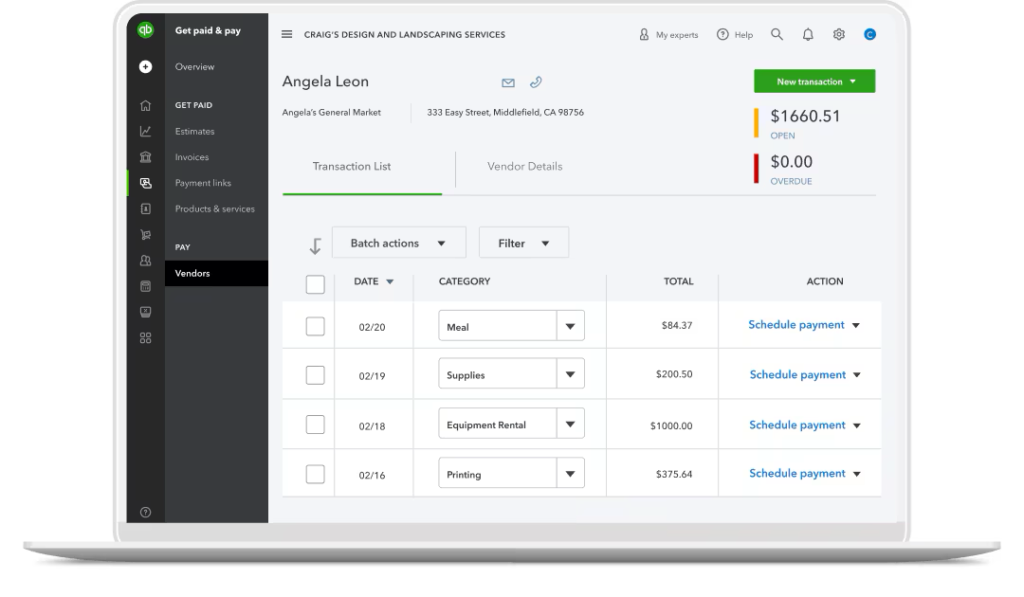
I’d recommend QuickBooks Payments for businesses that want payments and bookkeeping in one place. Its strongest advantage is that it automatically records online and in-person payments in QuickBooks, which removes a major reconciliation task for small businesses. I see it being particularly useful for service businesses that send invoices, collect deposits, or manage recurring customer payments. That native sync can reduce manual data entry and make daily reconciliation easier.
QuickBooks Payments also offers a well-rounded collection of payment methods and collection tools. Businesses can send payable invoices, accept ACH transfers, schedule recurring payments, take cards in person, and track payments from the same system used to manage their books. It is not the best standalone processor for every business, but it is a highly efficient choice for companies that already rely on QuickBooks.
Monthly software fees
- QuickBooks Payments: $0 per month. There is no separate monthly fee for the payments service.
- QuickBooks Online: $38 to $275 per month, depending on plan. Promotional pricing may be available for new customers. A subscription is required for the full payments-and-bookkeeping workflow.
- GoPayment: Can be used for in-person payments without a QuickBooks Online subscription, but businesses will not receive the same accounting-sync workflow.
Payment processing rates
- Cards and digital wallets through invoices, recurring payments, or quick requests: 2.99% per transaction
- ACH bank payments: 1% per transaction
- In-person card payments: 2.5% per transaction
- Keyed-in card payments: 3.5% per transaction
- Eligible buy now, pay later payments through Affirm: 2.99% per transaction
- Instant deposits: 1.75% of the deposit amount
- Payment dispute protection: Starts at 0.99%
- Volume discounts: Businesses processing more than $2,500 per month may qualify for up to 25% off standard transaction costs
Additional terms
- Installation fee: None. Setup is self-guided through the QuickBooks app and payments application, with help resources available.
- Contract length: No separate long-term QuickBooks Payments contract. QuickBooks subscription terms apply to businesses using QuickBooks Online.
- Automatic payment reconciliation: Payments accepted through QuickBooks are recorded in QuickBooks Online, helping businesses keep invoices, customer payments, deposits, and books aligned.
- Invoices and recurring payments: Send instantly payable invoices, schedule recurring invoices and payments, track invoice status, and automate reminders for overdue balances.
- Multiple payment methods: Customers can pay by credit or debit card, ACH, Apple Pay, PayPal, Venmo, and eligible Affirm financing options.
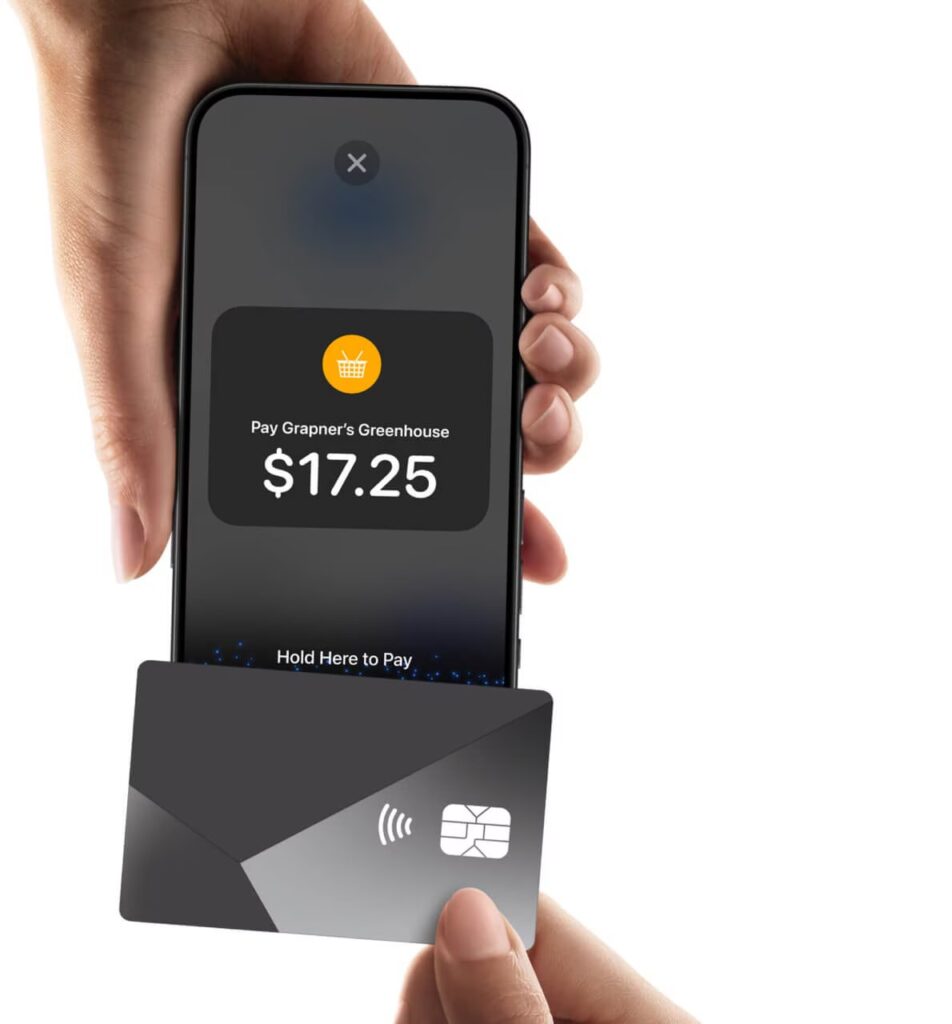
- Mobile and in-person payments: Use the QuickBooks mobile app or GoPayment to accept tap, dip, or swipe payments. Tap to Pay on iPhone allows eligible businesses to take contactless payments without a card reader.
Related: QuickBooks Overview

Shopify Payments: Best for ecommerce-first businesses
Overall score
3.97/5
Price and contract terms
3.06/5
Features
4.19/5
Support and reliability
4.25/5
User experience
4.44/5
User and expert scores
4.32/5
Pros
- Native payment processing for Shopify online stores
- Unified checkout, orders, inventory, customer, and payout data
- Supports online, in-person, social, and multichannel selling
- Strong ecommerce reporting, fraud analysis, and Shopify app ecosystem
Cons
- Requires a Shopify store subscription
- Total cost can rise with plan upgrades, apps, POS Pro, and hardware
- Less suitable for businesses that do not need an ecommerce platform
- Third-party payment providers can trigger extra Shopify transaction fees
Why I chose Shopify Payments
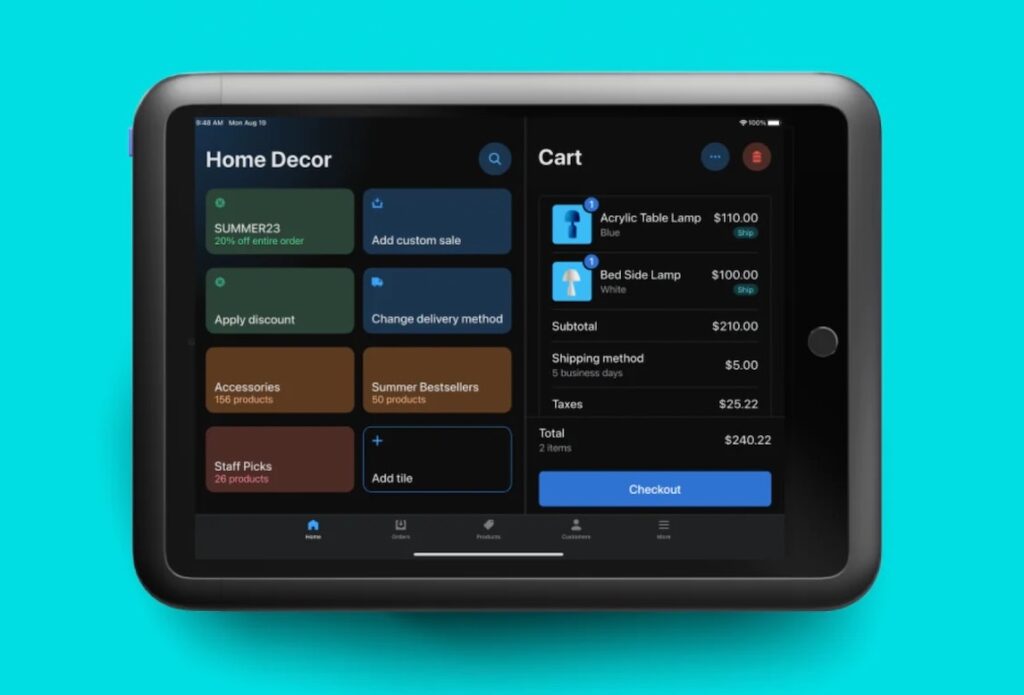
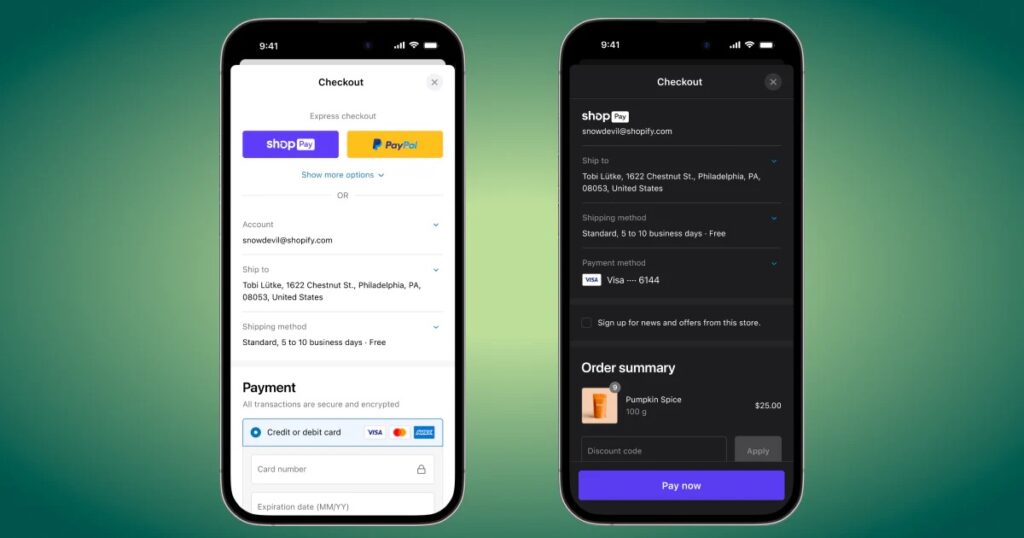
I chose Shopify Payments for ecommerce-first businesses because it removes the friction of connecting a separate processor to an online store. Payments, orders, refunds, inventory, reporting, customer data, and checkout all operate inside Shopify, which makes day-to-day management easier for a growing merchant.
Shopify Payments is also a strong option for businesses that sell through more than one channel. A merchant can take payments through its storefront, social channels, online marketplaces, and Shopify POS while keeping the data in one place. It is not a processor-only solution, so I would not recommend it to every small business. But for a company building on Shopify, it is one of the best payment processing solutions because checkout, orders, inventory, payouts, and customer data stay connected.
Monthly software fees
- Free trial: Three days. Eligible new stores can extend access for three months at $1 per month.
- Shopify Starter: $5 per month. Includes social selling, checkout links, invoices, payment acceptance, and a simple storefront.
- Shopify Basic: $39 per month. Includes a full online store, basic reporting, and Shopify POS Lite.
- Shopify Grow: $105 per month. Adds more detailed reporting, including first-time versus returning-customer data, and USPS cubic pricing.
- Shopify Advanced: $399 per month. Adds custom reports and third-party calculated shipping rates.
- Shopify Plus: $2,300 per month on a three-year term or $2,500 per month on a one-year term. Includes enterprise ecommerce tools, dedicated support, and custom options.
- Shopify POS Lite: Included with Shopify ecommerce plans; standalone Starter users pay $5 per month.
- Shopify POS Pro: $89 per month, per location. Adds advanced in-person selling tools.
Payment processing rates
- Online card payments: Rates vary by Shopify plan, generally ranging from 2.5% to 2.9% plus 30 cents per transaction for standard online cards
- In-person card payments: Rates vary by plan, generally ranging from 2.4% to 2.6% per transaction
- International cards: Additional fees may apply, depending on the customer’s card and selling market
- Third-party payment providers: Shopify charges an additional transaction fee when Shopify Payments is not used, with the rate varying by plan
- Chargebacks: A chargeback fee may apply, subject to Shopify Payments terms and the business’s location
Additional terms
- Installation fee: None. Businesses can activate Shopify Payments from Shopify admin after completing verification steps.
- Contract length: Shopify plans can be used month to month, though annual billing lowers the monthly subscription cost.
- Native Shopify checkout: Shopify Payments is built into Shopify checkout, so businesses do not need to connect a separate gateway or reconcile payments from a separate processor.
- Unified commerce operations: Payments sync with Shopify orders, inventory, customers, refunds, analytics, and sales channels.
- Omnichannel selling: Accept payments online, at pop-ups, in stores, through social channels, and through Shopify POS.
- Built-in fraud analysis: Shopify Payments includes fraud analysis tools to help merchants review the risk associated with online orders.
Related: Ecommerce Payment Processing: The Complete Guide

Stax: Best for higher-volume businesses
Overall score
3.97/5
Price and contract terms
3.88/5
Features
4.50/5
Support and reliability
3.88/5
User experience
4.00/5
User and expert scores
2.74/5
Pros
- Subscription pricing with no percentage markup on interchange
- Strong invoicing, recurring billing, ACH, payment link, and reconciliation tools
- Includes activation support, dashboard analytics, data exports, and unlimited users
- Better value potential for businesses with steady, higher payment volume
Cons
- $99 monthly subscription can be expensive for most small businesses
- Flat per-transaction fees still apply on top of interchange
- Lower review volume than several leading competitors
- May be more platform than a new or low-volume business needs
Why I chose Stax
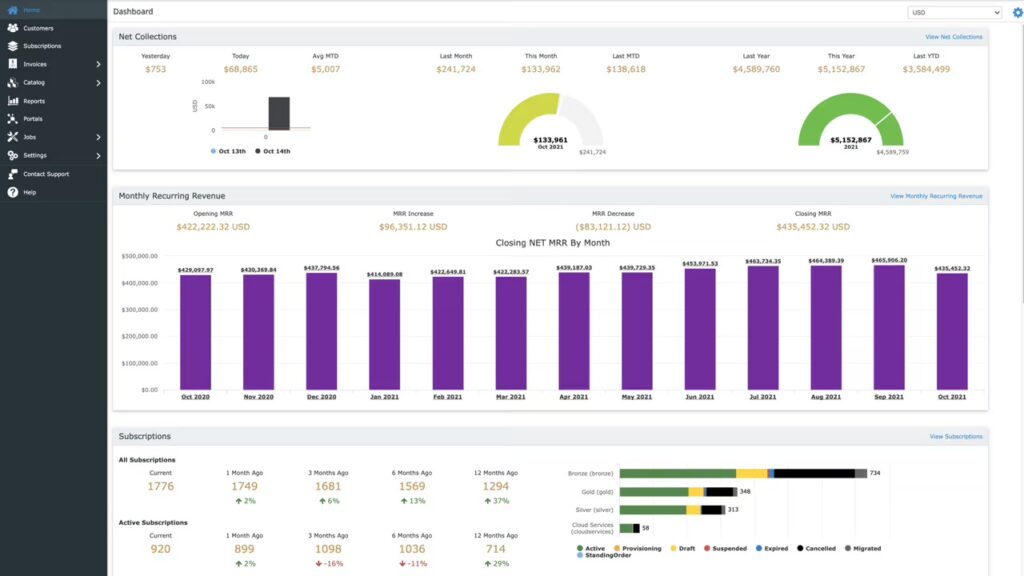
Stax is well-suited for higher-volume businesses because its subscription model can produce better value than flat-rate processing once a business has consistent card volume. Rather than adding a percentage markup to interchange, Stax charges a monthly platform fee and flat transaction fees. That structure is less attractive for a low-volume startup, but it can make financial sense as payment volume grows.
Stax’s subscription model is most compelling when businesses need broader payment processing services, such as invoicing, recurring billing, and reconciliation, without paying a separate percentage markup for each added workflow.
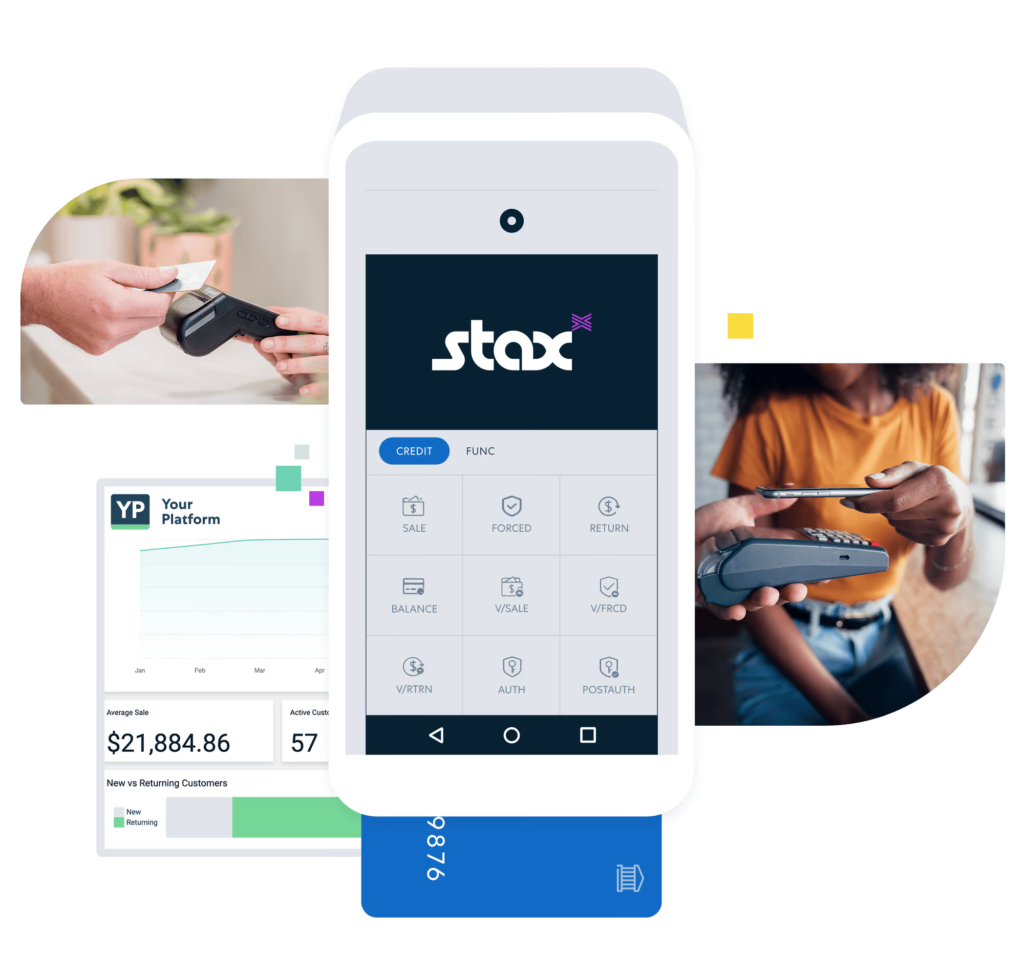
Stax also stands out for the depth of its included operational tools. Businesses receive invoicing, payment links, hosted payment pages, Text2Pay, recurring billing, account updating, reconciliation, reporting, API access, and unlimited users as part of the subscription. It is a strong fit for a growing company that needs more than basic card acceptance.
Monthly software fees
- Stax Pay for businesses processing up to $150,000 annually: $99 per month
- Stax Pay for businesses processing $150,000 to $250,000 annually: $139 per month
- Stax Pay for businesses processing more than $250,000 annually: Starts at $199 per month
- Custom pricing: Available for larger businesses with higher processing volume
- Terminal protection plan: $19 per month, optional
Payment processing rates
- Card payments: Interchange plus 0% percentage markup
- In-person card payments: 8 cents per transaction, plus interchange
- Keyed and online card payments: 15 cents per transaction, plus interchange
- ACH payments: 1% per transaction, capped at $10
- Eligible credit-card surcharging: Merchant pays 0% where eligible; the customer pays a 3% surcharge
- Debit transactions under the surcharge program: 1.25% plus 25 cents per transaction
- Chargeback protection: $25 per chargeback, optional
Additional terms
- Installation fee: None. An activation and onboarding specialist is included with the subscription.
- Contract length: No long-term contract or cancellation fee.
- Subscription-based interchange pricing: Stax charges no percentage markup on interchange, which can help businesses with consistent transaction volume control processing costs.
- Remote-payment tools: Create customized invoices, payment links, buttons, QR codes, hosted payment pages, and Text2Pay requests.
- Recurring billing and account updating: Automate subscriptions and use account-updater tools to help reduce failed recurring payments caused by expired card details.
- Reconciliation and reporting: Use dashboard analytics, data exports, accounting reconciliation, and unlimited user access to manage payments across a growing team.
Related: Best Credit Card Payment Apps

Stripe: Best for customizable payment workflows
Overall score
3.96/5
Price and contract terms
3.75/5
Features
4.56/5
Support and reliability
4.06/5
User experience
3.06/5
User and expert scores
3.85/5
Pros
- Highly flexible APIs, integrations, and customizable checkout tools
- Supports online, in-person, recurring, invoicing, and international payments
- More than 100 payment methods and support for 135+ currencies
- Strong built-in fraud prevention and reliable developer documentation
Cons
- More technical to configure than Square, QuickBooks Payments, or Shopify Payments
- Pricing can become more complex when adding international payments, billing, or optional products
- Less turnkey for businesses that want a ready-made POS workflow
- Hardware options require more setup and purchasing decisions than Square’s ecosystem
Why I chose Stripe
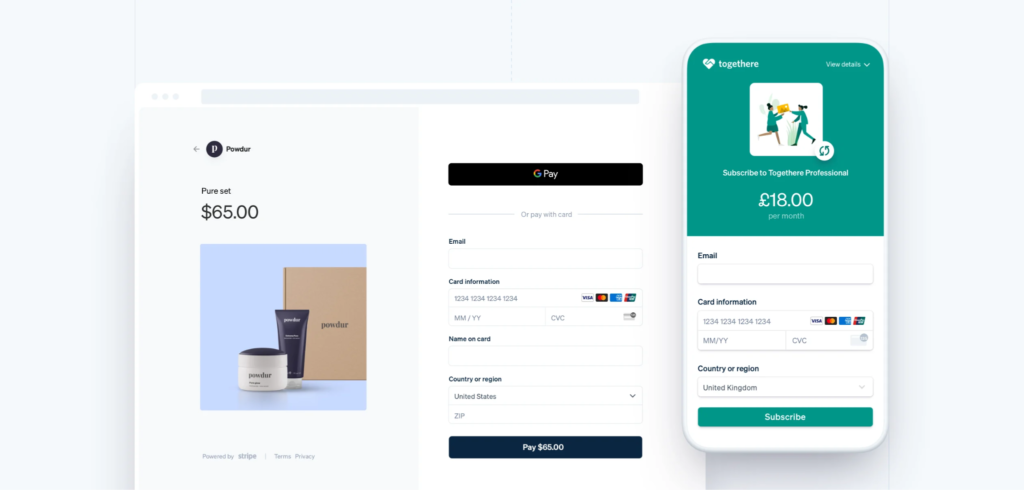
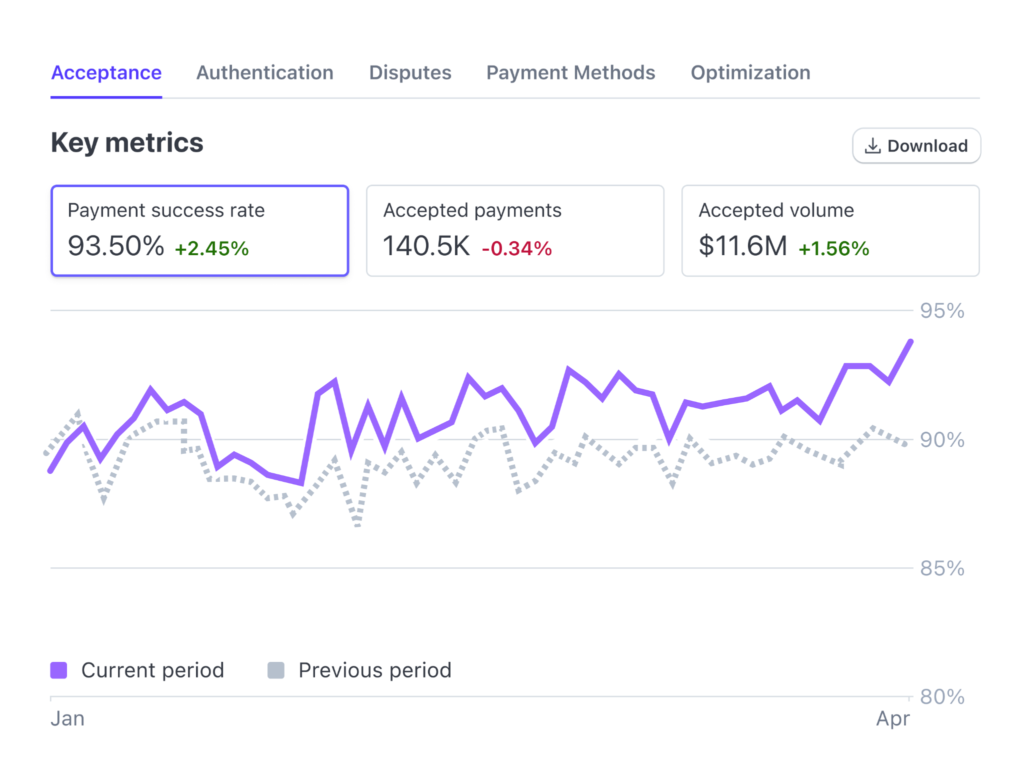
I highly recommend Stripe for customizable payment workflows because it gives businesses more control over how they accept and manage payments than nearly any other provider in this guide. A business can use Stripe’s prebuilt Checkout and Payment Links tools to get started quickly, then move to APIs and custom payment experiences as its needs become more sophisticated.
Stripe is especially well-suited to online-first businesses, SaaS companies, marketplaces, and businesses with internal development resources. It is not the simplest choice for every small business, but its flexibility is hard to match. Businesses that need a customizable payment processing solution can use Stripe for online payments, subscriptions, invoices, in-person payments, international sales, and embedded payment experiences without changing providers as they grow.
Monthly software fees
- Stripe Payments Standard: $0 per month
- Custom pricing: Available for businesses with high payment volume, unique business models, or multi-product needs
- Custom domain for Payment Links or Checkout: $10 per month, optional
Payment processing rates
- Online domestic card payments: 2.9% plus 30 cents per successful transaction
- Manually entered card payments: Additional 0.5%
- International card payments: Additional 1.5%
- Currency conversion: Additional 1% when required
- ACH Direct Debit: 0.8% per transaction, capped at $5
- In-person card payments through Stripe Terminal: 2.7% plus 5 cents per successful transaction
- Klarna buy now, pay later payments: 5.99% plus 30 cents per successful transaction
- Instant Payouts: 1.5% of payout volume, with a 50-cent minimum
- Disputes: $15 per dispute received; the fee is returned for disputes won after a manual response
Additional terms
- Installation fee: None. Businesses can start with no-code Payment Links or Stripe Checkout, then add APIs and custom integrations as needed.
- Contract length: Month to month with no long-term commitment for standard pricing.
- Customizable checkout: Businesses can use Stripe Checkout, Payment Links, or flexible UI components to create a payment flow that matches their website, app, or customer journey.
- Recurring billing and invoicing: Stripe supports subscriptions, recurring invoices, usage-based billing, stored payment methods, and account-updater tools.
- Global payment acceptance: Accept more than 100 payment methods, process payments in 135+ currencies, and use a single integration across markets.
- Fraud prevention: Stripe Radar uses machine learning, fraud analytics, authentication tools, and configurable controls to help businesses manage payment risk.
Related: Best Online Payment Processors

Authorize.net: Best for flexible payment gateways
Overall score
3.86/5
Price and contract terms
3.38/5
Features
4.50/5
Support and reliability
4.13/5
User experience
3.56/5
User and expert scores
3.06/5
Pros
- Gateway-only plan lets businesses keep an existing merchant account
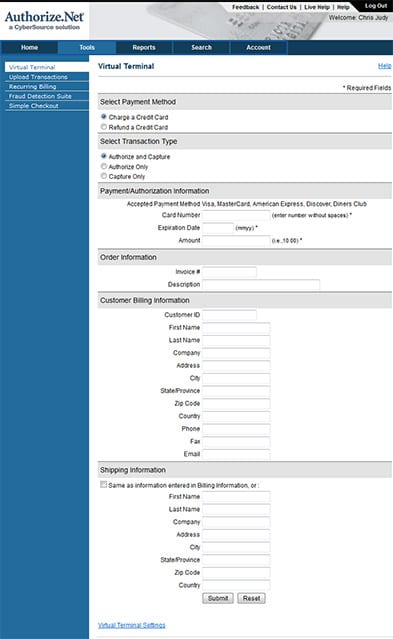
- Strong fraud controls, eCheck support, recurring billing, and Virtual Terminal
- Supports online, phone, mobile, and in-person payment workflows
- Offers 24/7 live support and a public service-status page
Cons
- $25 monthly gateway fee applies to core plans
- Gateway-only users must separately manage merchant-account pricing
- Setup can be more technical than an all-in-one processor
- Hardware and POS tools are less streamlined than Square or Shopify
Why I chose Authorize.net
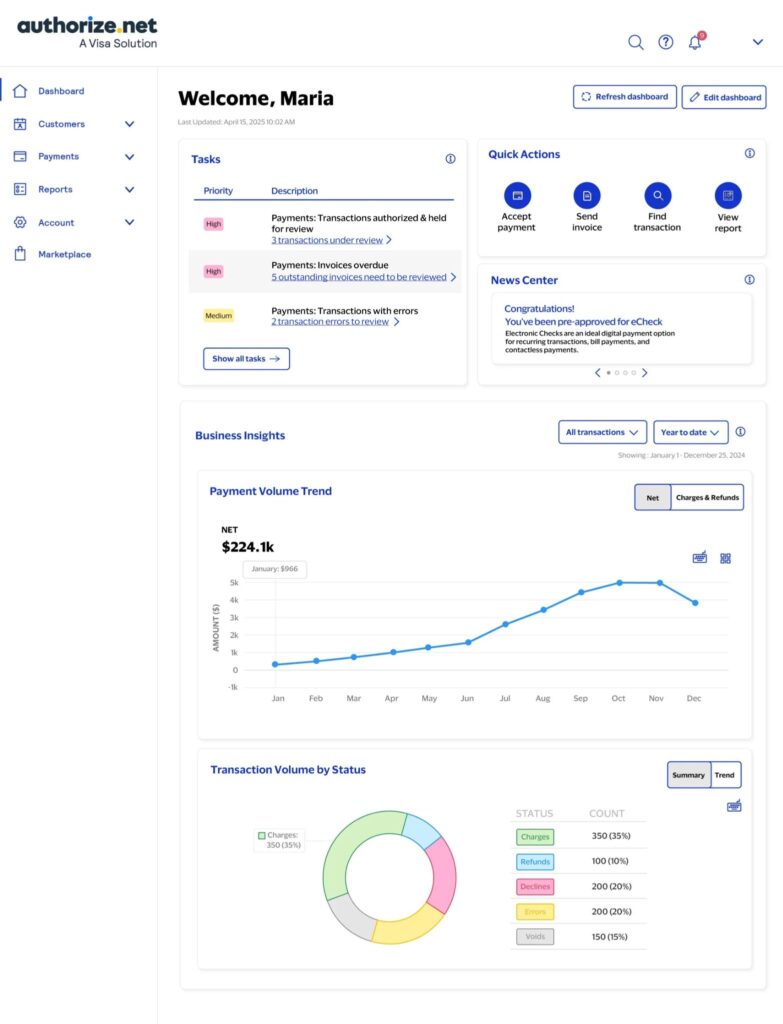
I chose Authorize.net for businesses that need payment-gateway flexibility. Its gateway-only option allows a business to keep an existing merchant account or choose a merchant provider that fits its industry, rates, and underwriting needs. That is valuable for growing businesses that do not want to be locked into a single payment processor. This gateway-centered payment processing solution is particularly useful when a business wants to keep its merchant account separate from its checkout and fraud-management tools.
Authorize.net also offers a strong mix of online payment tools, recurring billing, eChecks, digital invoicing, Virtual Terminal access, and configurable fraud filters. It is not the simplest option for a brand-new business, but it is a practical choice for businesses that need a dependable gateway and more control over their payment setup.
Monthly software fees
- All-in-one plan: $25 per month
- Gateway-only plan: $25 per month
- Gateway plus eCheck plan: $25 per month
Payment processing rates
- All-in-one card payments: 2.9% plus 30 cents per transaction
- Gateway-only card payments: 10 cents per transaction, plus a 10-cent daily batch fee Merchant-account processing rates apply separately
- Gateway plus eCheck payments: 0.75% per eCheck transaction
- Gateway plus eCheck card payments: 10 cents per transaction, plus a 10-cent daily batch fee. Merchant-account processing rates apply separately.
- Account Updater: May incur an additional fee
- Chargeback fees: May vary by merchant account and processor relationship
Additional terms
- Installation fee: None. Gateway accounts can be approved automatically, while merchant-account approval may take longer depending on business and underwriting details.
- Contract length: No contract or early termination fee for the Authorize.net payment gateway. Merchant-account terms may vary by provider.
- Payment gateway flexibility: Use Authorize.net with its all-in-one merchant account or connect the gateway to an existing merchant-account provider.
- Advanced Fraud Detection Suite: Configure rules-based fraud filters and controls to better match the business’s payment-risk profile.
- eChecks and recurring payments: Accept ACH-style eChecks, store customer payment information, and automate recurring or installment billing.
- Virtual Terminal and digital invoicing: Take phone payments, send digital invoices, create Buy Now buttons, and accept payments online without building a custom checkout.
Related: Best Payment Gateways: Essential Guide

PayPal: Best for simple online payments
Overall score
3.82/5
Price and contract terms
3.44/5
Features
4.00/5
Support and reliability
3.50/5
User experience
4.19/5
User and expert scores
4.35/5
Pros
- Familiar checkout option that can help online shoppers complete purchases
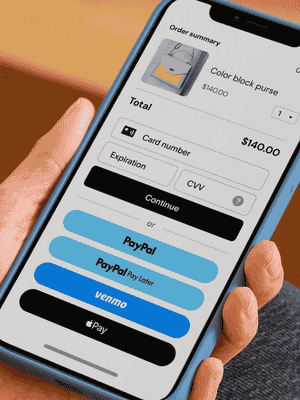
- Supports PayPal, Venmo, cards, digital wallets, invoices, payment links, and Tap to Pay
- No monthly software fee for standard payment acceptance
- Straightforward setup for small businesses selling online
Cons
- Per-transaction fees can be higher than interchange-plus options as volume grows
- Account limitations and payment holds can affect cash flow
- POS and business-management tools are less unified than Square’s
Why I chose PayPal
I chose PayPal for small businesses that want a fast, recognizable way to accept online payments. It is especially practical for service businesses, freelancers, and ecommerce sellers that want to add PayPal and Venmo alongside card payments. Among the payment processing software solutions in this guide, PayPal stands out for giving online sellers a familiar checkout option without requiring a monthly software commitment.
PayPal is less compelling for businesses with consistently high processing volume or complex in-person operations. Those businesses may benefit more from interchange-plus pricing or a more complete POS platform.
Monthly software fees
- Standard PayPal Business account: $0 per month
- Custom enterprise solutions: Custom pricing available
Payment processing rates
- Expanded Checkout card payments: 2.89% plus 29 cents per transaction
- PayPal Checkout card payments: 2.99% plus 49 cents per transaction
- PayPal and Venmo payments: 3.49% plus 49 cents per transaction
- Pay Later transactions: 4.99% plus 49 cents per transaction
- In-person card-present and QR code payments: 2.29% plus 9 cents per transaction
- Keyed-in card payments: 3.49% plus 9 cents per transaction
- Invoice card and Apple Pay payments: 2.99% plus 49 cents per transaction
- Virtual Terminal payments: 3.39% plus 29 cents per transaction
Additional terms
- Installation fee: None for standard self-service setup.
- Contract length: Pay-as-you-go for standard processing; enterprise agreements may vary.
- Multiple payment methods: Accept PayPal, Venmo, credit and debit cards, digital wallets, and Pay Later options through one provider.
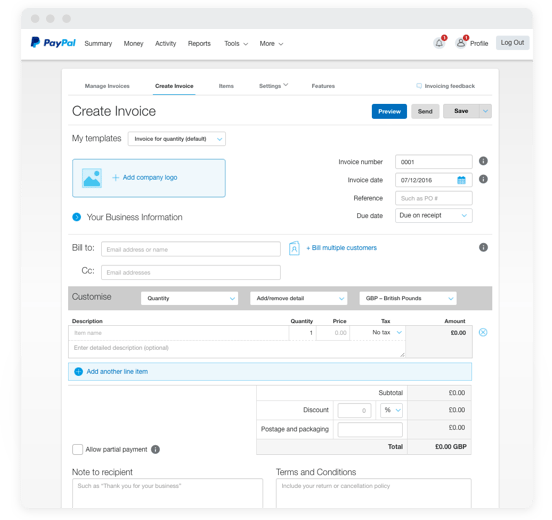
- Online checkout and invoicing: Add PayPal Checkout or guest checkout to an ecommerce site, create payment links, and send invoices customers can pay online.
- Virtual Terminal and remote payments: Manually enter card payments in a browser for phone orders and other card-not-present transactions.
- In-person payment options: Use Tap to Pay, a card reader, or a PayPal Terminal for mobile and in-person sales.
- Recurring payments and ecommerce integrations: Support subscriptions and recurring billing while connecting PayPal to major ecommerce platforms.
- Fraud and seller protection: Use fraud management tools and Seller Protection for eligible transactions.
- International payment acceptance: Sell across more than 200 markets and accept payments in more than 130 send currencies.

Related: Best Free POS Systems

Payment Depot: Best for negotiable rates for high-volume businesses
Overall score
3.80/5
Price and contract terms
4.06/5
Features
4.25/5
Support and reliability
3.31/5
User experience
3.50/5
User and expert scores
3.26/5
Pros
- Custom interchange-plus pricing can be attractive for higher-volume businesses
- No cancellation fees and access to all-in-one payment software
- Includes payment links, invoices, Text2Pay, recurring payments, and hosted payment pages
- Strong fit for businesses that want to negotiate processing costs
Cons
- Pricing is quote-based, making upfront comparisons more difficult
- Some workflows, including invoicing and recurring billing, may rely on SwipeSimple
- Less suitable for very small businesses that value instant setup and flat, predictable pricing
Why I chose Payment Depot
I like Payment Depot for established small businesses and growing teams that process enough volume to benefit from a negotiated interchange-plus rate. Its value is strongest when a business can compare its current processing statement with a custom quote and reduce its effective cost of accepting cards. For businesses with enough volume to negotiate, it can be the best payment processing option when lowering effective card costs matters more than having instant, self-serve pricing.
It is not the best fit for a new business that needs transparent, self-serve pricing and fully native invoicing tools from day one. Helcim or Square may be easier choices for those businesses.
Monthly software fees
- Payment Depot account and software: Custom quote
- All-in-one software access: Included with an account
- Invoicing and recurring billing tools: May require SwipeSimple services or additional fees, depending on the account configuration
Payment processing rates
- Interchange-plus pricing: Custom quote
- Published variable markup: As low as 0.2% to 1.95%, plus interchange
- In-person, online, keyed, and ACH rates: Vary by business type, processing volume, payment method, and negotiated agreement
Additional terms
- Installation fee: Not publicly listed; confirm during the sales process.
- Contract length: No cancellation fees; confirm contract and equipment terms in the merchant agreement.
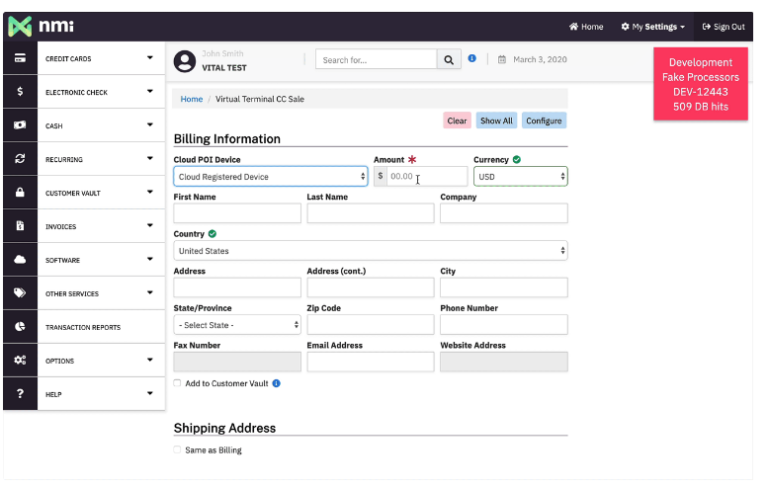
- Custom interchange-plus credit card processing
- Digital invoicing, payment links, payment buttons, QR codes, and Text2Pay
- Recurring and scheduled payments
- Hosted payment pages and securely stored customer payment details
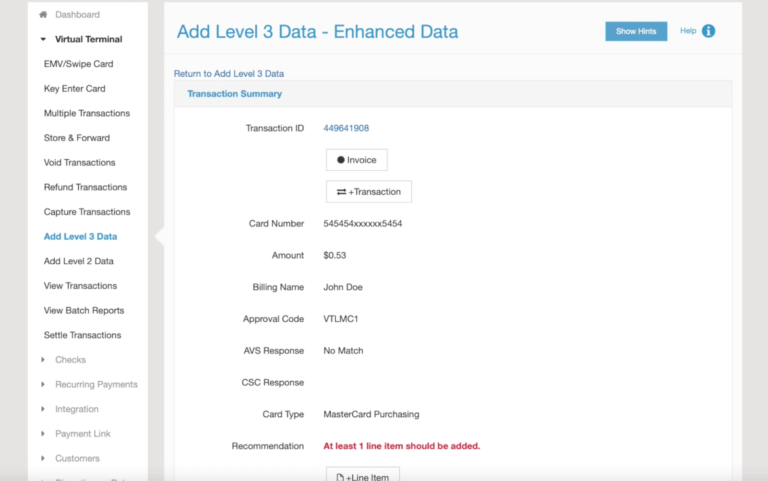
- Virtual terminal and API integration capabilities
- Dashboard analytics, reconciliation tools, and transaction exports
- Card-account updater for stored payment information
Related: Retail Payment Processing: A Complete Guide
CardX: Best for credit-card surcharging
Overall score
3.04/5
Price and contract terms
2.81/5
Features
3.19/5
Support and reliability
3.50/5
User experience
2.94/5
User and expert scores
2.43/5
Pros
- Helps eligible businesses pass a credit card surcharge to customers
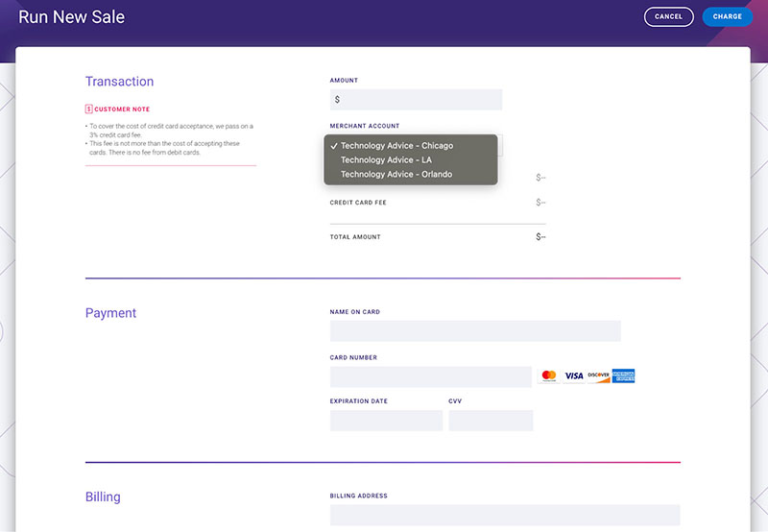
- Includes compliant surcharging tools, a virtual terminal, and online payment lightbox
- Offers in-person and online options starting at $99 per month
- Can reduce merchant-paid credit card acceptance costs
Cons
- Monthly cost is high for low-volume businesses
- Customers may react negatively to a visible credit card surcharge
- Debit card transactions remain a merchant expense
- Availability is limited in some states, and additional rules apply in others
Why I chose CardX
I chose CardX for businesses that want a purpose-built way to reduce the cost of accepting credit cards through compliant surcharging. It can make sense for professional services, B2B companies, and other businesses where customers are accustomed to paying invoices and may be less sensitive to a card surcharge. It is a specialized payments processing software option rather than a broad all-in-one POS platform, so its value depends on whether surcharging fits the business’s customer experience and state requirements.
It is not a general-purpose payment platform for every small business. Retailers, restaurants, and customer-facing businesses should weigh potential buyer friction against the savings before using a surcharge model.
Monthly software fees
- In-person solution: Starts at $99 per month
- In-office and online solution: Starts at $99 per month
- Custom pricing: Available based on business requirements
Payment processing rates
- Eligible credit card transactions: Merchant cost can be offset by a 3% customer surcharge
- Debit card transactions: 1.25% plus 25 cents for the merchant
- Commercial debit cards: May be assessed at 2.91%, depending on the processing platform
- Keyed debit transactions on the CardX Terminal: Do not qualify for the 1.25% debit rate; CardX directs businesses to use the Virtual Terminal for eligible keyed debit pricing
Additional terms
- Installation fee: Not publicly listed; confirm during the sales process.
- Contract length: Not publicly listed; review the merchant agreement before enrolling.
- Availability: Available in 48 states and Washington, D.C.; not available in Connecticut or Massachusetts. Additional terms apply in Maine and New York.
- Automated credit-card surcharge calculations and compliance support
- In-person EMV Quick Chip terminal
- Virtual Terminal for remote and keyed transactions
- Lightbox for online payment collection
- Debit card acceptance without customer surcharges
- In-house support and stated 99.99% uptime
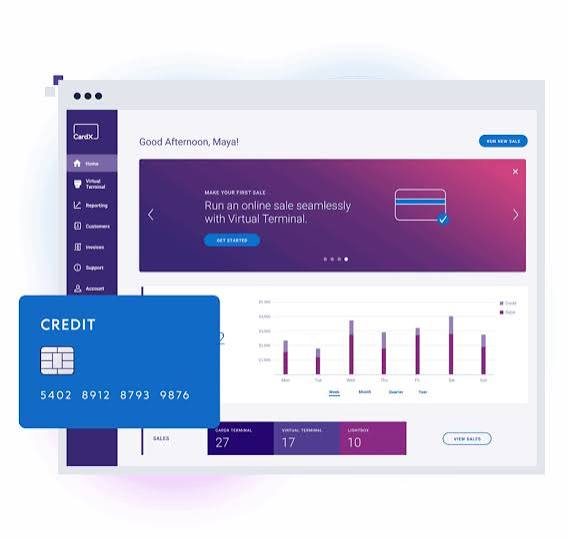
- Reporting and payment tools designed around surcharge-based processing
Related: Best Credit Card Processing Companies
How to choose the best payment processor for your business
The best payment processor depends on how you sell, how customers prefer to pay, and how much you process each month. Finding the best payment processing option means looking beyond a headline transaction rate to compare payment methods, payout timing, software costs, integrations, and contract terms. Use these factors to narrow your options:
- Start with your sales channels: Choose a processor that supports where you sell today, such as at a counter, through invoices, on an ecommerce site, or on the go. Businesses selling across multiple channels should prioritize a unified system for in-person and online payments.
- Compare total costs, not just headline rates: Review transaction fees alongside monthly software fees, hardware, chargeback fees, instant payout charges, and optional add-ons. Interchange-plus or custom pricing can become more cost-effective as volume grows.
- Match features to your workflow: Look for the tools you will actually use, such as POS software, payment links, recurring billing, ACH transfers, a virtual terminal, inventory tools, or accounting integrations.
- Consider payout timing and cash-flow needs: Check standard deposit schedules, eligibility for instant or same-day transfers, and any added payout fee. Fast access to funds can be valuable, but it should not outweigh higher long-term processing costs.
- Prioritize the quickest payment processing only when it supports your cash flow: Standard deposits are often free, while instant or same-day transfers may carry an added fee. If you need quickest payment processing, compare payout eligibility, cutoff times, transfer fees, and account-hold policies, not just the advertised deposit speed.
- Review contract terms and account policies: Favor transparent cancellation terms and understand how the provider handles account reviews, fund holds, reserves, and restricted businesses, especially if you sell high-ticket items or operate in a higher-risk industry.
- Plan for growth: The best payment processor should still fit when you add locations, staff, payment methods, online sales, subscriptions, or higher transaction volume. The best payment processing systems can scale without forcing you to replace your checkout, reporting, or reconciliation workflow within a year.
Frequently asked questions