


Key takeaways
- The top five most-used project methodologies are Waterfall, Agile, Kanban, Scrum, and Lean.
- Each has its pros and cons; great project managers are adept across all of these methodologies.
- Project management software plays an important role in the planning and tracking of your project, but it is only a tool. Deciding which methodology to use—and how to modify it—is one of the most important decisions you’ll make in the project’s lifespan.
Project management methodologies provide structured approaches to planning, executing, and completing work, but not all are created equal. Some prioritize predictability and control, while others are built for speed and flexibility.
In this guide, I’ll break down the five most widely used project management methodologies, when to use each one, and how to choose the right fit based on your project’s complexity, team structure, and goals. Understanding these differences will help you avoid mismatches that lead to delays, scope creep, or team friction and set your projects up for smoother execution from the start.
| Methodology | Best for | Limitations |
|---|---|---|
| Waterfall | Projects with fixed scope, clear timelines, and strict requirements (e.g., manufacturing, compliance-heavy work) | Difficult to adapt once the project is underway |
| Agile | Projects that require flexibility, frequent feedback, and iterative delivery (e.g., software, marketing) | Can lack structure if goals and scope aren’t clearly defined |
| Kanban | Continuous workflows that need efficiency and visibility (e.g., support teams, operations, inventory) | Not ideal for projects with strict deadlines or defined phases |
| Scrum | Teams working in structured sprints with regular feedback (e.g., product development, startups) | Requires strong team collaboration and defined roles |
| Lean | Efficiency-focused projects aiming to reduce waste and optimize processes (e.g., logistics, construction) | May lack structure for complex or highly regulated projects |
Why is project management methodology important?
A project management strategy defines what you’re trying to achieve. A project management methodology defines how you actually get there.
Methodologies provide a structured approach for planning, executing, and delivering work. Instead of relying on ad hoc decisions, teams follow a consistent framework that breaks complex projects into manageable steps from initiation through completion.
This structure becomes especially valuable as projects grow in scope or involve multiple stakeholders. With the right methodology in place, teams stay aligned, expectations are clearer, and progress is easier to track.
Different methodologies also shape how teams work together. Some prioritize flexibility and rapid iteration (like Agile), while others emphasize predictability and detailed planning (like Waterfall). Choosing the right one ensures your workflow matches the realities of your project and not the other way around.
Using the right project management methodology helps you:
- Allocate resources more efficiently
- Improve communication across teams and stakeholders
- Establish clear timelines and measurable milestones
- Anticipate and manage risks more effectively
- Increase the likelihood of delivering on time and within budget
Types of project management methodologies
Various project management methods offer distinct frameworks and approaches to achieving project goals. Some methodologies prioritize predictability and structure, while others are designed for flexibility and rapid iteration.
Each methodology is also suited for different project needs, team dynamics, project management software, and industry demands. Understanding when each one works best helps you choose a framework that best supports your project.
1. Waterfall
Waterfall is most effective for projects that follow a clear, sequential path where the steps are well-defined from the start and changes are minimal or not expected. Each phase must be completed before the next begins, making it ideal for projects that require structure, predictability, and thorough documentation. Industries that benefit from Waterfall’s structure include:
- Manufacturing
- Software Development
- Healthcare and Finance
Manufacturing
In manufacturing, Waterfall’s linear approach works well because production processes typically follow a structured sequence that can’t be skipped or altered. Each phase, from design to assembly to testing, needs to be completed in a specific order to ensure quality and compliance.
For example, the assembly of a product can’t begin until all designs are finalized, materials are sourced, and initial tests are completed. Waterfall’s rigid structure ensures there are no unexpected surprises, helping to maintain efficiency and avoid costly rework or delays.
Software development
For software development, particularly in projects with fixed requirements, Waterfall is effective because it offers a well-documented path from planning to final delivery.
In scenarios where the software’s functionality and design are clearly defined from the outset, Waterfall ensures that each stage, like design, coding, and testing, is completed thoroughly before moving forward.
This reduces the risk of scope creep or miscommunication between teams and clients. Waterfall’s focus on detailed documentation is also crucial for projects that require formal approval at each stage, making it easier to ensure everything aligns with the client’s expectations.
Healthcare and finance
In healthcare and finance, where regulatory compliance is non-negotiable, Waterfall shines due to its emphasis on thorough documentation and rigid progression through phases. These industries require stringent adherence to protocols and standards, and any deviation can lead to significant legal or financial consequences.
Waterfall provides the necessary structure to ensure every phase is properly vetted and approved before moving forward, which is particularly important for patient safety in healthcare or financial audits in the finance sector.
When not to use Waterfall: Avoid Waterfall if your project requirements are likely to change or if you need ongoing feedback. Its rigid structure makes mid-project adjustments difficult and costly.
Tools that support Waterfall
Waterfall project management requires software with specific features to support its linear structure. First and foremost, it needs robust scheduling tools, like Gantt charts, that allow for clear timelines and task dependencies. Resource management is crucial to allocating tasks efficiently across teams.
Detailed documentation and tracking features are also necessary to ensure that each phase is fully completed before moving on to the next. Reporting tools are also needed to track progress and keep stakeholders updated throughout the process.
Microsoft Project is well-suited to Waterfall because of its powerful scheduling and resource management features. Its Gantt chart capabilities are excellent for visualizing timelines and managing task dependencies, which are essential in Waterfall’s sequential approach.
Microsoft Project also excels in tracking resources and budgets, making it easy to monitor the project’s progress at every stage. The ability to create detailed reports ensures that all phases are properly documented.

Waterfall methodology is often visualized using a Gantt chart. Source: microsoft.com 
Interlocked dependencies are a hallmark of the waterfall methodology. Source: microsoft.com
Although Asana is more commonly associated with Agile, it can also be used effectively for Waterfall projects. Its timeline feature allows teams to track progress in a linear way, ensuring that each phase is completed before moving on.
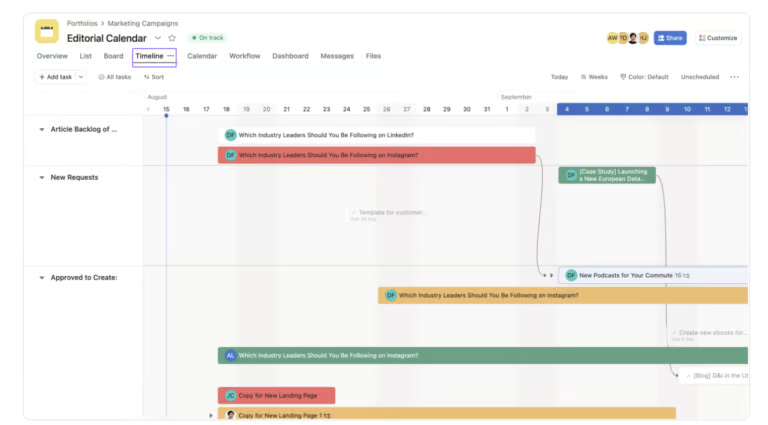
Asana’s task dependencies and project sections help teams stay organized and ensure that no steps are skipped.
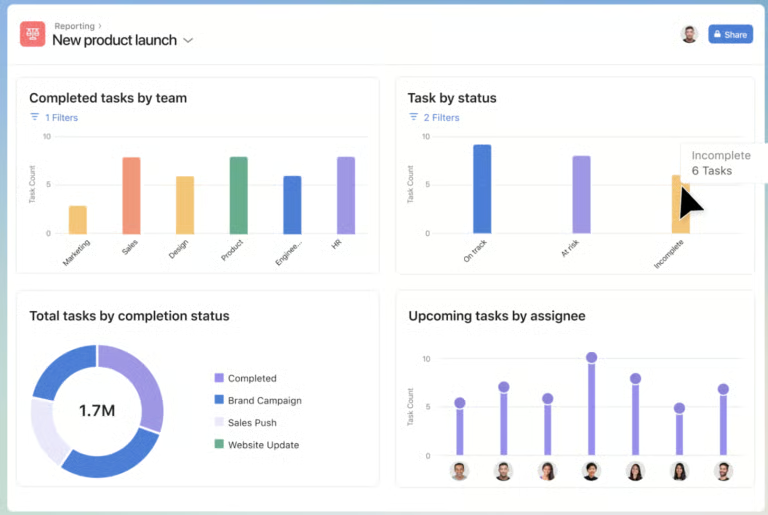
It also offers easy-to-use reporting tools that allow project managers to keep stakeholders informed and track the status of each phase.
2. Agile
Agile is designed for projects where requirements evolve and continuous feedback is essential. Instead of following a fixed plan, teams work in short cycles (often called sprints), allowing them to test ideas, gather input, and adjust as they go.
This approach allows teams to continuously refine and improve the project based on ongoing feedback.
Agile is especially useful in fast-paced environments where market trends, client needs, or external factors may shift.
Industries where Agile is commonly used include:
- Software Development
- Marketing Agencies
- Financial Services
Software development
Agile was built for this environment. Teams release features in stages, gather user feedback, and refine continuously. For example, a SaaS company might roll out a new feature in increments, improving it based on real user behavior.
Its sprint-based structure also enables quick adjustments, making it ideal for technology projects that need to stay responsive to evolving requirements.
Marketing agencies
In marketing, Agile is valuable because it allows teams to adapt campaigns quickly in response to changing client demands or market trends.
Marketing agencies often need to pivot strategies or experiment with different tactics based on real-time data, and Agile’s iterative nature supports this fluid approach.
Agile allows teams to test messaging, analyze results, and quickly adjust strategies without committing to long-term plans that may underperform.
Financial services
Agile is increasingly used in financial services, where rapid responses to market changes or new regulatory requirements are essential. Banks and investment firms benefit from Agile by being able to quickly develop, test, and deploy solutions to meet new challenges.
For instance, a fintech company can iteratively develop and launch new features while adapting to compliance requirements in real time.
Whether it’s responding to regulatory shifts or creating innovative financial products, Agile helps teams stay nimble and responsive while managing risk effectively.
When not to use Agile: Agile may not be ideal for projects with fixed scope, strict compliance requirements, or limited stakeholder availability, where constant iteration isn’t practical.
Jira is an excellent fit for Agile due to its highly customizable boards that allow teams to track sprints, user stories, and tasks with ease. Its flexibility supports multiple Agile frameworks, giving teams control over their workflow.
Jira also offers advanced reporting tools such as burndown charts and sprint reports, which are essential for monitoring progress and adjusting plans in real time.
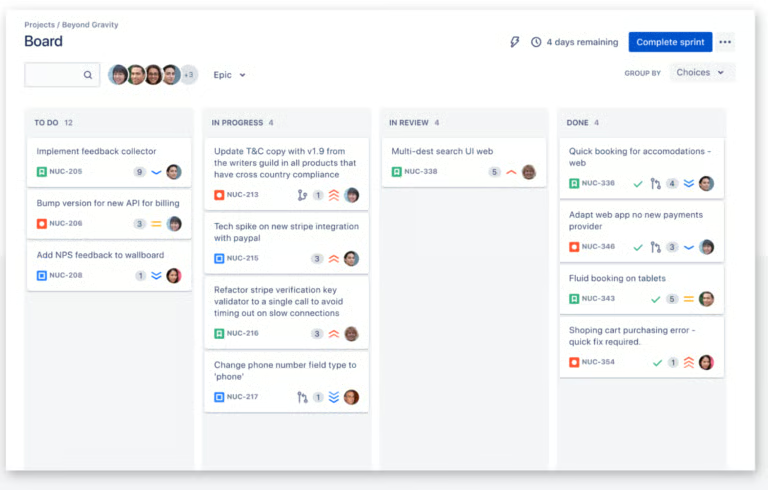
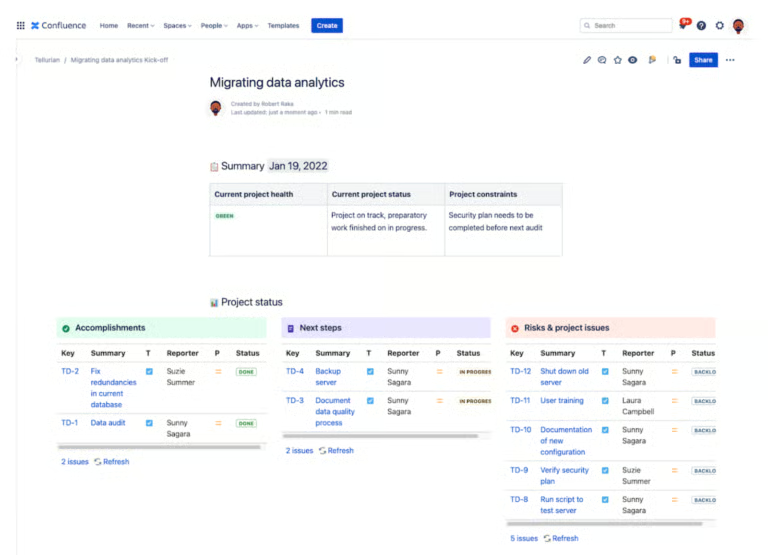
Jira can even integrate with tools like Confluence and Bitbucket, acting as a central hub for managing the full development lifecycle.
3. Kanban
Kanban works best in environments where tasks need to be completed just in time, avoiding bottlenecks and improving overall efficiency. Industries where Kanban is commonly used include:
- Software Development
- Manufacturing
- Healthcare
- Retail
Software development
Kanban is highly effective for projects that require continuous delivery and adaptability. Its visual approach helps teams manage workflow by making it easy to see task priorities and resource allocation.
For example, a dev team can prioritize incoming issues on a Kanban board, ensuring urgent tasks are addressed without disrupting the entire workflow.
By visualizing the entire workflow, developers can manage their workload more effectively, ensuring no tasks are left behind.
The continuous delivery focus of Kanban aligns well with teams that need to release updates frequently and prioritize bug fixes or feature development on the go.
Manufacturing
Kanban’s roots lie in manufacturing, where its just-in-time production and inventory management approach maximizes efficiency. Manufacturers rely on this system to signal precisely when resources need to be replenished. For example, an automotive plant may only reorder parts once inventory reaches a specific threshold, ensuring materials arrive exactly when needed without overstocking.
This approach keeps production flowing smoothly without interruptions while reducing excess inventory. It’s especially valuable for companies looking to streamline supply chains, minimize waste, and maintain consistent output without tying up resources in unused stock.
Healthcare
In healthcare, Kanban helps organizations deliver timely treatment by managing patient flow and monitoring resource availability. For example, a hospital might use a Kanban-style board to track patients from admission to discharge, ensuring beds, staff, and equipment are allocated efficiently at each stage.
Because this methodology helps with visualizing the current state of tasks, such as patient intake or equipment availability, healthcare providers can quickly identify bottlenecks and adjust in real time. This helps ensure resources are used effectively and that patient care remains consistent and uninterrupted.
Retail
Retail businesses use Kanban to manage stock levels and improve customer service by aligning product availability with demand. By tracking inventory and restocking in real time, Kanban helps retailers avoid overstocking or stockouts, ensuring that products are always available when needed.
It also streamlines customer service workflows, like helping staff quickly identify order statuses or prioritize restocking tasks. This then reduces delays and improves the overall shopping experience.
When not to use Kanban: Kanban isn’t the best fit for projects that require strict deadlines, fixed timelines, or clearly defined phases, since it focuses on continuous flow rather than structured milestones.
Trello is a popular tool for teams using the Kanban framework due to its highly visual and user-friendly interface. Its boards, which represent projects, allow teams to create cards for tasks and move them through columns representing different workflow stages.
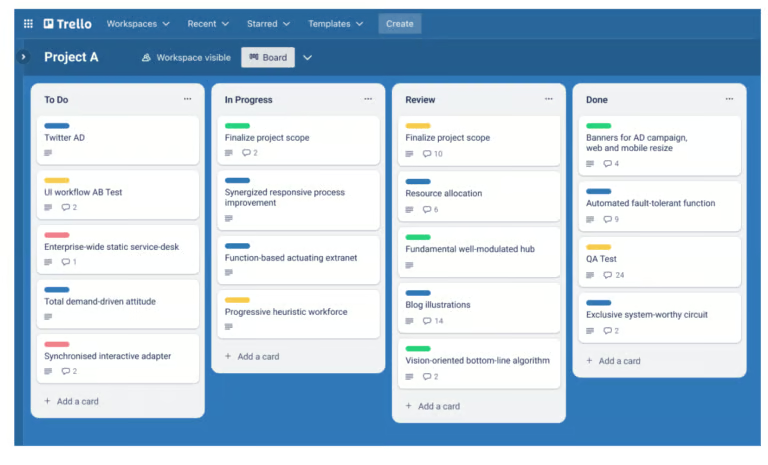
This setup aligns with Kanban’s core principles, like visualizing workflow and managing work-in-progress efficiently. Trello’s simplicity and adaptability make it an ideal choice for teams that need to organize tasks while staying flexible.
4. Scrum
Scrum is particularly effective for teams that deal with complex product development and require continuous feedback and iteration. Its framework thrives in environments where rapid adjustments are essential to the project’s success.
Industries that benefit from Scrum include software development, marketing, and consulting, where teams need to adapt to client feedback and evolving market demands. A few industries that tend to use Scrum are:
- Software Development
- Technology Startups
- Marketing Agencies
Software development
Scrum is a natural fit for software development teams, where complex products require iterative progress and continuous feedback. Teams work in sprints, allowing them to build, test, and refine features quickly.
For example, a team may release a new app feature every two weeks, gather user feedback, and improve it in the next sprint. This keeps development aligned with real user needs and reduces the risk of building the wrong solution.
Technology startups
Startups operate in fast-changing environments, making Scrum’s flexible, iterative approach especially valuable.
By breaking work into short sprints, teams can test ideas quickly, gather user feedback, and adjust direction without overcommitting resources. This makes it easier to validate what works early and pivot when needed.
Marketing agencies
Marketing teams often juggle multiple campaigns that require quick adjustments based on performance data or client input.
Scrum helps teams stay organized and work in short cycles, so they can test ideas, review results, and refine messaging as they go. This keeps campaigns relevant and allows teams to improve performance without waiting for a full campaign cycle to finish.
When not to use Scrum: Scrum can be challenging for teams without dedicated roles or consistent collaboration, and for projects that don’t benefit from sprint-based delivery cycles.
monday.com is a versatile tool that helps Scrum teams manage sprints, track progress, and facilitate collaboration. Teams can create customizable workflows that align with Scrum processes, such as sprint planning and backlog tracking.
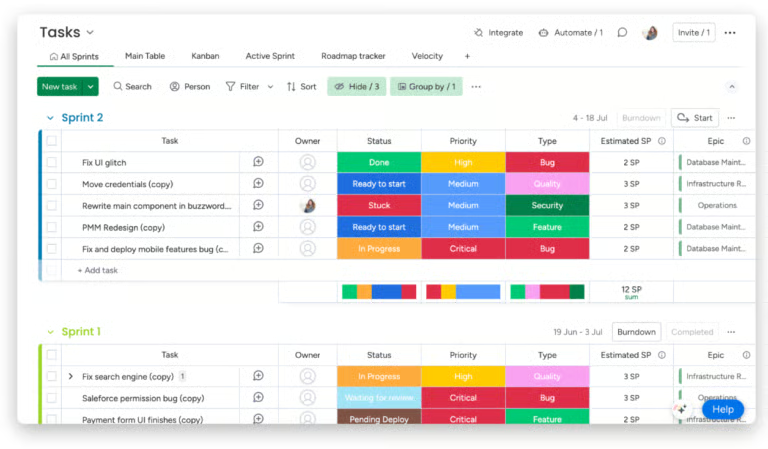
The platform’s visual boards provide a clear view of ongoing tasks, making it easier to manage both the product and sprint backlogs. With real-time task updates, deadlines, and assignment features, monday.com streamlines team communication.
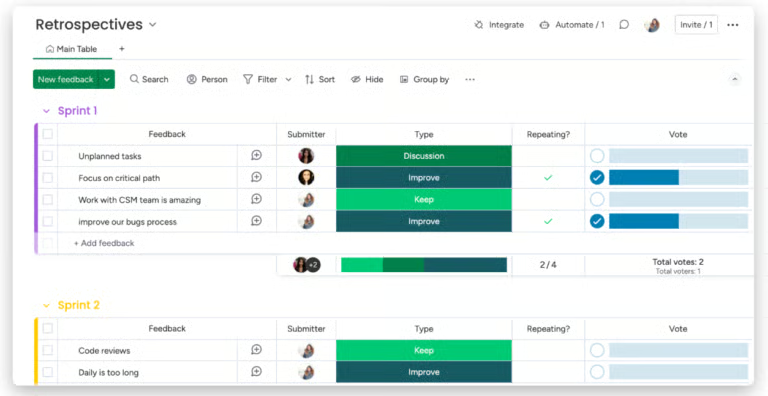
Its reporting tools also support sprint reviews and retrospectives, allowing teams to analyze performance and continuously improve.
5. Lean
Lean methodology is designed to maximize value while minimizing waste, making it highly effective in industries that require efficiency and precision. By focusing on continuous improvement and eliminating unnecessary steps, Lean helps teams optimize resources and streamline processes. This approach works well in various industries, where reducing waste can improve both quality and cost-effectiveness.
Industries where Lean is commonly used include:
- Logistics
- Construction
- Event Planning
Logistics
Lean helps streamline supply chains by reducing delays and excess inventory. This approach is ideal for organizations looking to optimize the flow of goods while keeping operational expenses low.
For example, companies use just-in-time practices to restock goods only when needed, keeping operations efficient without tying up capital in unused stock.
Construction
For construction projects, Lean principles help minimize waste and maximize value during project execution.
By focusing on eliminating inefficiencies in material usage and scheduling, Lean ensures projects stay on time and on budget. It also enhances overall quality, as teams are encouraged to continuously assess and improve processes throughout the project lifecycle.
Event Planning
Event planners apply Lean principles to efficiently coordinate with vendors and manage client requirements.
Lean enables smoother operations by reducing unnecessary steps, ensuring events are executed seamlessly and within budget constraints. It optimizes workflows and lets planners improve the organization of events, resulting in successful, well-coordinated experiences.
When not to use Lean: Lean may fall short in projects that require heavy documentation, complex approvals, or less emphasis on efficiency, where process rigor matters more than speed.
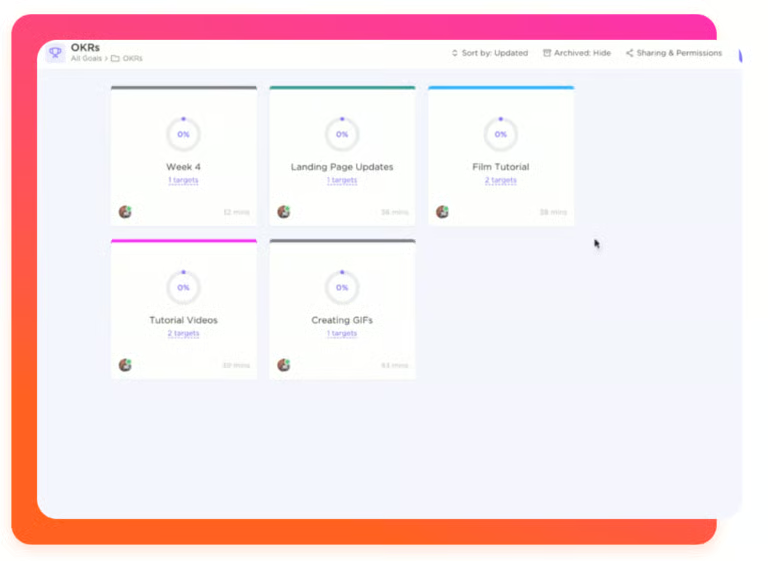
ClickUp is a versatile tool that aligns well with Lean methodologies, offering customizable project spaces that teams can adapt to their specific needs.
Its powerful automation features help reduce manual tasks through the streamlining of repetitive processes. This minimizes waste, one of the key goals of the Lean methodology.
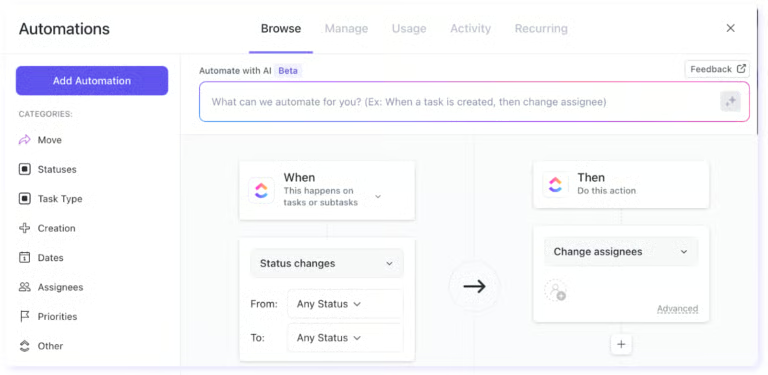
ClickUp’s collaboration tools ensure that every team member remains focused on value-adding activities, while its goals and documentation features aid in tracking progress and continuous improvement, essential elements of Lean.
Emerging or hybrid project management methodologies
As project environments evolve beyond the project management basics, new methodologies have emerged to address the growing complexity and speed of modern work.
Hybrid methodologies combine the strengths of traditional approaches like Waterfall with the flexibility of Agile, while entirely new frameworks are being developed to meet the demands of dynamic projects.
These methods are especially useful in industries where rapid adaptation is crucial for success.
Scrumban
A blend of Scrum and Kanban, Scrumban combines the structured sprints of Scrum with the continuous flow of Kanban. This methodology is ideal for teams that need the flexibility of Kanban but still want to maintain Scrum’s sprint-based cycles for regular planning and reviews.
Extreme Programming (XP)
XP focuses on improving software quality and responsiveness through frequent releases in short development cycles. It emphasizes collaboration, feedback, and continuous improvement, making it suitable for development environments that require constant interaction with clients and end users.
Lean Six Sigma
A hybrid of Lean and Six Sigma, this methodology focuses on eliminating waste (Lean) while maintaining a data-driven approach to improve processes (Six Sigma). It’s particularly effective in industries that need to balance efficiency with quality control, like manufacturing or healthcare.
Different types of project managers and their roles
Project managers adapt to various types of project management methodologies, shaping how they guide teams and ensure project success. Here are the key types:
- Waterfall Project Manager: Oversees projects in a linear sequence, ensuring each phase is completed before the next. They focus on managing resources, timelines, and budgets, crucial for structured project management types.
- Agile Project Manager (Scrum Master): Facilitates teams through sprints, focusing on adaptability and iterative development. They ensure smooth communication and rapid responses to changes, which is essential for this type of project management.
- Hybrid Project Manager: Uses elements from different types of project management methodologies, combining Waterfall and Agile to customize the approach based on specific project needs and industry requirements.
- Kanban Project Manager: Specializes in managing continuous workflows by optimizing the flow of tasks and limiting work in progress, ensuring the team remains focused and responsive to real-time demands.
Choosing a project management methodology
In project management, keep in mind that there is no universal, one-size-fits-all methodology. Each project has unique challenges and requirements; thus, the methodology you choose must align well with its specific needs.
Interestingly, there are scenarios where blending two methodologies proves to be highly effective. This hybrid approach can leverage the strengths of each methodology, providing a more tailored and efficient way to manage and execute projects.
To choose the right methodology, you must first establish a clear understanding of the project’s scope, complexity, stakeholder expectations, and desired outcomes. The right methodology should help the project team achieve its goals efficiently and effectively. It’s not just about following a set of procedures; it’s about adopting a framework that enhances the team’s ability to deliver successful results.
FAQ
What is the best tool for project management?
The best tool for project management depends on the types of project management methodologies you use. Tools like Jira are ideal for Agile frameworks, while Microsoft Project is well-suited for Waterfall. For hybrid methods, monday.com offers flexibility and customization options, making it a strong contender.
What is the most common project management tool?
Common tools vary based on project management types, but Jira and Trello are widely used, especially in Agile environments. Microsoft Project is also popular for more structured methodologies like Waterfall.
What methodology is best for small projects?
Agile or Kanban are typically the best methodologies for small projects, as they offer flexibility and allow teams to adapt quickly. These types of project management methodologies ensure that small teams can pivot and adjust priorities without being locked into a rigid process.