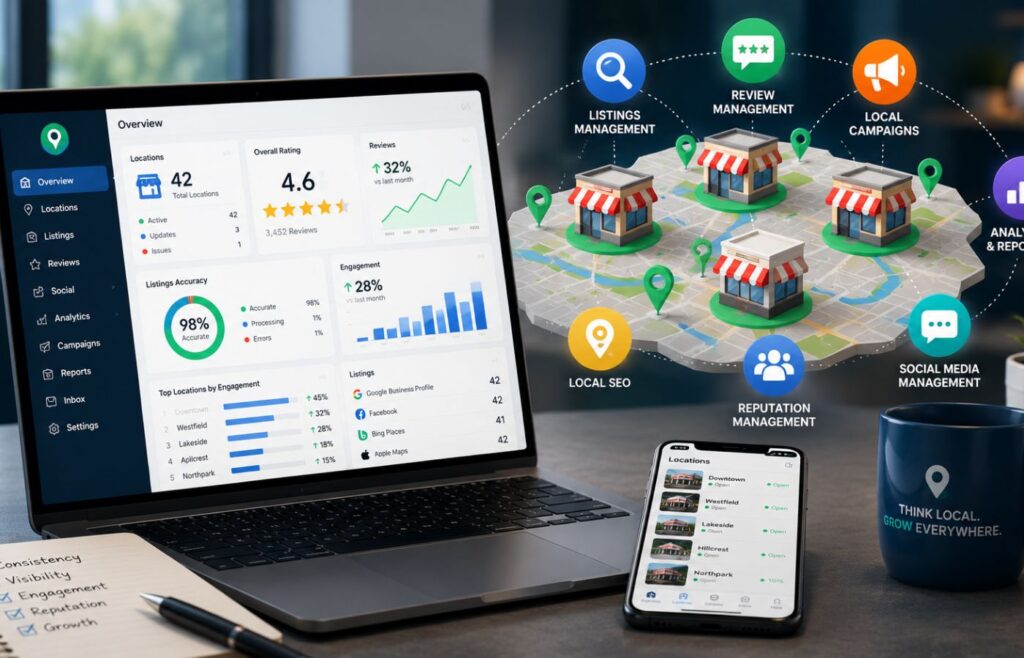
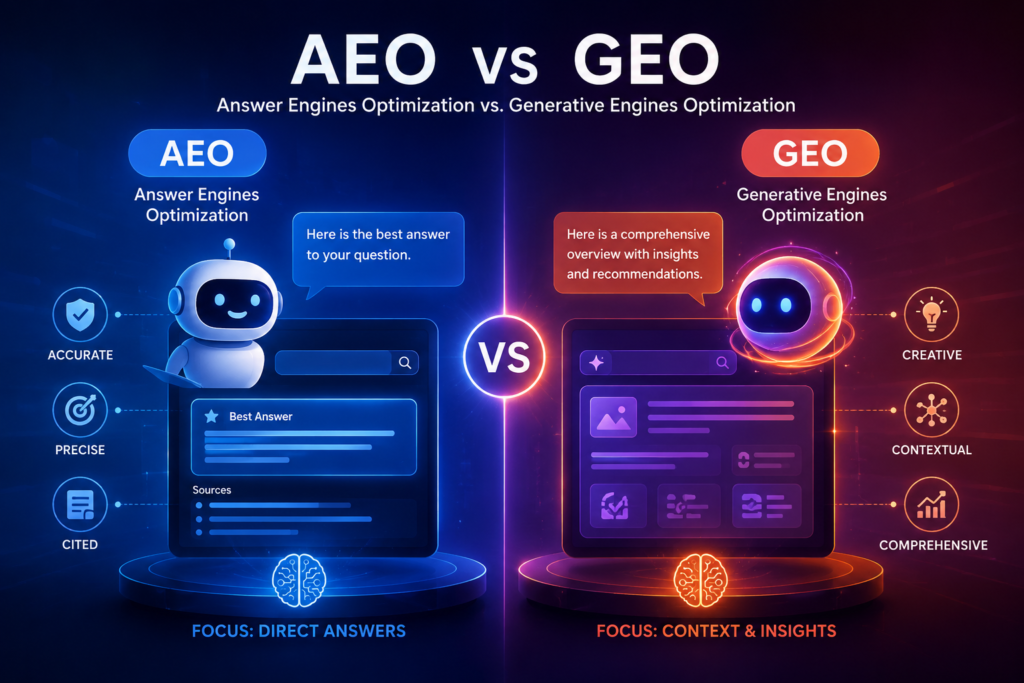
AI in digital marketing helps teams create, personalize, automate, analyze, and optimize campaigns faster than manual workflows alone. It can support everything from content creation and audience segmentation to ad testing, email automation, SEO research, social media planning, and campaign reporting.
That does not make AI a marketing strategy, though. A tool can produce copy, find patterns, or recommend an action, but it cannot decide what your company should stand for or why a customer should choose you. Those decisions still require customer knowledge, positioning, judgment, and a clear point of view.
In this guide, I’ll explain where AI fits into digital marketing, which uses offer the clearest value, what can go wrong, and how to judge whether a marketing tool is worth adding to your current workflow.
Key takeaways
- AI is most useful when it speeds up research, personalization, testing, and reporting while keeping people responsible for final decisions.
- Practical uses include content production, email marketing, SEO, paid advertising, social media, segmentation, chatbots, and campaign analysis.
- Common risks include inaccurate information, bland content, privacy concerns, inconsistent messaging, and automation that frustrates customers.
- A good AI marketing tool should fit your data, approval process, existing software, and campaign goals.
- Start with one clear problem rather than introducing AI across every marketing channel at once.
What is AI in digital marketing?
AI in digital marketing refers to the use of artificial intelligence technologies to plan, create, automate, personalize, measure, and improve marketing campaigns. These tools can analyze data, generate content, recommend next steps, predict customer behavior, and automate repetitive tasks.
In practical terms, AI can help marketers answer questions like:
- What topics should we create content around?
- Which audience segment is most likely to convert?
- What email subject line should we test?
- Which ad creative is performing best?
- What customer behavior should trigger a follow-up campaign?
- Which leads need sales attention?
- Where are we losing visibility in search?
The quality of those answers depends heavily on the information behind them. Clear goals and reliable data give the system something useful to work with. Weak or disconnected inputs tend to produce generic recommendations that may sound reasonable but do not match the business.
How AI is changing digital marketing
AI is reducing the amount of manual work involved in launching, measuring, and adjusting campaigns. Instead of writing every variation from scratch or sorting through reports line by line, marketers can use it to prepare a first draft, spot changes in performance, and suggest possible next steps.
Content generation gets most of the attention, but the broader shift is happening across the full campaign process. Teams are using AI to study audiences, prioritize leads, personalize messages, test creative, monitor results, and decide where to focus next.
For example, a marketing team might use AI to turn a product launch brief into email copy, paid ad variations, social posts, and landing page copy. The same team might also use AI to segment leads, recommend send times, analyze campaign results, and identify which messaging drove the strongest engagement.
The marketer’s role does not disappear in this process. It moves away from repetitive setup and closer to reviewing ideas, challenging assumptions, refining the message, and deciding what deserves to go live.
Common uses of AI in digital marketing
AI can support nearly every part of digital marketing, but some use cases are more practical than others. A sensible place to begin is a task that takes too long, requires repeated versions, depends on large amounts of data, or is difficult to personalize by hand.
Content creation
Content creation is one of the most common uses of AI in digital marketing. Marketers can use AI tools to draft blog outlines, social posts, email copy, landing page sections, product descriptions, ad variations, and video scripts.
Its clearest benefit is getting past the blank page. A useful prompt, supported by product information and audience context, can give a writer or marketer a workable starting point in minutes.
The downside is that many AI drafts sound alike. They often use the same sentence patterns, repeat broad claims, and avoid taking a firm position. Treat the output as raw material rather than publication-ready copy. Editors still need to check the facts, sharpen the argument, and add insight that could not have come from a generic prompt.
SEO and content planning
AI can help marketers research keywords, identify content gaps, summarize search intent, cluster topics, draft briefs, and optimize content for readability and relevance. Some AI SEO tools also help teams monitor search visibility across traditional search engines and AI-powered discovery experiences.
That support is useful because SEO planning requires more than producing a high volume of articles. Teams need to understand what searchers are trying to accomplish, which pages already satisfy that need, and where current results leave questions unanswered.
AI can reduce the research time, but it should not replace a manual review of the search results. Keyword data needs verification, competitor summaries can miss context, and a generated brief may simply repeat the structure of pages that already rank.
Email marketing
AI can draft subject lines, prepare email sequences, personalize messages, recommend send times, create audience segments, and summarize engagement data.
It is particularly useful in automated campaigns such as:
- Welcome series
- Lead nurture sequences
- Abandoned cart emails
- Reactivation campaigns
- Renewal reminders
- Post-purchase follow-ups
The message becomes more useful when it responds to real customer behavior. An email triggered by a demo request, product view, purchase, or lapse in activity has more context than a generic message sent to an entire list.
Marketers should still check whether the personalization feels natural. Inserting a name or product category does not automatically make a message relevant.
Related: 5 Best Newsletter Platforms: Top Picks to Grow & Monetize
Paid advertising
AI can create ad variations, suggest audience groups, compare creative, adjust bids, and identify campaigns that appear more likely to convert.
Advertising platforms have used machine learning for bidding, targeting, and delivery for years. Separate AI tools can also help teams produce copy options, explore new angles, and turn raw performance data into a faster summary.
Automation does not remove the need to watch the account. Teams still need to review spending, conversion tracking, audience quality, placement, and brand safety. An advertising system will optimize around the signals it receives, even when those signals are incomplete or misleading.
Social media marketing
AI can draft captions, repurpose longer content, suggest hashtags, summarize sentiment, track conversations, and identify emerging topics.
For a small team managing several channels, the time savings can be meaningful. A webinar, report, or article can become a set of platform-specific posts without rewriting the idea from the beginning each time.
The better use is not simply producing a larger volume of posts. AI is more valuable when it connects planning, publishing, listening, community management, and reporting.
Customer segmentation and personalization
AI can help marketers segment audiences based on behavior, demographics, purchase history, engagement, lifecycle stage, and predicted intent.
This makes personalization easier to manage at scale. A system may identify customers at risk of leaving, leads that show buying intent, or shoppers likely to respond to a specific recommendation. Those patterns can be difficult to find through manual reporting alone.
The results are only as dependable as the underlying data. When CRM, ecommerce, email, and analytics systems do not share information, the model is working from an incomplete customer picture.
Chatbots and conversational marketing
AI chatbots can answer common questions, qualify leads, suggest resources, route visitors, and provide basic support outside regular business hours.
For marketers, they can be useful on pages where visitors are close to making a decision, including:
- Pricing pages
- Product pages
- Comparison pages
- Demo-request pages
- Checkout or signup pages
A well-configured chatbot can remove small barriers before conversion. A poorly configured one can trap the visitor in an unhelpful loop. Teams should define what the bot can answer, when it should hand the conversation to a person, and how those interactions will be reviewed.
Analytics and reporting
AI can summarize performance, flag unusual changes, explain possible causes, and recommend areas to investigate.
That can reduce the hours spent assembling recurring reports. Instead of starting with charts and spreadsheets, a marketer can begin with a summary of what changed and then examine the data behind it.
The summary is not the conclusion. For example, AI may connect a decline in paid search conversions to a landing page update. A marketer still has to check tracking, traffic quality, creative, budget, seasonality, and the page itself before deciding what caused the change.
Benefits of AI in digital marketing
Speed is the most visible benefit, but it is not the only one. AI can also help teams make better use of data, test more ideas, and provide more relevant experiences without adding the same amount of manual work.
Faster campaign production
AI can shorten the time required to prepare first drafts, build variations, summarize research, and adapt content for other channels. That is especially helpful for small teams expected to support email, social, content, paid media, and reporting at the same time.
Related: The Best Social Media Schedulers I’ve Used as a Social Media Manager
Better personalization
AI can adjust campaigns according to customer behavior, preferences, lifecycle stage, and likely needs. Instead of sending one message to everyone, a team can create smaller groups and speak to the actions or interests that separate them.
More scalable testing
Marketers can use AI to create variations of ads, subject lines, landing page messages, and social posts. This gives teams more options to test without asking writers and designers to build every version individually. The goal should still be a meaningful test, not variation for its own sake.
Stronger audience insights
AI can examine large sets of customer and campaign data for recurring patterns. These findings may reveal which topics attract qualified leads, where customers lose interest, or which channels contribute most often to conversion.
More efficient reporting
AI can prepare performance summaries, flag unusual movement, and propose questions for further analysis. That allows marketers to spend less time compiling information and more time deciding what to change.
Risks and limitations of AI in digital marketing
AI can save time, but poor use can create more work than it removes. Teams need clear rules for review, data handling, and brand consistency before the tools become part of everyday campaign production.
Inaccurate or misleading outputs
AI can state incorrect, outdated, or unsupported information with confidence. Check product claims, pricing, statistics, legal language, and competitor comparisons against reliable sources before publishing them.
Generic content
AI-generated writing often becomes repetitive when the instructions lack detail, or the system has little brand context. Approved messaging, audience research, examples, product information, and firm editorial direction can improve the first draft, but an editor still needs to make it specific and useful.
Brand inconsistency
When each team member uses separate prompts and personal preferences, the company can end up sounding different across every channel. Shared terminology, examples, voice guidelines, and approval steps help reduce that drift.
Privacy and data concerns
Marketers need to be careful about the customer, prospect, employee, and company information entered into AI systems. Before adopting a platform, review how it stores data, whether prompts are used for training, who can access the information, and what controls are available for retention and deletion.
Over-automation
Customers can usually tell when a company has automated an interaction without considering the experience. A faster reply is not automatically a better reply. Decide which tasks can run on their own and which moments require judgment, empathy, or direct contact from a person.
How to use AI in digital marketing
The most manageable approach is to improve one workflow, measure the result, and expand only after the team knows how to repeat it.
1. Identify the highest-friction marketing workflows
Start by identifying where the team loses the most time or consistency. These can include content briefs, email drafts, campaign reporting, ad variations, social scheduling, lead scoring, or audience segmentation.
Avoid beginning with a broad goal such as “use AI across marketing.” Choose one problem that can be tested and measured.
2. Define the business goal
AI should connect to a measurable goal. That might be reducing content production time, improving email engagement, increasing conversion rates, speeding up reporting, or improving lead routing.
The goal will help narrow the tool selection. A content team may care most about editing time and brand voice, while an ecommerce team may care about product recommendations, customer segments, and repeat purchases.
3. Prepare your data and brand inputs
AI works better when it has better context. Before rolling it out, gather the inputs that will improve quality, such as brand guidelines, customer personas, product messaging, campaign goals, approved examples, CRM fields, and performance data.
This preparation matters most for personalization, automation, and analysis. Incomplete or poorly maintained data can lead to recommendations that are inaccurate or impossible to use.
4. Choose the right AI workflow
Different teams need different AI workflows. Some need AI-assisted writing. Others need AI-powered automation, design, SEO research, social listening, or ecommerce personalization.
Match the software to the task. A long feature list means little when most of those features do not solve the problem you selected.
5. Keep humans in the review process
AI outputs should be reviewed before they go live, especially when they include factual claims, customer data, legal language, pricing, competitive statements, or brand-sensitive messaging.
Review should be built into the workflow rather than added as an afterthought. Assign responsibility for checking accuracy, tone, and approval so that everyone knows who owns the final decision.
6. Measure performance and quality
Track both efficiency and outcomes. It is helpful to know whether AI reduced production time, but teams should also measure whether campaigns improved.
Quality should be measured too. A workflow that produces more assets but requires heavy correction may not be saving as much time as the initial numbers suggest.
Best AI tools for digital marketing
The best AI tools for digital marketing depend on the work you need to improve. Some tools focus on a single task, while others combine content, CRM, automation, analytics, or campaign management in one platform.
| Tool | Best for | Why it fits |
|---|---|---|
| HubSpot | CRM-connected AI marketing | A good fit for teams that want content tools, automation, lead capture, segmentation, reporting, and sales handoff connected to the same customer records. |
| Jasper | Brand-controlled content production | Useful for teams producing a high volume of campaign content that need shared brand guidance, audience profiles, and approved source material. |
| Canva | Visual campaign creation | Helps small teams create and resize graphics for social media, ads, presentations, and web campaigns without relying on a designer for every asset. |
| Semrush | SEO and AI search visibility | Supports keyword research, competitor analysis, content planning, and visibility tracking across search engines and AI answer platforms. |
| Adobe GenStudio and Firefly | Enterprise creative production | Suited to larger companies that need brand controls, shared assets, and high-volume creative production across departments, markets, or regions. |
| Sprout Social | AI-assisted social management | Combines publishing, engagement, listening, sentiment analysis, and reporting for teams managing several social channels. |
| ActiveCampaign | Email and lifecycle automation | Fits teams building behavior-based nurture, retention, and reactivation campaigns across email and other customer touchpoints. |
| Klaviyo | Ecommerce marketing | Connects customer, purchase, email, and SMS data to support predictive segments and personalized ecommerce campaigns. |
Related: 8 Best AI Marketing Tools for 2026
How to choose AI tools for digital marketing
Start with the workflow, not the number of AI features on the pricing page. A platform may offer dozens of automated functions and still be a poor choice if it cannot use your data or fit your review process.
1. Match the tool to the use case
A CRM-connected platform is useful for lead capture and automation. A writing tool is useful for campaign copy. A design tool is useful for visuals. An SEO platform is useful for search strategy. An ecommerce platform is useful for purchase-based personalization.
Write down the three tasks the tool must support before scheduling demos or starting trials. This makes it easier to separate useful features from appealing extras.
2. Check data and integration requirements
AI tools are more useful when they connect to your existing systems. Look for integrations with your CRM, email platform, ecommerce system, analytics tools, ad platforms, CMS, and collaboration software.
A platform that cannot reach the right information may require manual imports, duplicated records, or additional setup. Those costs are easy to overlook during a product demo.
3. Evaluate governance and approvals
Marketing teams should understand how the platform handles user permissions, brand controls, approvals, data privacy, and content review.
Governance becomes more important as access expands. One marketer using AI to brainstorm ideas creates less risk than an entire department using it for customer-facing campaigns.
4. Compare pricing against real usage
AI pricing can vary by users, credits, contacts, message volume, features, and usage limits. Estimate the cost using the number of people, campaigns, contacts, and outputs your team expects to use. The lowest advertised plan may not cover the volume or controls you need.
5. Test output quality
Use real campaign briefs, customer segments, product information, and brand guidelines during the trial.
Generic test prompts will show whether the tool can produce text or images. They will not show whether it can reduce the editing and production work your team handles every week.
AI in digital marketing examples
The easiest way to judge AI is to examine the workflow it supports. The following examples show where it can assist without taking control of the full marketing process.
Example 1: AI-assisted campaign launch
A team launching a product could use AI to summarize the brief, draft email and ad copy, prepare social posts, outline a landing page, and create a launch checklist.
The team would still need to approve the positioning, claims, audience, and creative direction. AI handles much of the initial assembly, while marketers decide whether the campaign makes a convincing case.
Example 2: AI-powered lead nurture
A B2B team could segment leads by role, industry, engagement, and funnel stage. It could then prepare separate nurture emails and trigger follow-ups based on page views, downloads, or other actions.
This gives the campaign more relevance than sending the same sequence to every prospect. It also requires clean CRM data and clear rules for when sales should step in.
Example 3: AI-driven ecommerce personalization
An online retailer could recommend products, identify customers who may lapse, trigger cart recovery messages, personalize email content, and estimate customer lifetime value.
The workflow is more effective when ecommerce, email, SMS, and customer records share current information rather than operating as separate systems.
Example 4: AI-supported SEO planning
A content team could cluster topics, summarize search intent, compare competitor coverage, create a brief, and identify missing sections in an existing article.
Editors should still review the search results themselves. The final page needs original expertise, clear recommendations, and better answers, not simply a rearranged version of competing content.
Example 5: AI-assisted social media management
A social team could turn an article or webinar into multiple posts, track mentions, summarize sentiment, and identify conversations gaining attention.
That support frees the team to spend more time deciding what deserves a response, how the brand should participate, and when a situation needs human judgment.
AI in digital marketing best practices
Keep strategy human-led
AI can suggest ideas and produce assets, but campaign strategy should come from customer research, positioning, competitive knowledge, and business priorities. Do not let the easiest content to generate determine what the company says.
Use approved inputs
Provide brand guidance, product messaging, customer personas, compliance notes, and examples of strong work. Maintain these resources so the tool is not relying on outdated language or retired claims.
Review every customer-facing asset
Check AI-generated copy, visuals, reports, and recommendations before publication. Apply stricter review to regulated industries, sensitive customer communications, high-value purchases, and content containing factual or legal claims.
Document what AI can and cannot do
Create guidelines that state:
- Which tools are approved
- Which data employees may enter
- Who reviews each type of output
- Which tasks may be automated
- Which workflows require human approval
Clear rules make it easier for employees to use AI consistently without guessing where the boundaries are.
Measure the effect on results
Track whether AI improves speed, quality, conversions, engagement, or cost efficiency. Producing more campaigns is not a success by itself. The work should become faster, better, or more effective in a way the team can demonstrate.
Frequently asked questions
AI in digital marketing is the use of artificial intelligence for tasks such as content creation, personalization, segmentation, automation, analytics, and campaign improvement. It can reduce manual work and help marketers act on large amounts of customer or performance data.
AI is used for content planning, SEO research, email automation, paid advertising, social media, chatbots, audience segmentation, personalization, and reporting. The strongest use cases usually involve repetitive work, large data sets, or campaigns that need many variations.
The main benefits include faster campaign production, more personalized messaging, easier testing, stronger audience analysis, and quicker reporting. The actual value depends on whether those improvements lead to better campaign results, not simply more output.
The main risks are incorrect information, generic content, privacy problems, inconsistent messaging, and too much automation. Clear data rules, documented workflows, and human review can reduce these risks.
AI is more likely to change marketing jobs than remove the need for marketers. It can handle parts of research, production, and analysis, but strategy, customer understanding, creative judgment, accountability, and final approval still require people.
The right tool depends on the task. HubSpot supports CRM-connected campaigns, Jasper focuses on brand-controlled content, Canva supports visual creation, Semrush covers SEO research and visibility, Adobe serves enterprise creative teams, Sprout Social supports social management, ActiveCampaign handles lifecycle automation, and Klaviyo focuses on ecommerce marketing.
Bottom line
AI in digital marketing delivers the most value when it helps a team make better decisions or remove repetitive work. Producing a higher volume of content is useful only when that content remains accurate, distinct, and connected to a campaign goal.
Choose one problem first, such as slow content production, weak segmentation, manual reporting, or limited personalization. Then test a tool against that workflow, measure the time and results, and decide whether it deserves a wider role in the marketing process.