

Key takeaways
- Expense management describes the process of budgeting, processing, and managing qualified business expenses.
- Relevant business expenses include those used for travel, employee perks, and operations.
- Proper expense management ensures a company is spending its money wisely and paying enough taxes.
Update notes
- Oct. 22, 2025: Hanna Sillo refreshed this guide with clearer headers, new data, added FAQs, and a new compliance section. She also added a breakdown table showing how HR, accounting, and finance share responsibility for expense management.
Expense management how modern companies control spending, maintain compliance, and make smarter financial decisions. Whether you’re a startup tracking every dollar or a large enterprise preparing for audits, good expense management protects both cash flow and credibility.
What is expense management?
Expense management involves tracking and controlling business spending. These may include recurring expenses necessary to keep facilities running and teams operating effectively. They may also include discretionary spending on things like employee perks, engagement activities, and travel.
In most cases, an employee incurs an expense that is eligible for reimbursement according to company policy, then they submit the receipt to an approval chain. The employee is usually required to provide a copy of the receipt as well as a description of the expense for bookkeeping.
In some cases, they may also need to provide an accounting code, contract agreement, or prior authorization documentation. Failure to provide the necessary information may cause the expense to be rejected even if it is an authorized expense. Once the expense has been approved and accounted for in the budget, the company’s accounting team processes the reimbursement.
These can be difficult to track and manage without the right software systems in place.
What counts as a business expense?
The Internal Revenue Service (IRS) defines business expenses as “the costs of carrying on a trade or business” that are “usually deductible if the business is operated to make a profit.” The IRS also provides a more exhaustive list of things that qualify as business expenses for tax purposes.
In practice, most company policies cover a range of business expenses, such as:
- Operational expenses for repairs, utilities, and maintenance
- Business-related travel expenses like hotels, meals, airfare, car rentals, fuel, or mileage reimbursements
- Professional development expenses like certification programs or training courses
- Benefits and perks like gym membership or home internet reimbursements
Who handles expense management?
HR, finance, and accounting teams are primarily responsible for overseeing the expense management process.
Department
Responsibilities
Outcomes
HR
- Oversees fair, consistent expense policies.
- Manages reimbursements for perks like wellness or home-office costs.
- Educates employees on eligible expenses.
- Addresses repeated policy violations.
- Equitable, transparent policies.
- Informed and compliant employees.
- Stronger trust and accountability.
Accounting
- Records and reconciles approved expenses.
- Ensures tax and policy compliance.
- Prepares audit-ready documentation.
- Coordinates reimbursements with HR and finance.
- Accurate financial reporting.
- Smooth audits.
- Fewer processing errors.
Finance
- Analyzes spending trends and sets budgets.
- Forecasts costs and allocates resources.
- Advises leadership on financial decisions.
- Refines policies with HR and accounting.
- Smarter budgeting and forecasting.
- Better investment decisions.
- Aligned financial goals.
The role of HR
The HR department is involved in expense management with the goal of keeping employees happy, motivated, and supported in their job. For instance, as an employee perk, someone on the HR team might process reimbursement for gym memberships.
HR teams are also generally responsible for ensuring that all employees are adhering to company expense policies. If someone has a history of repeated violations, HR may need to step in to enforce the company’s disciplinary process.
The role of accounting and finance
Regardless of who’s incurring or processing expenses, the expenses themselves all ultimately funnel up to the accounting department.
Accounting teams keep records of individual expense histories, track overall company spending, and monitor expense reports. Conversely, finance staff are responsible for setting budgets for future business expenses.
Accounting and finance teams work together to determine how a company can move toward its financial goals. The accounting team reports on past expenses to give the finance team an idea of the business’s solvency. From there, finance teams work with company executives to craft a budget based on historical data and projected business expenses.
Accounting and finance leaders set expense policies, then work with HR teams to ensure the policies are clearly communicated and upheld across the company. These policies outline what counts as a business expense, an overview of the approval process, and what the expectations are for expense decisions.
Compare two accounting solutions that support expense management: QuickBooks vs FreshBooks
The business value of expense management
Conducting proper expense management comes with a range of benefits, including but not limited to:
- Accounting accuracy
- Preparedness for audits
- Cross-departmental spending aligned with accounting and finance
- Cost control by setting departmental expense caps
- Reporting for more effective budgeting and planning
- Better business solvency ratio
Perhaps most importantly, proper expense management is necessary to comply with tax requirements. When a company declares business expenses to lower the amount of taxes it owes, those expenses need to be accurately documented to prove they were qualifying business expenses. Otherwise, a company may need to pay a fine or pay back the taxes it owes.
In a more strategic sense, expense management is the key to proper accounting. With a firm grasp on business spending patterns, executives can make smarter decisions about where to cut costs or make investments.
Compliance and risk management
Proper documentation of expenses is essential for IRS compliance. Inaccurate or incomplete records can result in penalties or lost deductions during audits. To stay compliant, businesses should ensure every expense is properly categorized, supported by receipts, and clearly tied to legitimate business activity.
The IRS recommends keeping financial records for at least seven years, including digital copies of receipts, invoices, and reimbursement documentation. Maintaining clear, organized expense data not only protects against audits but also strengthens a company’s overall financial integrity.
What type of business needs expense management?
Since every business spends money on at least one of the common types of business expenses, every business needs effective expense management practices.
However, expense management will look different from one company to the next. The business size will determine who’s involved; for example, the CEO of a small business might perform accounting and finance functions, whereas large companies may have an entire team of people solely dedicated to processing expense reports.
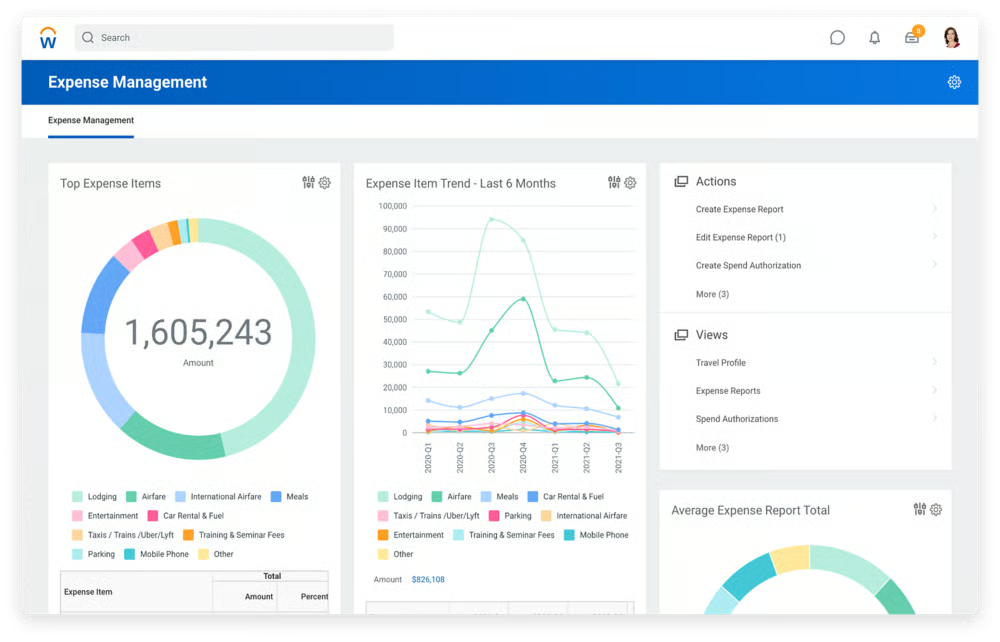
Further, the business’s budget will inform the way it handles expense management, whether through paper, spreadsheets, or software. Software is an ideal solution because it:
- Integrates with other software, such as payroll, accounting, and HR suites
- Automates approval workflows for quicker processing and reimbursement
- Enables mobile receipt scanning for easier use
- Displays drill-down reports by expense type, employee, or team
Expense management software exists as standalone tools, such as ClickTime, Ramp, Zoho Expense, or Airbase. Yet, sometimes it’s integrated within accounting software, such as Quickbooks, or in an HR platform like Rippling, Workday, or isolved.
Expense management FAQs
What are common business expenses?
Common business expenses include operational costs (like rent, utilities, and software subscriptions), employee travel, client meals, professional development programs, and office supplies. The IRS defines these as “ordinary and necessary” expenses required to run your business. Always document them with receipts and accurate descriptions to ensure compliance.
Why is expense management important?
Effective expense management helps organizations control costs, improve budgeting accuracy, and stay compliant with tax regulations. It ensures every dollar spent supports business goals—and gives leadership visibility into spending patterns that inform smarter financial decisions.
How to choose the best expense management software?
Choosing the right expense management software starts with understanding your company’s size, spending habits, and integration needs. Here’s a step-by-step process to guide your decision:
- Identify your pain points: List what’s slowing down your current expense process—manual approvals, lost receipts, limited reporting, or compliance gaps.
- Define must-have features: Look for automation, mobile receipt capture, mileage tracking, policy enforcement, and integration with your accounting or payroll system.
- Set your budget and user count: Estimate how many employees will submit expenses and how many managers or finance staff will approve them. Many tools charge per active user or report.
- Check for integrations: Choose software that connects easily with your existing systems to avoid double data entry.
- Compare usability and support: Request demos or free trials. Evaluate how intuitive the dashboard feels and whether the vendor offers responsive customer support.
- Review compliance and security: Ensure the tool aligns with your company’s data-protection policies, offers audit trails, and supports tax-ready recordkeeping.
- Pilot, gather feedback, and finalize: Test the platform with a small team before rolling it out company-wide. Collect feedback on ease of use and approval speed, then refine your policies as needed.
Browse one of the following software guides to explore solutions that support expense management: