

Page Summary
Who it’s for: Businesses looking for a customer experience platform to manage customer interactions across multiple channels.
Overview: This guide compares the best customer experience platforms based on pricing, features, AI capabilities, integrations, scalability, and ease of use.
Top recommendation: Zendesk is our best overall pick for its omnichannel support, AI-powered tools, extensive integrations, and scalability.
Key takeaway: Choose a platform that matches your communication channels, integrates with your existing tech stack, and can scale as your business grows.
Products covered: Zendesk, Salesforce, Freshdesk, Qualtrics XM, and NICE CXone.
Important considerations: Omnichannel support, AI features, integrations, pricing, reporting, compliance, and implementation complexity.
Customer experience platforms have become one of the most critical differentiators for businesses in 2025. Customers expect fast, personalized, and consistent service, whether they contact through phone, live chat, email, or social media. However, meeting those expectations requires more than just a help desk or CRM. What businesses need now is a CX platform that unifies engagement, integrates data, and leverages AI to guide every interaction.
This buyer’s guide breaks down the best CX platforms in 2025 by explaining what CX platforms are, why they matter, highlighting the top tools, and comparing pricing to help you choose the best option from the list below.
- Zendesk: Best overall customer experience platform
- Salesforce: Best for CRM integrations
- Freshdesk: Best for growing teams
- Qualtrics XM: Best for experience management
- NICE CXOne: Best for omnichannel support
What is a customer experience (CX) platform?
A customer experience (CX) platform serves as a centralized system designed to facilitate seamless and consistent interactions with customers across multiple channels. In recent years, the functionality of CX platforms has evolved from being mere ticketing systems to comprehensive experience hubs. Specifically, many leading CX platforms enable businesses to create hyper-personalized experiences, automate loyalty programs, and proactively address potential issues before customers bring them to your attention.
What are the key features to look for in a CX platform?
When it comes to customer experience tools, a few key features can make all the difference. Here’s what to keep an eye out for:
- Omni-channel integration: CX software extends beyond traditional channels, such as email and chat, to encompass voice interactions, social media platforms, SMS messaging, popular messaging apps, and mobile applications, allowing you to meet customers where they are.
- Automation and artificial intelligence: With the rise of AI tools, sentiment analysis, topic detection, predictive routing, generative responses, and chatbots are used to enhance customer experience platforms.
- Customer feedback: After an interaction, customer experience tools can automate surveys, track the customer journey, and close the loop to ensure a seamless experience.
- Personalization and loyalty tools: Many businesses select CX platforms to customize interactions based on customer data, which provide comprehensive support for loyalty and retention programs.
- Workforce and quality management: Managing agents and representatives is crucial for supporting customer experience tools through scheduling, forecasting, and tracking agent performance.
- Scalability and security: Distributed teams would benefit from support for global operations in multiple languages, while those in regulated industries can benefit from compliance with legal standards, such as the General Data Protection Regulation (GDPR) and Health Insurance Portability and Accountability Act (HIPAA), through quality assurance and audit logs.
- Integrations: Finally, the top CX platforms can connect with CRM, marketing, product analytics, and existing data sources to unify data across different systems.
Why CX platforms matter in 2025
Customer experience platforms are gaining popularity among leaders seeking a strong return on investment. Specifically, 58% of leaders believe that CX platforms provide a significant return, according to Nextiva’s “Leaders Guide to CX Trends in 2025.” Therefore, this is a good time to ask for increased CX investments in your organization, which can benefit your business in the following areas:
- Retention and growth: Enhancing customer experience is closely tied to improved customer retention rates, increased repeat sales, and reduced churn rates. When businesses prioritize a seamless and satisfying customer experience, they foster deeper connections with their clientele.
- Efficiency and cost savings: Automating repetitive tasks can improve efficiency and reduce costs. By streamlining these processes, organizations can reduce duplicate work, which often results in wasted resources and time.
- Competitive differentiation: As customer experience expectations continue to rise, companies that fail to keep up with these changing standards risk losing their competitive edge in the market. Staying ahead in CX is crucial for maintaining a strong position against competitors.
- Data-driven decision making: Centralized customer experience platforms enable organizations to gather insights from diverse sources, including customer support interactions, feedback, and behavioral data. This integrated approach allows businesses to make informed decisions that enhance customer satisfaction and foster growth.
The best CX platforms at a glance
CX platforms | My rating | Monthly starting price | Key features |
|---|---|---|---|
 | 4.46 | $25 per agent |
|
 | 4.44 | $25 per user |
|
 | 4.37 | $18 per agent |
|
 | 4.36 | Contact sales for pricing |
|
 | 4.32 | $71 per agent |
|

Zendesk: Best overall customer experience platform
Pros
- Mature ecosystem with 1,000+ integrations
- AI-powered search and generative replies
- Granular SLA management and compliance controls.
- Scalable plans with enterprise readiness
Cons
- Text messaging is an add-on feature
- A significant price increase from the initial to the higher-tier plans
- Advanced setup requires technical resources
Why I chose Zendesk
Zendesk is my top choice for the best CX platform because it offers businesses a combination of power, ease of use, and scalability. It shines at integrating omnichannel support into a single dashboard and provides advanced compliance controls for regulated industries. Its AI search features also stand out, helping agents find answers quickly while minimizing reliance on manual processes.
Beyond its technical strengths, Zendesk also benefits from a robust ecosystem. Thousands of integrations and third-party apps make it a highly adaptable choice. This means businesses can start with core ticketing and messaging features, then expand into AI, analytics, and security as they grow.
Gallery
Key features
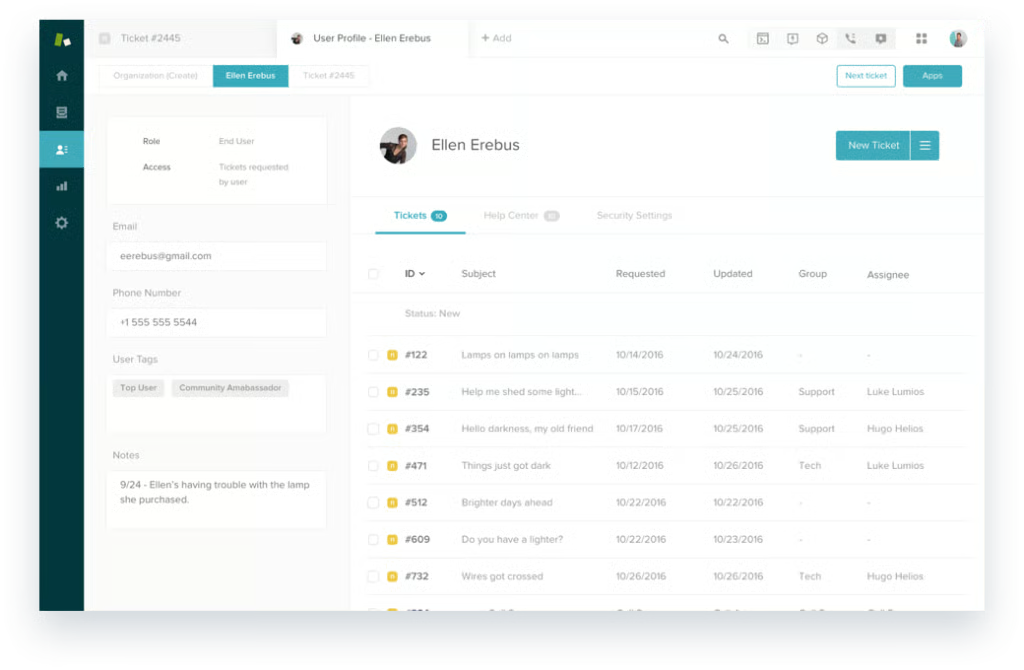
- Generative AI search: Automatically interprets customer questions and delivers the most relevant help articles or ticket solutions.
- Customizable SLAs: Define service-level agreements by priority, channel, or customer type, ensuring clear response and resolution targets.
- Advanced audit logs: Track every agent action and configuration change to maintain compliance and accountability.
- Multibrand support: Manage multiple brands or product lines from one unified platform.
Pricing
- Support Team: $25/user billed monthly; $19/agent/month billed annually
- Suite Team: $69/user billed monthly; $55/agent/month billed annually
- Suite Growth: $149/user billed monthly; $115/agent/month billed annually
- Suite Enterprise: $219/user billed monthly; $169/agent/month billed annually
Salesforce: Best for CRM integrations
Pros
- Native integration with Salesforce CRM
- Predictive case routing powered by Einstein AI
- Extensive partner ecosystem for customization
- Agent productivity tools for specific tasks and employees
Cons
- Some integrations are only available on enterprise plans
- Limited access to AI features on the lower-tier plans
- Can overwhelm SMBs without dedicated IT support
Why I chose Salesforce
Salesforce Service Cloud is the clear choice for businesses that rely on third-party apps and tools because its integration with sales and marketing tools creates a single source of truth across the customer lifecycle. With Einstein AI, support agents can predict which cases need escalation, while management gets deep insights into service performance.
The platform is also highly customizable, which is ideal for enterprises with unique processes. While it can be overwhelming for smaller teams, larger organizations benefit from the flexibility to build workflows that align with their structure. That makes Salesforce an excellent option for complex, global operations where customer experience ties directly to revenue.
Gallery
Key features
- Case management: Consolidate customer issues in a single system with tools for tracking, prioritizing, and resolving service cases efficiently.
- Omnichannel routing: Automatically direct customer requests from phone, chat, email, or messaging to the appropriate agent based on availability and expertise.
- Knowledge management: Build and share a searchable knowledge base that enables both customers and agents to access consistent, accurate answers.
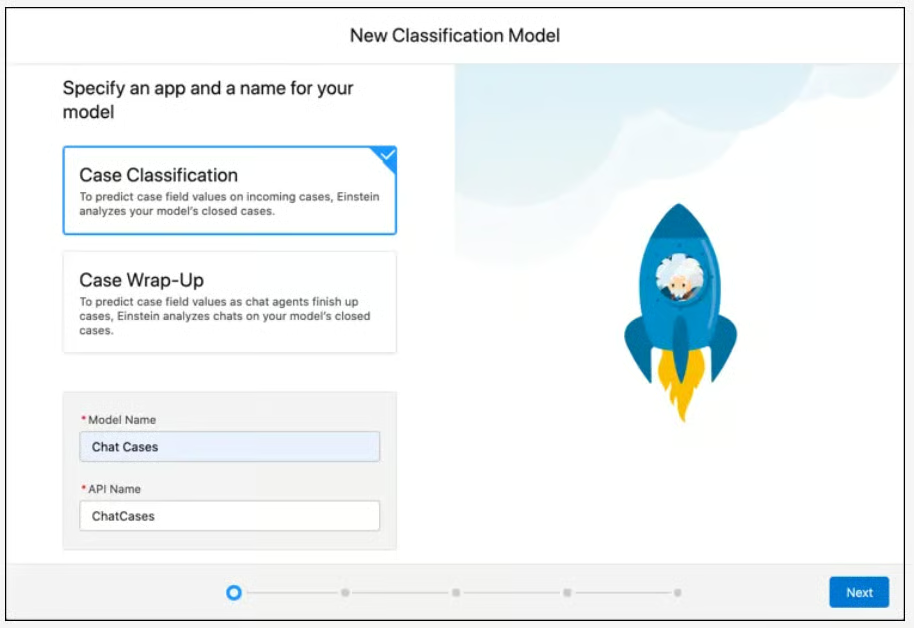
- Einstein case classification: Leverage AI to automatically predict which agent is most suited to resolve a case, and auto-assign accordingly.
Pricing
- Starter Suite: $25/user/month (starting price billed monthly or annually)
- Professional: $80/user/month (starting price billed monthly or annually)
- Enterprise: $165/user/month billed annually
- Unlimited: $330/user/month billed annually
- Agentforce 1 Service: $550/user/month billed annually

Freshdesk: Best for growing teams
Pros
- Free tier available for small teams
- Freddy AI copilot helps agents draft faster replies
- Simple, intuitive UI with fast setup
- Affordable scaling compared to other providers
Cons
- Limited compliance/security features for CX software
- External collaborators aren’t available on the base plan
- Some AI add-ons cost extra
Why I chose Freshdesk
As one of our top customer engagement platforms, Freshdesk is ideal for growing teams, offering an easy entry point without compromising on robust features. Its Freddy AI copilot helps smaller teams automate routine responses and speed up case resolution. The platform’s intuitive interface also reduces the learning curve, enabling teams to become productive quickly.
The free starter plan distinguishes Freshdesk by allowing you to try modern CX tools without incurring immediate costs. You can then choose to upgrade to one of the affordable paid plans as your needs increase. This combination of simplicity, automation, and reasonable prices makes Freshdesk one of the most practical options for growing businesses.
Gallery
Key features
- Freddy AI copilot: Suggests responses, automates ticket classification, and recommends actions for quicker resolutions.
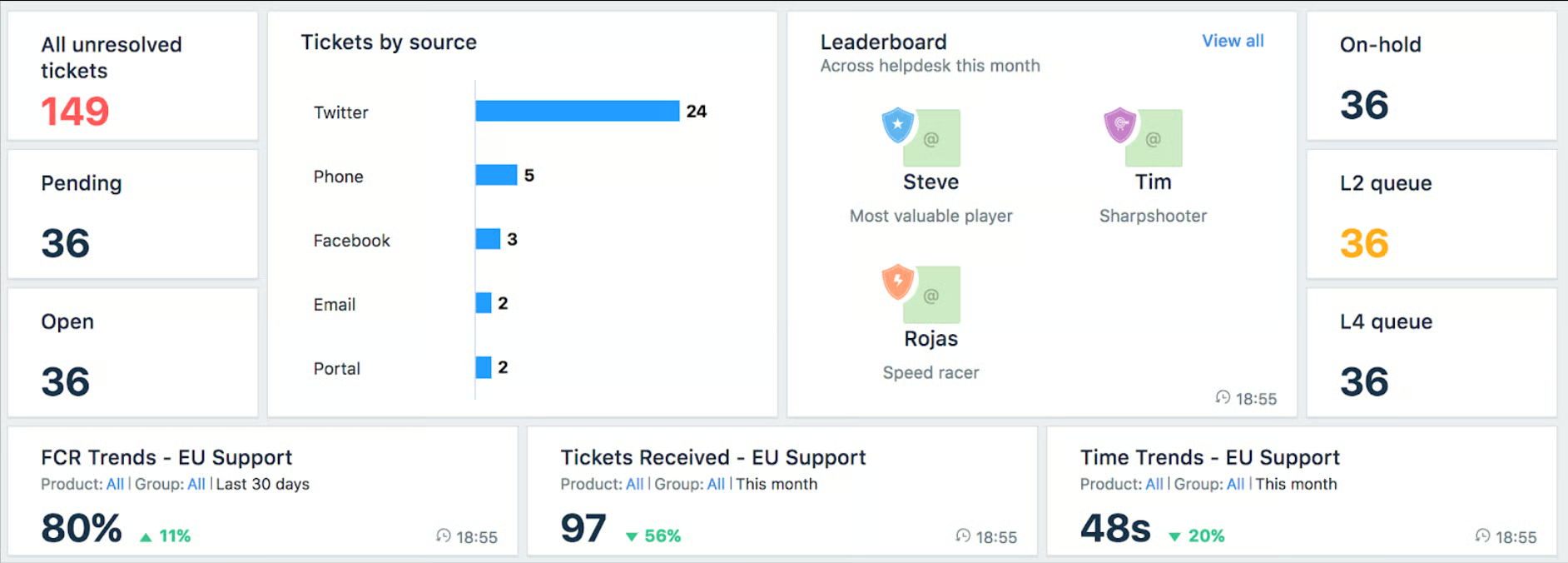
- Agent gamification: Adds leaderboards, badges, and points to motivate support teams and enhance performance through customer-experience-focused gamification.
- Collision detection: Shows which agents are already responding to prevent multiple agents from working on the same ticket.
- Multichannel ticketing: Consolidates requests from email, chat, social, and phone into one dashboard.
Pricing
- Free plan: $0/agent for up to two agents
- Growth: $18/agent billed monthly; $15/agent/month billed annually
- Pro: $59/agent billed monthly; $49/agent/month billed annually
- Pro+ AI Copilot: $94/agent billed monthly; $78/agent/month billed annually
- Enterprise: $95/agent billed monthly; $79/agent/month billed annually

Qualtrics XM: Best for experience management
Pros
- Best-in-class survey and VoC tools.
- Real-time dashboards and automated alerts.
- Journey mapping uncovers hidden pain points.
- Integrates with CRM and analytics systems.
Cons
- Lacks transparent pricing
- Data-focused solutions can be too complex for small teams
Why I chose Qualtrics XM
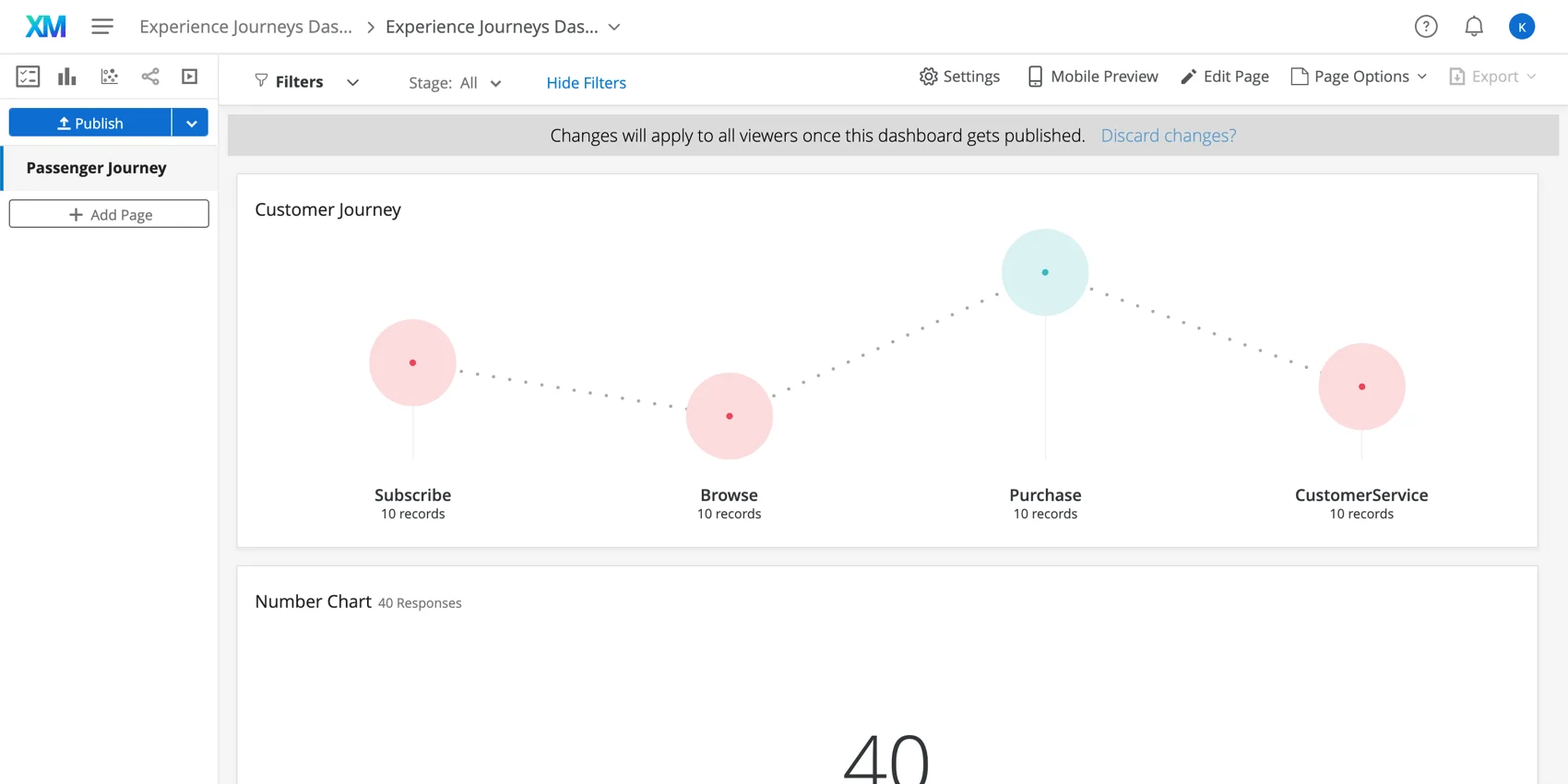
Qualtrics is a leader in customer feedback and experience management. It goes beyond service tickets by providing advanced analytics that identify trends, segment feedback, and generate actionable insights. Businesses can map the customer journey to identify gaps and then take immediate action through automated workflows.
While it’s not a complete contact center solution, Qualtrics excels at the proactive side of customer experience. For companies seeking to measure and enhance loyalty, satisfaction, and overall brand perception, it offers unmatched depth. Therefore, it’s best suited for organizations that view CX as a strategic investment and want detailed visibility into customer sentiment and data-driven insights.
Gallery
Key features
- Experience analytics: AI-powered analysis of survey and feedback data to identify sentiment, trends, and underlying causes.
- Journey mapping: Visualize customer journeys across touchpoints and pinpoint pain points with the highest churn risk.
- Feedback segmentation: Group customers by demographics, behavior, or feedback to tailor follow-up actions.
- Closed-loop alerts: Trigger automated actions when negative feedback occurs, ensuring a prompt response to customers.
Pricing
- Contact sales for pricing on customer experience tools.
NICE CXone: Best for omnichannel support
Pros
- Strongest voice-first capabilities in this list
- Workforce engagement management suite included.
- AI conversation analytics for coaching and QA.
- Enterprise-grade uptime and scalability.
Cons
- Omnichannel support requires a higher-tier plan
- Setup can be complex without IT involvement
- A la carte services can add up in price
Why I chose NICE CXone
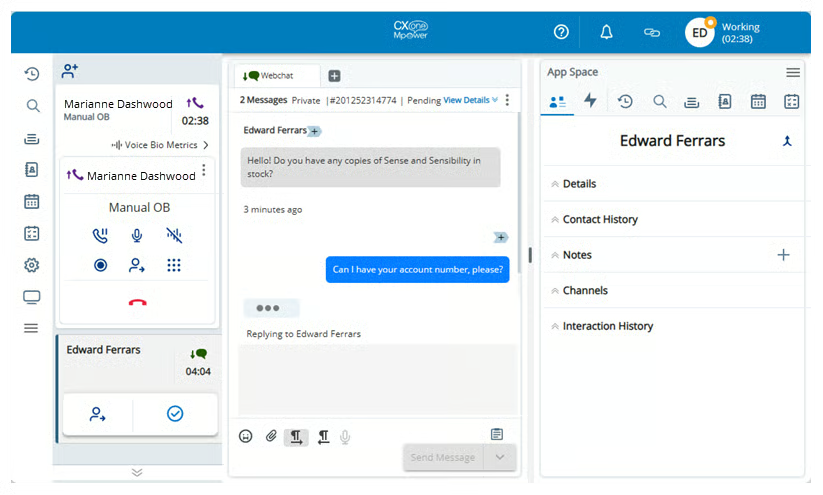
NICE CXone is designed specifically for organizations where voice and contact center operations are central to customer experience. Its intelligent routing guarantees customers connect with the right agent on the first try, while its workforce engagement suite helps managers predict demand and coach agents more efficiently. This makes it an excellent choice for service-focused industries.
The addition of AI conversation analytics also sets CXone apart. Businesses can analyze every call in real-time, uncovering patterns in customer sentiment and enhancing coaching outcomes. While its pricing places it firmly in the enterprise category, for contact center-focused businesses, features like agent assist make NICE CXone worth the investment.
Gallery
Key features
- Intelligent voice routing: Directs calls to the best available agent using skills-based and outcome-based rules.
- Outbound caller ID management: Customize caller IDs for outbound campaigns to improve answer rates and maintain brand trust.
- Workforce engagement management (WEM): Forecasts call volumes, schedules agents, and provides performance coaching tools.
- Conversation analytics: Uses AI to analyze speech and text interactions, identifying sentiment, keywords, and compliance risks.
Pricing
- CXone Mpower Digital Agent: Starting at $71/month
- CXone Mpower Voice Agent: Starting at $94/month
- CXone Mpower Omnichannel Agent: Starting at $110/month
- CXone Mpower Essential Suite: Starting at $135/month
- CXone Mpower Core Suite: Starting at $169/month
- CXone Mpower Complete Suite: Starting at $209/month
- CXone Mpower Ultimate Suite: Starting at $249/month
My methodology
To identify the best CX Platforms in 2025, I evaluated products based on six key areas. First, I examined cost, focusing on pricing transparency, scalability for seasonal agents, and onboarding fees. I also reviewed features such as omnichannel support (including email, chat, social, SMS, and voice), customer feedback tools (CSAT/NPS surveys), ticket management (with routing and prioritization), and knowledge management.
Then, I considered advanced features that enhance a platform’s potential, including third-party integrations, journey orchestration, workforce management, scalability, compliance automation, and reporting. I also evaluated ease of use and customer support, using third-party reviews and my expertise to assess the value of each product for the TechnologyAdvice audience.
Frequently asked questions (FAQs)
What integrations should I look for in a CX platform?
When selecting a CX platform, consider key integrations such as CRM systems (e.g., Salesforce, HubSpot), marketing tools, analytics platforms, and workforce management applications. These integrations enhance functionality and improve overall customer experience strategies.
How quickly can a business expect ROI from a CX platform?
Small and medium-sized businesses typically observe a payback period of six to 12 months. This timeframe can be significantly influenced by the level of platform adoption and the optimization of associated workflows. High adoption rates and streamlined processes are key factors that can help accelerate ROI.
How do I measure the success of a CX platform?
To measure the success of a customer experience platform, consider tracking key metrics such as Net Promoter Score (NPS), Customer Satisfaction Score (CSAT), churn rates, first-contact resolution rates, average handle time, and customer retention rates. Analyzing these metrics provides valuable insights into the effectiveness of CX and identifies areas for improvement.
Can CX platforms help with compliance and data privacy?
Yes, major vendors in data compliance include GDPR and HIPAA, which are vital for protecting personal information. Role-based permissions are also essential for managing access, while companies like NICE and Zendesk focus on strong compliance controls.