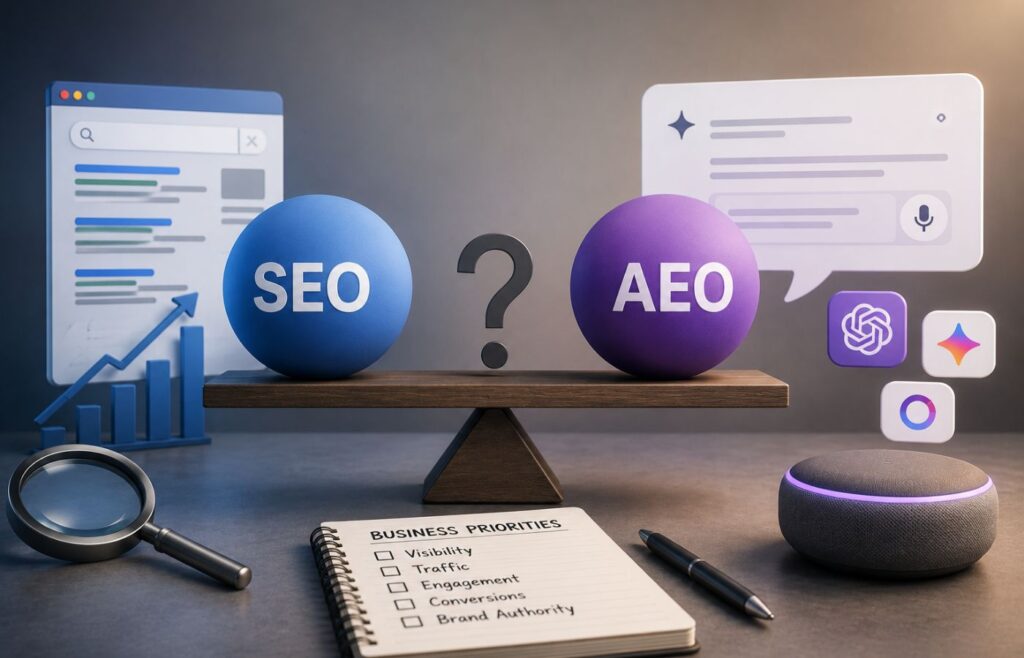
Key takeaways
- AEO software helps businesses optimize content to appear in AI-generated answers, answer engines, and evolving search experiences — not just traditional search rankings.
- Benefits of AEO software include stronger answer-level visibility, better content structuring for AI extraction, and improved authority across AI-driven discovery channels.
- As search shifts from links to answers, the ability to create structured, credible, and easily extractable content is driving more businesses to adopt an AEO tracking tool.
AI search is changing how users discover information, shifting visibility from traditional search results to AI-generated answers. Instead of ranking on a results page, brands now need to be cited, referenced, and recommended by platforms like ChatGPT and Google’s AI Overviews.
That shift has led to the rise of answer engine optimization (AEO), a new approach focused on improving how your brand appears in AI responses. As a result, a growing number of tools now help businesses track AI visibility, analyze competitor mentions, and identify opportunities to improve their presence in AI search.
In this guide, I evaluated the best AEO tools based on their core capabilities, data quality, actionability, and overall value. Whether you’re looking for a lightweight tracking tool or a full platform that connects insights to content execution, these are the best answer engine optimization tools to consider in 2026.
| AEO software | Best for | Starting price* |
|---|---|---|
| HubSpot AEO | End-to-end AEO with built-in content workflows | Free or $45/month |
| Semrush AI Visibility Toolkit | AI search tracking within a full SEO platform | $99/month |
| Profound | Enterprise-grade AI visibility monitoring | $82.50/month |
| Botify | Technical SEO teams expanding into AI search | Custom pricing |
| Ahrefs Brand Radar | AI mentions tracking with SEO research tools | Free or $199/month |
| Peec AI | SMBs needing simple AI visibility tracking | $80/month |
| Scrunch | Growth teams experimenting with AEO strategies | $250/month |
| Conductor Intelligence | Enterprise teams adding AI to organic strategy | Custom pricing |
*All prices are with a one-year commitment unless otherwise noted.
Best AEO tools at a glance
| AEO software | Optimization workflows | Custom prompt tracking | CRM / content integration | My rating out of 5 |
|---|---|---|---|---|
| HubSpot AEO | ✓ | △ | ✓ | 4.70 |
| Semrush | △ | ✓ | ✗ | 4.45 |
| Profound | ✓ | ✓ | ✓ | 4.14 |
| Botify | ✗ | ✓ | ✗ | 4.09 |
| Ahrefs | ✗ | ✓ | ✗ | 4.00 |
| Peec AI | ✗ | ✓ | ✗ | 3.77 |
| Scrunch | ✗ | ✗ | ✗ | 3.71 |
| Conductor Intelligence | ✗ | ✓ | ✗ | 3.40 |
Legend:
✓ = Available
△ = Limited/partial capability
✗ = Not available
- See exactly how your brand shows up across ChatGPT, Gemini, and other AI platforms
- Identify the prompts and topics where you’re winning or losing to competitors
- Close visibility gaps by uncovering missing citations and content opportunities
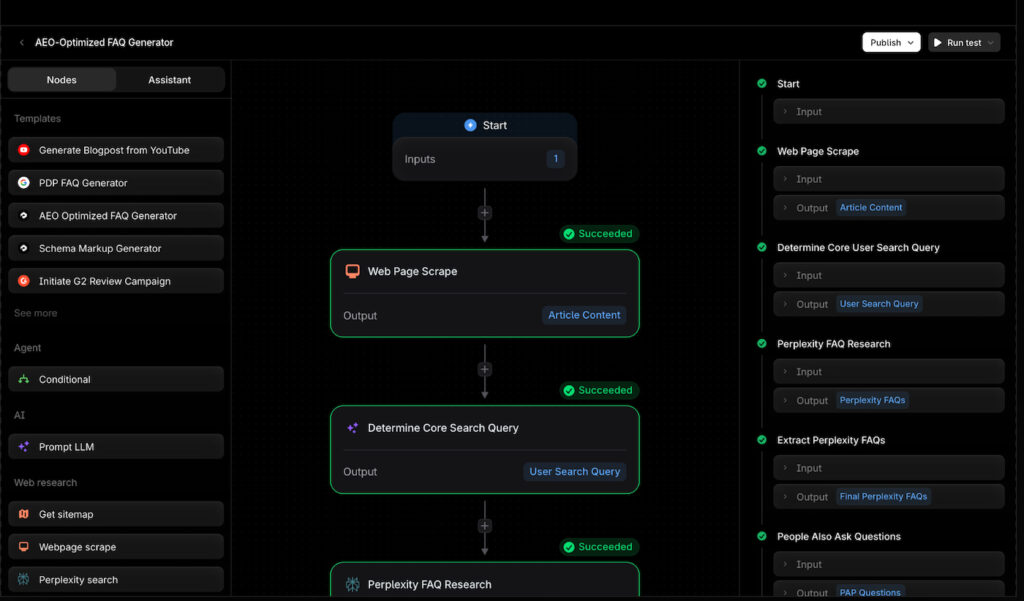
- Turn insights into action with built-in tools to optimize and publish content faster
What makes HubSpot AEO the best for end-to-end AEO with built-in content workflows?
Overall Reviewer Score
4.7/5
Core AEO functionality
5/5
Actionability and optimization
4.81/5
Data quality and intelligence
3.93/5
Ease of use
5/5
Integrations and ecosystem
4.15/5
Pricing and value
4.75/5
Expert score
4.88/5
Pros
- Built-in content workflows
- Strong AI visibility scoring and competitor benchmarking
- CRM-informed insights and actionable content recommendations
Cons
- Advanced features tied to Marketing Hub tiers
- Still in beta
- Less depth than some enterprise AEO tools
Why I picked HubSpot AEO
I found HubSpot AEO to be the best AEO analysis software for teams that want to turn AI visibility insights into real marketing actions. Because it’s embedded within HubSpot’s ecosystem, I was able to connect prompt data, citation analysis, and competitor insights directly to content creation, campaign planning, and CRM data. This is something no standalone AEO tool matched in my testing.
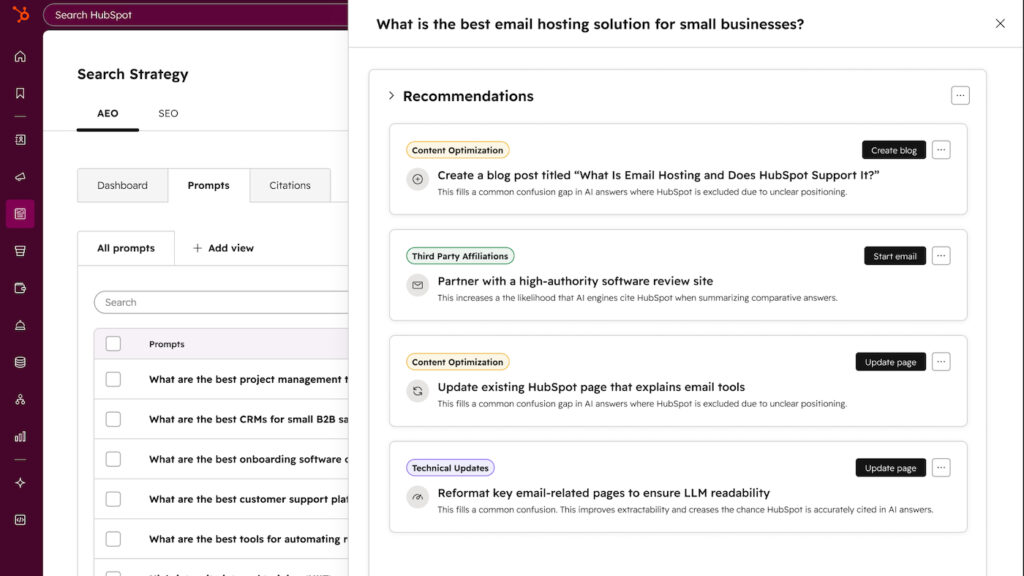
What stood out most is its end-to-end workflow integration. Instead of stopping at dashboards, HubSpot AEO surfaces prioritized recommendations and makes it easy to act on them within the same platform, whether that’s creating new content, optimizing existing pages, or aligning messaging with how AI systems interpret your brand. I also found the free AEO Grader useful for quickly benchmarking visibility before diving into deeper analysis.
I recommend HubSpot AEO for marketing teams that want a centralized system to manage AEO alongside content and customer data, especially if they’re already using HubSpot’s Marketing Hub.
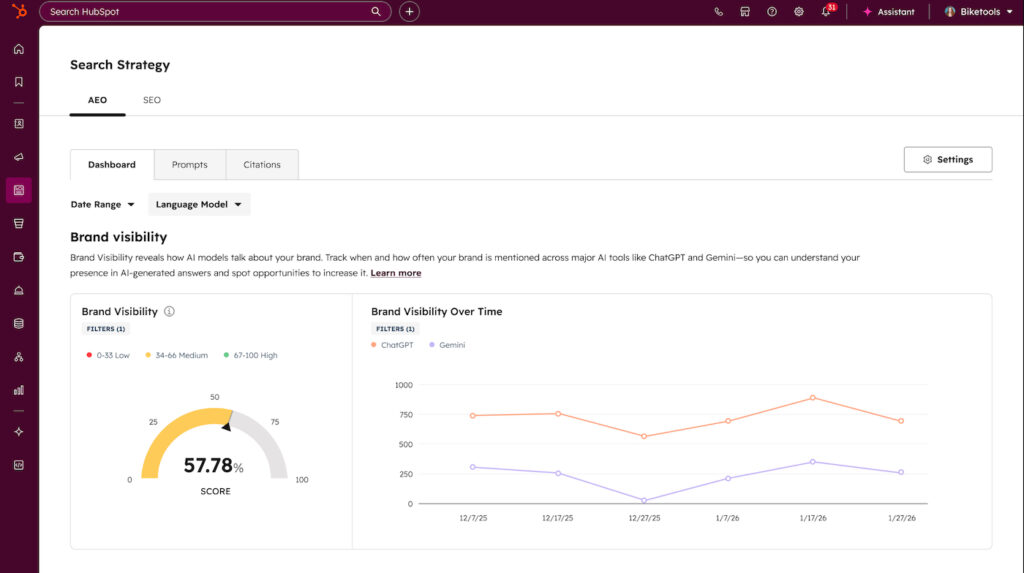
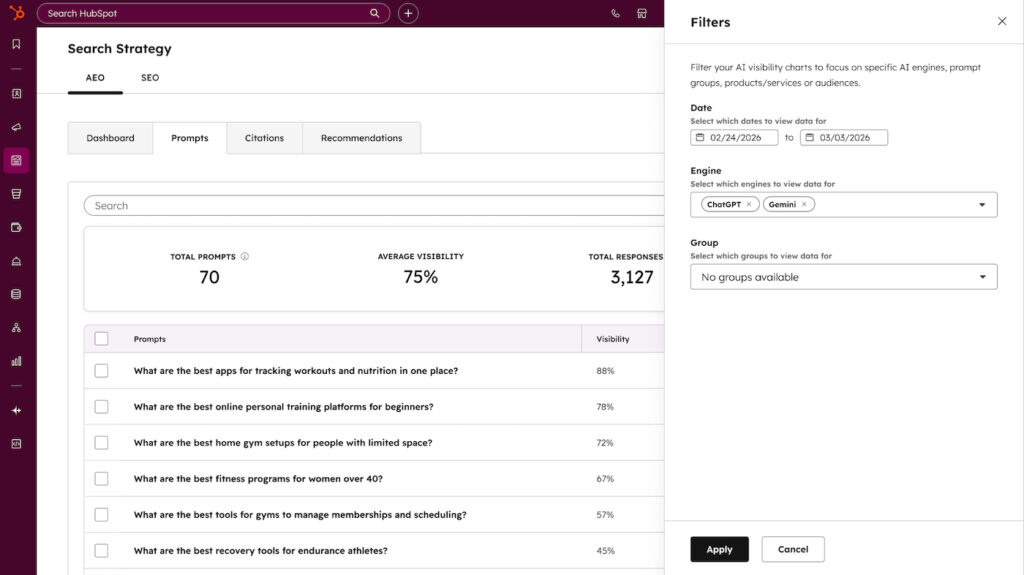
HubSpot AEO is an answer engine optimization tool designed to help businesses measure and improve how they appear in AI-generated answers. It includes a free AEO Grader that evaluates brand visibility across platforms like ChatGPT and Gemini, along with expanded capabilities inside HubSpot’s marketing platform for tracking performance, analyzing competitors, and identifying optimization opportunities.
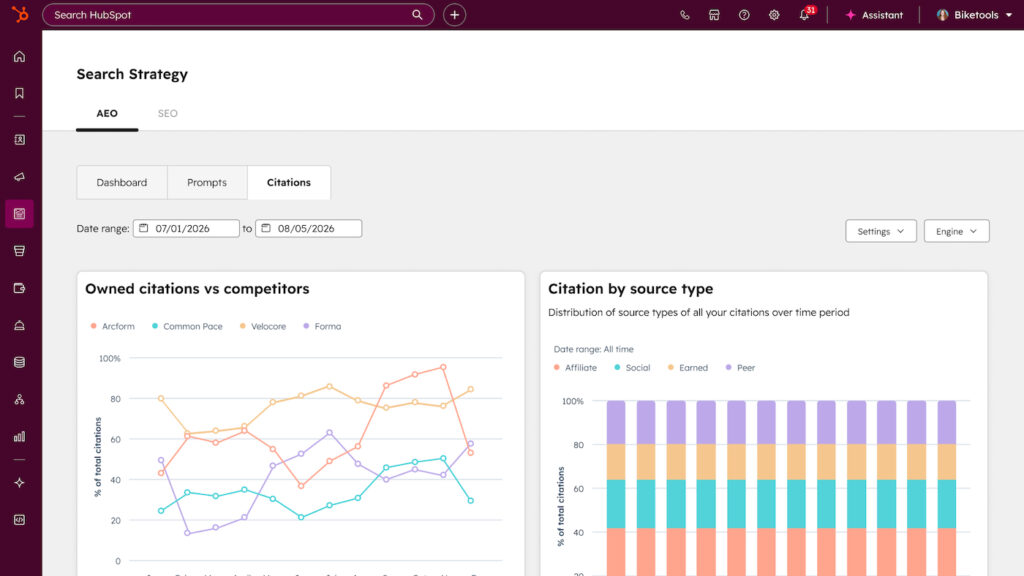
- AI visibility score: Provides a benchmark for how often your brand appears in AI-generated answers, helping identify gaps in visibility.
- Citation analysis: Shows which sources and content types influence AI responses, helping explain why certain brands are cited more often.
- Competitor comparison: Benchmarks your brand’s visibility, sentiment, and share of voice against competitors in AI-generated answers.
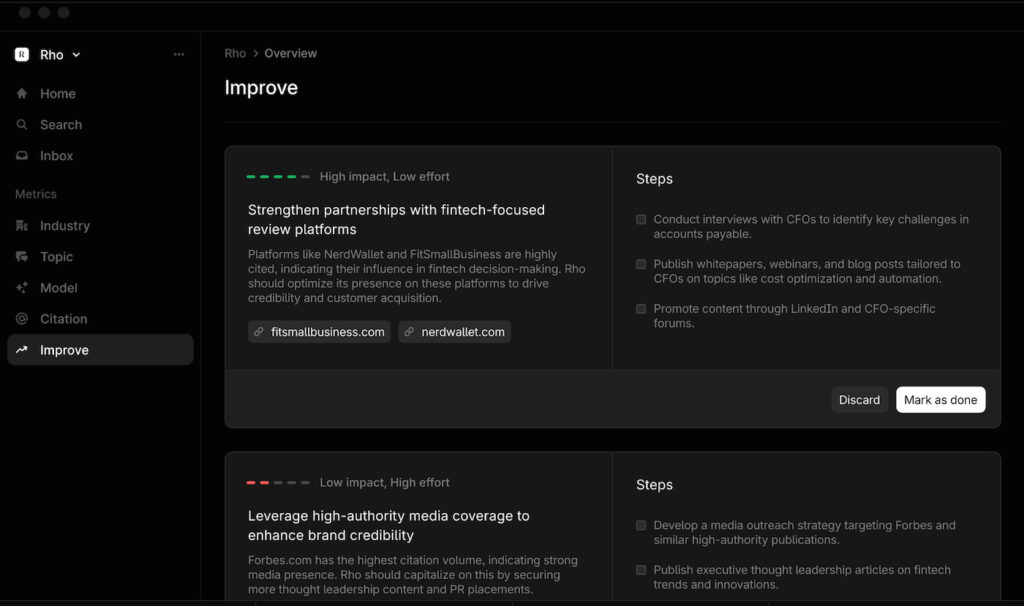
- Prioritized recommendations: Suggests specific content opportunities based on visibility gaps, helping teams focus on high-impact actions.
- CRM-informed insights: Uses HubSpot data to tailor recommendations and prioritize prompts relevant to your audience.
- AEO Grader: Free
- HubSpot AEO (standalone): $45/month
- HubSpot AEO (within Marketing Hub): Starts at $800/month for 3 core seats
- Free trial: 28 days

What makes Semrush AI Visibility Toolkit the best for AI search tracking within a full SEO platform?
Overall Reviewer Score
4.45/5
Core AEO functionality
4.88/5
Actionability and optimization
3.93/5
Data quality and intelligence
5/5
Ease of use
4.24/5
Integrations and ecosystem
3.74/5
Pricing and value
4.38/5
Expert score
4.69/5
Pros
- Familiar interface for SEO teams
- Multi-platform AI visibility tracking
- Strong prompt and query tracking
Cons
- No native CRM integration
- Less built-in content execution than HubSpot
- AI Visibility Toolkit is a paid add-on; best suited to teams already using Semrush
Why I picked Semrush AI Visibility Toolkit
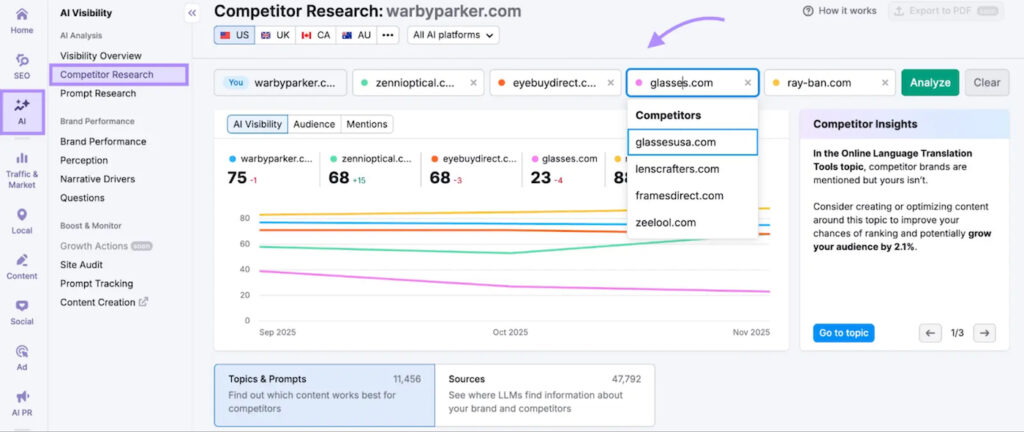
When I evaluated Semrush’s AI Visibility Toolkit, I saw how naturally it extends traditional SEO workflows into AI search. It builds on Semrush’s existing strengths, allowing me to analyze prompts, competitors, and brand mentions alongside keyword rankings, domain authority, and traffic data.
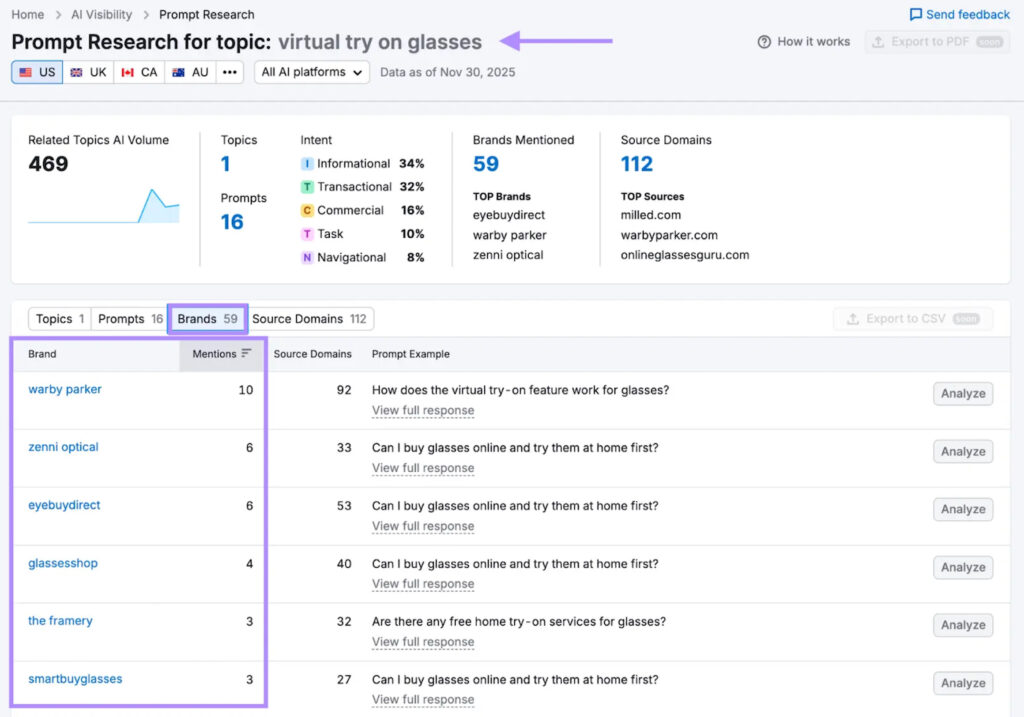
What makes Semrush the best AI SEO software is its prompt and competitor research within a unified SEO environment. I was able to identify which queries trigger AI-generated answers, see where competitors are being cited, and connect those insights back to existing SEO strategies. While it doesn’t offer the same level of built-in execution as HubSpot, I recommend it for SEO-led teams that want to integrate AI visibility tracking into a platform they already rely on.
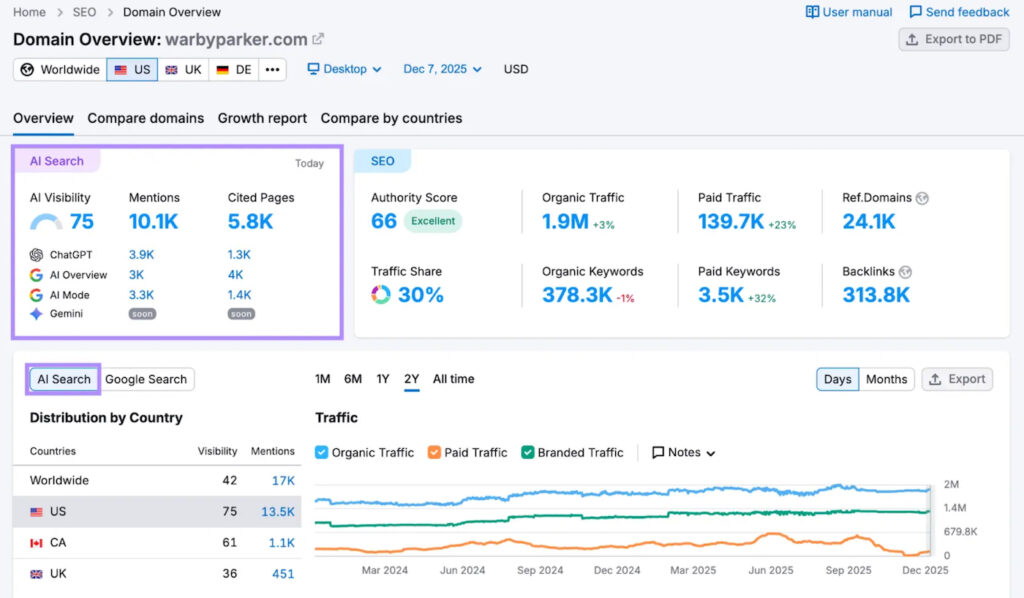
Semrush AI Visibility Toolkit is a premium Semrush toolkit built to help businesses measure how they show up in AI-driven search experiences. Semrush says it tracks brand visibility across platforms such as ChatGPT, Google AI, Gemini, and Perplexity, and includes tools for prompt monitoring, competitor analysis, and optimization guidance.
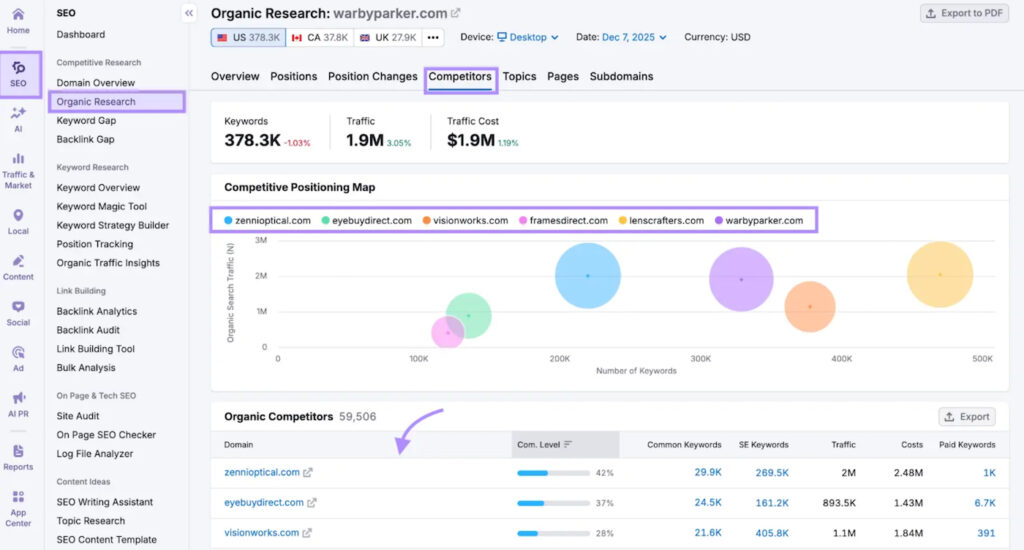
- AI visibility tracking: Measures how visible your brand is across AI search platforms and highlights where your presence is strong or weak.
- Prompt-level monitoring: Tracks the prompts that matter most to your business so you can see which questions surface your brand and which do not.
- Competitor research: Compares your AI visibility against competitors and identifies the topics and prompts where rivals are cited but you are not.
- Optimization guidance: Surfaces priorities for improvement, including technical blockers and content opportunities that may help strengthen AI visibility.
- Integrated search ecosystem: Lets SEO teams work from AI visibility data inside a larger Semrush environment that already includes keyword, site audit, and broader search research tools.
- Free: $0
- Base: $99/month per domain
- Free trial: 7 days

What makes Profound the best for enterprise-grade AI visibility monitoring?
Overall Reviewer Score
4.14/5
Core AEO functionality
4.44/5
Actionability and optimization
3.71/5
Data quality and intelligence
4.35/5
Ease of use
4.38/5
Integrations and ecosystem
3.6/5
Pricing and value
4/5
Expert score
4.5/5
Pros
- Deep AI citation and mention tracking
- Advanced brand perception and narrative analysis
- Strong competitive intelligence for AI search
Cons
- Enterprise-focused (not SMB-friendly)
- Limited content workflow or execution tools
- Smaller ecosystem vs legacy SEO tools
Why I picked Profound
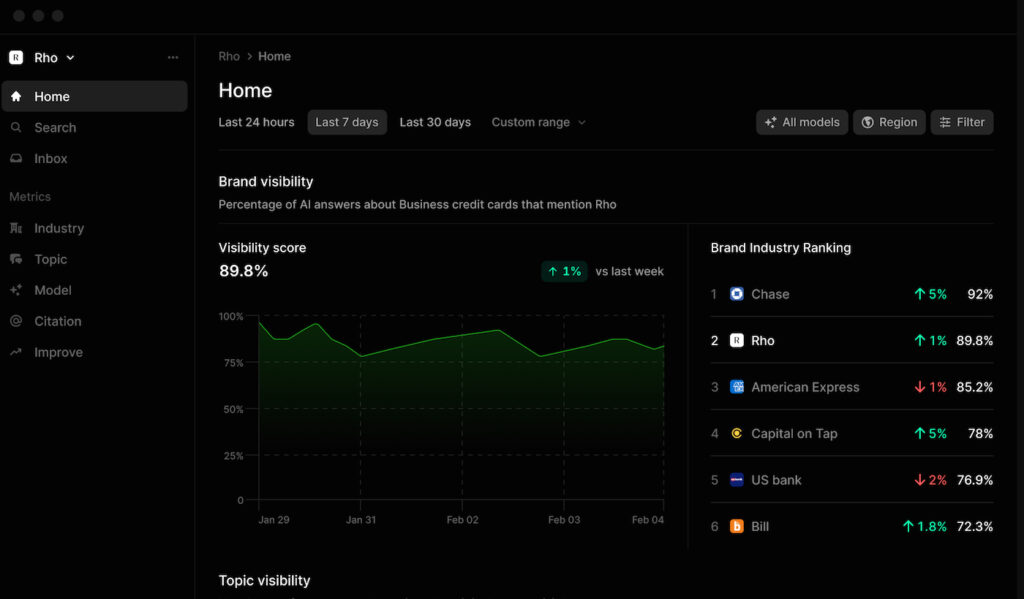
In my testing, Profound stood out for going beyond surface-level visibility metrics to analyze how AI platforms actually describe and position your brand. As one of the best AEO checking software, it helped me uncover narrative gaps where competitors were being framed more favorably or cited more often in specific contexts.
Its biggest strength is brand perception analysis paired with actionable recommendations. Instead of just showing mentions, Profound highlights how your brand is interpreted across prompts and suggests ways to improve that positioning. I recommend it for teams that care about shaping brand narrative in AI-generated answers, especially those operating in competitive or reputation-sensitive industries.
Profound is an AI visibility and answer engine optimization platform designed to help brands understand and improve how they appear in AI-generated responses. It focuses on tracking citations, monitoring brand mentions, and analyzing how AI systems interpret your content across different prompts and topics.
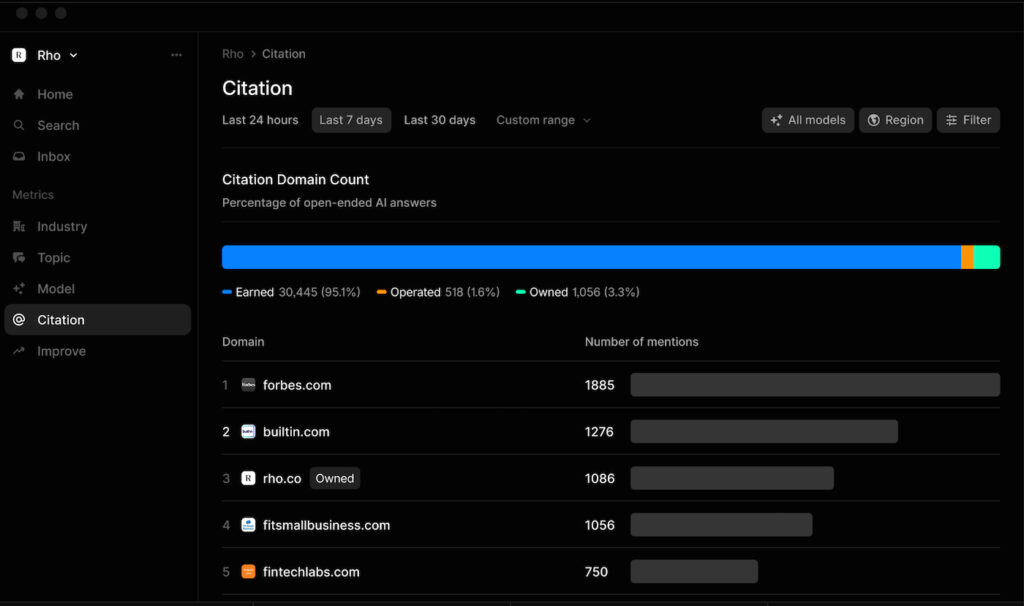
- AI citation tracking: Tracks where and how your brand is cited across AI-generated answers, helping you understand which sources and content influence visibility.
- Brand perception analysis: Analyzes how AI models describe your brand, including sentiment, positioning, and recurring narratives.
- Competitive intelligence: Identifies which competitors are being mentioned in AI responses and highlights gaps where your brand is missing.
- Prompt and topic monitoring: Tracks performance across key queries and topics to show where your brand is gaining or losing visibility.
- Source and influence mapping: Breaks down which domains and content types AI models rely on, helping guide content and PR strategies.
For brands:
- AEO Report: Free
- Starter: $82.50/month
- Growth: $332.50/month
- Enterprise: Custom pricing
For agencies:
- Agency Growth: $99/month + add-ons
- Agency Enterprise: Custom pricing

What makes Botify the best for technical SEO teams expanding into AI search?
Overall Reviewer Score
4.09/5
Core AEO functionality
4.9/5
Actionability and optimization
4.13/5
Data quality and intelligence
4.5/5
Ease of use
3.38/5
Integrations and ecosystem
2.75/5
Pricing and value
3.06/5
Expert score
4.06/5
Pros
- Strong AI visibility and citation analysis
- Botify adds AI-prioritized recommendations
- Connects AEO insights with enterprise technical SEO data
Cons
- Built primarily for enterprise teams
- Requires more technical expertise than simpler AEO tools
- Less native content workflow support than HubSpot AEO
Why I picked Botify
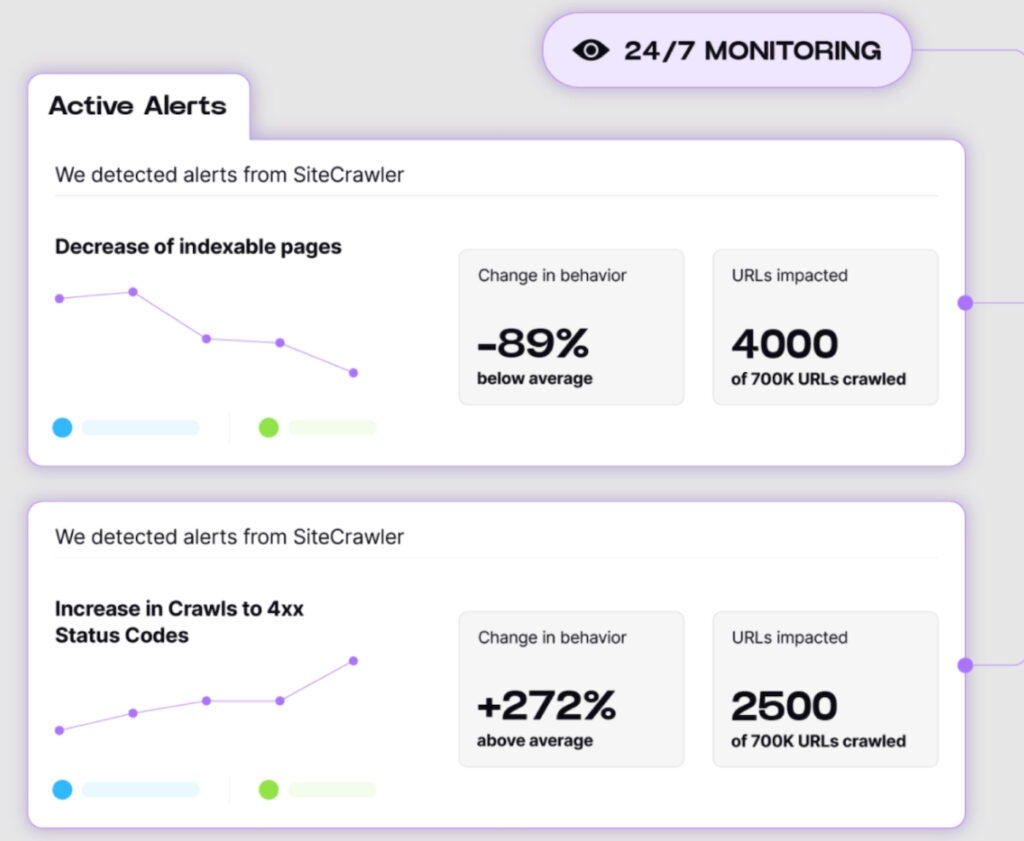
When I reviewed Botify, I found it to be the best AEO software for enterprise teams managing large, complex websites where technical performance directly impacts discoverability. It connects AI visibility data with crawlability, indexing, and site health. This gives you a more complete picture of why content is or isn’t being surfaced.
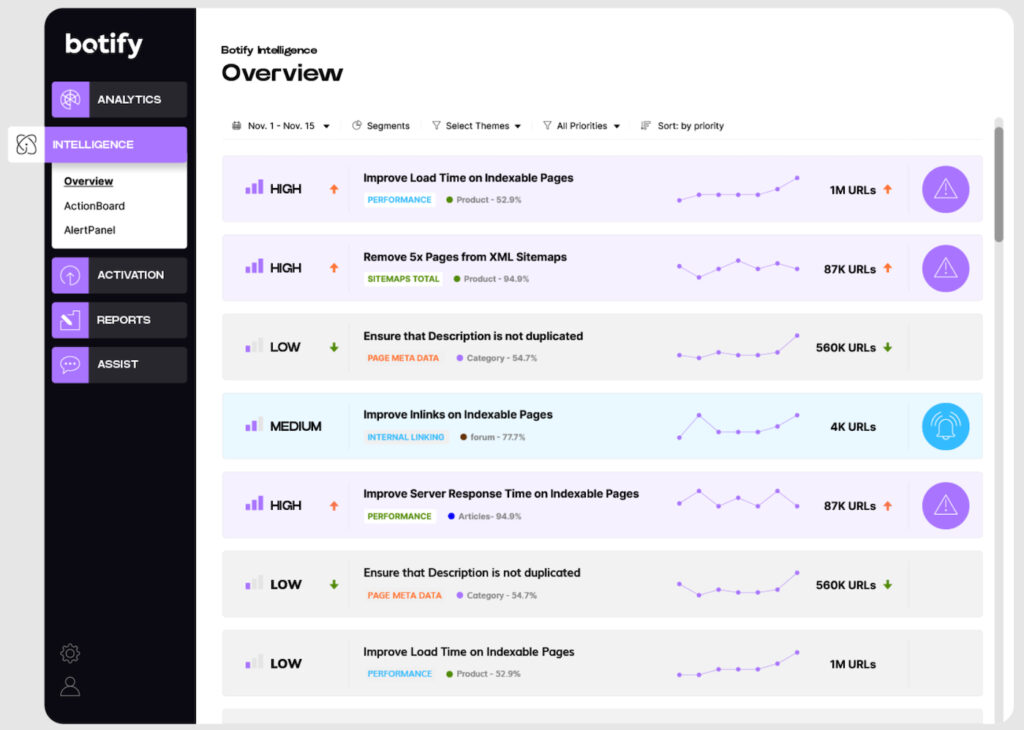
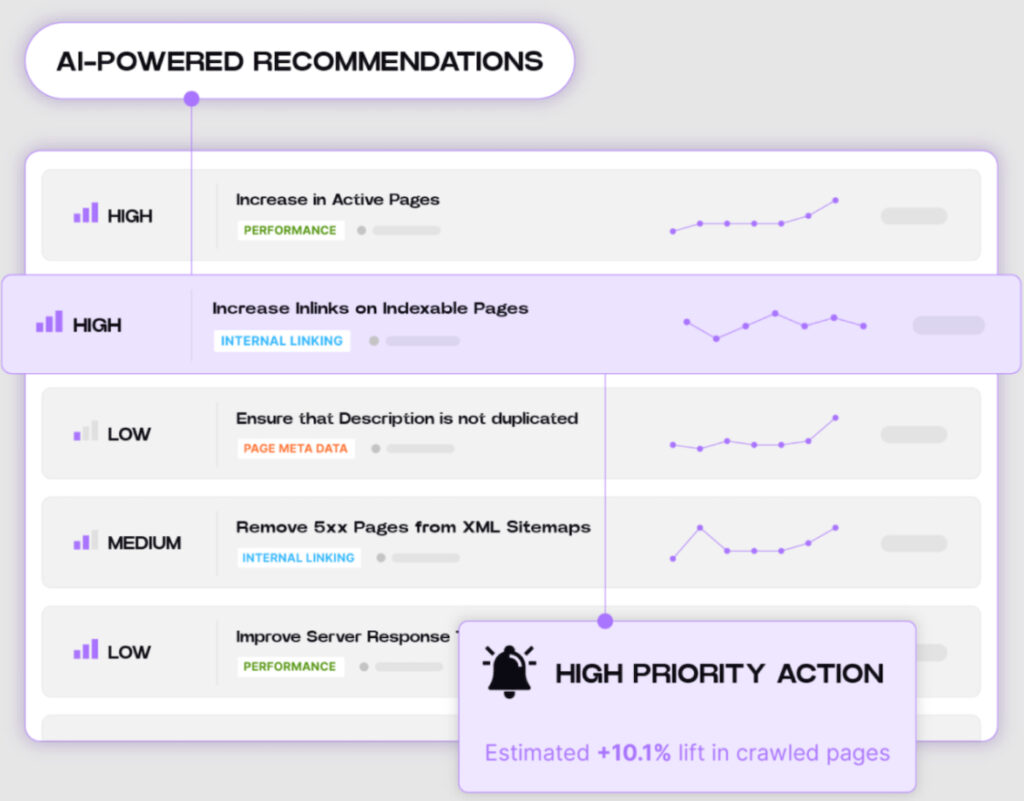
Its key differentiator is Botify Intelligence, which prioritizes the most impactful technical and content fixes. I observed that it doesn’t just surface issues; it helps teams focus on the changes most likely to improve visibility at scale.
I recommend Botify for organizations that need to operationalize AEO within a technical SEO framework, particularly those with large content inventories or complex site structures.
Botify is an enterprise AI search optimization platform that combines traditional search visibility data with newer AEO capabilities. Its AI Visibility product, part of Botify Analytics, helps brands measure how often they appear in AI-generated results, while Botify helps prioritize the optimizations most likely to improve online discoverability.
- AI Visibility campaigns: Botify lets teams create campaigns that generate and distribute prompts, then measure performance across platforms such as ChatGPT, Perplexity, and Google AI Mode.
- Citation and mention analysis: This AEO visibility tool tracks how often your brand and content appear in AI-powered search results and compares those signals against competitors.
- Competitor AI visibility reporting: Botify includes competitor analysis so teams can see where rival brands are winning or losing visibility over time.
- Botify recommendations: Botify prioritizes the next most impactful optimizations using AI, helping teams act on visibility data faster.
- Technical SEO plus AEO context: Because Botify sits inside a broader enterprise search platform, teams can connect AI visibility insights with crawlability, site performance, and other technical SEO signals.
Botify offers custom pricing based on your organization’s size, needs, and feature requirements. Because it’s built for enterprise teams, you’ll need to contact Botify directly for a tailored quote. Requesting a demo is the best way to explore pricing and see how the platform fits your AEO and SEO strategy.
What makes Ahrefs Brand Radar the best for tracking AI mentions with SEO research tools?
Overall Reviewer Score
4/5
Core AEO functionality
4.88/5
Actionability and optimization
2.76/5
Data quality and intelligence
4.56/5
Ease of use
3.99/5
Integrations and ecosystem
2.21/5
Pricing and value
4.88/5
Expert score
4.75/5
Pros
- Strong brand mention and share-of-voice tracking
- Proactive AI visibility tracking via add-ons
- Backed by Ahrefs’ industry-leading SEO data
Cons
- Not a dedicated AEO platform
- Limited optimization workflows and recommendations
- Full functionality requires paid add-ons
Why I picked Ahrefs Brand Radar
I found Ahrefs Brand Radar most useful as a measurement and benchmarking tool rather than a full AEO platform. It extends Ahrefs’ core strength — search and backlink data — into brand visibility tracking, helping me understand how often a brand is mentioned across web and AI-influenced search.
What stood out is its share-of-voice tracking tied to keyword and search demand data. I could quickly see how brand visibility aligns with what users are actually searching for, which adds useful context for prioritization. I recommend it for teams that want reliable visibility tracking and competitive benchmarking, especially if they’re already using Ahrefs for SEO research.
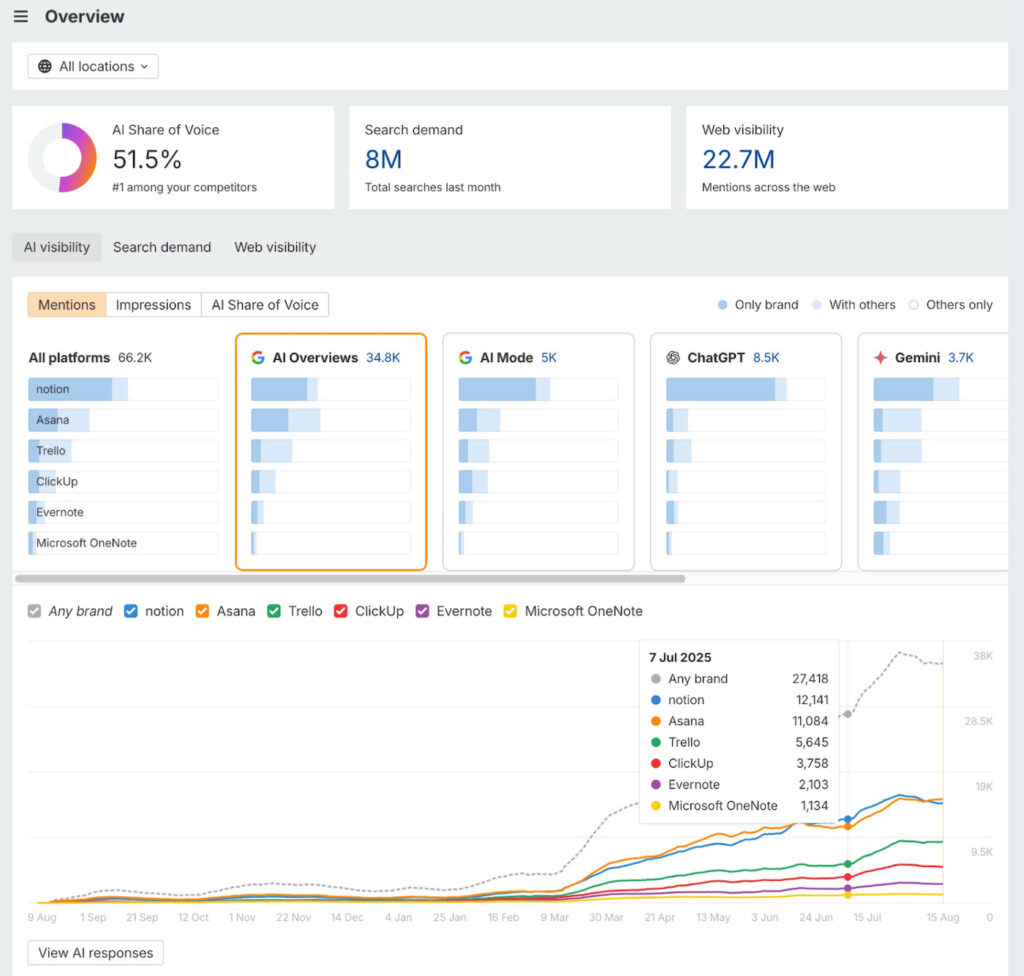
Ahrefs Brand Radar is a brand monitoring feature within Ahrefs that helps businesses track mentions, visibility, and share of voice across web content and emerging AI-driven search experiences. It combines brand tracking with Ahrefs’ broader SEO data to provide insight into visibility and competitive positioning.
- Brand mention tracking: Monitors where and how often your brand appears across the web, helping measure visibility and awareness.
- AI visibility tracking (add-on): Tracks brand presence across AI-generated prompts and platforms, enabling ongoing monitoring of AI search visibility.
- Share-of-voice analysis: Compares your brand’s visibility against competitors to identify gaps across topics and queries.
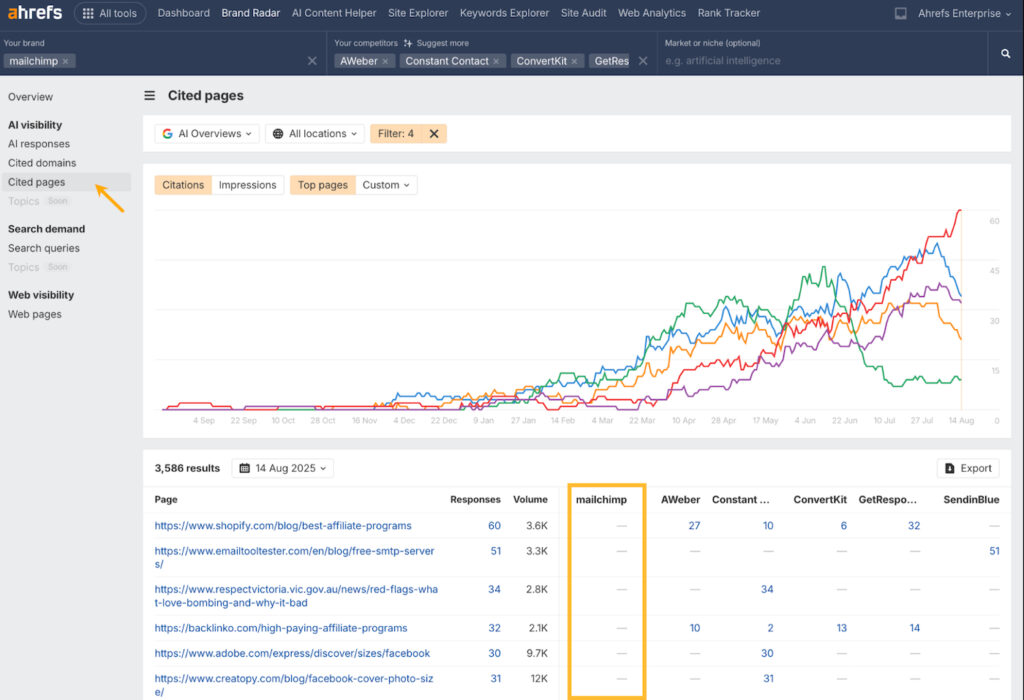
- Brand Radar add-on: $199/month per platform
- All platforms: $699/month
The Ahrefs Brand Radar add-on is for broad platform coverage and custom tracking. This tool is also included in the regular Ahrefs subscription plans below for research and discovery:
- Ahrefs Free: $0
- Starter: $29/month
- Lite: $108/month
- Standard: $208/month
- Advanced: $374/month
- Enterprise: $1,499/month

What makes Peec AI the best for SMBs needing simple AI visibility tracking?
Overall Reviewer Score
3.77/5
Core AEO functionality
4.13/5
Actionability and optimization
3.25/5
Data quality and intelligence
3.75/5
Ease of use
5/5
Integrations and ecosystem
1.59/5
Pricing and value
4.3/5
Expert score
4.44/5
Pros
- Purpose-built for AI search visibility tracking
- Strong prompt and citation monitoring
- Simple, clean interface with fast setup
Cons
- Limited optimization workflows or recommendations
- Additional costs for more AI models
- Not a full SEO or all-in-one platform
Why I picked Peec AI
In my testing, Peec AI stood out for its simplicity and flexibility. It’s the best AI search visibility tracking software for small teams looking for an easy-to-use platform to track prompts, citations, and competitors without the overhead of a larger SEO or enterprise platform.
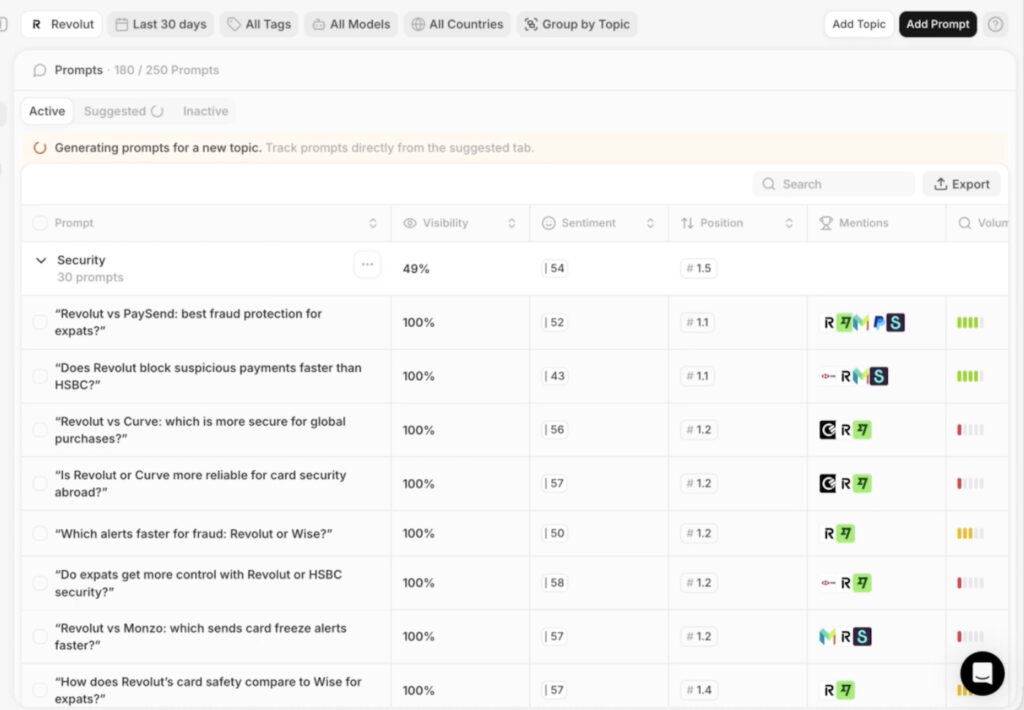
Its main advantage is customizable prompt tracking across models and topics. I was able to define exactly which prompts to monitor and track performance across different AI systems, which makes it more flexible than tools with fixed datasets. I recommend it for teams that want a lightweight, focused solution for ongoing AI visibility tracking without needing full optimization workflows.
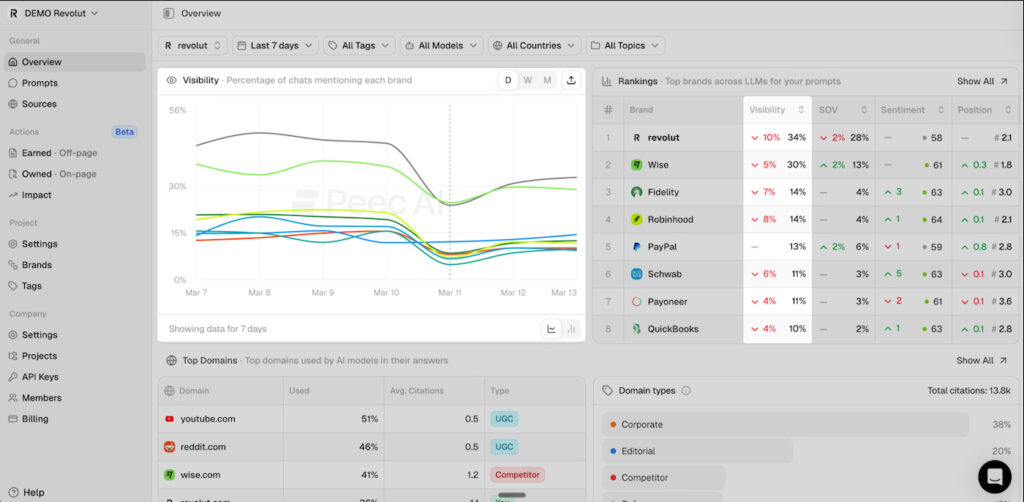
Peec AI is an AI search analytics platform designed to help marketing teams track how their brand appears in AI-generated search results. It focuses on monitoring visibility, citations, and competitive performance across platforms like ChatGPT, Perplexity, Gemini, and Google AI Overviews, helping teams understand and measure their presence in AI-driven search.
- AI visibility tracking: Monitors how often your brand appears across major AI search platforms, including ChatGPT, Perplexity, and Google AI Overviews, with daily tracking and historical trends.
- Prompt and citation analysis: Tracks which prompts trigger your brand and identifies the exact sources AI models cite, helping inform content and PR strategy.
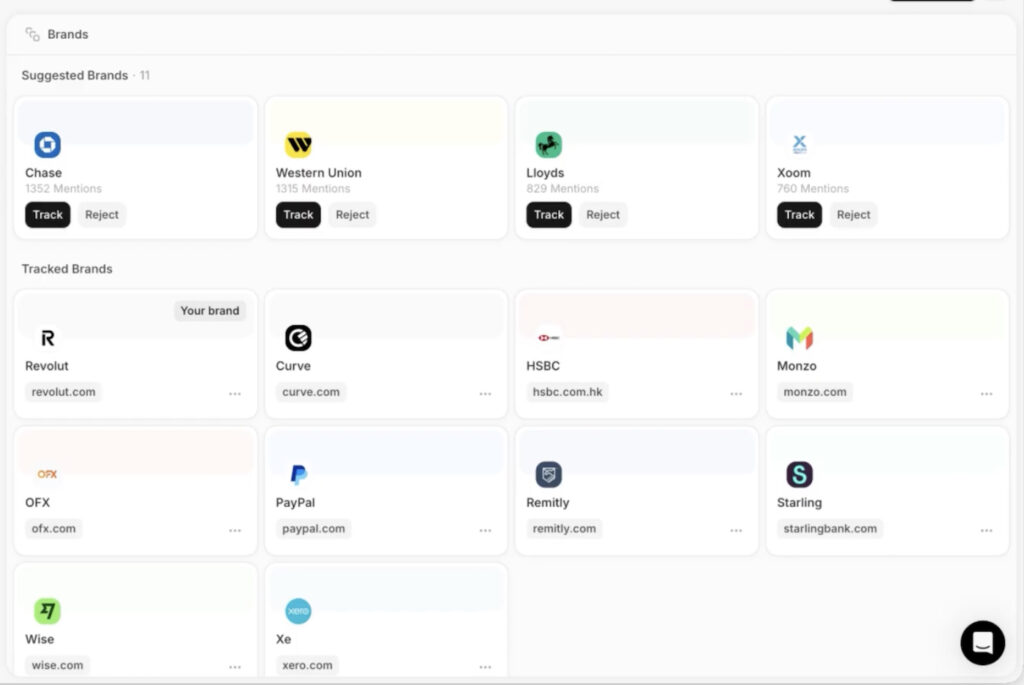
- Competitive benchmarking: Compares your visibility, positioning, and mentions against competitors across AI engines to identify gaps and opportunities.
For brands:
- Starter: $80/month
- Pro: $205/month
- Advanced: $420/month
- Enterprise: Custom pricing
For agencies:
- Essential: $205/month
- Growth: $420/month
- Comprehensive: $675/month
- Custom: Custom pricing

What makes Scrunch the best for growth teams experimenting with AEO strategies?
Overall Reviewer Score
3.71/5
Core AEO functionality
3.81/5
Actionability and optimization
3.88/5
Data quality and intelligence
3.56/5
Ease of use
3.75/5
Integrations and ecosystem
2.59/5
Pricing and value
4.38/5
Expert score
3.63/5
Pros
- Strong cross-LLM monitoring and prompt analytics
- Citation and competitor intelligence with gap detection
- AI-friendly content delivery through AXP tool
Cons
- Less native CRM/content workflow integration than HubSpot
- Broader platform focus can feel heavier than lightweight trackers
- Best value comes from teams ready to act on technical and content insights
Why I picked Scrunch
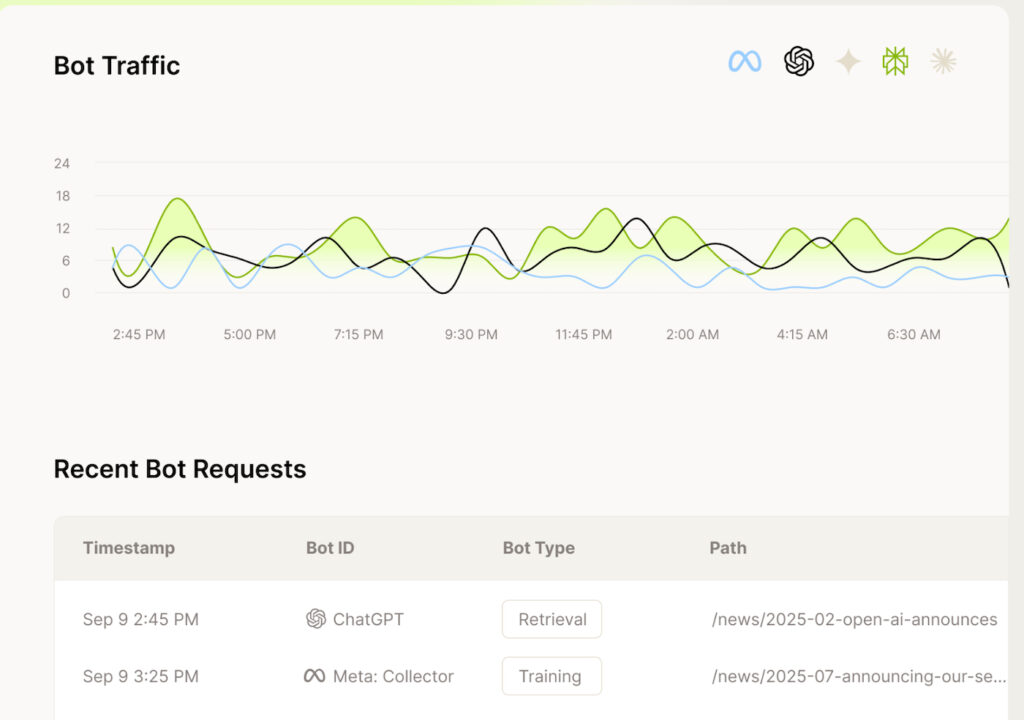
For me, Scrunch is the best LLM SEO analysis software in this list. It stood out to me for going beyond visibility tracking to focus on how AI systems actually access and interpret your content. It provides insight into citation sources, competitor gaps, and even how AI bots interact with your site. These are areas that most tools don’t cover in depth.
Its defining strength is agent-ready content delivery through its AXP framework. I observed that it helps ensure content is structured in a way that AI systems can easily retrieve and cite. I recommend Scrunch for teams that want to optimize not just for visibility, but for how their content is consumed and surfaced in AI-generated answers.
Scrunch is an AI search optimization platform that helps businesses monitor brand presence in AI search, understand how AI interprets their sites, and improve visibility through optimization guidance and AI-friendly content delivery. Its platform includes monitoring, auditing, optimization, and AXP tools designed for AI-first discovery.
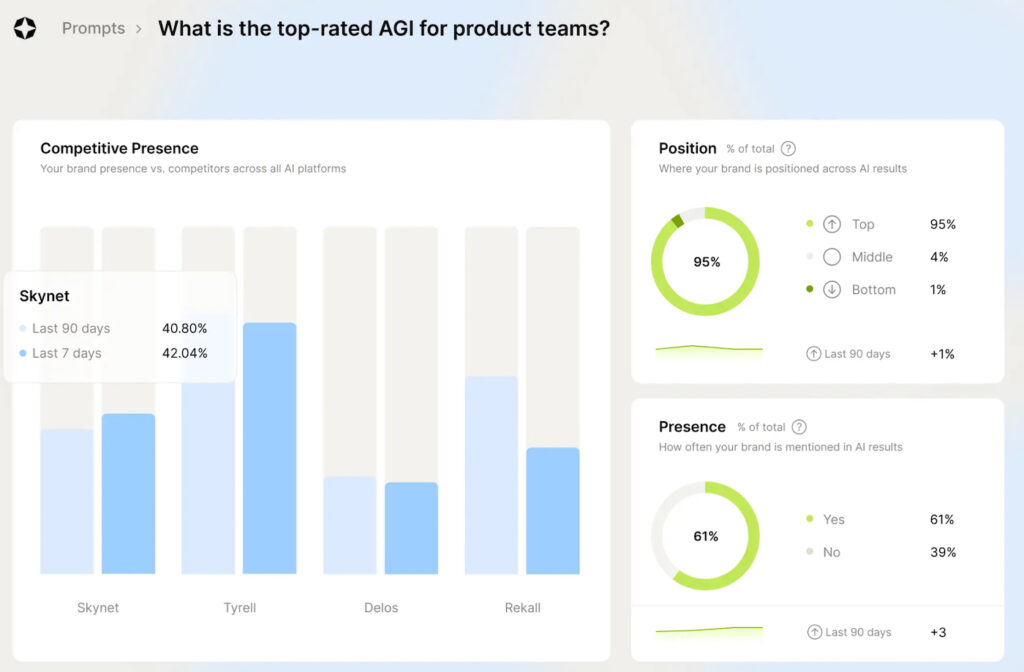
- Cross-LLM monitoring: Scrunch tracks brand presence, rankings, sentiment, citations, and competitor performance across major AI platforms, with filtering by topic, persona, model, region, and more.
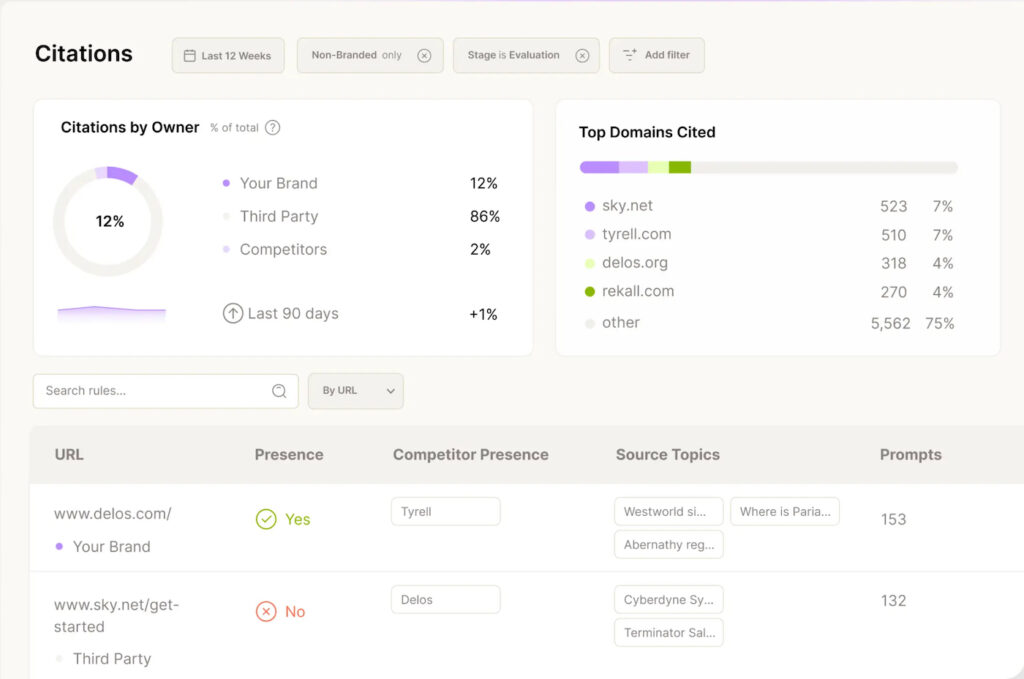
- Citation and competitor intelligence: The platform maps cited sources, flags competitive gaps, and shows where competitors are being surfaced instead of your brand.
- Agent Experience Platform (AXP): Scrunch can generate an AI-friendly version of your site that is easier for AI agents to crawl, parse, and cite, helping improve inclusion in AI answers.
For brands:
- Core: $250/month
- Enterprise: Custom pricing
- Free trial: 7 days
For agencies:
- Agency Core: $500/month
- Agency Enterprise: Custom pricing
- Free trial: 7 days

What makes Conductor Intelligence the best for enterprise teams adding AI to organic strategy?
Overall Reviewer Score
3.4/5
Core AEO functionality
2.96/5
Actionability and optimization
3.56/5
Data quality and intelligence
3.03/5
Ease of use
4.08/5
Integrations and ecosystem
3.26/5
Pricing and value
3.88/5
Expert score
3.88/5
Pros
- Strong enterprise SEO and content optimization platform
- Deep integration with content workflows and teams
- Robust reporting and stakeholder dashboard
Cons
- Not a dedicated AEO platform
- Limited prompt and citation tracking
- Requires mature SEO processes to get full value
Why I picked Conductor Intelligence
When I evaluated Conductor Intelligence, I found it best suited for enterprise teams managing large-scale content operations. It extends Conductor’s existing SEO and content platform with AI-influenced insights, allowing teams to incorporate AEO into their broader strategy.
As one of the best software for AEO, its biggest strengths include integration with content workflows and reporting. I was able to connect visibility insights directly to content planning, optimization, and performance tracking, which is critical for large organizations. I recommend it for teams that want to incorporate AI search into an established SEO and content program rather than adopt a standalone AEO tool.
Conductor Intelligence is an enterprise SEO and content intelligence platform that helps businesses plan, create, and optimize content for search. It combines keyword research, performance tracking, and content guidance with emerging insights into how content performs across AI-influenced search experiences.
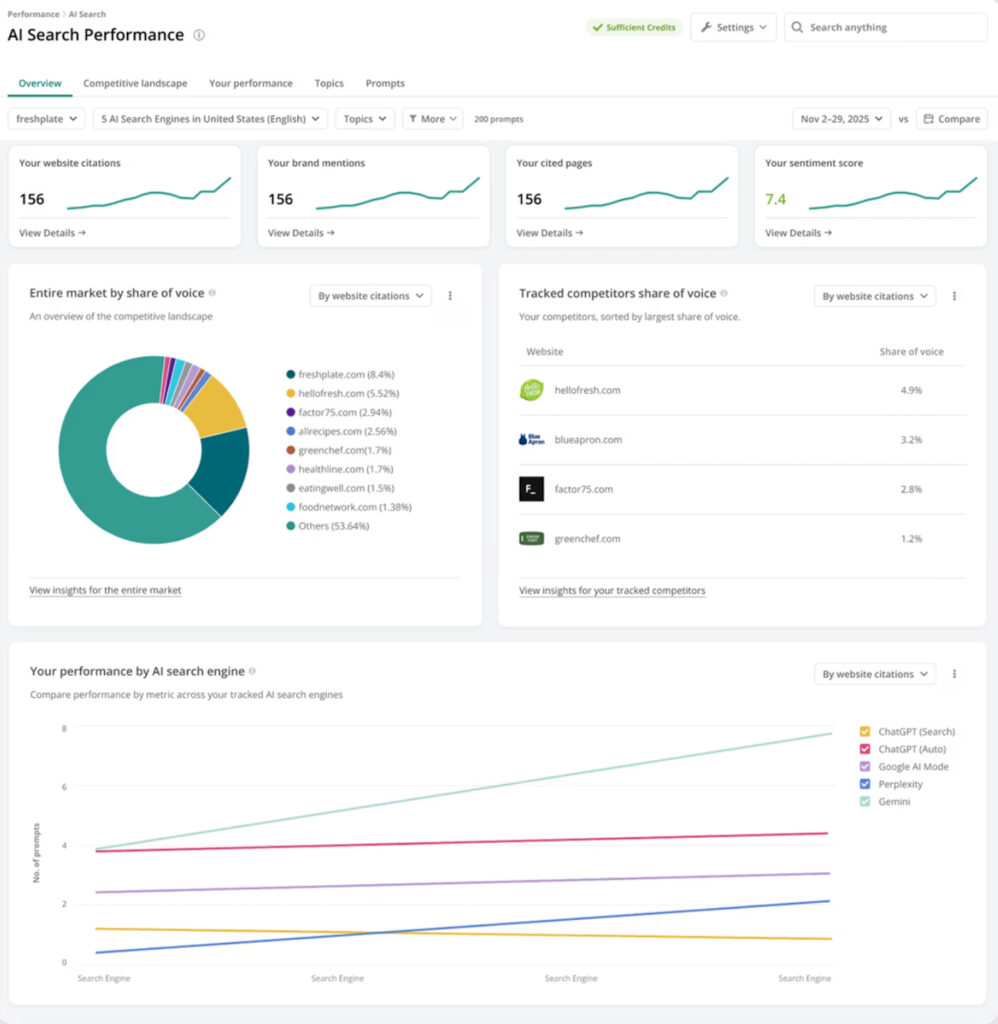
- Enterprise SEO and content platform: Supports keyword research, content planning, and performance tracking to improve search visibility at scale.
- Content workflow integration: Connects SEO insights directly to content teams, enabling collaboration, task management, and optimization workflows.
- Performance reporting and dashboards: Provides customizable reporting and executive-level dashboards to track content performance and ROI.
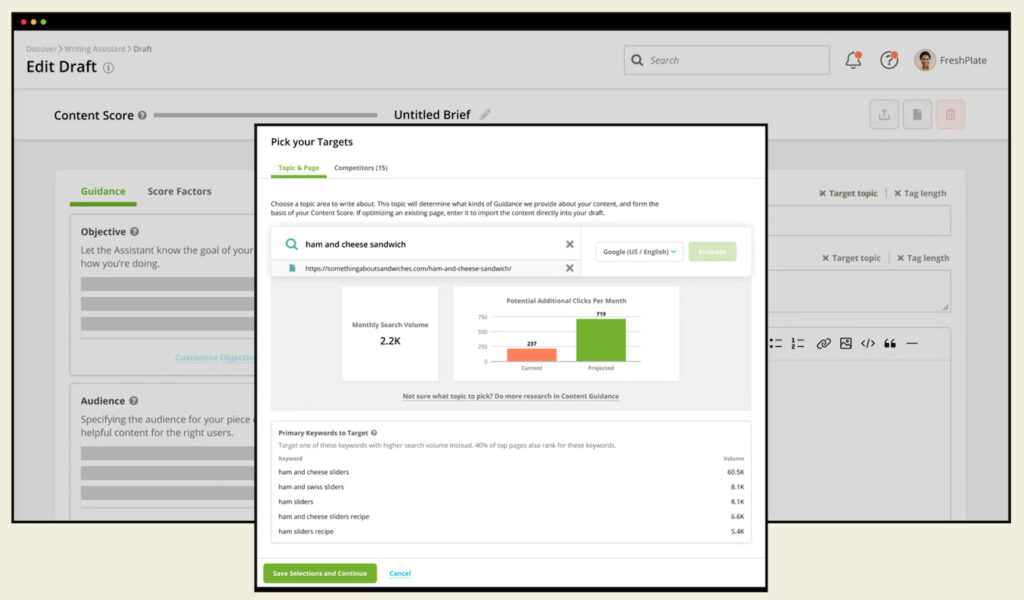
Conductor Intelligence offers custom enterprise pricing based on business size, data needs, and feature requirements. Contact the vendor to request a demo or get a tailored quote.
Key features of AEO software
The best AEO tools focus on making content usable by AI systems, not just discoverable.
- Content structuring and optimization: Formats content for extraction with clear headings, summaries, and Q&A sections.
- AI visibility tracking: Shows where and how your content appears in AI-generated answers.
- Schema and structured data support: Improves how search engines and AI systems interpret your content.
- Content gap analysis: Identifies gaps or weaknesses in your content strategy.
- Authority and credibility guidance: Recommends ways to strengthen signals of expertise and differentiation.
- Performance analytics beyond traffic: Tracks visibility and influence, not just rankings and clicks.
Benefits of AEO software
The best tools for AEO help B2B teams stay visible as discovery shifts from search results to AI-generated answers. Instead of competing for clicks, these tools help your content get selected and cited.
Improves visibility in AI-driven discovery
AEO software increases the chances your content appears in AI-generated answers and summaries. This helps your brand surface earlier when buyers are researching solutions.
Example: A SaaS company optimizing a “HubSpot vs Salesforce” page can get cited when buyers ask for CRM recommendations.
Builds credibility in competitive markets
AEO tools prioritize expertise, structure, and original insights, which are key factors in answer selection. This helps your content stand out in crowded B2B categories.
Example: A cybersecurity vendor publishing proprietary data is more likely to be surfaced than generic content.
Influences buyers earlier in the journey
AEO analysis tools help your brand appear during early research, before buyers visit your website or contact sales. This allows you to shape vendor consideration sooner.
Example: A RevOps platform showing up in answers to “how to improve pipeline visibility.”
Maximizes existing content ROI
AEO tools improve the performance of your existing content by making it easier for AI systems to extract and reuse. This reduces the need to constantly create new assets.
Example: Turning a whitepaper into FAQs or summaries that surface in AI responses.
Supports long-term search visibility
AEO software helps maintain visibility even as clicks decline and zero-click search increases. Your content can still influence buyers without requiring a site visit.
Example: A payments platform staying visible in AI comparisons despite lower organic traffic.
How to choose the best AEO software
The following steps help you choose the best AEO software depending on your goals, team structure, and how advanced your content strategy is.
- Define your primary use case. Focus on visibility, optimization, or tracking — don’t try to solve everything at once.
- Look for actionable recommendations. Choose tools that provide clear guidance, not just scores or reports.
- Check integration with your existing tools. Ensure compatibility with your CMS, SEO tools, and analytics stack.
- Prioritize visibility tracking. Pick platforms that show where your content is being surfaced or cited.
- Evaluate ease of use. The best AEO platform should fit into your team’s workflow without adding complexity.
- Plan for scalability. Select software that can adapt as AI-driven discovery evolves.
Frequently asked questions (FAQs)